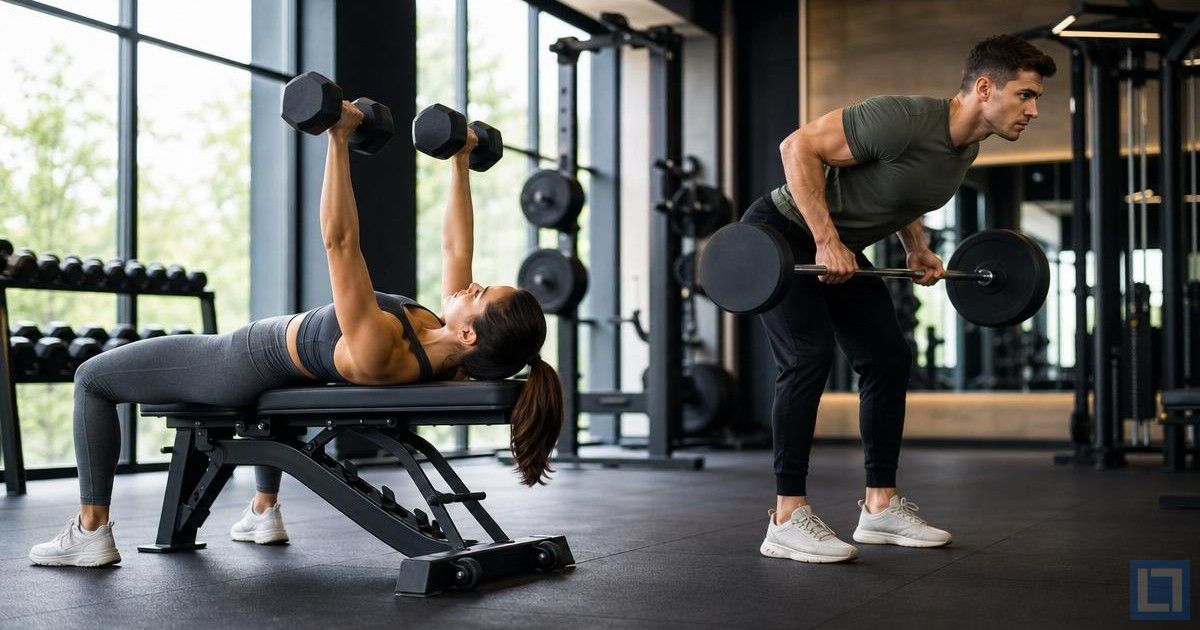
The push pull legs split, or PPL, is one of the most popular training structures in serious lifting for a simple reason: it groups exercises by movement pattern, which lets you train each muscle group with maximum freshness and minimum interference. The best push pull legs routine covers every major lift across three days, hitting the entire body in a way that no other split can match for both strength and hypertrophy.
This routine spans 12 exercises split across three days: push day for chest, shoulders, and triceps, pull day for back and biceps, and legs day for the entire lower body. Each day uses one heavy compound, one secondary compound, and one or two accessory pieces. Run it three times per week for a 3-day version, or six days per week as a 6-day version with each day repeated.
Push Day
Push day covers every muscle that pushes a load away from the body: chest, shoulders, and triceps. The four exercises below cover horizontal pressing, vertical pressing, upper-chest specialization, and tricep finishing.
Barbell Bench Press

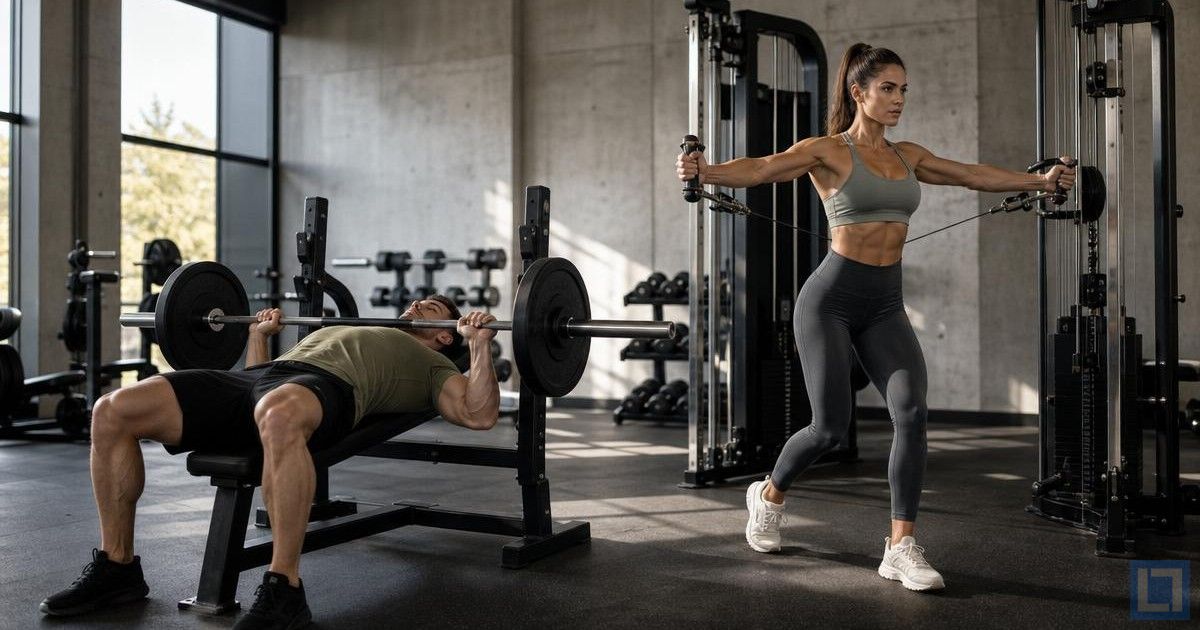
The Barbell Bench Press is the king of upper-body pressing exercises. Lying on a flat bench with a barbell over the chest, you lower the bar to mid-chest and press it back up to lockout. It builds the chest, front delts, and triceps as a complete unit and is the single best mass-building movement for the upper body.
No PPL push day is complete without bench pressing. Every other push exercise should be considered an accessory to it. The barbell allows the heaviest possible load and the bilateral lift develops raw pressing strength better than any unilateral or machine variation.
Plant the feet flat, arch the upper back slightly, and pull the shoulder blades together hard. Lower the bar to the lower-to-mid chest under control, then drive it back up. Keep the elbows tucked at roughly 60 to 75 degrees from the torso, not flared straight out.
Barbell Standing Military Press

The Barbell Standing Military Press is the king of overhead pressing. Standing with a barbell at the shoulders, you press it overhead to lockout while keeping the body rigid. The standing version requires significant core and glute engagement on top of pure pressing strength, making it more demanding than seated alternatives.
Overhead pressing is the second non-negotiable on any push day. While the bench press dominates horizontal pressing, the military press handles the vertical plane and develops the front delts, traps, and triceps in ways no other lift can match.
Brace the core hard before unracking the bar. Press the bar in a slight arc around the head, ending with the bar directly over the crown. Keep the rib cage stacked over the pelvis throughout to avoid arching backward.
Dumbbell Incline Bench Press

The Dumbbell Incline Bench Press performs an incline bench press using dumbbells instead of a barbell. The incline angle shifts emphasis to the upper chest and front deltoids, and the dumbbells allow each arm to work independently with a longer range of motion than a bar permits.
Most lifters under-develop the upper chest because the flat bench dominates programs. The incline version closes that gap. Using dumbbells instead of a barbell adds the benefit of independent arm work, which catches strength imbalances and produces more even chest development.
Set the bench between 30 and 45 degrees. Steeper angles shift more work to the shoulders and away from the upper chest. Press the dumbbells up and slightly together at the top, with a controlled descent to a deep stretch position.
Triceps Dip

The Triceps Dip is performed on parallel bars with the body upright, lowering until the upper arms are roughly parallel to the floor and pressing back to lockout. It is the most effective bodyweight exercise for the triceps and a strong secondary chest builder.
Dips are the closing movement on most push days. After heavy pressing has fatigued the chest and shoulders, dips finish the triceps with bodyweight loading that lets you work to true failure. Adding a dip belt with weight progresses them indefinitely.
Stay relatively upright through the rep to keep the triceps as the prime mover. Forward lean shifts emphasis to the chest, which is fine if that is your goal. Lower until the upper arms reach parallel with the floor, then press back to full lockout.
Pull Day
Pull day covers every muscle that pulls a load toward the body: lats, mid-back, rear delts, and biceps. The four exercises below cover vertical pulling, horizontal pulling, lat specialization, and direct bicep work.
Pull Up

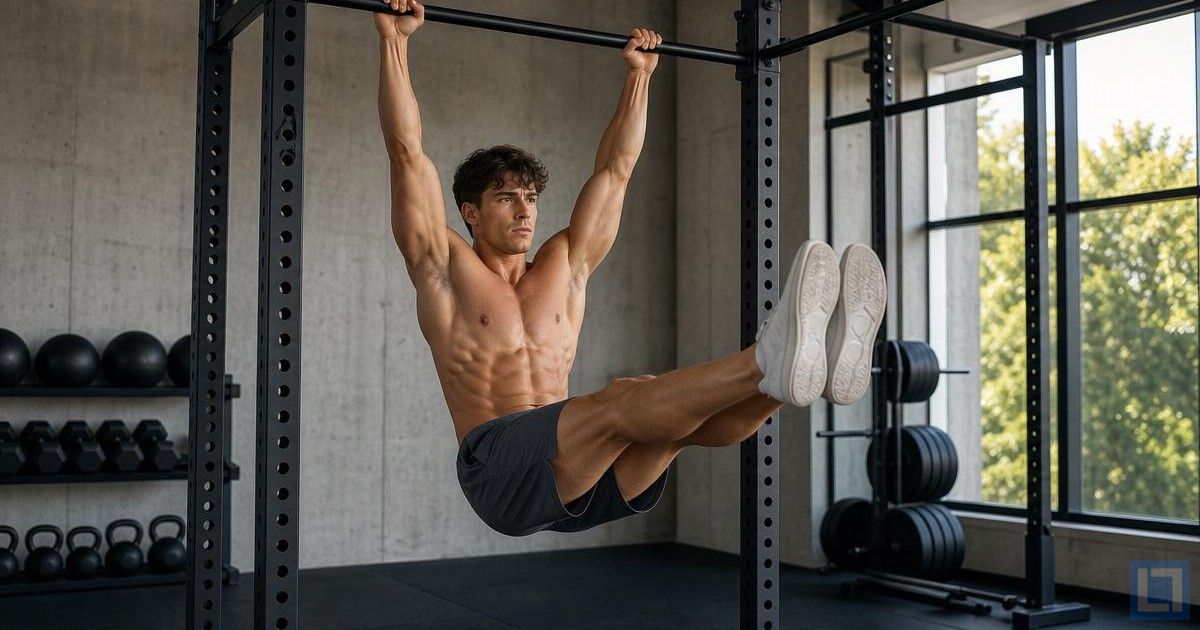
The Pull Up is the king of vertical pulling. Hanging from a bar with an overhand grip, you pull the body up until the chin clears the bar, then lower under control. It builds the lats, biceps, mid-back, and core in a way no other single movement can match.
Every pull day starts with a vertical pull, and the standard pull-up is the most effective vertical pull there is. Bodyweight loading scales naturally with the lifter, and progressing to weighted pull-ups gives years of additional progression once bodyweight reps get comfortable.
Hang fully at the bottom with the arms straight. Drive the elbows down and back to pull the chest toward the bar. Lower under control to a full hang and reset. For a more detailed walkthrough, see our complete pull-up guide.
Barbell Bent Over Row

The Barbell Bent Over Row hinges at the hips with a barbell in the hands and rows the bar to the lower chest or upper abdomen. It is the most effective horizontal pull for total back development, hitting the lats, mid-back, and rear delts together.
After the vertical pull, every pull day needs a horizontal pull. Barbell rows hit the muscles a pull-up does not target as effectively: the rhomboids, mid-traps, and rear delts. Combined with pull-ups, they build a complete back in a way either lift would miss alone.
Hinge at the hips with a flat back and a slight bend in the knees. Pull the bar to the lower chest or upper abdomen, squeezing the shoulder blades together at the top. Lower under control. Avoid using momentum or jerking the bar upward.
Cable Pulldown

The Cable Pulldown is the most popular cable back exercise. Sitting at a pulldown station, you pull a wide bar down to the upper chest, working the lats, biceps, and upper back. It is essentially a seated pull-up that allows precise load adjustment for any strength level.
For lifters who cannot yet do bodyweight pull-ups for high reps, the cable pulldown fills the same role with adjustable load. It also serves as a higher-rep volume exercise after a working set of pull-ups, letting you accumulate more pulling volume in a session than weighted bodyweight work alone.
Pull the bar down to the upper chest, not behind the neck. Lean back slightly to engage the lats fully. Squeeze the back hard at the bottom of each rep before letting the weight stretch the lats at the top.
Barbell Curl

The Barbell Curl is the single most effective bicep mass-builder. Standing with a barbell in both hands at the thighs, you curl the bar up toward the shoulders. The barbell allows heavier loading than dumbbells and produces a strong contraction at the top.
After heavy pulling has handled the back and biceps together, direct bicep work finishes the day. The barbell curl is the most efficient choice because it loads the biceps directly with the heaviest weight you can curl strictly.
Keep the elbows pinned to the sides through the entire rep. Avoid swinging the bar up using body momentum. Lower under control to full extension between reps for a complete range of motion.
Legs Day
Legs day covers the entire lower body: quads, hamstrings, glutes, and calves. The four exercises below cover the squat pattern, the hinge pattern, accessory leg pressing, and direct hamstring isolation.
Barbell Squat

The Barbell Squat is the foundation of every serious leg routine. With a barbell across the upper back, you squat to roughly parallel depth or below, then drive back to standing. It is the single best lift for total lower-body strength and mass.
No legs day is complete without squatting. Every other leg exercise on this list should be considered an accessory or specialization to the back squat. The bilateral compound load builds the quads, glutes, hamstrings, and lower back as a coordinated unit.
Set the bar across the upper back, brace the core, and break at the hips and knees together. Squat to whatever depth your mobility allows cleanly (parallel or below). Drive up by pushing through the whole foot, not just the heels.
Barbell Romanian Deadlift

The Barbell Romanian Deadlift is a hip-hinge variation of the deadlift performed by lowering the bar from the standing position rather than pulling from the floor. It targets the hamstrings, glutes, and lower back through a deeper stretch than conventional deadlifts.
The Romanian deadlift is the best hamstring builder in any program. After squatting has taken care of the quads, the RDL handles the posterior chain. The combination of the two within a leg day covers everything from quads to calves.
Hinge at the hips while keeping a slight knee bend. Lower the bar in a path close to the legs until the hamstrings stretch. Drive the hips forward to stand back up. Keep the back flat throughout. The bar should not bounce off the floor.
Sled 45 Leg Press
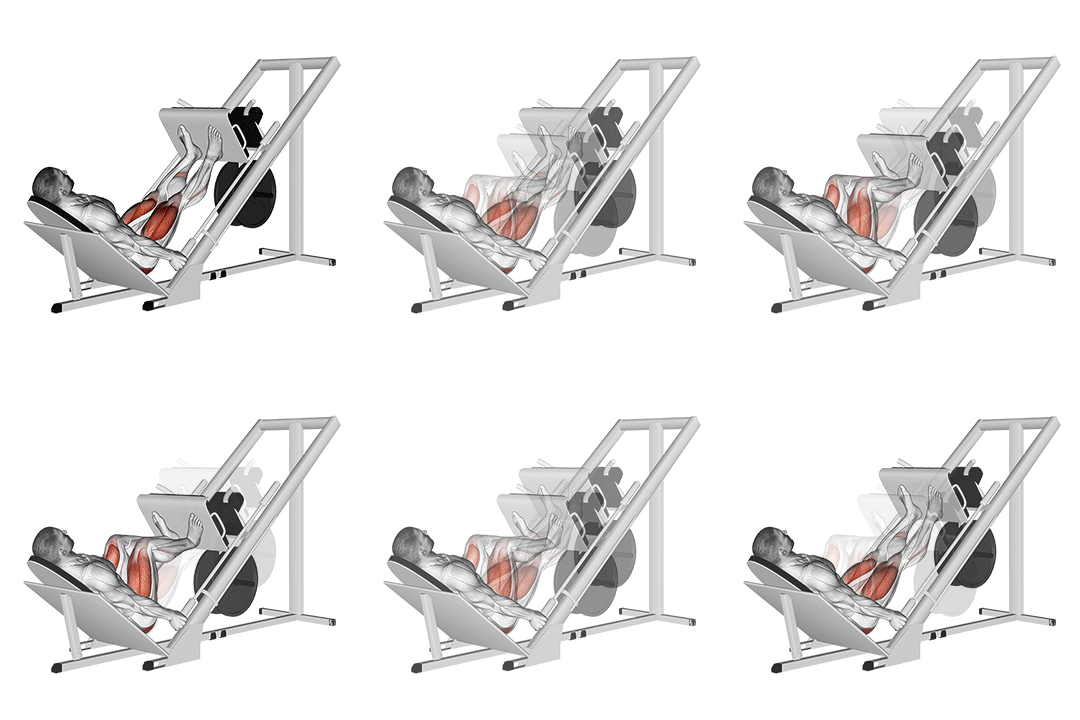
The Sled 45 Leg Press, often just called the leg press, sits at a 45-degree angle and presses a weighted sled away with both feet. The angled position takes the lower back out of the equation, allowing pure leg loading without the spinal compression of squatting.
After heavy squatting has fatigued the entire body, the leg press lets you continue training the legs at high volume without further loading the spine. It is a strong second compound on legs day, especially for hypertrophy-focused training.
Place the feet shoulder-width on the platform. Lower the sled until the knees come close to the chest, then drive back to lockout without snapping the knees fully straight. Foot position changes the emphasis: higher targets glutes and hamstrings, lower targets quads.
Lying Leg Curl

The Lying Leg Curl is performed face-down on a leg curl machine, curling the heels toward the glutes against the machine’s resistance. It is a dedicated hamstring isolation exercise that hits the muscle through pure knee flexion, the function the RDL doesn’t cover.
Romanian deadlifts train the hamstrings through hip extension. Leg curls train them through knee flexion. Both functions need direct work for complete hamstring development, which is why the leg curl earns its spot at the end of legs day.
Lie face-down with the ankles under the pads. Curl the heels toward the glutes by squeezing the hamstrings. Lower under control rather than letting the weight crash down. Avoid arching the lower back as the heels approach the glutes.
How To Schedule Push Pull Legs
PPL works in two main schedules: a 3-day version where you hit each day once per week, and a 6-day version where you run the full cycle twice. The 3-day version suits beginners and busy lifters who want to maintain progress with less time. The 6-day version is for advanced lifters chasing hypertrophy who can recover from high volume.
Most lifters do best on a 4-to-5-day version that splits the difference: Push, Pull, Legs, rest, Push, Pull, Legs, rest, repeat. That gives each movement pattern roughly 1.5 sessions per week of recovery, which beats the 3-day frequency without the volume of a true 6-day setup.
For more split options, see our best 5 day split workout and best bro split workout guides. To browse the equipment library, explore our barbell exercises collection.
Final Thoughts
The best push pull legs routine works because it respects how the body actually recovers. Chest, shoulders, and triceps all share workload during pressing, so training them together (and resting them together) produces better recovery than scattering them across the week. The same logic applies to back and biceps on pull days and to the entire lower body on leg days.
Stick with this 12-exercise framework for at least 8 to 12 weeks before changing it. Progress on PPL comes from incremental load and rep increases on the same lifts session after session, not from constantly rotating exercises. Pick a starting weight you can do for clean reps, add load every week or two, and let the system work.
Frequently Asked Questions
How many days per week should I run PPL?
Three to six days per week works depending on experience and recovery capacity. Beginners do well on three days (Push, Pull, Legs once per week with two days rest between cycles). Intermediates often benefit from four to five days. Advanced lifters can handle six days with each day hit twice per week.
How long should each PPL session last?
Sixty to ninety minutes is the typical range. That includes warm-up, the working sets across four exercises, and rest periods between sets (which are often three to five minutes for heavy compound lifts). Going significantly longer than 90 minutes usually means quality has dropped off.
What rep ranges should I use?
A balanced approach uses lower reps (4 to 6) on the heavy compounds at the start of each session, moderate reps (8 to 12) on the second compound, and higher reps (12 to 20) on accessories. That structure builds both strength and muscle simultaneously rather than choosing one or the other.
Can I add more exercises per day?
Yes, especially on the 3-day version where each day only runs once per week. Adding a fifth or sixth exercise on each day works fine for intermediate-to-advanced lifters with good recovery. On a 6-day version, four exercises per day is usually enough since you are training each pattern twice per week.
Is PPL good for fat loss?
PPL is primarily a muscle-building structure, but it works for fat loss when combined with appropriate nutrition. Heavy compound lifting preserves muscle mass during a calorie deficit, which is the most important goal during fat loss. The fat loss itself comes from diet, not from the training split.