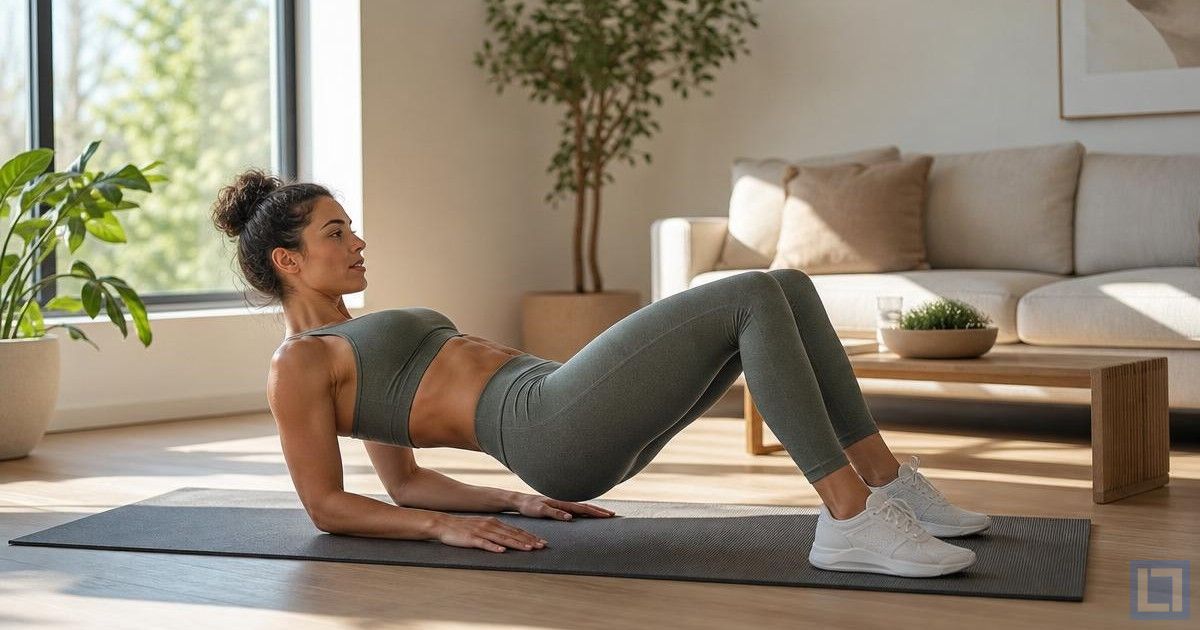
Building bigger glutes at home is more achievable than most lifters assume. The glutes respond well to bodyweight loading, and a few targeted exercises with minimal equipment (bands, light dumbbells, a sturdy bench) cover all the patterns the muscle needs to grow. The best at home glute workouts focus on the foundational movements that drive most of the development: glute bridges, step-ups, single-leg work, and direct activation drills.
Below are ten effective at-home glute exercises that cover hip extension, abduction, mobility, and direct activation. Together they form a complete glute training program that requires nothing more than bodyweight, optionally a pair of light dumbbells, and a sturdy bench.
Kneeling Glute Press

The Kneeling Glute Press positions the body on hands and knees and presses one leg upward toward the ceiling, squeezing the glute hard at the top. The unilateral motion isolates each glute directly with no equipment required.
For at-home glute training without weights, the kneeling glute press is one of the most direct exercises that exists. The position eliminates other muscle groups from contributing significantly, which forces the glute to do the work. Most lifters feel the glute working immediately even at low rep counts.
Set up on hands and knees with the back flat. Lift one leg up and press it toward the ceiling by squeezing the glute, keeping the knee bent at 90 degrees. Lower under control. Switch sides on the next set, or alternate as preferred.
Dumbbells Glute Bridge

The Dumbbells Glute Bridge lies on the back with knees bent and feet flat, then bridges the hips up while holding a dumbbell across the hips for added load. The hip-thrust mechanics are nearly identical to the standard barbell hip thrust, just at a slightly reduced range of motion.
For lifters with one or two dumbbells at home, the loaded glute bridge is the most direct glute-loading exercise available. The hip-thrust pattern targets the glutes specifically (not the quads or hamstrings) at peak contraction, which makes it the single most efficient glute-builder for at-home training.
Lie flat with knees bent and feet planted. Place a dumbbell across the hips. Bridge the hips up by squeezing the glutes hard at the top. Lower under control without letting the dumbbell crash. Use a moderate weight that allows clean reps in the 10 to 15 range.
Lying Glute Stretch
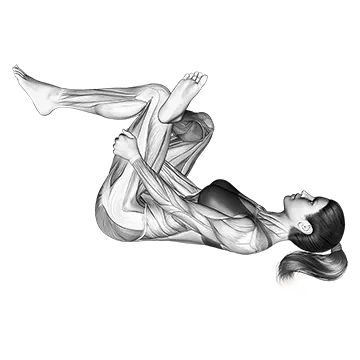
The Lying Glute Stretch lies on the back, crosses one ankle over the opposite thigh, and pulls the bottom leg toward the chest to stretch the glute and hip rotators. It is one of the most effective passive stretches for the glute muscles.
Glute stretching is often skipped despite being one of the simplest interventions for hip mobility and lower-back relief. Tight glutes pull on the hips and put unnecessary load on the lower back during squatting, hinging, and walking. Two minutes per side a few times per week makes a measurable difference.
Lie flat on the back. Bend the knees with feet on the floor. Cross one ankle over the opposite knee. Reach through and grab the back of the supporting thigh, pulling it gently toward the chest. Hold for 60 to 90 seconds per side, breathing slowly throughout.
Lying Glute Squeeze

The Lying Glute Squeeze lies on the back with knees bent and squeezes the glutes hard for sustained contractions. There is no movement involved; the entire exercise consists of maximal voluntary contraction of the glutes.
Mind-muscle connection matters in glute training. Many lifters who squat heavy never actually feel their glutes work because the firing pattern stays dormant. Pure isometric glute squeezes train the brain-to-muscle connection, which transfers to better activation during compound exercises and produces faster glute growth over time.
Lie flat with knees bent and feet planted. Squeeze the glutes as hard as possible without lifting the hips. Hold each squeeze for 5 to 10 seconds, then relax briefly before the next rep. Three sets of 10 to 15 squeezes per session is plenty.
Glute Ham Raise

The Glute Ham Raise (bodyweight version) kneels with the upper legs vertical and the feet anchored, then lowers the torso forward by extending at the knees, returning to start by contracting the hamstrings and glutes. It is one of the most demanding bodyweight posterior chain exercises that exists.
For lifters who can do the bodyweight version, the glute ham raise produces hamstring and glute development that few other bodyweight exercises match. Most beginners cannot do the full range yet; partial-range work and assistance from the hands on the floor builds the strength to progress over months.
Kneel on a soft surface with the feet anchored under a couch or held by a partner. Keep the torso, hips, and thighs in one line. Lower the torso forward by extending the knees, keeping the body straight. Contract the hamstrings and glutes hard to return to start. Use hand assistance on the floor to make the exercise easier as needed.
Seated Glute Stretch
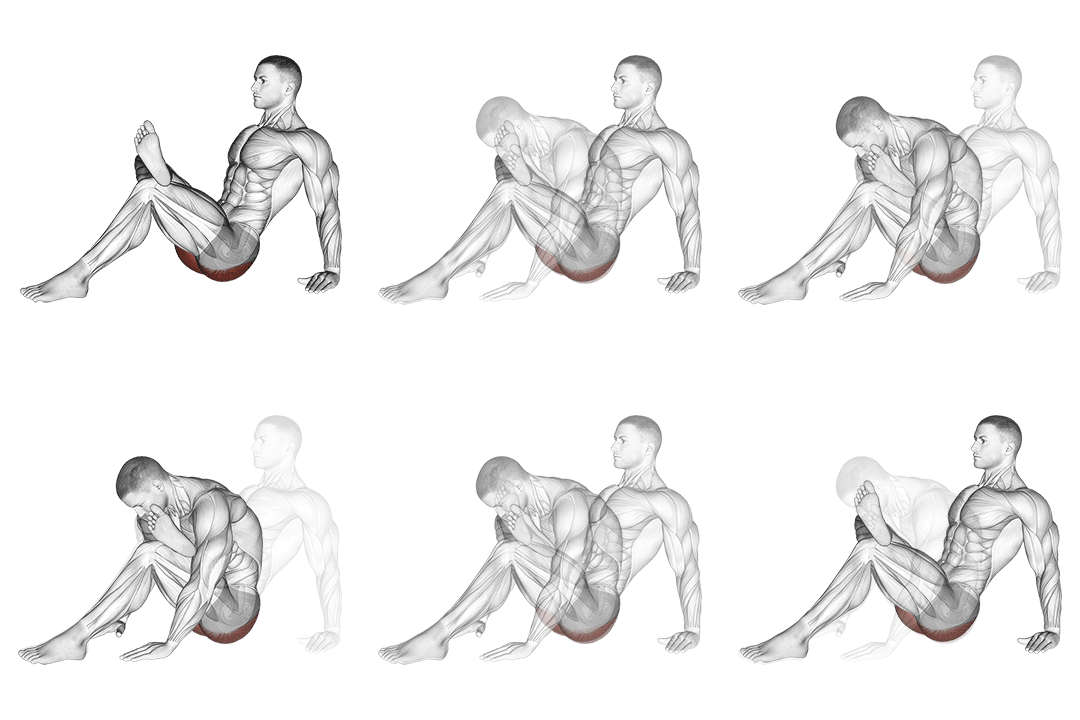
The Seated Glute Stretch sits on the floor with one leg extended and the other crossed over, then twists toward the bent leg side to deepen the glute stretch. The seated position allows deeper rotation and stretch than the lying variation.
Where the lying glute stretch hits the upper glute, the seated variation reaches deeper into the hip rotators (piriformis, gemelli) that contribute most to chronic hip and lower-back tightness. Including both stretches in any mobility routine produces more complete hip flexibility than either alone.
Sit on the floor with one leg extended forward. Cross the other leg over with the foot planted next to the opposite knee. Twist the trunk toward the bent-leg side, using the elbow against the knee for leverage. Hold for 60 to 90 seconds per side.
Heel Glute Bridge

The Heel Glute Bridge performs a glute bridge with the feet positioned slightly farther from the body than a standard bridge, with the heels driving up. The heel-elevated position shifts more emphasis to the glutes and away from the quads compared to the flat-foot version.
Foot position matters significantly in glute bridge variations. Setting the heels farther from the body forces the glutes to do more of the work; setting them closer brings the quads in. The heel glute bridge is the cleanest at-home variation for direct glute loading without equipment.
Lie flat with knees bent and feet positioned roughly 12 to 18 inches from the glutes (slightly farther than a standard bridge setup). Bridge the hips up by driving through the heels and squeezing the glutes hard. Lower under control. Hold the top position briefly on each rep.
Low Glute Bridge on Floor

The Low Glute Bridge on Floor performs a partial-range glute bridge that hovers the hips just above the floor without fully bridging up. The shorter range produces continuous tension on the glutes for the entire set.
Continuous-tension exercises produce a different muscle response than full-range work because the glutes never fully relax between reps. The low glute bridge serves as both a strong activation drill before heavier glute work and a finisher after heavier work to fatigue the glutes maximally.
Lie flat with knees bent and feet planted. Lift the hips slightly off the floor, then perform small pulses upward without letting the hips touch the floor between reps. Move at a steady tempo. Sets of 25 to 50 reps work well for this variation.
Dumbbell Glute Dominant Step Up

The Dumbbell Glute Dominant Step Up holds dumbbells at the sides and steps up onto a bench using a slow, glute-focused tempo. The slower tempo and intentional glute focus shifts more emphasis to the glutes compared to standard step-ups, which often become quad-dominant.
Step-ups are typically driven by the quads at faster tempos. The glute-dominant version slows the movement deliberately and emphasizes pushing through the heel of the elevated foot, which forces the glute to do most of the work. The change in emphasis produces meaningfully different glute development than standard step-ups.
Step up onto a sturdy bench with one foot, focusing on driving through the heel of the elevated foot rather than pushing off the floor with the back leg. Move at a slow, deliberate tempo (3 seconds up, 3 seconds down). Lower under control by reversing the motion.
Bodyweight Glute Dominant Step Up

The Bodyweight Glute Dominant Step Up performs a slow, glute-focused step-up with no added weight. The bodyweight version produces real glute loading for most lifters because the unilateral weight on each step is significant relative to total bodyweight.
For at-home glute training without dumbbells or kettlebells, bodyweight step-ups are the most direct glute exercise available. Combined with slow tempo and a focus on pushing through the elevated heel, they produce consistent glute growth even with no added load. Most beginners progress on bodyweight step-ups for several months before needing external load.
Step up onto a sturdy bench with one foot, focusing on driving through the heel of the elevated foot. Move at a slow tempo (3 seconds up, 3 seconds down). Lower under control. Complete all reps on one leg before switching.
How To Program These Workouts
A productive at-home glute session pulls six to eight exercises from the list above. A balanced session includes one direct hip-thrust pattern (loaded glute bridge or heel bridge), one unilateral pattern (kneeling glute press or step-up), one mobility piece (lying or seated glute stretch), and a finisher (low glute bridge for continuous tension or bodyweight glute squeezes for activation).
Train glutes two to four times per week. The glutes recover within 24 to 48 hours of moderate training because they are large muscles with high blood flow, so frequent training drives faster growth than infrequent high-volume sessions. The 30-minute home format makes high frequency realistic.
For more glute programming, see our how to grow your glutes guide and best resistance band glute workouts. To browse the muscle archive, explore our glutes exercise collection.
Final Thoughts
The best at home glute workouts deliver real glute growth without barbells, racks, or specialized gym equipment. The combination of bodyweight loading, focused activation, and unilateral work covers every major glute function. For lifters working from home or in limited space, these exercises produce measurable results when programmed consistently with progressive overload.
Track progress by either reps or load. Without weights to add, progressive overload comes from rep counts, set counts, time-under-tension, or single-leg variations of bilateral exercises. The glutes respond to consistent challenge over time; the lifters who progress the fastest are the ones who deliberately push for more reps, more sets, or harder variations week after week.
Frequently Asked Questions
Can I really grow my glutes at home without weights?
Yes, especially for beginners and intermediates. Bodyweight loading is more than enough to drive significant glute growth for the first 6 to 12 months of training. Adding light dumbbells or resistance bands extends the runway by another 12 to 24 months. Advanced lifters chasing maximum size eventually benefit from heavy barbell loading, but real growth happens long before that ceiling is reached.
How often should I do at home glute workouts?
Two to four times per week works for most lifters. The glutes recover quickly because they are large muscles with high blood flow, so frequent training drives faster growth than infrequent high-volume sessions. Daily glute training is fine if total volume per session stays moderate; daily maximum-effort sessions burn out the muscle within a few weeks.
How long should an at home glute session be?
Twenty to forty minutes is the standard range. Shorter sessions (15 minutes) work for daily practice; longer sessions (45+ minutes) usually mean either too much volume or insufficient rest between sets. Twenty-five focused minutes with proper effort on each set produces real results when run consistently.
How long until I see results from at home glute workouts?
Most lifters see meaningful glute development within 12 to 16 weeks of consistent training combined with adequate calories and protein. Visible changes appear earlier (6 to 8 weeks) for beginners. Major shape changes typically take 6 to 12 months of dedicated training.
What’s the best at home glute exercise?
The dumbbell glute bridge is the most efficient single exercise for at-home glute development. The hip-thrust pattern loads the glutes specifically at peak contraction, and adding any moderate dumbbell weight produces real progressive overload. If only one exercise had to fit into a daily routine, this would be it.