At-home core training requires no equipment and produces real strength gains for years of consistent practice. The body’s core muscles (abs, obliques, transverse abdominis, erector spinae, glutes) all respond well to bodyweight loading because the muscles function primarily as stabilizers rather than prime movers, which means the resistance from controlling the body’s own weight is often sufficient stimulus for ongoing development. The best at home core workouts use foundational bodyweight exercises that build the kind of core strength that transfers to every other lift and athletic activity.
Below are ten effective at-home core exercises that cover anti-extension stability (planks, dead bug, bird dog, hollow hold), trunk flexion (bicycle crunch, reverse crunch), lower-ab endurance (flutter kicks), lateral core work (side plank), glute-core integration (glute bridge march), and dynamic core work (mountain climber). Together they form a complete core training program that fits in any home with a few square feet of floor space.
Front Plank
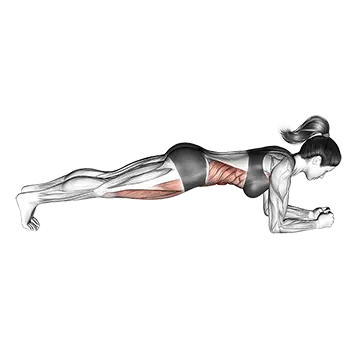
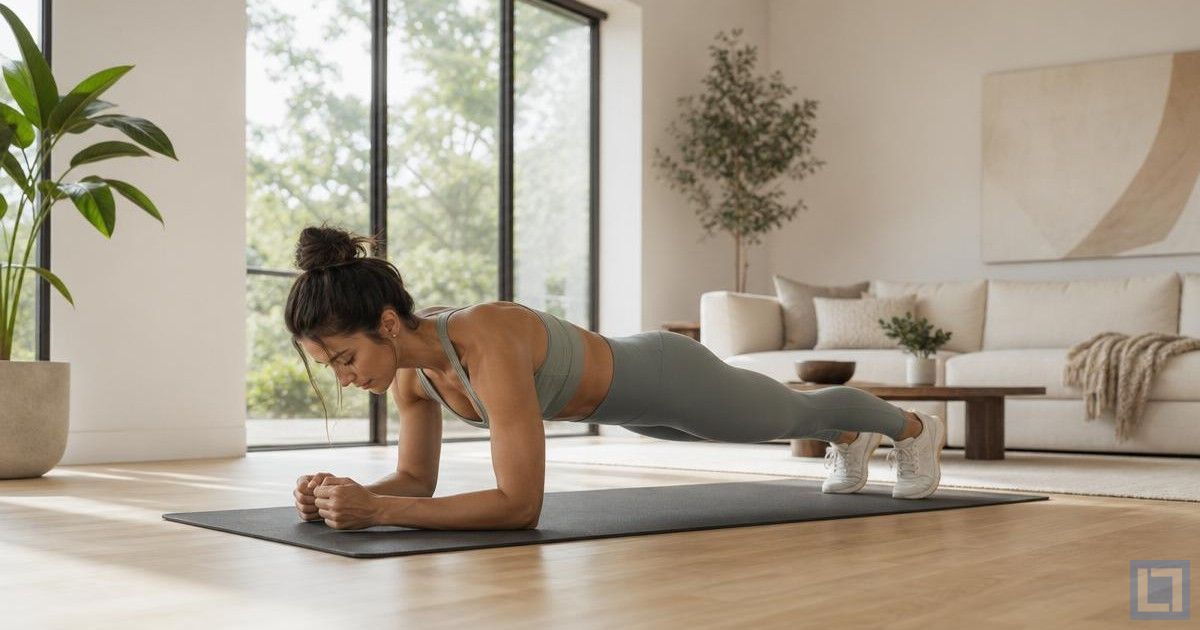
The Front Plank holds a forearm plank position with the body in a straight line from head to heels. The isometric hold builds core strength and teaches the trunk to brace under static load.
For at-home core training, the front plank is the foundational anti-extension exercise. The bracing pattern transfers directly to harder skills and to every compound lift. Build to 60 to 90-second clean holds before progressing to harder variations like long lever planks or weighted planks.
Set up on the forearms with elbows directly under the shoulders. Body straight from head to heels, hips not sagging or piking up. Hold the position while breathing normally. End the set when form breaks down, not when an arbitrary clock runs out.
Side Plank
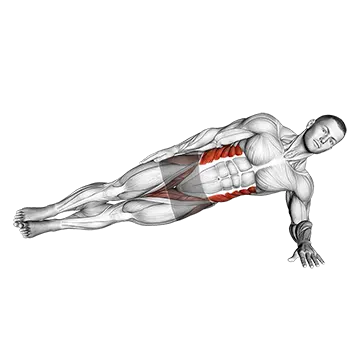
The Side Plank holds a side-supported plank position with the body in a straight line from head to feet, supporting on one forearm and the side of one foot. The exercise targets the obliques and lateral core stabilizers through isometric loading.
For at-home core training, the side plank fills the lateral plane that front planks miss. Most core programs underdevelop the obliques relative to the abs, which produces core imbalances and limits rotational athletic performance. Build to 45 to 60-second clean holds per side before progressing to harder side plank variations.
Lie on one side with the elbow directly under the shoulder, body in a straight line from head to feet. Lift the hips off the floor to form a straight line. Hold the position while breathing normally. End the set when form breaks down. Switch sides on the next set.
Dead Bug

The Dead Bug lies on the back with arms extended toward the ceiling and knees bent at 90 degrees, then lowers opposite arm and leg toward the floor while maintaining a flat lower back. The exercise builds anti-extension trunk stability through controlled motion.
In core programs, the dead bug complements planks by adding dynamic anti-extension work that static planks cannot match. The supine position protects the spine while the controlled limb motion teaches the abs to brace against opposing limb loading. Run it for 3 sets of 8 to 10 reps per side.
Lie flat on the back with arms extended toward the ceiling and knees bent at 90 degrees over the hips. Slowly lower the opposite arm and leg toward the floor while keeping the lower back flat. Return to the starting position and switch sides. Breathe normally throughout.
Bird Dog
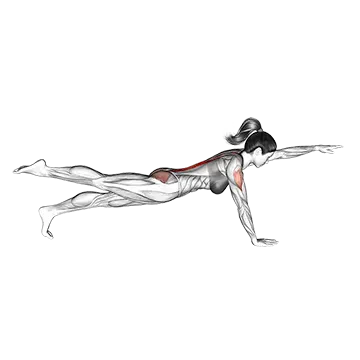
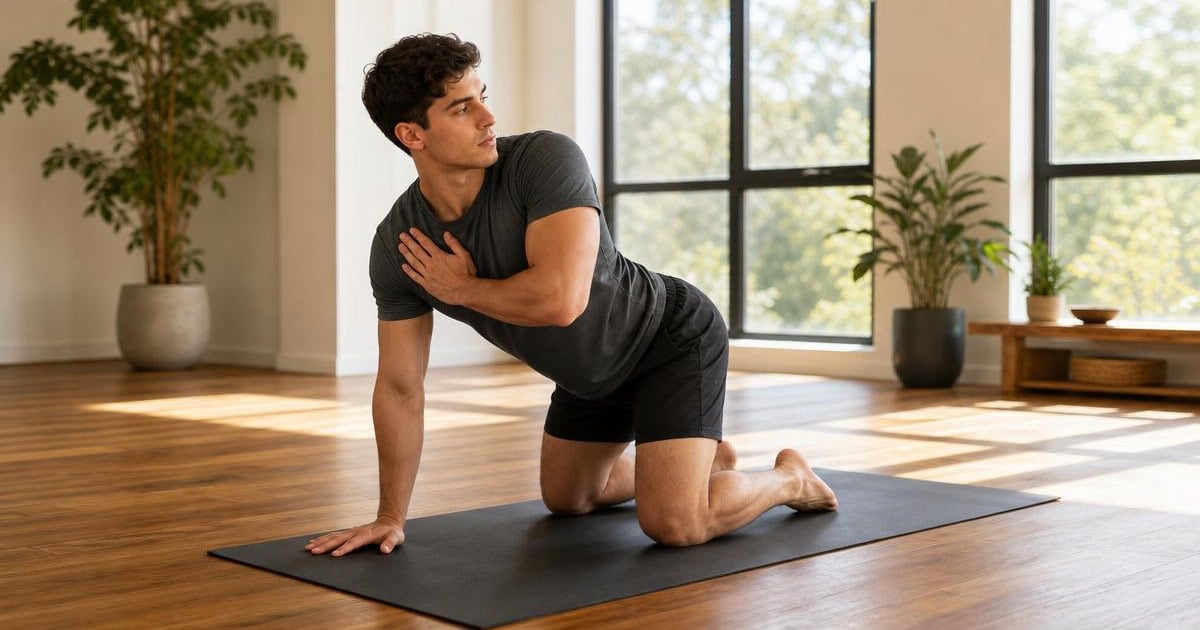
The Bird Dog starts on hands and knees and extends the opposite arm and leg simultaneously while maintaining a stable trunk. The cross-body extension trains anti-rotation core stability along with shoulder and hip control.
For at-home core training, the bird dog complements the dead bug by training the same anti-rotation function from a prone position. Both exercises avoid the spinal flexion that crunches produce, which makes them useful for lifters with lower back sensitivity. Run it for 3 sets of 8 to 10 reps per side.
Start on hands and knees with hands directly under shoulders and knees under hips. Extend one arm forward while extending the opposite leg back, ending with both fully extended in a straight line with the trunk. Hold briefly. Return to the start and switch sides.
Bicycle Twisting Crunch

The Bicycle Twisting Crunch lies on the back and alternates bringing one knee toward the chest while rotating the trunk to bring the opposite elbow toward the knee. The combined flexion and rotation hits the abs and obliques simultaneously.
For dynamic ab work that hits both flexion and rotation, the bicycle crunch is one of the most efficient exercises that exists. The alternating pattern allows continuous rep counts that produce strong metabolic stress on the entire core. Run it for 3 sets of 16 to 20 total reps (8 to 10 per side) with controlled tempo.
Lie flat on the back with hands behind the head and knees bent. Lift the shoulder blades off the floor. Bring one knee toward the chest while rotating the trunk to bring the opposite elbow toward the knee. Switch sides in a continuous bicycle motion. Move under control rather than rushing.
Flutter Kicks

The Flutter Kicks lie on the back with legs extended and alternately raise and lower the legs in a flutter motion. The continuous lower-ab loading produces strong endurance demand on the lower abdominal region.
For lower-ab development, flutter kicks are one of the most direct bodyweight exercises that exists. The continuous motion produces strong metabolic stress, and the sustained position trains lower-ab endurance that few other exercises match. Run it for 3 sets of 30 to 45-second intervals at controlled tempo.
Lie flat on the back with hands at the sides for support, legs extended and slightly raised off the floor. Alternately raise and lower the legs in a flutter motion, keeping them straight. Maintain the lifted position throughout the entire set; do not let the heels touch the floor between reps.
Hollow Hold
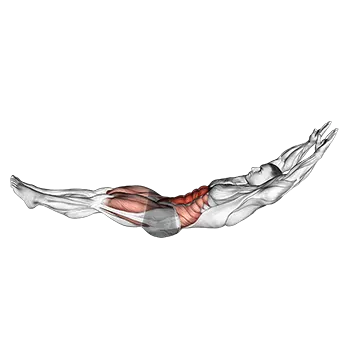
The Hollow Hold lies on the back with arms extended overhead and legs extended, then lifts both arms and legs slightly off the floor while pressing the lower back into the floor. The exercise builds the foundational position used throughout gymnastics and advanced calisthenics.
For advanced core training, the hollow hold is one of the most demanding exercises that exists for the demand it places on relatively few muscles. The position requires maximum continuous abdominal contraction to maintain, which produces strong core development per second of work. Build to 30 to 45-second clean holds before progressing to hollow rocks or hollow body holds with movement.
Lie flat on the back with arms extended overhead and legs straight. Press the lower back firmly into the floor by contracting the abs hard. Lift both the arms and legs slightly off the floor (a few inches) while maintaining the lower-back contact. Hold while breathing shallow but consistent breaths.
Reverse Crunch

The Reverse Crunch lies on the back with knees bent and lifts the hips and lower back off the floor by pulling the knees toward the chest. The motion targets the lower abs through hip flexion against the abdominal contraction.
For lower-ab work, the reverse crunch is one of the most effective bodyweight exercises that exists. The pattern is the inverse of standard crunches (the legs move toward the trunk rather than the trunk moving toward the legs), which loads the lower abs more directly than standard ab exercises. Run it for 3 sets of 12 to 15 reps as primary lower-ab work.
Lie flat on the back with hands at the sides. Bend the knees at 90 degrees with feet slightly off the floor. Pull the knees toward the chest while lifting the hips off the floor. Lower under control to the start. The lower-ab muscles do the work; do not use momentum.
Glute Bridge March

The Glute Bridge March lies on the back in a glute bridge position and alternates lifting one knee toward the chest while maintaining the bridge. The combined hip extension and unilateral leg lift produces strong glute and core demand.
For at-home core training that addresses the glute-core connection, the glute bridge march is one of the most effective exercises that exists. The pattern strengthens the glutes (often weak in lifters who sit a lot) while engaging the deep core stabilizers. Run it for 3 sets of 8 to 10 reps per side.
Lie flat on the back with knees bent and feet planted shoulder-width apart. Lift the hips up into a glute bridge. Maintaining the bridge, lift one knee toward the chest, then lower back to the start. Lift the opposite knee. Continue alternating without dropping the hips.
Mountain Climber

The Mountain Climber starts in a push-up position and rapidly drives the knees toward the chest in alternating fashion. The continuous movement combines core engagement with cardiovascular demand in one efficient exercise.
For at-home core training that adds cardiovascular work, mountain climbers earn their place by producing strong heart rate response while loading the abs and shoulders. The combination produces broader fitness adaptations than pure ab exercises. Run them for 30 to 45-second intervals as a finisher.
Set up in a push-up position with arms straight and body in a straight line. Drive one knee toward the chest, then quickly switch and drive the other knee forward. Maintain a strong core position throughout. Continue for 30 to 60 seconds at a fast tempo.
How To Program These Workouts
A productive at-home core session pulls six to eight exercises from the list above. A balanced session includes one anti-extension exercise (plank or hollow hold), one anti-rotation exercise (dead bug or bird dog), one lower-ab exercise (reverse crunch or flutter kicks), one rotational exercise (bicycle crunch), one lateral exercise (side plank), and one dynamic exercise (mountain climbers). Run isometric holds for 30 to 60 seconds; dynamic exercises for 12 to 20 reps; cardio intervals for 30 to 45 seconds.
Train at-home core 3 to 4 times per week. The core muscles recover within 24 to 48 hours of moderate bodyweight training, which allows higher frequency than heavily-loaded ab work. Most lifters do well with three to four dedicated at-home core sessions per week, or with shorter core finishers (5 to 10 minutes) attached to the end of every other workout.
For more core programming, see our best dead bug ab workouts and best standing ab workouts. For different core training approaches, see our best ab workouts for women.
Final Thoughts
The best at home core workouts deliver complete core development through bodyweight exercises that require no equipment beyond floor space. The combination of anti-extension stability work, trunk flexion exercises, lower-ab loading, lateral core work, and dynamic conditioning covers every major core function the body uses, and the at-home format makes daily training realistic in a way that gym-dependent core programs cannot match.
Stay focused on form quality over rep count. The most common at-home core training mistake is rushing through reps to hit higher numbers rather than holding strict positions through full ranges of motion. The fix: prioritize strict form over speed. A 30-second strict plank produces stronger core stimulus than a 60-second sloppy plank, and 12 strict reverse crunches produce stronger lower-ab development than 25 sloppy ones. Quality first, quantity follows.
Frequently Asked Questions
Are at home core workouts effective?
Yes, very effectively. The core muscles respond well to bodyweight loading because they function primarily as stabilizers, which means body weight produces sufficient resistance for ongoing development. Most lifters build strong, defined core muscles with at-home core training alone for years of consistent practice. The training translates directly to better performance on every other lift and athletic activity.
How often should I do at home core workouts?
Three to four times per week works for most lifters. The core muscles recover within 24 to 48 hours of moderate training, which allows higher frequency than heavily-loaded ab work. Daily core training is feasible with moderate volume but often produces lower-back fatigue that limits other training. Spacing sessions every 24 to 48 hours produces strong results.
Will at home core workouts give me a six-pack?
Core training builds the muscle that gives the stomach its shape; reducing body fat through nutrition reveals that shape. Both are required for visible abs. Most lifters need to be at 12 to 18 percent body fat for abs to show clearly. At-home core workouts handle the muscle-building side; sustainable nutrition handles the body fat side. Consistent training plus appropriate calorie management produces visible results over 12 to 16 weeks.
Do I need any equipment for at home core workouts?
Most exercises in this list require nothing more than a clear floor space. A yoga mat adds comfort but is not strictly necessary; a few square feet of floor and 15 to 20 minutes of focused work is plenty. Optional additions like a stability ball or ab wheel add variety but are not required for effective core training.
How long until I see core development?
Most lifters feel meaningful core strength improvements within 2 to 3 weeks of consistent at-home core training. Visible core definition typically appears after 8 to 12 weeks combined with appropriate nutrition. Major changes (significantly improved core appearance) take 12 to 16 weeks of dedicated practice. Patience and consistency matter more than session intensity in the early stages.