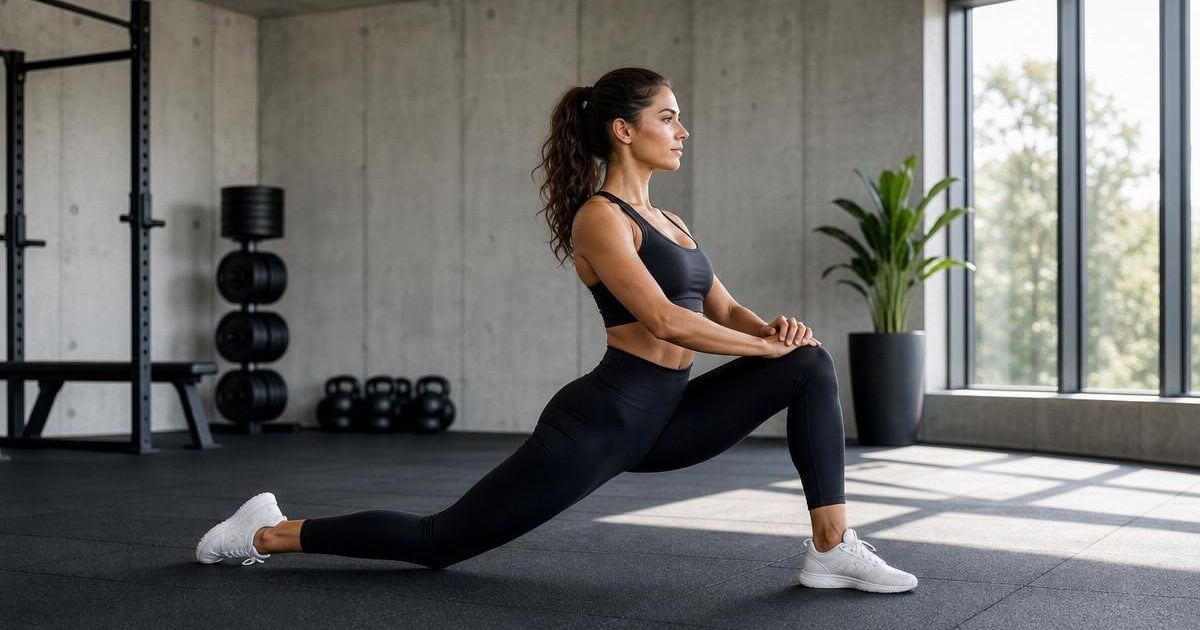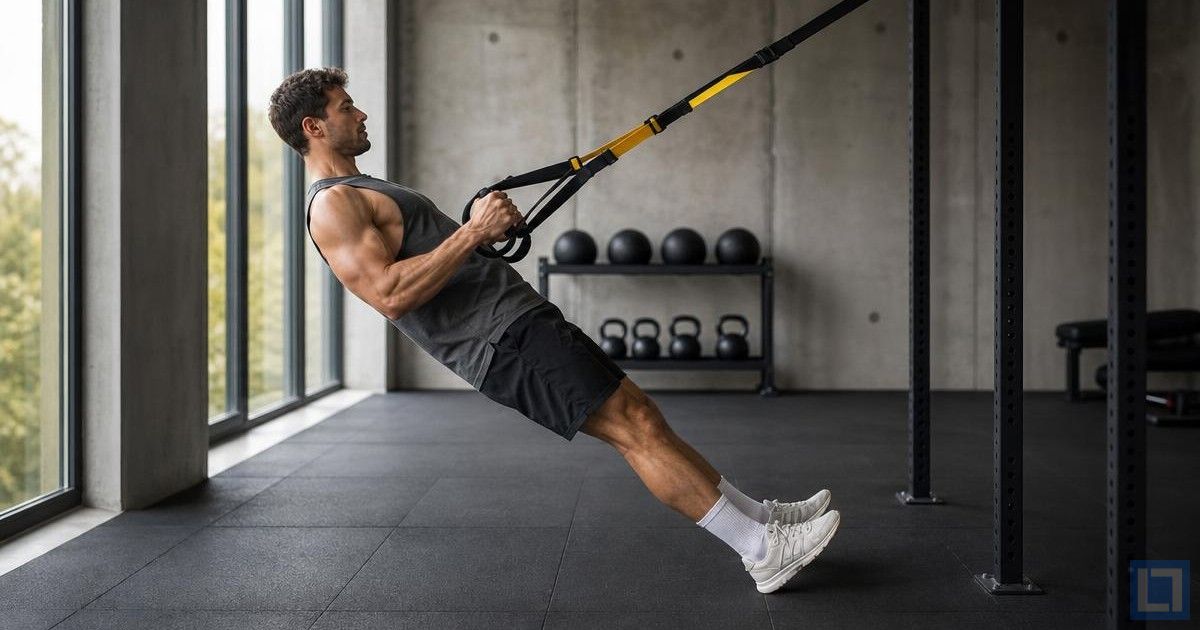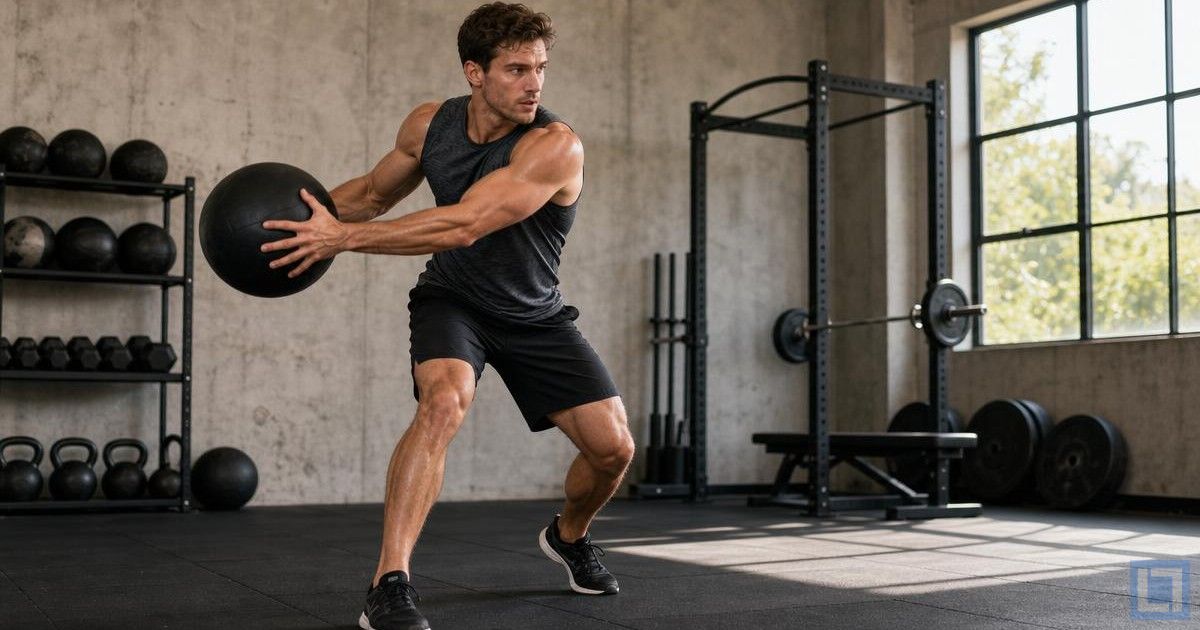
Medicine ball training combines strength training, core work, and explosive power development into a unique training format. The format works particularly well because medicine balls allow exercises that fixed equipment cannot match: rotational throws (training trunk rotation power), explosive throws (training full-body extension power), and loaded core work (adding weight to bodyweight ab exercises). The combination produces broader athletic development than pure strength training alone, which makes medicine ball training particularly valuable for athletes, fighters, and anyone wanting to develop explosive power alongside foundational strength.
Below are ten effective medicine ball exercises that cover loaded core work (medicine ball crunch, lying leg raise, dead bug, crunch with medicine ball), rotational power (around-head rotation, rotational throw), explosive jumping power (squat jump), upper-body explosive power (supine chest throw, standing overhead throw, overhead throw). Together they form a complete medicine ball training program that fits in any setting from home to gym to outdoor space. A 30 to 45-minute session pulled from this list produces strong core, power, and conditioning stimulus.
Medicine Ball Crunch

The Medicine Ball Crunch performs standard crunches while holding a medicine ball at the chest or extended overhead. The added load increases the demand on the abs throughout the entire range of motion.
For medicine ball ab training, the loaded crunch is the foundational exercise. The added medicine ball weight scales the difficulty of standard crunches significantly. Run it for 3 to 4 sets of 12 to 15 reps as primary loaded ab work in any medicine ball session.
Lie flat on the back with knees bent and feet planted. Hold a medicine ball at the chest or extended overhead. Crunch the upper body up by contracting the abs while keeping the medicine ball in position. Lower under control to the start.
Medicine Ball Around Head Rotation

The Medicine Ball Around Head Rotation stands tall holding a medicine ball and rotates it in a circle around the head, switching directions on each set. The pattern produces strong shoulder mobility work along with rotational core demand.
For medicine ball training that includes shoulder mobility, the around-head rotation is one of the most efficient combined exercises that exists. The pattern produces strong upper-body warm-up work along with core engagement. Run it for 2 to 3 sets of 8 to 10 reps per direction as warm-up or recovery work.
Stand tall holding a medicine ball with both hands. Lift the ball overhead. Rotate the ball in a circle around the head, keeping the arms slightly bent throughout the motion. Switch directions between sets.
Medicine Ball Rotational Throw
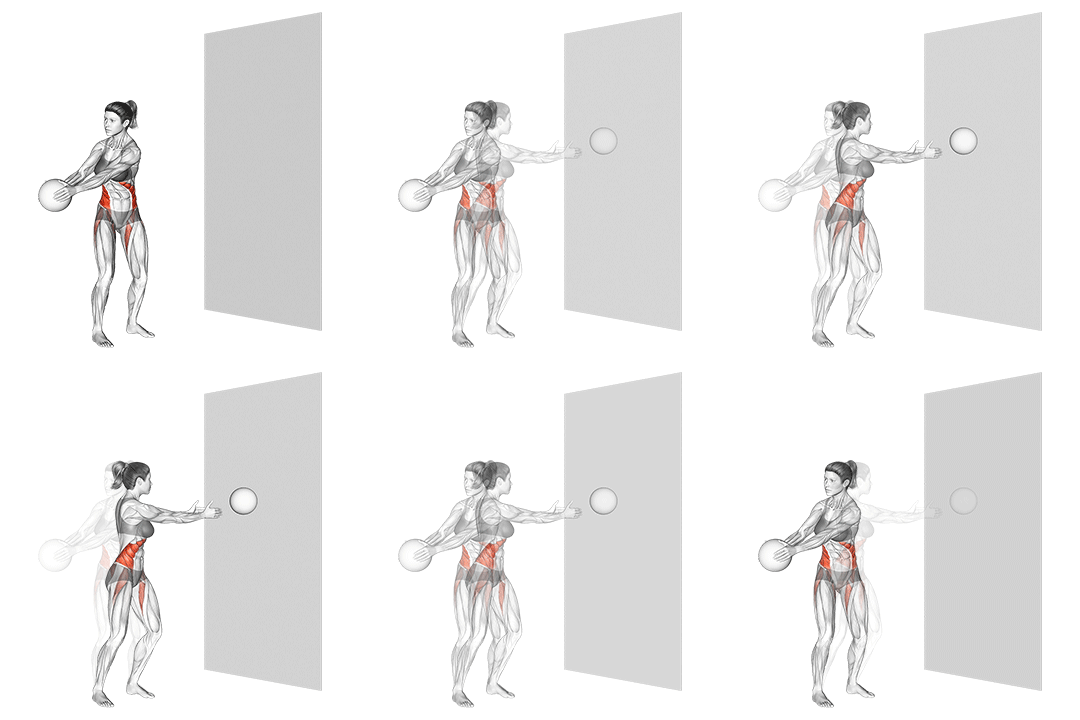
The Medicine Ball Rotational Throw stands sideways to a wall with a medicine ball held at the chest, rotates the trunk explosively to throw the ball against the wall, then catches the rebound. The pattern produces explosive rotational power.
For medicine ball training that includes athletic power development, the rotational throw is one of the most direct rotational power exercises that exists. The pattern translates to throwing sports, racquet sports, and combat sports. Run it for 3 to 4 sets of 6 to 8 reps per side as primary rotational power work.
Stand sideways to a sturdy wall with feet shoulder-width and a medicine ball held at the chest. Rotate the trunk explosively away from the wall, then back toward the wall while throwing the ball. Catch the rebound with both hands. Switch sides between sets.
Medicine Ball Lying Leg Raise

The Medicine Ball Lying Leg Raise lies on the back and lifts the legs up to vertical while squeezing a medicine ball between the feet. The added load increases the demand on the lower abs and adductors.
For medicine ball lower-ab training, the loaded leg raise produces stronger lower-ab loading than bodyweight leg raises. The medicine ball between the feet also engages the inner-thigh adductors. Run it for 3 sets of 10 to 12 reps as loaded lower-ab work.
Lie flat on the back with hands at the sides for support. Squeeze a medicine ball between the feet. Lift the legs up to vertical (or as high as possible) by contracting the lower abs. Lower under control without letting the ball drop. Maintain the squeeze on the ball throughout.
Crunch With Medicine Ball

The Crunch With Medicine Ball performs the crunch motion while holding a medicine ball at chest level or overhead. The pattern is a variation of the standard medicine ball crunch with different ball positions for varying difficulty.
For medicine ball ab training that varies the loading position, the crunch with medicine ball produces different loading intensities based on ball position. Holding the ball overhead produces stronger loading than holding it at the chest due to the longer lever arm. Run it for 3 sets of 10 to 12 reps as variation ab work.
Lie flat on the back with knees bent and feet planted. Hold a medicine ball at the chest or extended overhead. Crunch the upper body up by contracting the abs. The further the ball is held from the body, the greater the loading. Lower under control.
Medicine Ball Squat Jump

The Medicine Ball Squat Jump performs an explosive squat with a medicine ball held at the chest or overhead. The added load increases the demand and produces stronger loaded plyometric loading.
For medicine ball training that includes loaded plyometric work, the squat jump produces strong leg power development. The pattern translates to athletic explosive power. Run it for 3 sets of 6 to 8 reps as loaded leg power work with conservative weight (5 to 15 pound medicine ball).
Stand with feet shoulder-width and a medicine ball held at the chest. Squat down by sitting the hips back. Drive up explosively, jumping straight up while keeping the ball at the chest. Land softly with bent knees. Reset before each rep.
Dead Bug With Medicine Ball

The Dead Bug With Medicine Ball performs the dead bug pattern while holding a medicine ball overhead with both hands or balanced on the working knee. The added load increases the anti-extension demand.
For medicine ball anti-extension training, the loaded dead bug produces stronger core stability demand than the bodyweight version. The pattern translates to overhead pressing and athletic positions. Run it for 3 sets of 8 to 10 reps per side as loaded anti-extension work.
Lie flat on the back with arms extended toward the ceiling holding a medicine ball with both hands. Bend the knees at 90 degrees. Press the lower back into the floor. Slowly extend one arm overhead with the ball and the opposite leg out to nearly touch the floor. Return to the start. Alternate sides.
Medicine Ball Supine Chest Throw
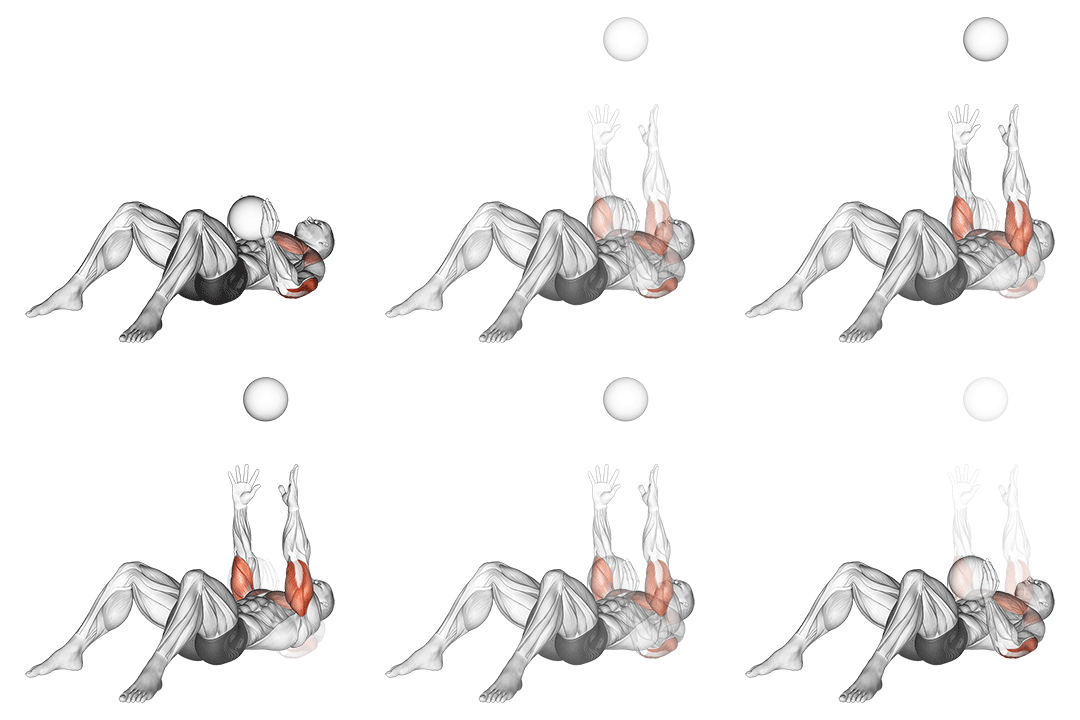
The Medicine Ball Supine Chest Throw lies on the back with knees bent and a medicine ball held at the chest, then explosively pushes the ball straight up and catches the rebound. The pattern produces strong explosive chest power.
For medicine ball training that includes upper-body explosive work, the supine chest throw produces strong chest and tricep power development. The pattern translates to pressing strength and athletic chest function. Run it for 3 sets of 6 to 8 reps as loaded chest power work.
Lie flat on the back with knees bent and feet planted. Hold a medicine ball at the chest with both hands, elbows bent. Press the ball explosively straight up and slightly forward, releasing the ball briefly. Catch the rebound with both hands at the chest. Reset before each rep.
Medicine Ball Standing Overhead Throw

The Medicine Ball Standing Overhead Throw stands tall holding a medicine ball overhead and explosively throws the ball forward with overhead extension power. The pattern produces strong full-body extension power.
For medicine ball training that includes full-body explosive work, the standing overhead throw is one of the most demanding power exercises that exists. The pattern translates to overhead athletic movements like volleyball spikes and throwing patterns. Run it for 3 sets of 5 to 8 reps as full-body power work.
Stand tall holding a medicine ball overhead with both hands. Hinge slightly back at the hips to load the throw. Drive the hips forward explosively while throwing the ball forward and downward. Reset before each rep. Use a medicine ball that won’t bounce back unpredictably.
Medicine Ball Overhead Throw

The Medicine Ball Overhead Throw stands tall holding a medicine ball and throws it overhead and behind the body, similar to throwing a ball backward over the head. The pattern produces strong full-body extension power.
For medicine ball training that includes posterior-chain power, the overhead throw produces strong glute, hamstring, and back explosive loading. The pattern translates to athletic explosive movements like jumping and sprinting. Run it for 3 sets of 5 to 8 reps as posterior-chain power work.
Stand tall holding a medicine ball with both hands at hip level. Hinge back at the hips and bend the knees slightly. Drive explosively up and back through the hips and arms, throwing the ball overhead and behind the body. Reset before each rep with the ball returned to the start position.
How To Program These Workouts
A productive medicine ball session pulls six to eight exercises from the list above. A balanced session includes 1 to 2 loaded core exercises (medicine ball crunch, lying leg raise), 1 to 2 rotational exercises (rotational throw, around-head rotation), 1 to 2 explosive jumping or pressing exercises (squat jump, supine chest throw), and 1 to 2 full-body power exercises (overhead throw, standing overhead throw). Run loaded core work for 3 sets of 10 to 12 reps; rotational and explosive throws for 3 sets of 5 to 8 reps with full recovery between sets; squat jumps for 3 sets of 6 to 8 reps.
Train medicine ball sessions 1 to 2 times per week as dedicated sessions or integrated into broader strength programming. The explosive power exercises require full neural recovery between sessions, which limits how often they can be trained at high intensity. Most successful programs include 1 to 2 medicine ball power sessions per week alongside dedicated strength training and conditioning. The format also fits as power-focused warm-ups before strength training (3 to 5 explosive throws to prime the nervous system).
For specific medicine ball ab training, see our best medicine ball ab workouts. For broader power training, see our best compound exercises for strength and best workouts for strongmen.
Final Thoughts
The best medicine ball workouts deliver real explosive power and core development through training patterns that fixed equipment cannot match. The combination of loaded core work, rotational power, explosive throws, and combined patterns covers every major power-development function and produces broader athletic development than pure strength training. For athletes, fighters, and anyone wanting to develop explosive power alongside foundational strength, medicine ball training is one of the most versatile and effective options available.
Stay focused on the explosive intent of every rep. The most common medicine ball training mistake is performing throws with submaximal explosive intent, which reduces the actual power-development stimulus to mediocre conditioning work. The fix: every throw should attempt maximum explosive force, with appropriate full recovery between reps (typically 30 to 60 seconds). Quality explosive reps with full intent produce stronger power development than higher-rep counts with reduced intensity. Power develops through near-maximum efforts; medicine ball training works because of that intent.
Frequently Asked Questions
What weight medicine ball should I use?
Most beginners start with 5 to 8-pound medicine balls; intermediates work with 10 to 15-pound balls; advanced lifters use 15 to 25-pound balls for power exercises. The right weight is whatever allows explosive movement throughout the prescribed reps. Heavier balls produce stronger strength stimulus but reduced explosive output; lighter balls produce stronger power output but less strength loading. Most successful medicine ball setups include 2 to 3 different weights for varied training.
Are medicine ball workouts effective for building muscle?
Marginally. Medicine ball training produces moderate hypertrophy stimulus through loaded core and explosive work, but the moderate loads limit how much muscle growth the format can produce relative to heavy strength training. Most successful programs include medicine ball training for power and conditioning alongside dedicated strength training for hypertrophy. Lifters wanting maximum muscle growth do better with traditional strength training; those wanting power and athletic function do better with medicine ball work.
How often should I do medicine ball workouts?
One to two times per week works for most lifters. The explosive power exercises require full neural recovery between sessions, which limits training frequency for the high-intensity work. Most successful programs include 1 to 2 medicine ball sessions per week alongside dedicated strength training. Athletes during sport-specific power phases sometimes train medicine ball work 3 times per week with appropriate intensity variation.
Are medicine balls good for athletes?
Yes, very effectively. The combination of rotational power exercises (rotational throws), explosive extension exercises (overhead throws, squat jumps), and loaded core work translates directly to athletic performance in throwing sports, racquet sports, combat sports, jumping sports, and team sports. Most successful athletic strength-and-conditioning programs include medicine ball training as a core component alongside traditional strength work.
Can I do medicine ball workouts at home?
Yes for most exercises. Medicine balls fit easily in any home gym and require minimal storage space. Home setups need: a sturdy wall (for rotational throws and supine chest throws), open floor space for jumping and dead bug variations, and ideally a non-slam ball for indoor use (regular medicine balls bounce unpredictably and can damage floors). Outdoor training with slam balls expands the exercise selection significantly.