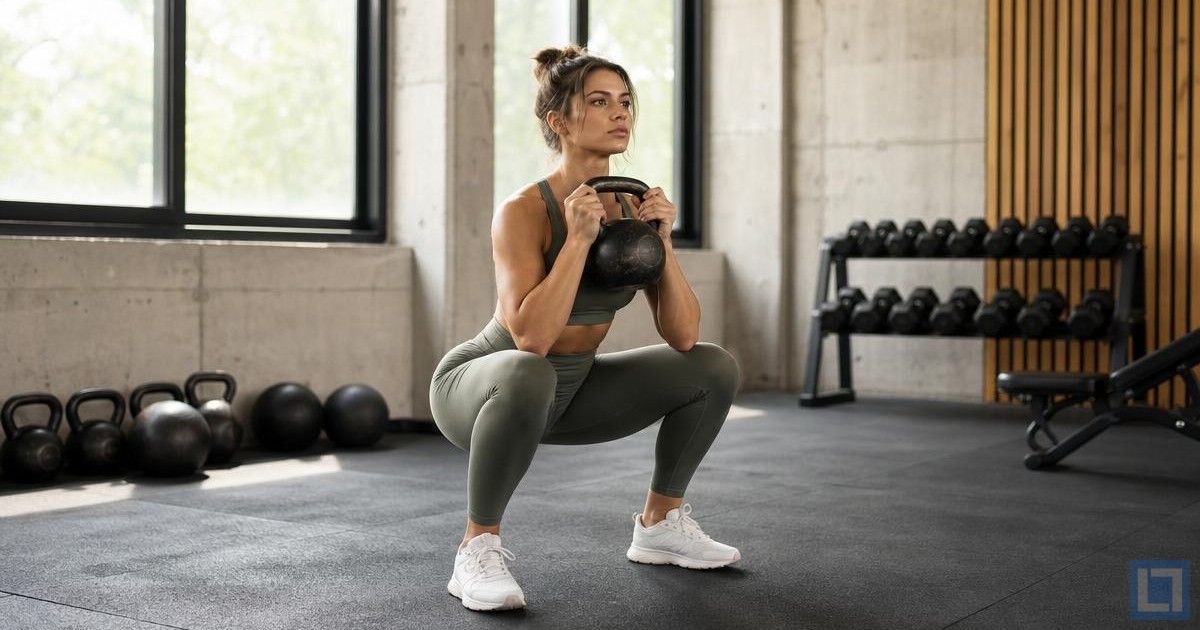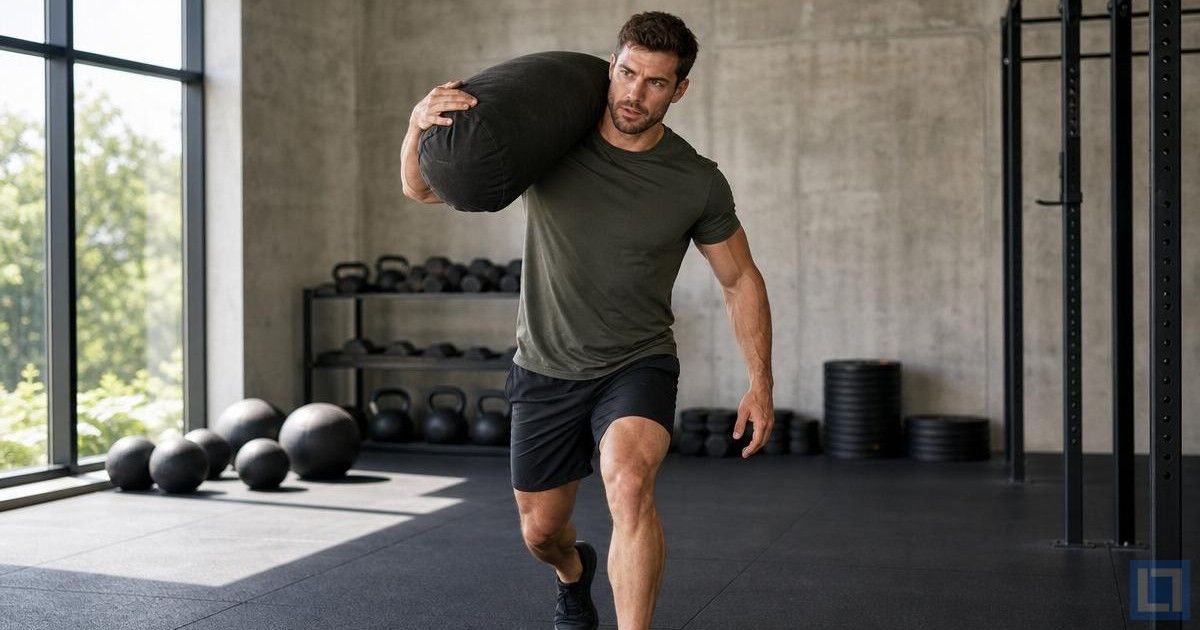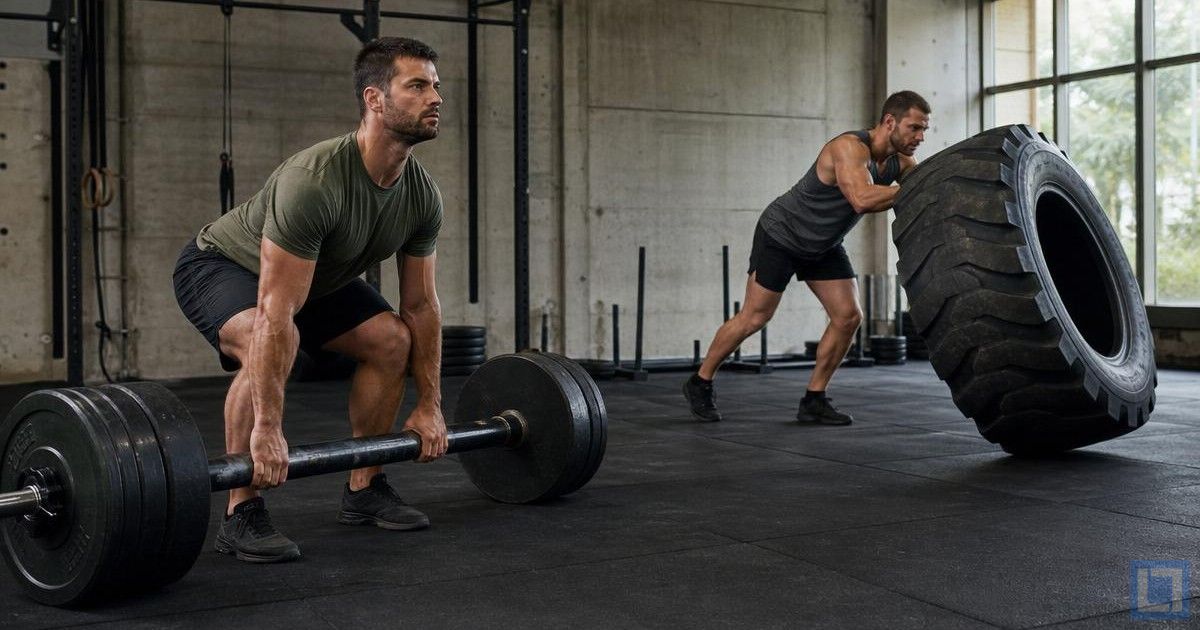
Strongman training combines maximum-strength barbell lifts (deadlifts, squats, presses) with iconic strongman events (atlas stones, yoke walks, tire flips, farmer carries) into a complete strength and conditioning system. The training prioritizes raw strength development through heavy bilateral loading, full-body conditioning through loaded carries and event work, and the kind of work capacity required to perform multiple maximum-effort lifts in a single session. Most successful strongman athletes follow this dual-track approach: foundational barbell work to build base strength, plus event-specific training to develop the unique skills required for competition.
Below are ten effective strongman exercises that cover foundational barbell lifts (deadlift, back squat, clean and press, shrug), loaded carries (farmer’s walk, trap bar farmer’s carry, yoke walk), classic strongman events (atlas stones, tire flip), and supplementary heavy pulling (trap bar deadlift). Together they form the foundation of any productive strongman training program. The exercises require access to a well-equipped strongman gym with the specialty equipment (atlas stones, tire, yoke); recreational lifters can adapt the program with substitutions where specialty equipment is unavailable.
Barbell Deadlift

The Barbell Deadlift starts with the barbell on the floor and lifts it to standing position by hinging at the hips and extending through the legs. The exercise is the foundational pull in strongman training and the foundation of every successful strongman athlete’s programming.
For strongman training, the deadlift is non-negotiable. The lift produces the strongest posterior-chain development and grip strength of any single exercise. Most successful strongman programs include heavy deadlifts as the cornerstone exercise. Run it for 4 to 5 sets of 3 to 5 reps as primary heavy pulling work.
Stand with feet hip-width with the barbell over the middle of the feet. Hinge at the hips and bend the knees to grip the bar with shoulder-width grip. Drive through the legs and pull the bar up close to the body until standing fully upright. Reverse the motion under control. Reset before each rep.
Barbell Squat

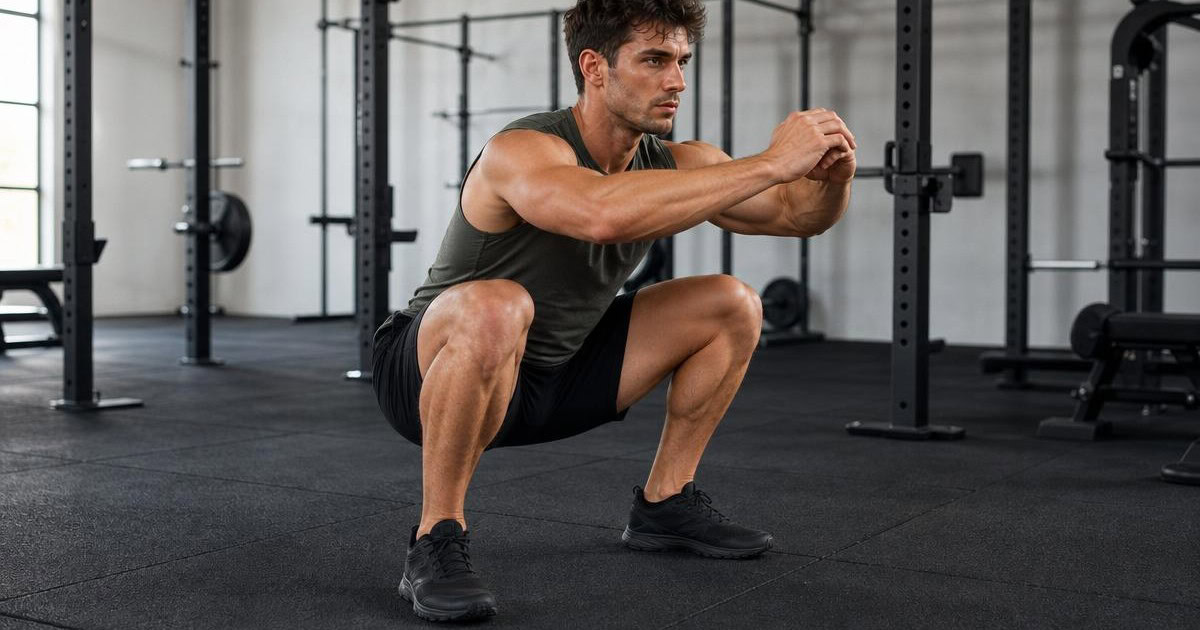
The Barbell Squat (back squat) holds a barbell across the upper back and squats down by bending at the hips and knees. The exercise is the foundational lower-body compound in strongman training and the cornerstone strength-building exercise.
For strongman training, the back squat builds the foundational leg strength required for atlas stones, tire flips, yoke walks, and every other strongman event. Run it for 4 to 5 sets of 3 to 5 reps for maximum strength, or 5 to 8 reps for combined strength and size development.
Set up under a barbell on a squat rack with the bar across the upper back. Step back to clear the rack. Stand with feet shoulder-width and toes pointed slightly out. Squat down by sitting the hips back while bending the knees. Drive back to standing through the whole foot.
Barbell Clean and Press

The Barbell Clean and Press lifts a barbell from the floor to the front rack position (the “clean”) and then presses overhead in one or two distinct phases. The full-body explosive lift is one of the foundational strongman events and a strength-building cornerstone.
For strongman training, the clean and press is one of the most demanding full-body lifts that exists. The exercise translates directly to log press, axle press, and viking press strongman events. Run it for 4 to 5 sets of 3 to 5 reps as primary explosive overhead work.
Stand with feet shoulder-width and a barbell on the floor in front. Hinge to grip the bar with shoulder-width grip. Lift explosively to the front rack position by extending through the legs and hips. Pause briefly. Press the bar overhead to lockout. Lower under control to the rack, then back to the floor.
Farmers Walk
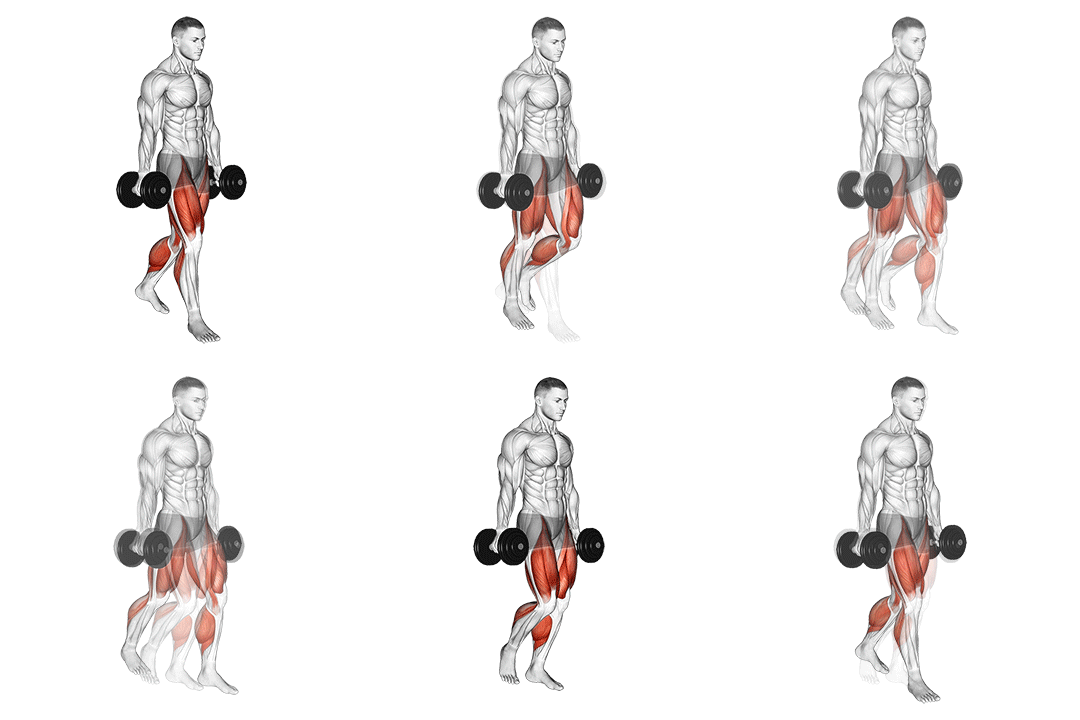
The Farmers Walk holds heavy dumbbells (or specialized farmer’s walk handles) at the sides and walks for distance or time while maintaining upright posture. The exercise produces extreme grip strength, trap loading, and full-body conditioning.
For strongman training, the farmer’s walk is one of the most foundational events that exists. The exercise translates directly to nearly every strongman scenario requiring sustained grip strength under load. Run it for 4 to 5 sets of 50 to 100-foot distances or 30 to 60-second intervals with heavy dumbbells.
Hold heavy dumbbells at the sides with arms extended. Stand tall with shoulders back and chest out. Walk forward at a steady pace while maintaining upright posture and tight grip on the dumbbells. Continue for the prescribed distance or time. Set the dumbbells down with control.
Trap Bar Deadlift

The Trap Bar Deadlift uses a hexagonal-shaped trap bar (or hex bar) with the lifter standing inside the bar and lifting it from the floor. The neutral grip position and the bar surrounding the body produce different mechanics than standard deadlifts.
For strongman training, the trap bar deadlift is one of the most useful supplementary lifts that exists. The pattern produces strong leg and back development with reduced lower-back stress compared to standard deadlifts. Run it for 4 to 5 sets of 3 to 6 reps as primary or secondary heavy pulling work.
Stand inside a loaded trap bar with feet hip-width. Hinge at the hips and bend the knees to grip the handles with neutral grip (palms facing the body). Drive through the legs and stand fully upright. Reverse the motion under control. Reset before each rep.
Trap Bar Farmers Carry
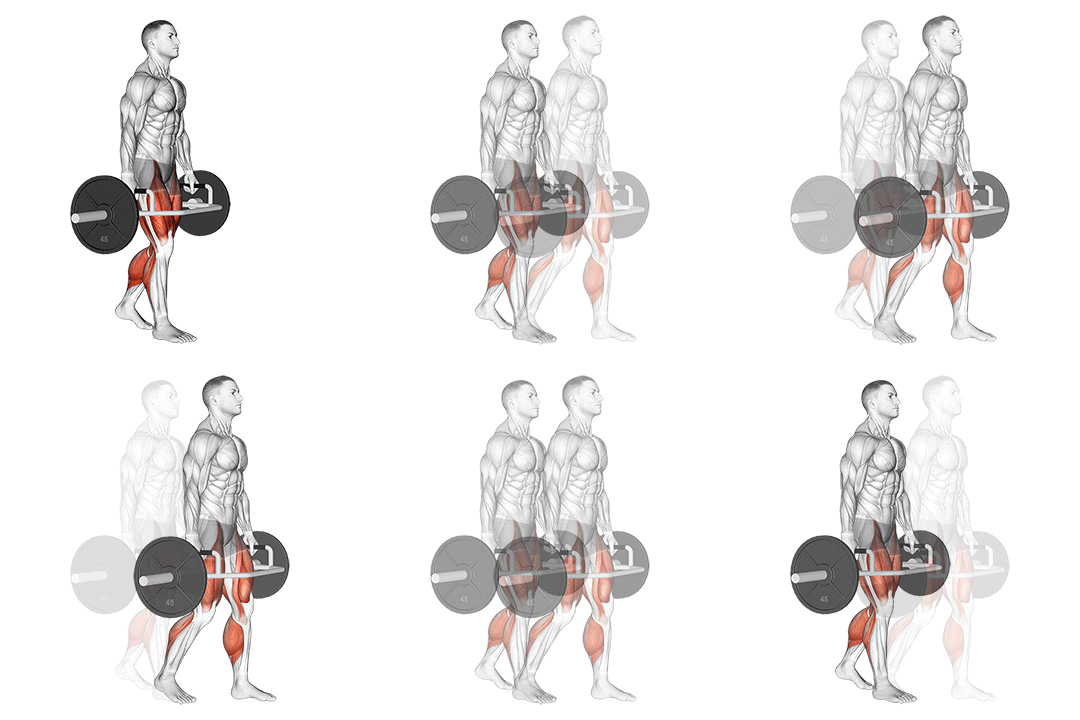
The Trap Bar Farmers Carry uses a trap bar held at the sides while walking for distance. The neutral grip and centered loading make trap bar farmer carries one of the most accessible loaded carry exercises that exists.
For strongman training, the trap bar farmer’s carry is an excellent alternative to dumbbell farmer carries when heavier loading is desired. The trap bar allows much higher total loading than dumbbells. Run it for 4 to 5 sets of 50 to 100-foot distances with progressively heavier loading.
Stand inside a loaded trap bar. Lift the bar by extending through the legs and hips into standing position. Walk forward at a steady pace while maintaining upright posture and tight grip. Continue for the prescribed distance. Set the bar down with control.
Strongman Atlas Stones
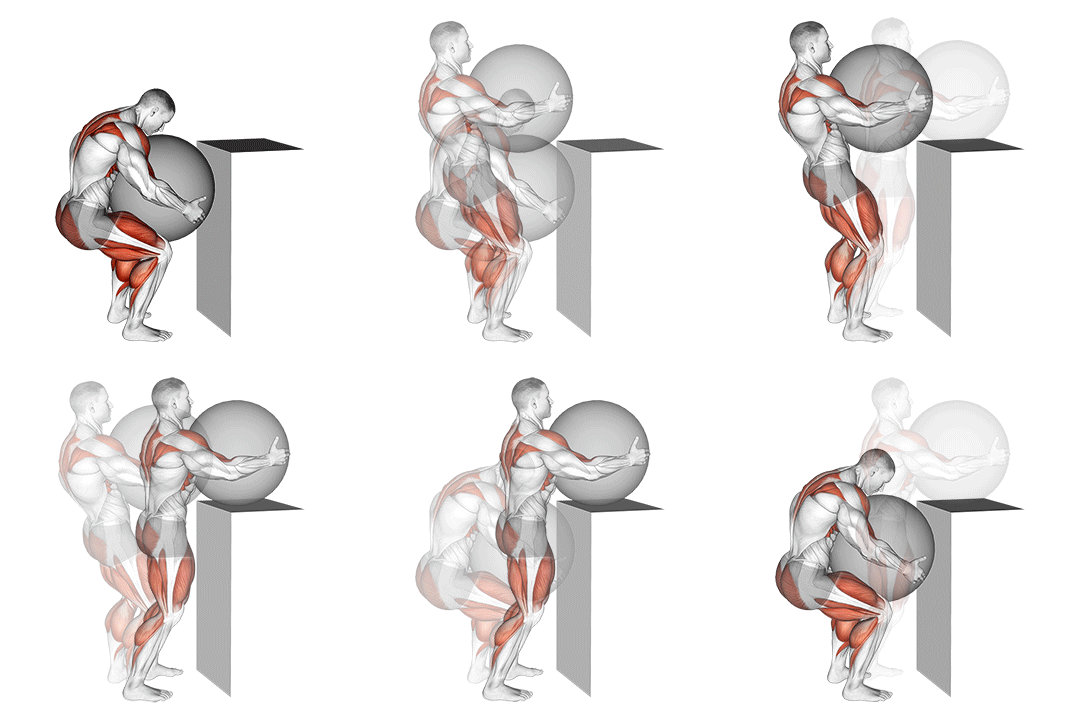
The Strongman Atlas Stones lift heavy spherical stones (typically 100 to 400+ pounds) from the floor and load them onto an elevated platform. The lifting pattern combines a deadlift, awkward bearhug carry, and overhead extension into one demanding full-body movement.
For strongman training, atlas stones are one of the most iconic and demanding events that exists. The exercise produces extreme full-body strength and conditioning. Most strongman athletes train atlas stones using progressively heavier stones over months and years of consistent practice. Run them for 3 to 4 sets of 3 to 5 reps with appropriately heavy stones.
Stand over a loaded atlas stone with feet shoulder-width. Squat down and wrap the arms around the stone in a bearhug grip. Lift the stone to the lap by extending through the legs. Reposition for the loading motion. Drive through the legs to extend up and load the stone onto the platform.
Strongman Yoke Walk
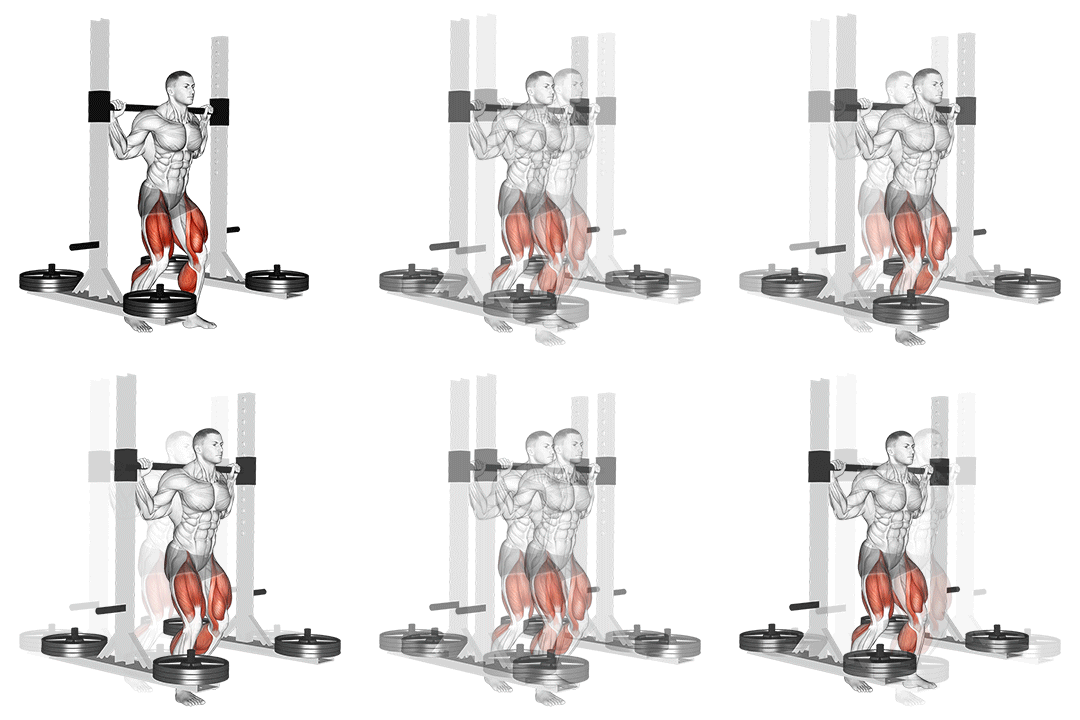
The Strongman Yoke Walk supports a heavy yoke (an iron frame loaded with weight plates) across the upper back and walks for distance or time. The exercise produces extreme spinal compression and full-body conditioning.
For strongman training, the yoke walk is one of the most demanding loaded carry events that exists. The pattern translates to every strongman scenario requiring carrying heavy loads over distance. Run it for 3 to 4 sets of 50 to 100-foot distances with progressively heavier loading.
Position a loaded yoke across the upper back with the body underneath and the yoke uprights at chest level. Stand up by extending through the legs to lift the yoke off its supports. Walk forward at a steady pace while maintaining upright posture. Set the yoke back on the supports with control.
Tire Flip
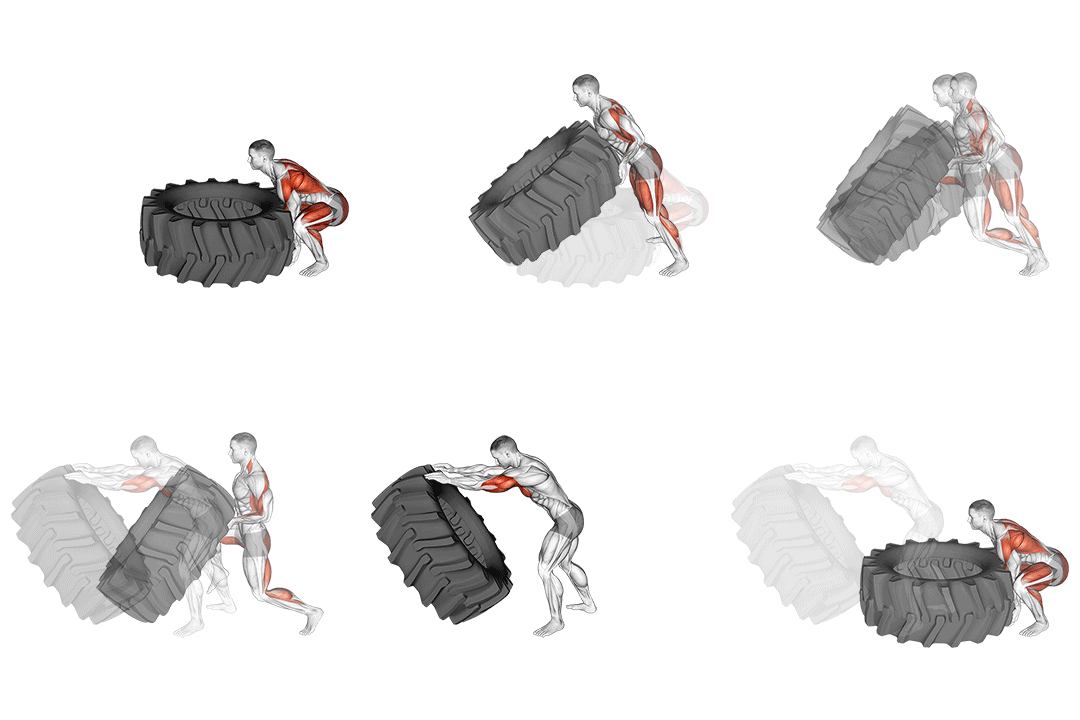
The Tire Flip lifts a large heavy tractor tire from the ground by squatting deep, gripping the bottom of the tire, and using leg drive to flip the tire forward. The full-body explosive lift produces extreme strength and conditioning per rep.
For strongman training, the tire flip is one of the most iconic and effective full-body exercises that exists. The pattern translates directly to strongman events and produces broader athletic development than any single barbell exercise. Run it for 4 to 5 sets of 5 to 8 reps with an appropriately heavy tire.
Stand close to a heavy tractor tire lying flat on the ground. Squat down and grip the bottom of the tire with both hands (palms up). Drive explosively through the legs to lift the tire to standing. Push the tire forward to flip it onto its other side. Approach for the next rep.
Barbell Shrug

The Barbell Shrug holds a heavy barbell at the front of the thighs and shrugs the shoulders straight up toward the ears. The exercise targets the upper traps directly and produces strong neck and upper-back development.
For strongman training, heavy shrugs build the trap mass required for carrying loaded yokes, sandbags, and atlas stones. The traps function as a primary stabilizer in nearly every strongman event. Run it for 3 to 4 sets of 8 to 12 reps with heavy loading as accessory trap work.
Stand tall with a heavy barbell held at the front of the thighs, hands shoulder-width with palms facing the body. Shrug the shoulders straight up toward the ears, keeping the arms straight throughout. Pause briefly at the top. Lower under control to the start.
How To Program These Workouts
A productive strongman training week typically includes 2 to 3 strength sessions and 1 to 2 event sessions. Strength sessions focus on barbell compounds: heavy squats, deadlifts, overhead pressing, and accessory work for 4 to 5 sets of 3 to 6 reps. Event sessions practice strongman-specific exercises: atlas stones, yoke walks, tire flips, farmer carries for 3 to 5 sets at competition-relevant loads and distances. Most successful strongman programs alternate heavy strength sessions and skill-focused event sessions across the week with appropriate recovery.
Train strongman 3 to 4 times per week with full rest days between sessions. The high systemic demand of heavy strongman training requires more recovery than bodybuilding-style training. Most successful athletes include at least 2 to 3 full rest days per week. Sleep, nutrition (typically 4,000 to 6,000+ calories per day for serious competitors), and recovery work (mobility, soft tissue work) become as important as the training itself for sustainable strongman progression.
For broader strength programming, see our best powerlifting program and best compound exercises for strength. For specific equipment training, see our best landmine workouts.
Final Thoughts
The best workouts for strongmen deliver real strength and athletic development through the combination of foundational barbell lifts and iconic strongman events. The dual-track approach (heavy barbell strength + event-specific skills) produces broader strength and conditioning than any single training modality alone, and the training prepares lifters for actual strongman competition or recreational strongman events. For lifters with access to strongman equipment who want to compete or train in this style, the foundational exercises in this list serve as the proven building blocks of effective programming.
Stay focused on form and progressive overload over weeks and months. The most common strongman training mistake is attempting maximum-effort lifts on every session without appropriate progression structure, which produces injuries and burnout within months. The fix: follow a structured program that progresses loads gradually, includes deload weeks every 4 to 6 weeks, and emphasizes form quality over weight chasing. Strongman is a long-term sport; the lifters who progress over years follow systematic programming, not random maximum effort attempts.
Frequently Asked Questions
How often should I train strongman?
Three to four times per week works for most strongman athletes. The high systemic demand requires more recovery than bodybuilding-style training. Most successful programs include 2 to 3 strength sessions (heavy barbell work) and 1 to 2 event sessions (atlas stones, yoke walks, tire flips, farmer carries) per week with full rest days between sessions.
Do I need to compete to train strongman?
No. Many lifters train strongman style for the strength, conditioning, and unique training stimulus without competing. The strongman approach builds broader athletic development than pure powerlifting or bodybuilding training and produces a particularly satisfying training experience for lifters who enjoy variety. Most commercial gyms with strongman equipment serve recreational lifters as well as competitors.
What equipment do I need for strongman?
A complete strongman gym includes barbells with 700+ pound capacity, atlas stones ranging 100 to 400 pounds, a yoke and weight plates, tractor tires (300 to 800+ pounds), heavy farmer’s walk handles, and a log or axle bar for pressing. Many commercial gyms now offer strongman areas; specialty strongman gyms exist in most major cities. Home setups require significant investment ($5,000 to $20,000+) for full equipment.
How heavy should I lift for strongman?
The right weight depends on body weight, training experience, and competition class. Most successful intermediate strongman athletes deadlift 1.5 to 2.5 times bodyweight, squat 1.5 to 2 times bodyweight, and overhead press 1 to 1.4 times bodyweight as base strength markers. Event-specific weights (atlas stones, yoke walks, tire flips) scale to body weight: lighter athletes work with lighter loads, heavier athletes with heavier loads.
Can beginners train strongman?
Yes, with appropriate progression and supervision. Beginners should build foundational strength through standard barbell training (squat, deadlift, bench, overhead press) for 6 to 12 months before attempting event-specific strongman exercises. Atlas stones and tire flips require significant existing strength to perform safely; lifters without that foundation should build it through standard barbell training first.