Trail running demands a unique combination of physical qualities – sustained leg strength for climbing and the eccentric work of descending, core stability for varied terrain navigation, explosive power for steep hills, balanced unilateral leg strength for technical terrain, and durability for long runs over challenging surfaces. The sport places different demands than road running, particularly the climbing/descending volume and technical terrain navigation that road runners do not encounter.
These ten exercises cover the complete trail running conditioning toolkit. Heavy compound squats and Romanian deadlifts build the leg and posterior chain foundation. Bulgarian split squats and walking lunges develop the unilateral strength technical terrain demands. Step-ups directly mimic the climbing pattern. Jump squats and kettlebell swings build explosive power for hills. Front and side planks develop the core stability for terrain navigation. Push-ups maintain balanced upper body strength. Together they build the physical capacity trail running demands beyond what running alone provides.
Barbell Squat

The Barbell Squat performs back squats. The compound pattern builds the leg strength trail running demands.
For trail running conditioning, squats build the leg strength for climbing and descending. Run it for 3 sets of 6 to 10 reps as primary leg work.
Set up a barbell on a rack at upper back height. Position the bar across the upper back. Step back with feet shoulder-width. Squat down by bending the knees and hips. Drive back up through the heels. The pattern produces the heaviest leg loading possible – critical for trail running because the sport demands sustained leg work across varied terrain including substantial climbing. Strong squats build the leg strength foundation that supports both climbing power and the eccentric leg work of descending.
Dumbbell Bulgarian Split Squat
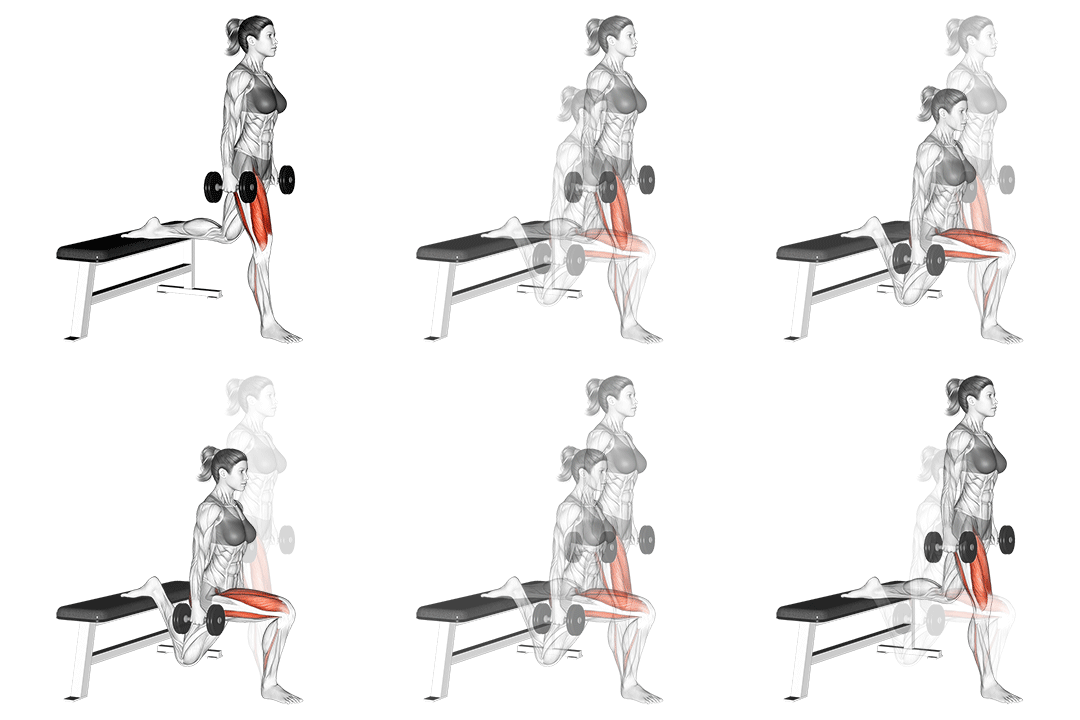
The Dumbbell Bulgarian Split Squat performs Bulgarian split squats. The unilateral pattern develops the per-leg strength trail running requires.
For trail running conditioning, Bulgarian split squats build the unilateral leg strength for hill running. Run it for 3 sets of 8 to 12 reps per leg as unilateral work.
Stand 2 to 3 feet in front of a bench. Place the top of the rear foot on the bench behind. Hold dumbbells in each hand at the sides. Squat down by bending the front knee deeply. Drive back up through the front heel. The pattern develops unilateral leg strength critical for trail running – hill climbing, uneven terrain navigation, and the constant single-leg loading of running all demand substantial per-leg strength. Builds the unilateral leg strength that translates to hill climbing power and stable footing on technical terrain.
Jump Squat

The Jump Squat performs explosive bodyweight squats. The plyometric pattern develops the explosive power trail running demands.
For trail running conditioning, jump squats develop the explosive leg power for hill climbing. Run it for 3 sets of 6 to 10 reps as explosive work.
Stand with feet shoulder-width. Squat down to a quarter squat depth. Drive up explosively to jump straight up. Land softly with knees bent and immediately descend into the next squat. The plyometric pattern develops explosive leg power – critical for trail running because climbing steep terrain, navigating obstacles, and the bounding patterns of trail running all benefit from explosive leg drive. Foundational power exercise for trail-specific performance.
Front Plank
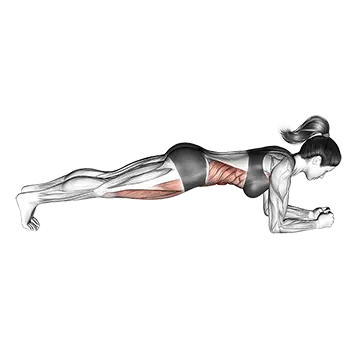
The Front Plank performs static plank holds. The pattern develops the core stability trail running demands.
For trail running conditioning, front planks build core stability for varied terrain. Run it for 3 sets of 30 to 60 second holds as core work.
Position face-down on the forearms with elbows under the shoulders, body in a straight line from head to heels. Hold the position with the core engaged, glutes tight, and back neutral. Continue for time. The plank develops isometric core strength – critical for trail running because varied terrain demands continuous core stabilization. Strong core stability supports running form during fatigue, maintains posture on technical terrain, and reduces the back stress of long runs.
Side Plank
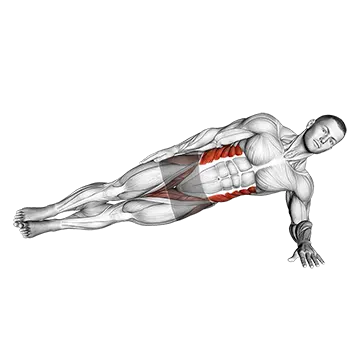
The Side Plank performs static side plank holds. The pattern develops lateral core stability for trail navigation.
For trail running conditioning, side planks build lateral core for technical terrain navigation. Run it for 3 sets of 20 to 45 second holds per side as lateral core work.
Lie on one side with the bottom forearm on the floor, elbow under the shoulder. Lift the hips so the body forms a straight line from head to feet. Hold the position. Switch sides. The pattern develops lateral core stability – critical for trail running because navigating uneven terrain, jumping rocks and roots, and stabilizing during quick foot adjustments all demand strong lateral core function. Builds the side-on core strength that technical trails demand.
Dumbbell Walking Lunge

The Dumbbell Walking Lunge performs walking lunges with dumbbells. The dynamic unilateral pattern develops trail running leg work.
For trail running conditioning, walking lunges build dynamic unilateral strength for hill running. Run it for 3 sets of 14 to 20 total steps as dynamic leg work.
Stand with feet hip-width holding dumbbells in each hand at the sides. Step forward with one leg into a lunge position, lowering the back knee toward the floor. Drive through the front heel to stand up while bringing the rear leg forward. Continue alternating. The dynamic pattern develops unilateral leg strength through movement – critical for trail running because the dynamic movement pattern closely mirrors the unilateral demands of trail running. Walking lunges train the dynamic unilateral leg strength that translates directly to hill climbing and trail navigation.
Barbell Romanian Deadlift

The Barbell Romanian Deadlift performs hip-hinge deadlifts. The pattern develops hamstring and glute strength.
For trail running conditioning, RDLs build hamstring and glute strength for running power. Run it for 3 sets of 6 to 10 reps as posterior chain work.
Hold a barbell at the front of the thighs with hands shoulder-width. Hinge at the hips by pushing the hips back, lowering the bar along the thighs while keeping the knees slightly bent. Lower until the bar reaches just below the knees with a stretch felt in the hamstrings. Drive the hips forward to return to standing. The pattern develops hamstring and glute strength through hip-hinge loading – critical for running because the hamstrings and glutes drive running propulsion and stride power. Strong RDLs support running economy and reduce hamstring injury risk.
Kettlebell Swing

The Kettlebell Swing performs hip-hinge driven kettlebell swings. The explosive pattern builds trail running conditioning.
For trail running conditioning, kettlebell swings build hip power for hill running. Run it for 3 sets of 15 to 25 reps as conditioning work.
Stand with a kettlebell on the floor between the feet. Hinge at the hips and grip the kettlebell with both hands. Swing the kettlebell back between the legs, then drive the hips forward explosively to swing the kettlebell up to roughly chest height. Let it swing back down. Continue. The explosive hip-hinge pattern develops hip power and produces high-intensity cardiovascular conditioning – excellent for trail running because the explosive hip drive directly supports hill climbing and the cardio component supplements running-based conditioning.
Dumbbell Step Up

The Dumbbell Step Up performs step-ups onto a box. The unilateral pattern develops climbing-specific leg strength.
For trail running conditioning, step-ups directly mimic the climbing pattern of trail running. Run it for 3 sets of 8 to 12 reps per leg as functional climbing work.
Stand in front of a sturdy box or bench (knee height). Hold dumbbells in each hand. Step up onto the box with one foot, driving through the heel to bring the body up. Step the other foot up onto the box. Step back down with control. The pattern directly mirrors the hill climbing movement of trail running – the front leg must produce all the force to lift the body up onto the box, exactly like climbing steep trail. Excellent specific exercise for trail running because the loading pattern matches the climbing demands.
Push Ups

The Push Up performs bodyweight pushups. The pattern develops upper body strength balanced for runners.
For trail running conditioning, push-ups maintain upper body strength balance. Run it for 3 sets of 12 to 20 reps as upper body maintenance work.
Set up in a high plank position with hands shoulder-width apart, body in a straight line. Lower the body by bending the elbows until the chest is just above the floor. Press back up to the start. The pattern develops chest, shoulder, and triceps strength – important for trail runners because total body strength supports running form and prevents the upper body atrophy that running-only training can produce. Accessible exercise that maintains upper body function alongside the lower body emphasis of run-specific training.
How To Program These Workouts
Trail running conditioning works best with 2 strength sessions per week balanced with running volume. Total weekly training volume should account for substantial running time that trail runners commit to. Strength training supplements rather than replaces running.
Structure sessions with strength foundation work that supports running. Sample week: Day 1 – back squat, Bulgarian split squats, Romanian deadlifts, planks. Day 2 – walking lunges, step-ups, jump squats, side planks, kettlebell swings, push-ups. Use 3 sets of 6 to 10 reps for heavy strength work, 3 sets of 8 to 12 reps for unilateral work, 3 sets of 30 to 60 second holds for core work.
Progressive overload drives strength gains for trail runners – add weight or reps when current loading becomes manageable. During heavy training and race weeks, prioritize running with reduced strength training volume to support recovery. The strength foundation supports running performance and reduces injury risk, but should be programmed as supplementary work to the running that defines trail running training.
Final Thoughts
These ten exercises cover the complete trail running conditioning approach. The compound strength work builds the leg foundation that running depends on. The unilateral work addresses the per-leg demands of technical terrain. The climbing-specific work directly supports hill running. The core work builds stability for varied terrain. Together they support the demands of trail running beyond what running alone provides.
Building trail running readiness requires consistent strength training combined with substantial running. Trail runners who add structured strength work to their running typically demonstrate measurably better climbing power, descent control, and durability than those who only run. The strength foundation supports running performance and reduces the injury risk that high running volumes alone can create.
Frequently Asked Questions
What makes trail running different from road running?
Trail running involves substantial climbing and descending, technical terrain (rocks, roots, uneven surfaces), greater unilateral leg demands from terrain navigation, more variable pace, and the durability requirements of running on harder surfaces (rocky trails). All of these factors create different training demands than steady-pace road running on flat surfaces.
How often should trail runners strength train?
2 strength sessions per week works well for most trail runners, balanced with running volume. The volume should account for substantial running time that trail runners require. During race preparation periods, prioritize running with reduced strength training to support recovery. Year-round consistency in basic strength patterns provides the foundation.
Should trail runners do heavy strength training?
Moderate to heavy strength training (4 to 8 reps for compound lifts) supports trail running performance better than light volume work for most runners. Heavy strength training builds the foundational strength that supports climbing power and descent control. The key is balanced loading rather than maximum strength training – 3 sets of 6 to 8 reps is typical effective dosage.
Will strength training make trail runners slower?
No – properly programmed strength training improves running performance for most runners. The increase in functional strength typically improves running economy, climbing power, and durability without slowing pace. The key is balanced training that supports rather than crowds out running. Heavy strength training combined with adequate running typically improves rather than reduces running performance.
How important are step-ups for trail runners?
Step-ups directly mimic the climbing pattern of trail running – the front leg producing the force to lift the body weight up onto the box matches the demands of steep hill climbing. This direct specificity makes step-ups especially valuable for trail runners who race hilly courses or train in mountainous terrain. Excellent specific exercise alongside the more general strength work.