The medicine ball is one of the most versatile pieces of core training equipment that exists. The added load (typically 6 to 25 pounds) intensifies bodyweight ab exercises significantly, the rotational and explosive throwing variations produce functional core power that static exercises cannot match, and the equipment requires no specialized setup beyond a sturdy wall (for rebound throws) or open space. The best medicine ball ab workouts use this versatility to deliver complete core training across strength, power, and rotation.
Below are ten effective medicine ball ab exercises that cover loaded crunches, anti-extension dead bugs, lower-ab leg raises, rotational throws, explosive slams, and overhead power throws. Together they form a complete medicine ball core program that produces both visible ab development and functional rotational power.
Medicine Ball Crunch

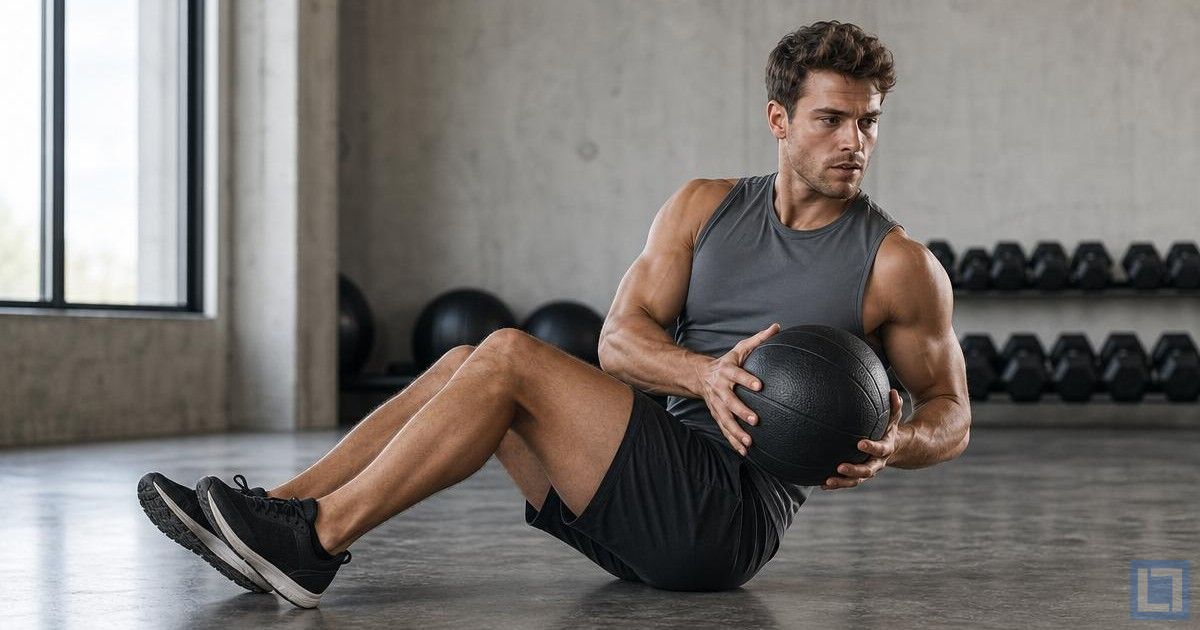
The Medicine Ball Crunch lies on the back with a medicine ball held at the chest and performs a standard crunch motion. The added load increases the demand on the abs through trunk flexion compared to bodyweight crunches.
For medicine ball ab training, the standard crunch with a medicine ball is the foundational exercise. The added external load produces stronger ab loading per rep than bodyweight crunches, which fits the medicine ball format perfectly. Run it for 3 sets of 12 to 15 reps as the primary ab exercise.
Lie flat on the back with knees bent and feet planted. Hold a medicine ball at the chest with both hands. Curl the trunk up to bring the chest toward the knees, keeping the ball at the chest. Lower under control to the start position.
Crunch With Medicine Ball

The Crunch With Medicine Ball lies on the back and holds a medicine ball overhead with both hands, then performs a crunch motion while keeping the ball positioned overhead. The overhead ball position increases the lever arm and intensifies the ab loading.
The overhead-ball variation produces stronger ab loading per rep than the chest-held version because the longer lever arm increases the demand on the abs to control the trunk movement. Use it as a progression from the standard medicine ball crunch once 15 to 20 strict reps with a heavier ball become manageable.
Lie flat on the back with knees bent. Hold a medicine ball with both hands extended above the head. Curl the trunk up by bringing the chest forward while keeping the ball positioned overhead. Lower under control. The ball position must stay constant; do not let it drift forward toward the knees during the crunch.
Medicine Ball Lying Leg Raise

The Medicine Ball Lying Leg Raise lies on the back with a medicine ball pinned between the feet and lifts the legs up toward the ceiling using lower-ab strength. The added load on the legs significantly increases the demand on the lower abs and hip flexors.
Lower-ab work is essential for complete ab development. Most ab routines emphasize crunches (which hit the upper abs) but skip direct lower-ab work. The medicine ball leg raise fills that gap with significant external loading, which produces stronger lower-ab development per rep than bodyweight leg raises.
Lie flat on the back with hands at the sides for support. Pin a medicine ball between the feet. Lift the legs up toward the ceiling by contracting the lower abs, ending with the legs vertical. Lower under control without letting the feet touch the floor between reps.
Dead Bug With Medicine Ball

The Dead Bug With Medicine Ball holds a medicine ball at the chest with both hands and performs the dead bug pattern. The added weight intensifies the anti-extension demand on the abs throughout the movement.
For complete core training, anti-extension work like the dead bug complements the trunk-flexion work of crunches. The medicine ball variation adds load to the standard dead bug pattern, which produces stronger trunk stability development per rep. Run it for 3 sets of 8 to 10 reps per side.
Lie flat on the back with knees bent at 90 degrees over the hips. Hold a medicine ball at the chest with both hands. Slowly lower one leg toward the floor while keeping the medicine ball stable at the chest and the lower back flat. Return to the starting position and switch legs.
Medicine Ball Rotational Throw
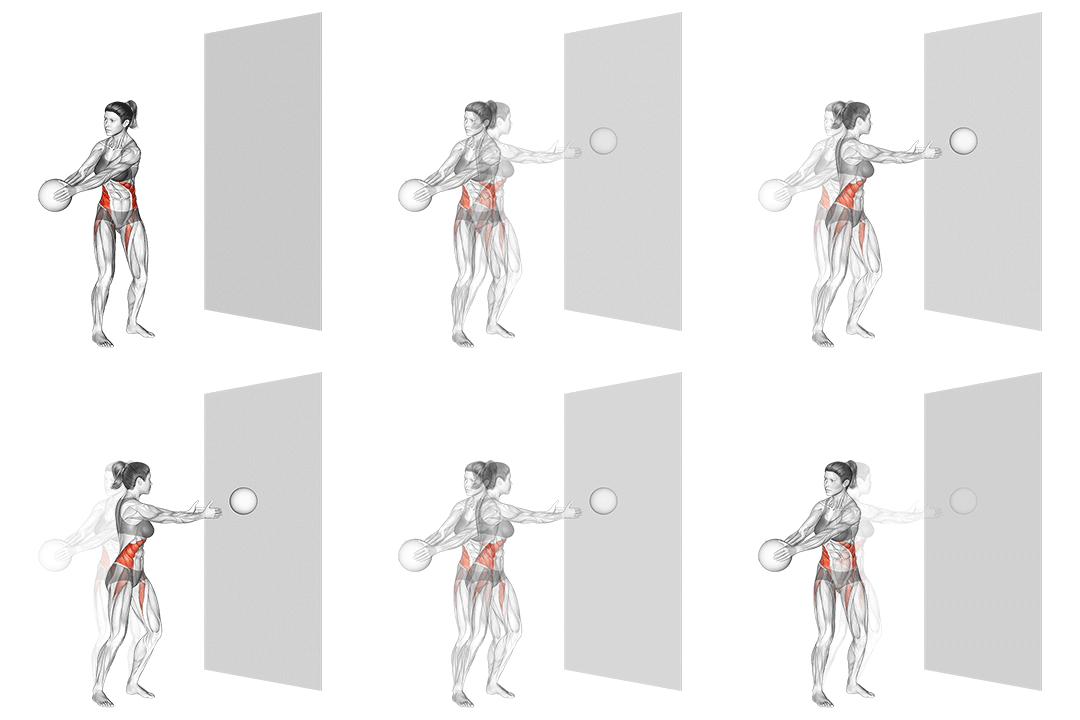
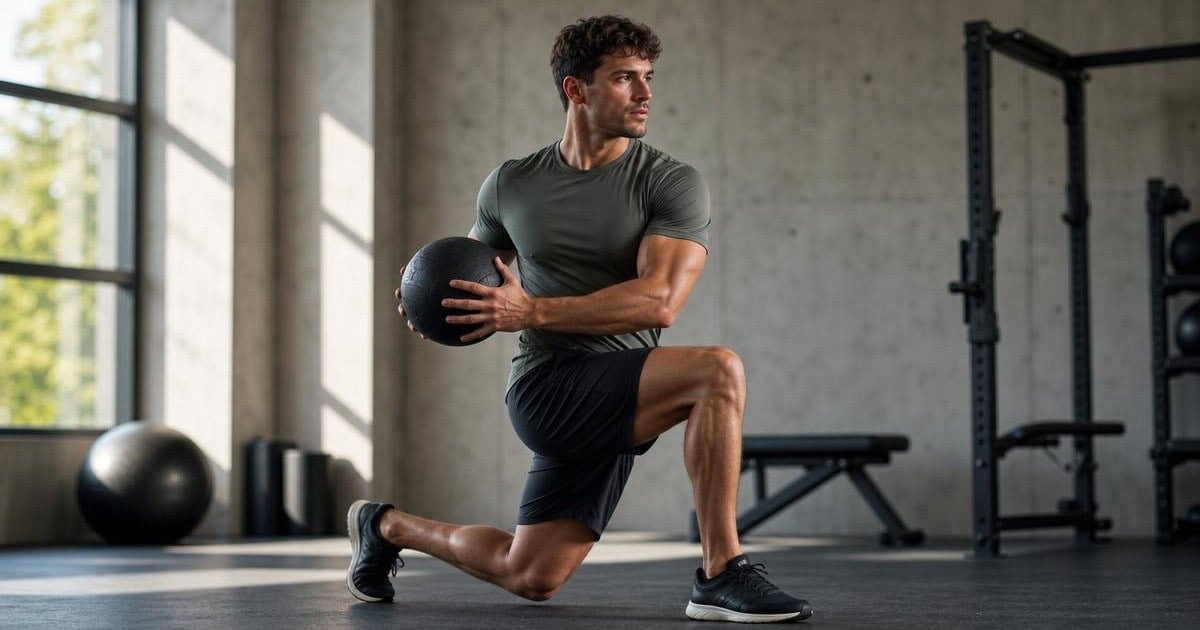
The Medicine Ball Rotational Throw stands sideways to a wall and rotates the trunk to throw a medicine ball at the wall, then catches it on the rebound. The explosive rotation pattern hits the obliques and rotational core stabilizers under load.
Rotational power training produces functional core development that static ab exercises cannot match. The combination of explosive rotation and the catch-and-release pattern teaches the body to produce and absorb rotational force, which carries over to athletic performance. Run it for 3 sets of 8 to 10 reps per side.
Stand sideways to a sturdy wall, holding a medicine ball at one hip. Rotate the trunk explosively to throw the ball at the wall. Catch the ball on the rebound and immediately rotate back to throw again. Maintain explosive intent on every rep. Switch sides on the next set.
Medicine Ball Step Behind Rotational Throw

The Medicine Ball Step Behind Rotational Throw adds a step-behind motion to the standard rotational throw, where the back foot crosses behind during the rotation. The added footwork increases hip rotation and produces stronger oblique loading per rep.
For lifters who want to maximize rotational core power, the step-behind variation produces stronger total-body rotation than standing-only throws. The added hip rotation engages the obliques through a longer range of motion, which produces stronger rotational strength gains. Run it for 3 sets of 6 to 8 reps per side.
Stand sideways to a wall with a medicine ball at one hip. As you rotate to throw the ball, step the back foot behind the front foot to maximize hip rotation. Throw the ball at the wall, catch it on the rebound, and reverse the step-behind for the next rep.
Medicine Ball Overhead Slam

The Medicine Ball Overhead Slam stands with a medicine ball held overhead and slams it down to the floor with maximum force. The explosive downward motion engages the entire core, lats, and shoulders simultaneously.
For combined core training and full-body conditioning, medicine ball slams are one of the most efficient exercises that exists. The explosive demand drives heart rate up while loading the core through the slamming motion. Run them for 3 to 4 sets of 6 to 10 reps with maximum effort on every rep.
Hold a medicine ball overhead with both hands. Brace the core hard. Slam the ball down to the floor with maximum force, allowing the body to bend forward as the ball travels down. Pick up the ball and immediately set up for the next rep. Use a non-bouncing medicine ball (slam ball) for safety.
Medicine Ball Around Head Rotation

The Medicine Ball Around Head Rotation holds a medicine ball with both hands and rotates it around the head in a controlled circular motion. The continuous core engagement holds tension throughout the movement.
For core endurance training, the around-the-head rotation produces continuous abdominal contraction without explosive demand. The pattern fits well as a finisher or as a warm-up for heavier rotational work. Run it for 3 sets of 8 to 10 rotations in each direction.
Stand tall holding a medicine ball with both hands at chest level. Move the ball in a circular path around the head: forward, to one side, behind the head, to the other side, and back to the start. Maintain core engagement throughout. Switch direction on the next set.
Medicine Ball Overhead Throw

The Medicine Ball Overhead Throw bends down to grip a medicine ball at the floor, then explodes up and throws the ball overhead and behind the body in one motion. The full-body explosive demand hits the core, posterior chain, and shoulders simultaneously.
For explosive total-body power training, the overhead throw is one of the most demanding medicine ball exercises that exists. The combination of triple extension (ankles, knees, hips) and overhead release produces strong athletic carryover to throwing sports, jumping, and Olympic lifting. Run it for 3 to 4 sets of 5 to 6 reps with full recovery between sets.
Stand with feet shoulder-width and a medicine ball on the floor between the feet. Hinge down to grip the ball with both hands. Explode up by extending the ankles, knees, and hips while throwing the ball overhead and behind the body. Land softly. Retrieve the ball and reset for the next rep.
Medicine Ball Supine Chest Throw
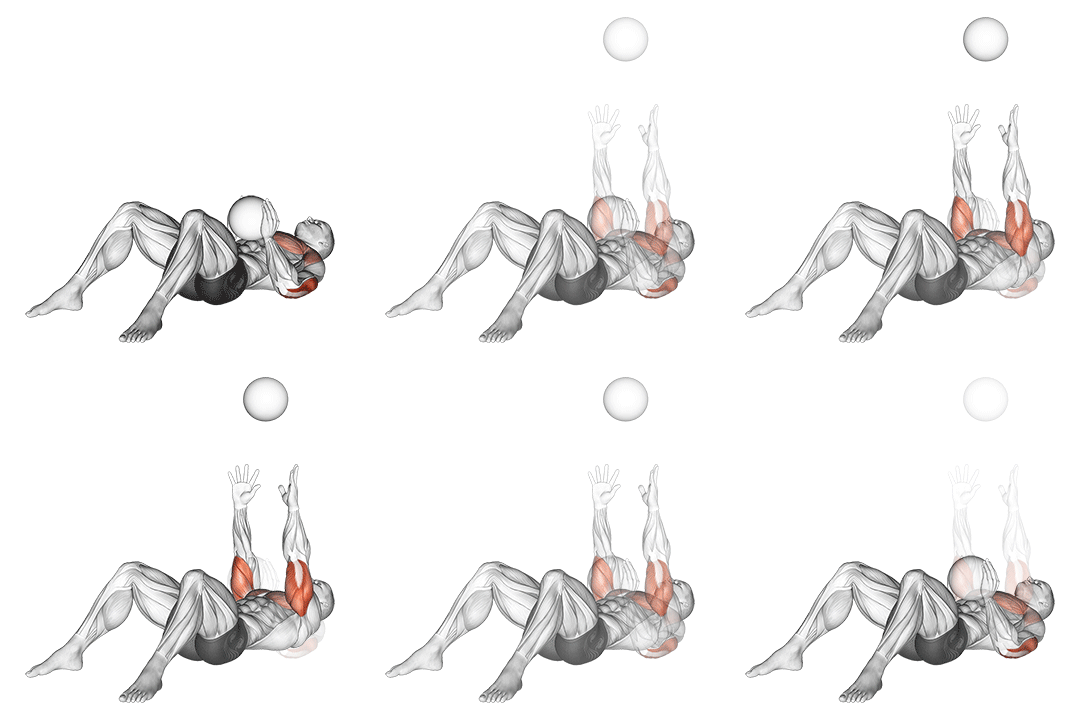
The Medicine Ball Supine Chest Throw lies on the back with a medicine ball at the chest and throws the ball straight up to a partner or by yourself, catching it as it returns. The supine position eliminates leg drive and forces the chest, shoulders, and core to do all the throwing work.
For combined chest-and-core power training, the supine chest throw produces unique stimulus that few other exercises match. The lying position isolates the upper-body throw mechanics while loading the core through the catch-and-release pattern. Run it for 3 sets of 8 to 10 reps as a power finisher.
Lie flat on the back holding a medicine ball at the chest with both hands. Throw the ball straight up explosively by pressing the arms up. Catch the ball as it returns and immediately set up for the next throw. Use a partner to assist with catches if available, or work in a setup where the ball comes back consistently.
How To Program These Workouts
A productive medicine ball ab session pulls six to eight exercises from the list above. A balanced session includes one loaded flexion exercise (medicine ball crunch), one anti-extension exercise (dead bug with medicine ball), one lower-ab exercise (lying leg raise), one rotational power exercise (rotational throw), and one explosive total-body exercise (overhead slam or supine chest throw). Run loaded reps for 3 sets of 10 to 12 reps; explosive throws for 3 sets of 6 to 8 reps with full recovery.
Train medicine ball abs two to three times per week. The combination of loaded strength work and explosive power work produces stronger total core development than static ab training alone. Most lifters do well with two sessions per week alongside regular strength training, or three focused sessions per week as a dedicated core-power approach.
For more ab programming, see our best ab workouts for women and best dead bug ab workouts. For other equipment-focused ab work, see our best ab roller workouts.
Final Thoughts
The best medicine ball ab workouts produce both visible ab development and functional rotational power that static ab training cannot match. The combination of loaded crunches, anti-extension stability work, and explosive throwing variations covers every major core function the body uses during athletic and daily-life activities. For lifters who want stronger core training that translates to athletic performance, medicine ball ab work is one of the most effective options available.
Stay focused on intent during throws. The most common medicine ball training mistake is throwing the ball with moderate effort rather than maximum explosive force. The power variations only produce their full benefit when each throw is performed with maximum intent; lifters who throw at 60 percent effort waste the unique advantage of medicine ball training. Treat every throw as a maximum-effort rep and the strength and power adaptations follow.
Frequently Asked Questions
What weight medicine ball should I use?
Most beginners start with a 6 to 10 pound ball. Most intermediate lifters work with 10 to 15 pound balls for crunches and rotational throws, and 15 to 20 pound balls for slams and overhead throws. The right weight is whatever allows clean reps with explosive intent. Heavier balls slow down the throws and reduce the power-development benefit; lighter balls produce too little stimulus for stronger lifters.
How often should I do medicine ball ab workouts?
Two to three times per week works for most lifters. The combination of loaded core work and explosive throwing demands appropriate recovery; daily medicine ball training often produces shoulder and lower-back soreness within a few weeks. Spacing sessions every 48 to 72 hours allows full recovery while maintaining frequent training stimulus.
Are medicine ball workouts good for fat loss?
Yes, particularly the explosive variations. Medicine ball slams, throws, and rotational work produce strong cardiovascular response alongside the core training, which combines fat-loss benefits with strength and power development. The full-body explosive demand drives heart rate up while loading the core, which produces broader fitness adaptations than isolated core training.
Can I do medicine ball ab workouts at home?
Yes, with the right ball type. Slam balls (which do not bounce) are essential for overhead slams and rotational throws against the floor. Soft medicine balls work for crunches, dead bugs, and partner-based throws. Most home gyms benefit from one slam ball (for slams) and one softer ball (for crunches and rebounds against walls). Avoid hard-surfaced bouncing medicine balls for indoor use; they tend to break things.
How heavy is too heavy for medicine ball training?
For explosive throws and slams, anything that slows the throw significantly is too heavy. The point of explosive training is producing maximum force quickly; using a ball so heavy that the throw becomes a slow grind defeats the purpose. For static loaded ab exercises (crunches, dead bugs), heavier balls work fine as long as form stays clean. Most lifters never need balls heavier than 25 pounds even for advanced training.