High-intensity interval training (HIIT) is one of the most efficient fat-loss training tools that exists. The combination of brief intense work intervals followed by short recovery periods produces strong calorie burn during the workout and elevated post-exercise oxygen consumption (EPOC) that continues burning calories for hours afterward. Research consistently shows that HIIT produces fat loss equal to or greater than traditional steady-state cardio in significantly less time, which makes it particularly valuable for time-constrained lifters.
Below are ten effective HIIT exercises that work especially well for fat loss. Together they cover full-body explosive movements, kettlebell ballistics, plyometric leg work, lateral motion, and combination patterns. A 20-minute HIIT session pulled from this list produces stronger fat-loss results than 45 minutes of steady-state cardio for most lifters.
Burpee

The Burpee combines a squat, push-up, and vertical jump in one continuous motion. Drop into a squat, kick the legs back into a plank, perform a push-up, jump the feet forward, and explode upward into a vertical jump. The combination drives heart rate up rapidly while hitting nearly every major muscle group.
For HIIT fat loss, burpees are the most efficient single exercise that exists. The full-body recruitment and continuous motion produce the highest heart rate response per minute of any bodyweight exercise, which means the highest calorie burn per unit time. They are the gold standard for any fat-loss-focused HIIT workout.
Drop quickly into a squat with hands on the floor. Kick the legs back into a plank, perform one push-up, jump the feet forward to the squat position, then jump straight up with arms overhead. Land softly and immediately drop into the next rep.
Kettlebell Swing

The Kettlebell Swing hinges at the hips with a kettlebell held in both hands and drives the hips forward to swing the bell explosively to chest height. The exercise produces strong posterior chain power along with high cardiovascular response.
For HIIT fat loss programs that include weight equipment, kettlebell swings produce stronger calorie burn than most bodyweight exercises because of the heavy posterior chain loading. Research shows that kettlebell swing intervals can match or exceed traditional cardio for fat loss in significantly less time. Run them for 20 to 30-second intervals.
Hinge at the hips and let the kettlebell swing back between the legs. Drive the hips forward explosively to launch the bell forward to chest height. The arms guide the bell but do not lift it; all the power comes from the hips. Reverse the swing back through the legs.
Jump Squat II

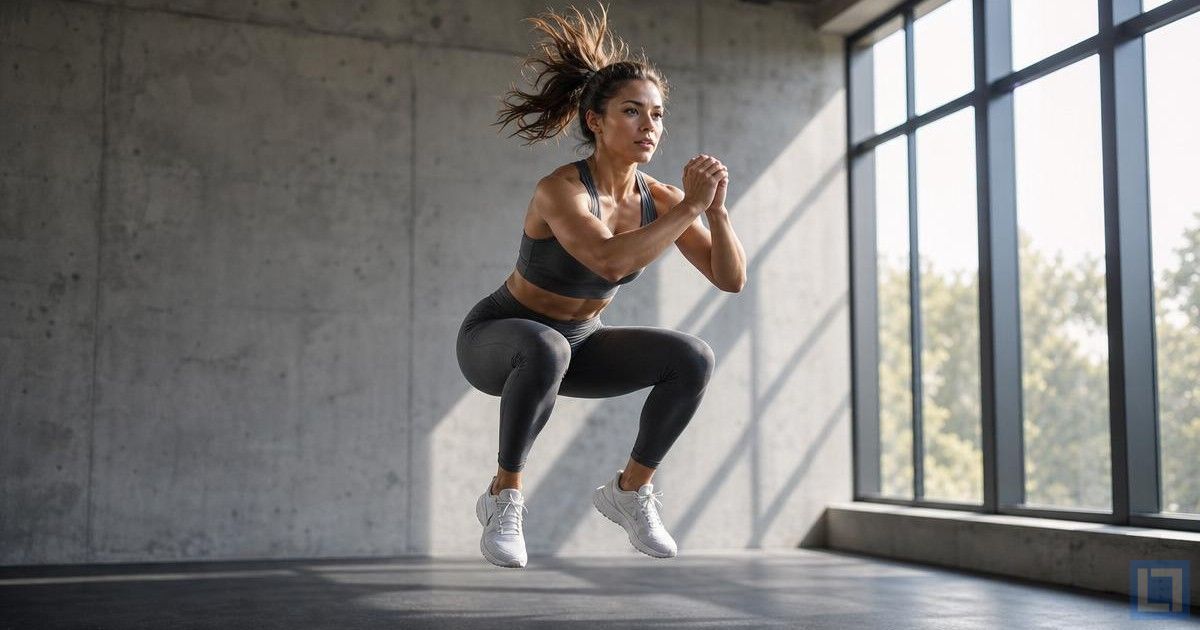
The Jump Squat squats down to a parallel position and explodes upward into a vertical jump, landing softly back into the squat position. The plyometric demand produces strong leg power development on top of cardiovascular response.
For HIIT fat loss with strong leg-strength carryover, jump squats are one of the most effective exercises that exists. The combination of explosive leg power and high heart rate response produces stronger fitness adaptations than steady-state cardio at a fraction of the time. Run them for 30 to 45-second intervals at maximum intensity.
Squat to roughly parallel depth with weight in the heels. Explode upward into a vertical jump, reaching the arms overhead. Land softly with bent knees and immediately drop into the next squat. Maintain quality through the set; if jump height drops significantly, the set is over.
Mountain Climber

The Mountain Climber starts in a push-up position and rapidly drives the knees toward the chest in alternating fashion. The continuous movement combines core engagement with cardiovascular demand in one efficient exercise.
For HIIT fat loss, mountain climbers earn their place by producing strong heart rate response while loading the abs and shoulders simultaneously. The combination produces broader fitness adaptations than pure cardio movements. Run them for 30 to 45-second intervals at high tempo.
Set up in a push-up position with arms straight and body in a straight line. Drive one knee toward the chest, then quickly switch and drive the other knee forward. Maintain a strong core position throughout. Continue for 30 to 60 seconds at a fast tempo.
High Knees Butt Kicks

The High Knees Butt Kicks performs a rapid running-in-place pattern that alternates between high knees (driving the knees up to chest height) and butt kicks (kicking the heels back to the glutes). The combination drives heart rate up with no skill or jumping power required.
For HIIT fat loss accessible to lifters at any fitness level, high knees butt kicks produce strong cardiovascular response while remaining lower-impact than jumping exercises. They serve as both a primary HIIT movement and an active recovery option between higher-intensity intervals.
Stand tall and run in place, alternating between high knees (knees driving up to chest height) and butt kicks (heels kicking back to the glutes). Maintain fast tempo throughout the interval. Use the arms for momentum and rhythm.
Squat Thrust

The Squat Thrust drops into a squat with hands on the floor, kicks the legs back into a plank, then jumps the feet back to the squat position. The motion is functionally a burpee without the push-up and final jump, which produces moderate intensity with faster reps than full burpees.
For HIIT fat loss circuits where full burpees feel too demanding to maintain quality through long workouts, squat thrusts are the next-step substitute. They retain most of the cardiovascular and full-body demand of burpees while removing the push-up and vertical jump that often degrade as fatigue accumulates.
Drop quickly into a squat with hands on the floor. Kick the legs back into a plank position, then immediately jump the feet forward to the squat position. Stand briefly, then drop into the next rep. Maintain fast tempo throughout the interval.
Skater

The Skater hops sideways from one leg to the other in a speed-skating motion, planting on the landing leg with the opposite leg crossed behind. The lateral motion combines cardiovascular demand with single-leg loading.
For HIIT fat loss workouts, skaters earn their place by adding lateral motion that most HIIT routines miss. The unilateral loading also catches strength imbalances and produces stronger glute and hip stabilizer work than bilateral exercises. Run them for 30 to 45-second intervals.
Stand on one leg with the other crossed behind. Hop laterally to the other side, planting on the opposite leg and crossing the first leg behind. Continue alternating sides in a smooth skating motion. Land softly on each side with bent knees.
Jumping Jack

The Jumping Jack jumps the feet apart while raising the arms overhead, then jumps back to standing position. The full-body movement drives heart rate up with no equipment required.
For HIIT fat loss, jumping jacks serve as both warm-up movements and active recovery intervals between harder exercises. The simple motion is accessible to lifters at every fitness level, and the moderate intensity allows long continuous sets that build cardiovascular endurance.
Stand with feet together and arms at the sides. Jump and land with the feet shoulder-width apart while simultaneously raising the arms overhead. Reverse the motion immediately. Continue at a sustainable pace for 30 to 60 seconds.
Plank Jack

The Plank Jack starts in a plank position and jumps the feet apart and back together rapidly while maintaining the plank. The combination of plank loading and lower-body cardiovascular work produces strong total-body demand.
For HIIT fat loss programming, plank jacks combine isometric core work with dynamic cardiovascular demand in a single exercise. The position loads the abs and shoulders while the leg motion drives heart rate up, which produces broader fitness adaptations than isolated movements. Run them for 30-second intervals.
Set up in a plank position on the hands or forearms with body straight from head to heels. Jump the feet apart to a wide stance, then jump them back together. Maintain a strong plank position throughout. Continue at a fast tempo for the prescribed time.
Star Jump

The Star Jump jumps up while extending the arms and legs out to form a star shape in midair, then lands back in a standing position. The full-body extension combined with vertical jumping produces strong cardiovascular response and full-body power demand.
For HIIT fat loss workouts, star jumps add explosive total-body demand that produces strong calorie burn per rep. The full-body extension pattern hits more muscles than standard jumping jacks, which produces broader fitness adaptations. Run them for 20 to 30-second intervals.
Stand with feet together. Squat down slightly, then explode upward while spreading the arms and legs out to form a star shape in midair. Land softly with bent knees back in the standing position. Continue for 20 to 30 seconds at a steady tempo.
How To Program These Workouts
A productive HIIT fat loss session uses one of three formats. Tabata intervals run 20 seconds work and 10 seconds rest for 8 rounds (4 minutes per exercise), with 5 to 8 exercises per workout. AMRAP (as many rounds as possible) runs a circuit of 5 to 6 exercises for 15 to 20 minutes total. EMOM (every minute on the minute) performs prescribed work within each minute, with rest in whatever time remains.
Train HIIT three to five times per week for fat loss. The high intensity demands appropriate recovery; daily HIIT training produces burnout for most lifters within a few weeks. Pair HIIT sessions with two to three strength training sessions per week and adequate sleep and nutrition. Most successful fat-loss programs combine training with appropriate caloric deficit (200 to 500 calories below maintenance per day).
For more conditioning programming, see our best HIIT workouts at home and best Tabata workouts. For broader fat-loss training, see our best at home cardio workouts.
Final Thoughts
The best HIIT workouts for fat loss deliver maximum calorie burn in minimum time, which makes them particularly valuable for time-constrained lifters who need fitness training to fit into busy schedules. The combination of high-intensity work and brief recovery periods produces stronger fat-loss adaptations than steady-state cardio at a fraction of the duration, while also building cardiovascular fitness, muscular endurance, and athletic power.
Stay focused on intensity and nutrition. The most common HIIT fat loss mistake is treating the work intervals as easy or moderate effort rather than maximum sustainable effort. Each interval needs to push hard enough that breathing becomes labored and heart rate climbs into the working zone. Just as importantly, fat loss requires appropriate nutrition; HIIT alone without dietary management rarely produces significant fat loss results. Combine intense training with a sustainable caloric deficit for the strongest results.
Frequently Asked Questions
How long should HIIT workouts for fat loss be?
Most productive HIIT fat loss workouts run 15 to 30 minutes total, including warm-up and cool-down. The high intensity makes longer sessions counterproductive (form quality drops and calorie burn per minute decreases as fatigue accumulates). Tabata intervals run as short as 4 minutes per exercise; full Tabata workouts of 4 to 6 exercises (20 to 30 minutes total) produce stronger fat loss than 45-minute steady-state cardio.
How often should I do HIIT for fat loss?
Three to five times per week works for most lifters. The high intensity demands appropriate recovery; daily HIIT training produces burnout for most lifters within a few weeks. Most successful fat-loss programs run HIIT three to four times per week alongside two to three strength sessions and adequate cardio recovery work.
Will HIIT alone make me lose weight?
Not without nutritional management. HIIT burns significant calories during and after the workout (through EPOC), but most lifters underestimate how easily those calories can be replaced with even small dietary excesses. Most successful fat-loss programs combine HIIT with a moderate caloric deficit (200 to 500 calories per day below maintenance) for the strongest results.
Is HIIT better than running for fat loss?
Generally yes, in less time. Research shows that HIIT produces fat loss equal to or greater than steady-state cardio in 30 to 50 percent of the time. However, both methods work; the best fat-loss approach is whatever the lifter will actually do consistently. Lifters who hate HIIT and love running will get better results from running because adherence matters more than per-minute efficiency.
Can beginners do HIIT for fat loss?
Yes, with appropriate scaling. Beginners should start with longer rest intervals (40 seconds work, 20 to 40 seconds rest) and lower-impact exercises (jumping jacks, mountain climbers, squat thrusts) before progressing to harder versions (burpees, jump squats, kettlebell swings). Most beginners can do effective HIIT within their first few weeks of training; the key is scaling intensity to current fitness level rather than copying advanced workout protocols.