High-intensity interval training (HIIT) is one of the most time-efficient training methods that exists. Twenty to thirty minutes of HIIT produces cardio adaptations comparable to much longer steady-state cardio sessions, plus muscular endurance benefits that traditional cardio rarely matches. The best HIIT workouts at home use bodyweight movements that require zero equipment and minimal space.
Below are ten effective HIIT exercises that work in any home environment. Together they cover lower-body explosive power, upper-body endurance, core stability under cardiovascular load, and the lateral movement patterns most cardio routines miss. Pick six to eight exercises and run them as a circuit for two to three rounds inside 20 to 30 minutes.
Burpee

The Burpee combines a squat, a plank, a push-up, and a jump in one fluid sequence. It is the most efficient single HIIT exercise that exists because it trains every major movement pattern under significant cardiovascular load in one rep.
No HIIT routine is complete without burpees. The combination of pushing, squatting, and jumping produces more total stimulus per rep than any other bodyweight movement, which is exactly what HIIT training requires. They are also genuinely brutal in any sustained set.
Move continuously through all phases (squat, plank, push-up, jump) without pausing. The push-up should be a real rep, not a chest dip. The jump should be a real vertical jump. Pace yourself; burpees burn out fast if you start too hot.
Jumping Jack

The Jumping Jack jumps the legs apart while raising the arms overhead, then jumps back to the start. It is the most basic HIIT exercise and serves as both a warm-up and an active recovery movement during higher-intensity sessions.
Jumping jacks fit any HIIT session because they elevate the heart rate quickly without requiring the recovery time that more demanding moves do. They make excellent active recovery between burpees, jump squats, and other higher-intensity exercises in interval training.
Move the arms and legs together rhythmically. Arms reach overhead at the top; legs jump to roughly shoulder-width. Keep a steady tempo rather than rushing or slowing arbitrarily.
Mountain Climber

The Mountain Climber holds a high plank position and rapidly drives one knee forward to the chest, alternating sides. The continuous motion elevates the heart rate quickly while loading the core, hip flexors, and shoulders.
Mountain climbers fit HIIT training because they require zero equipment, almost zero space, and deliver serious cardio response within 30 to 60 seconds. They also train the core under dynamic load, which transfers better to athletic and combat-relevant movement than static plank holds alone.
Hold a strong plank position with hands directly under the shoulders. Drive each knee toward the chest in turn, keeping the hips level (not bouncing up and down). Move at whatever tempo you can hold without form breaking down.
Jump Squat II

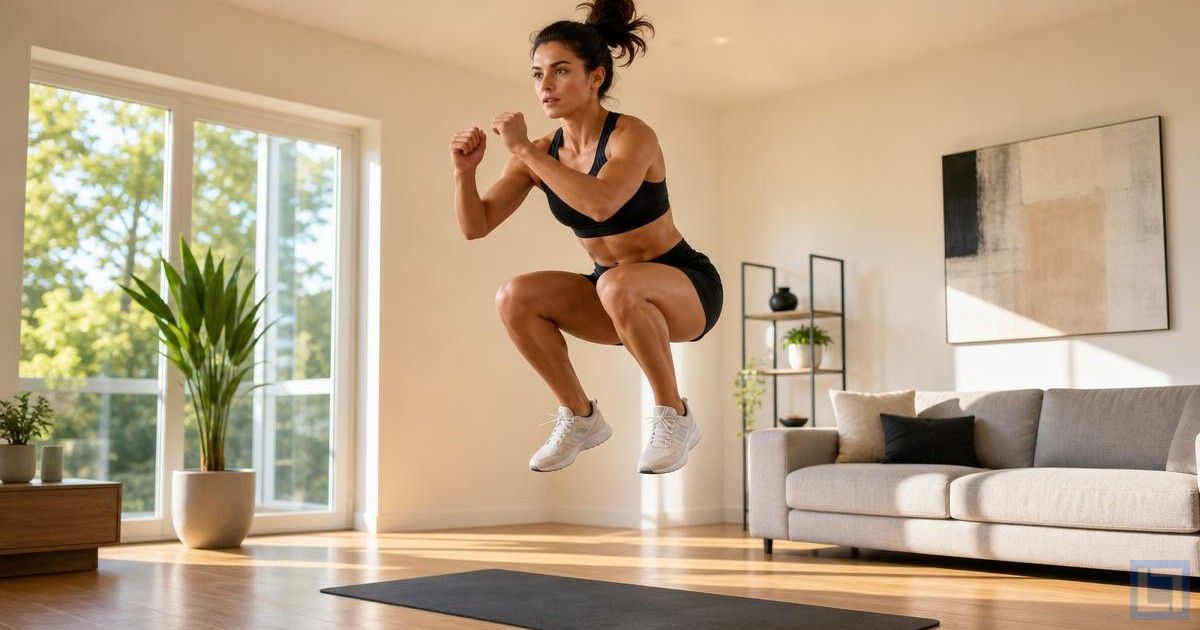
The Jump Squat (Jump Squat II) squats down to a parallel position and explodes upward into a vertical jump, landing softly back into the squat. It trains explosive lower-body power and significantly elevates the heart rate.
Jump squats are one of the most demanding bodyweight HIIT exercises that exists. The combination of repeated maximum-effort jumps drives the heart rate up faster than nearly any other single exercise, and the explosive demand also builds genuine athletic power.
Squat to roughly parallel depth with weight in the heels. Explode upward into a vertical jump, reaching the arms overhead. Land softly with bent knees and immediately drop into the next squat. Maintain quality through the set; if jumps lose height, the set is over.
High Knees Butt Kicks

The High Knees Butt Kicks combines two running drills: lifting the knees high in front and kicking the heels back to the glutes. The combined movement drives the heart rate up quickly while warming up the hip flexors and hamstrings.
High knees butt kicks make excellent HIIT exercise both as standalone work and as transitions between higher-intensity moves. The continuous running motion elevates the heart rate without the demanding recovery time that burpees or jump squats require.
Run in place, alternating between lifting the knees high to waist level and kicking the heels back to the glutes. Pump the arms naturally as you would when running. Maintain a steady rhythm without rushing or slowing.
Squat Thrust

The Squat Thrust is the burpee minus the push-up and the jump: from standing, you drop to a plank, then jump back to a squat and stand up. The simpler movement pattern lets you maintain higher rep counts than full burpees while still hitting the major movement patterns.
Squat thrusts work well in HIIT for lifters who want significant cardio stimulus without the upper-body fatigue that burpees produce. They also serve as a beginner progression to burpees: master the squat thrust pattern first, then add the push-up and the jump.
From standing, drop the hands to the floor and jump the feet back into a plank. Pause briefly in plank position, then jump the feet forward to the squat. Stand up. Continuous motion through the full sequence; do not pause between phases.
Skater

The Skater jumps laterally from one foot to the other, mimicking a speed skater’s motion. The lateral hop trains the lower body in a different plane than most exercises, which builds athletic agility and challenges balance.
Most HIIT exercises move in the sagittal plane (forward and backward). Skaters fix that by adding lateral motion, which trains the muscles and movement patterns that stabilize the body during athletic activities. They also produce significant cardio response with minimal equipment requirement.
Hop laterally from one foot to the other, landing on a single leg with the opposite leg crossing slightly behind. Reach the opposite hand toward the planted foot for balance. Maintain a steady rhythm; quality matters more than speed.
Plank Jack on Elbows

The Plank Jack on Elbows holds a forearm plank position and jumps the feet apart and together (jumping jack motion in plank). It combines core stability work with cardiovascular load in one efficient movement.
Most plank exercises are static and isolate core stability without much cardio response. The plank jack adds the cardiovascular component while still demanding strong core stability, which makes it more time-efficient than alternating between separate plank and cardio exercises.
Hold a forearm plank position with elbows directly under the shoulders. Jump the feet apart and back together rhythmically while keeping the hips level. Move at a steady tempo without letting the hips bounce or sag.
Push Up to Side Plank

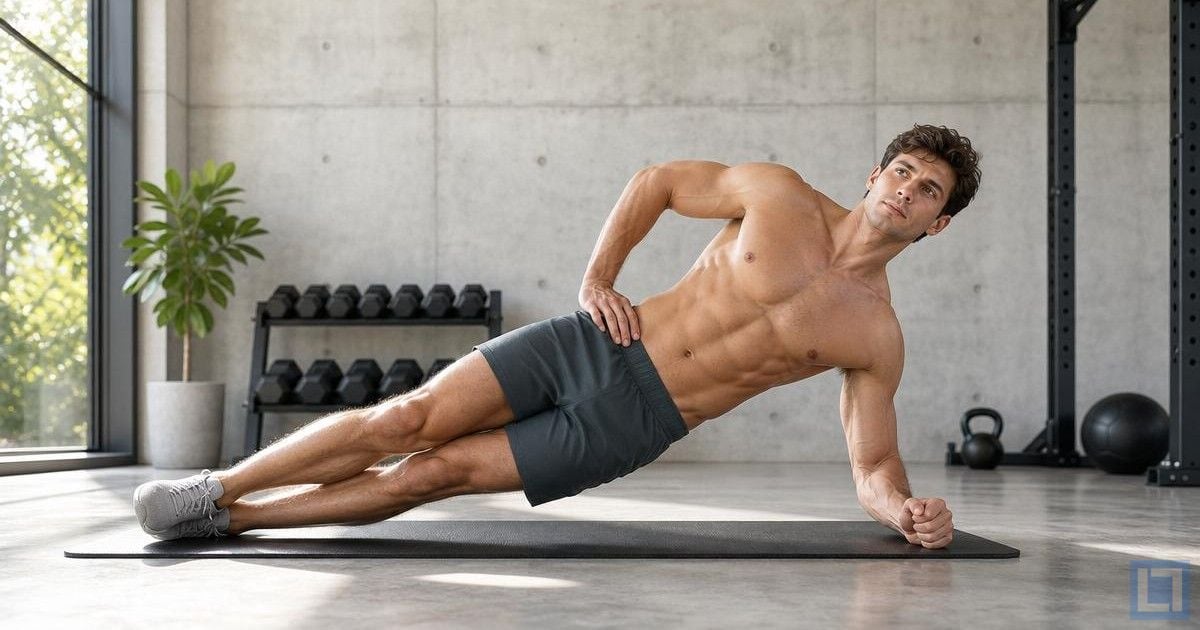
The Push Up to Side Plank performs a push-up, then rotates the body into a side plank with one arm extended overhead. The combination trains pushing strength, rotational core stability, and shoulder mobility in one rep.
Combo movements like this earn a spot in any HIIT routine because they hit multiple muscle groups simultaneously, which fits the time-efficient goal of interval training. The side plank rotation also engages the obliques in a way most HIIT exercises miss.
Perform a strict push-up. At the top, rotate the body into a side plank with the top arm reaching toward the ceiling. Reverse back to the push-up position and perform the next rep. Alternate sides on each rep.
Silent Burpee

The Silent Burpee is a burpee variation that emphasizes soft, controlled landings on every phase rather than the typical loud impact. The slower, more controlled motion still drives heart rate up but reduces joint stress and increases the muscular tension per rep.
For HIIT training in apartments, hotel rooms, or any setting where loud impact is a problem, silent burpees deliver the workout without the noise. The slower tempo also produces more time-under-tension per rep, which can produce more muscle stimulus than fast burpees with the same total rep count.
Perform the burpee sequence (squat, plank, push-up, return to squat, jump) but emphasize quiet, controlled landings on every phase. Land softly on the balls of the feet rather than slapping the floor. The slower tempo is intentional, not a result of fatigue.
How To Program These Workouts
A productive home HIIT session uses interval timing rather than rep counts. The classic Tabata structure (20 seconds work, 10 seconds rest, 8 rounds) hits one exercise hard for 4 minutes; combine multiple exercises across a session for a 20 to 30 minute total. A simpler structure runs each exercise for 45 seconds with 15 seconds rest, cycling through 6 to 8 exercises for 2 rounds.
Train HIIT three to four times per week. The high cardiovascular and muscular demand requires recovery time; daily HIIT burns out the central nervous system within a few weeks for most lifters. Pair HIIT days with strength training days for a complete weekly program (Monday/Wednesday/Friday HIIT, Tuesday/Thursday strength).
For more home-friendly programming, see our best at home chest workouts and best full body calisthenics workout guides.
Final Thoughts
The best HIIT workouts at home produce serious results in minimal time and space. The combination of explosive lower-body work, upper-body endurance, and rotational core demand covers the full range of cardio adaptations the body benefits from. Twenty to thirty minutes of focused HIIT, three to four times per week, produces measurable improvements in conditioning within six to eight weeks.
Quality matters more than quantity in HIIT. The lifters who get the most benefit are the ones who maintain real intensity for the work intervals rather than going through the motions. If form breaks down or speed drops significantly within an interval, the rest period is too short or the work interval is too long. Adjust the structure to maintain quality rather than pushing through degraded reps.
Frequently Asked Questions
How long should a HIIT session be?
Twenty to thirty minutes is the sweet spot for most lifters. Shorter sessions (10 to 15 minutes) work for time-limited days but produce less total adaptation; longer sessions (45+ minutes) become harder to maintain at high intensity. Most research on HIIT benefits uses sessions in the 20 to 30 minute range.
How often should I do HIIT workouts?
Three to four times per week works for most lifters. The high cardiovascular demand requires recovery time; daily HIIT burns out the central nervous system within a few weeks. Pair HIIT days with strength training or active recovery days for a balanced weekly program.
Do HIIT workouts burn fat?
Yes, when combined with appropriate nutrition. HIIT produces both immediate calorie burn during the session and elevated metabolic rate for hours afterward (the EPOC effect). The fat loss itself comes from being in a calorie deficit, not from any specific exercise; HIIT contributes to the deficit and preserves muscle mass during fat loss better than steady-state cardio for most lifters.
Can beginners do HIIT?
Yes, with appropriate modifications. Beginners should start with longer rest intervals (20 seconds work, 40 seconds rest), simpler exercises (squat thrusts instead of full burpees, jumping jacks instead of jump squats), and shorter total session lengths (10 to 15 minutes). The intensity adjusts to current fitness level; the protocol scales for any starting point.
What’s the difference between HIIT and cardio?
Traditional cardio (steady-state running, biking, etc.) maintains a moderate intensity for an extended period. HIIT alternates short bursts of maximum effort with brief recovery periods. HIIT typically produces faster cardiovascular adaptations and better muscle preservation during fat loss; steady-state cardio is easier on recovery and more accessible for beginners. Most well-rounded programs include some of both.