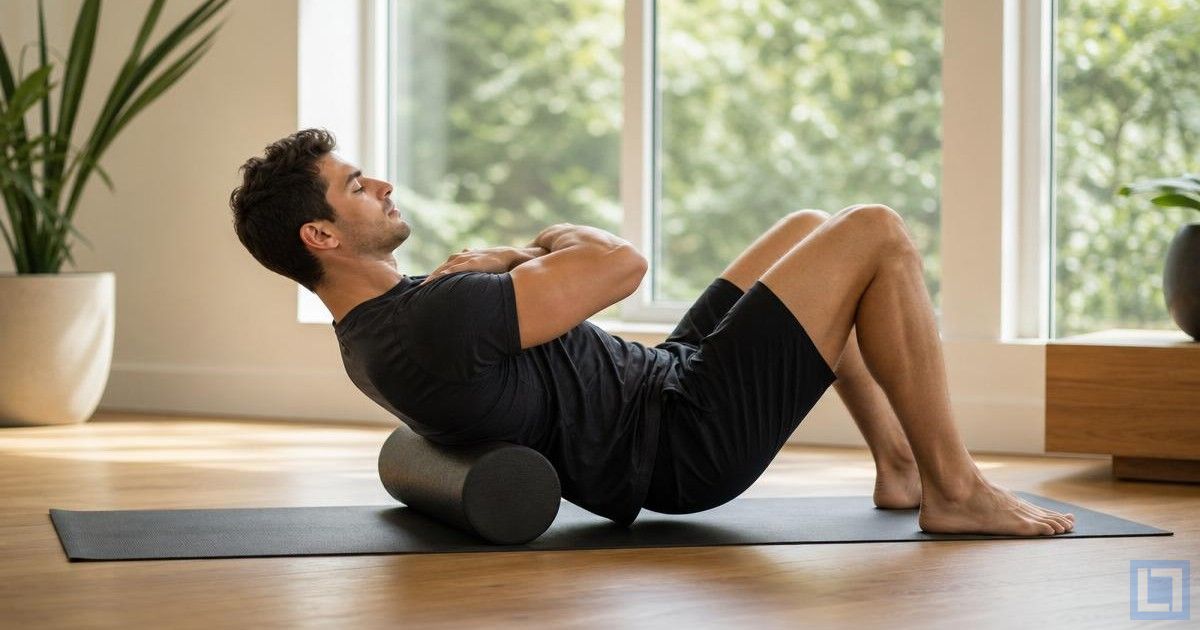
Foam roller back recovery produces real mobility and tension-release benefits through self-myofascial release techniques that target the back muscles, fascia, and thoracic spine. The format works particularly well for back recovery because the back muscles accumulate significant tension from daily activities (desk work, driving, prolonged sitting) and from training (heavy compound lifts, overhead pressing, pulling work). Most lifters who incorporate 5 to 10 minutes of foam roller back work daily see measurable mobility and tension reduction within 2 to 4 weeks. The combination of release work for the upper back, mobility work for the thoracic spine, serratus activation, and hip release (which directly supports lower back health) produces broader back recovery than single-modality stretching.
Below are ten effective foam roller back exercises that cover upper-back release (roll upper back, roll rhomboids), thoracic mobility (roll thoracic spine, kneeling upper back rotation, shoulder back rotation), middle-back release (roll middle back), serratus and scapular work (foam roll serratus wall slide, band-loaded serratus slide), passive recovery (roll back stretch lengthwise), and hip release that supports back health (roll hip stretch). Together they form a complete foam roller back recovery program. A 10 to 15-minute session pulled from this list produces meaningful tension reduction and mobility improvement.
Roll Upper Back

The Roll Upper Back lies on the floor with a foam roller positioned across the upper back and rolls the upper back over the roller by lifting and lowering the hips. The pattern releases tension in the trapezius and upper-back muscles.
For foam roller back recovery, rolling the upper back is the foundational thoracic and trap release exercise. The pattern targets the upper-back muscles that accumulate tension from desk work and overhead training. Run it for 1 to 2 minutes as primary upper-back release work in any back recovery session.
Lie on the back with a foam roller positioned horizontally across the upper back at trap level. Cross the arms over the chest. Lift the hips off the floor to put body weight on the roller. Roll the upper back slowly up and down across the roller by walking the feet forward and back. Pause on tight spots for 20 to 30 seconds.
Roll Thoracic Spine Lying on Floor

The Roll Thoracic Spine Lying on Floor positions the foam roller perpendicular to the spine at the thoracic level and performs slow extension motions over the roller. The pattern increases thoracic mobility and releases mid-back tension.
For foam roller back recovery, the thoracic spine roll is one of the most direct mobility exercises that exists. The pattern restores thoracic extension that desk posture compromises over time. Run it for 8 to 12 slow extension reps as primary thoracic mobility work.
Lie on the back with a foam roller positioned horizontally under the upper-mid back. Place hands behind the head with elbows pointing up. Lift the hips slightly. Slowly extend the upper back over the roller by arching backward, allowing the head to drop back. Return to neutral. Move the roller down 1 to 2 inches and repeat at the next level.
Roll Middle Back Lying on Floor

The Roll Middle Back Lying on Floor positions the foam roller across the middle back and rolls back and forth slowly. The pattern targets the middle-back muscles between the thoracic and lumbar regions.
For foam roller back recovery, the middle back roll targets the mid-back muscles that bridge the upper and lower back. The pattern releases tension that contributes to mid-back stiffness from prolonged sitting. Run it for 1 to 2 minutes as middle-back release work.
Lie on the back with a foam roller positioned horizontally across the middle back. Cross the arms over the chest or place hands behind the head. Lift the hips slightly. Roll the middle back slowly up and down across the roller by walking the feet forward and back. Pause on tight spots for 20 to 30 seconds.
Roll Kneeling Upper Back Rotation

The Roll Kneeling Upper Back Rotation kneels with one elbow on the foam roller and the other hand behind the head, then rotates the trunk to bring the elbow up toward the ceiling. The pattern improves thoracic rotation and releases upper-back tension.
For foam roller back recovery, the kneeling rotation produces strong combined release and mobility work. The pattern hits the thoracic rotation that traditional rolling cannot match. Run it for 8 to 12 reps per side as combined upper-back release and rotation work.
Kneel on the floor with one forearm on a foam roller at chest level. Place the other hand behind the head with the elbow pointing out. Rotate the trunk to bring the free elbow up toward the ceiling, twisting through the thoracic spine. Return to the start. Switch sides between sets.
Roll Rhomboids

The Roll Rhomboids lies on the back and positions the foam roller specifically at the rhomboid level (between the shoulder blades and spine), then rolls slowly. The pattern targets the rhomboids that contribute to upper-back tightness.
For foam roller back recovery, the rhomboid roll targets one of the most commonly tight upper-back muscles. The pattern releases the rhomboids that contribute to rounded-shoulder posture. Run it for 1 to 2 minutes as direct rhomboid release work.
Lie on the back with a foam roller positioned horizontally at the level of the rhomboids (between shoulder blades and spine). Cross the arms over the chest to spread the shoulder blades. Roll slowly over the rhomboid area, pausing on tight spots for 20 to 30 seconds. Adjust position to target both rhomboids individually.
Roll Shoulder Back Rotation Lying on Floor

The Roll Shoulder Back Rotation Lying on Floor lies on the back with the foam roller positioned at the upper back and performs slow rotation motions by reaching one arm across the body. The pattern combines back release with shoulder mobility work.
For foam roller back recovery, the rotation roll combines release and mobility work in single exercise. The pattern hits both the upper-back muscles and the shoulder rotation patterns. Run it for 8 to 12 reps per side as combined release and mobility work.
Lie on the back with a foam roller positioned horizontally across the upper back. Extend both arms straight up toward the ceiling. Reach one arm across the body in a wide arc, allowing the shoulder to roll across the foam roller. Reverse the motion. Switch sides on each rep, continuing in a controlled tempo.
Foam Roll Serratus Wall Slide

The Foam Roll Serratus Wall Slide stands facing a wall with a foam roller held against the wall by the forearms, then slides the arms up and down the wall while pressing through the foam roller. The pattern produces strong serratus anterior activation.
For foam roller back recovery, the serratus wall slide combines release work with shoulder mobility and serratus activation. The serratus anterior contributes to scapular stability and good posture. Run it for 3 sets of 8 to 12 reps as serratus and scapular mobility work.
Stand facing a wall with feet hip-width and arms bent at chest level. Hold a foam roller vertically against the wall with the forearms. Slide the arms up the wall by extending overhead while pressing through the foam roller. Lower under control to chest level. Maintain consistent pressure on the roller throughout.
Roll Back Stretch

The Roll Back Stretch positions the foam roller along the spine lengthwise (parallel to the spine) and lies on the roller with arms extended out to the sides. The pattern provides passive thoracic extension and chest opening.
For foam roller back recovery, the lengthwise back stretch is one of the most relaxing release exercises that exists. The pattern provides passive thoracic extension and opens the chest. Run it for 2 to 3 minutes as restorative back release work at the end of recovery sessions.
Place a foam roller on the floor lengthwise (parallel to where the spine will be). Lie back on the roller so it runs from the tailbone to the head. Extend the arms out to the sides at shoulder level with palms facing up. Hold the position while breathing deeply. Allow the chest to open and the upper back to relax.
Foam Roll Hip Stretch

The Roll Hip Stretch positions the foam roller under the hips and rolls the hip and glute area to release tension that often contributes to lower back tightness. The pattern targets the hip flexors and glutes that support back health.
For foam roller back recovery, the hip release is essential because tight hips contribute significantly to lower back tightness. The pattern releases the hip muscles that pull on the lower back. Run it for 1 to 2 minutes per side as hip release work that supports back recovery.
Lie on one side with a foam roller positioned under the hip and outer thigh area. Support the body with the bottom forearm. Roll slowly up and down from hip to mid-thigh, pausing on tight spots for 20 to 30 seconds. Switch sides between sets. The hip release directly supports lower back health.
Resistance Band Serratus Wall Slide with Foam Roll

The Resistance Band Serratus Wall Slide with Foam Roll combines a foam roller against the wall with resistance band loading at the forearms, performing wall slides under combined band and foam roller tension. The pattern produces strong serratus and back activation.
For foam roller back recovery, the band-loaded serratus wall slide adds resistance to the foundational wall slide pattern. The combined loading produces stronger serratus activation than bodyweight versions. Run it for 3 sets of 8 to 12 reps as advanced serratus and scapular mobility work.
Stand facing a wall with a foam roller held vertically against the wall by the forearms. Loop a resistance band around the forearms with the band providing tension that pulls the arms apart. Slide the arms up the wall against the band tension while pressing through the foam roller. Lower under control. Maintain band tension throughout.
How To Program These Workouts
A productive foam roller back session pulls 5 to 7 exercises from the list above. A balanced 10-minute session includes one upper-back release (roll upper back, 1 minute), one thoracic mobility exercise (roll thoracic spine, 8 to 12 extensions), one rhomboid release (roll rhomboids, 1 minute), one middle-back release (roll middle back, 1 minute), one serratus exercise (foam roll serratus wall slide, 3 sets of 8 to 12), one hip release (roll hip stretch, 1 to 2 minutes per side), and ending with passive recovery (roll back stretch lengthwise, 2 to 3 minutes). Total session covers 10 to 15 minutes of focused back recovery work.
Train foam roller back sessions 5 to 7 times per week (essentially daily) for the strongest mobility and tension-reduction benefits. The format produces no muscle fatigue, which means daily training is sustainable without recovery limitations. Most successful recovery programs include daily 10 to 15-minute foam roller sessions that target the back and adjacent areas (hips, glutes, chest). The format works particularly well as morning routines (to release overnight tension), pre-workout warm-ups (to improve range of motion), or evening recovery (to release training-day tension before sleep).
For broader recovery work, see our best foam roller exercises and best foam roller recovery stretches. For specific back issues, see our best lower back stretches.
Final Thoughts
The best foam roller back exercises deliver real mobility and tension-release benefits through self-myofascial release techniques that target the entire back from upper traps to lower back to surrounding hips. The combination of release work, thoracic mobility, scapular activation, and hip release covers every major back recovery function and produces broader benefits than single-modality stretching. For lifters who want effective back recovery between training sessions, want to address chronic upper-back tension from desk work, or need accessible mobility work that fits any setting, foam roller back recovery is one of the most accessible and effective options available.
Stay focused on slow tempo and pausing on tight spots. The most common foam roller back recovery mistake is rolling too quickly without pausing on the tight muscle areas, which significantly reduces the release benefit. The fix: roll slowly across each muscle area, identify tight spots through subjective tension feeling, then pause on those spots for 20 to 30 seconds while breathing deeply. The slow tempo with tight-spot pauses produces stronger tension reduction than fast rolling that covers more area. Quality release work over time produces sustained mobility improvements.
Frequently Asked Questions
How long should I foam roll my back?
Ten to fifteen minutes per session works for most lifters. The session length covers the major back areas (upper back, middle back, rhomboids, thoracic spine) plus adjacent areas (hips, serratus) without producing accumulated discomfort. Shorter sessions (5 to 8 minutes) work well for daily practice or pre-workout warm-ups; longer sessions (20+ minutes) typically produce diminishing returns and can occasionally aggravate tissue if performed too aggressively.
How often should I foam roll my back?
Daily for the strongest results. Foam rolling produces no muscle fatigue and can be performed every day without recovery limitations. Most successful recovery programs include daily 10 to 15-minute foam roller sessions. The format works particularly well as morning routines, pre-workout warm-ups, or evening recovery. Lifters with severe back tension may benefit from twice-daily foam rolling sessions for the first few weeks to address accumulated tension.
Can foam rolling fix back pain?
Foam rolling can significantly reduce muscular back tension and improve mobility, which addresses many causes of common back discomfort. The format produces no fix for structural back issues (disc problems, fractures, severe joint issues) and lifters experiencing severe or persistent back pain should consult medical professionals. For most lifters with general back tension from desk work or training fatigue, regular foam roller work produces measurable tension reduction within 2 to 4 weeks.
Should foam rolling hurt?
Foam rolling should produce moderate discomfort but not sharp pain. The right intensity feels like a deep massage that reaches tight muscle tissue without producing winces or breath-holding. If foam rolling produces sharp pain, switch to a softer roller, reduce body weight on the roller (more support from limbs), or roll a different area. Sharp pain typically indicates either incorrect technique or rolling over an area that isn’t suitable for foam rolling (bones, joints).
What size foam roller do I need?
Most lifters benefit from a standard 36-inch foam roller for back work. The longer length covers the entire back at once and provides versatility for different positions. Density matters more than length for results: medium-density rollers work for beginners and most general use; firmer rollers work for advanced lifters or those needing deeper release. Avoid extremely soft rollers (which provide minimal release) or extremely firm rollers (which can produce excessive discomfort) until building tolerance with medium-density options.