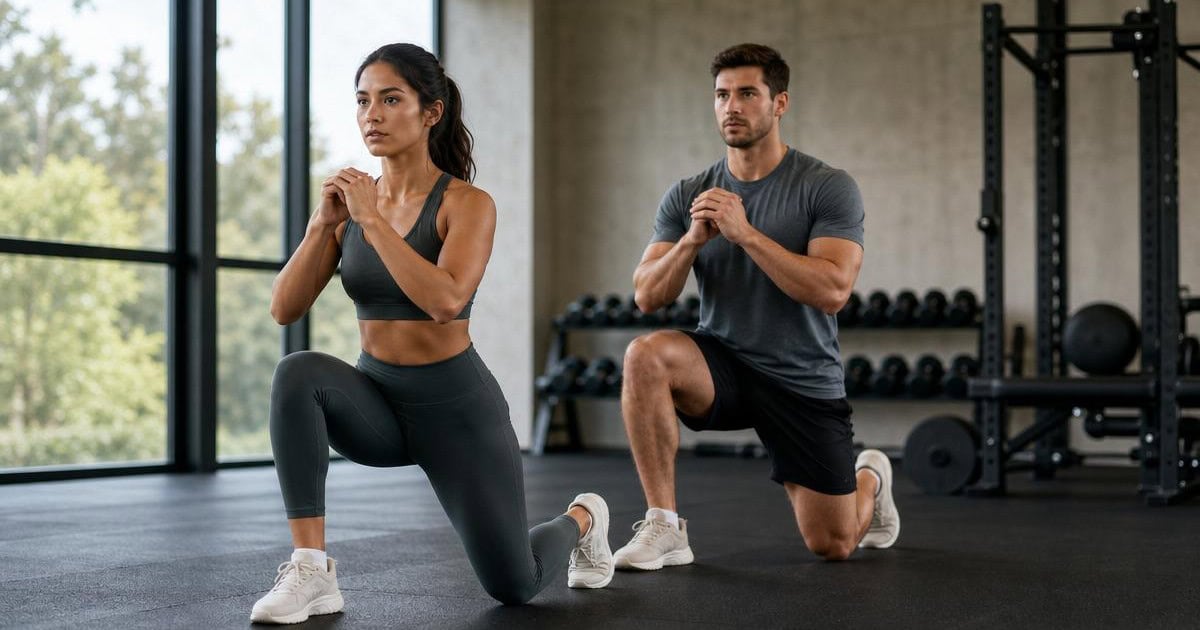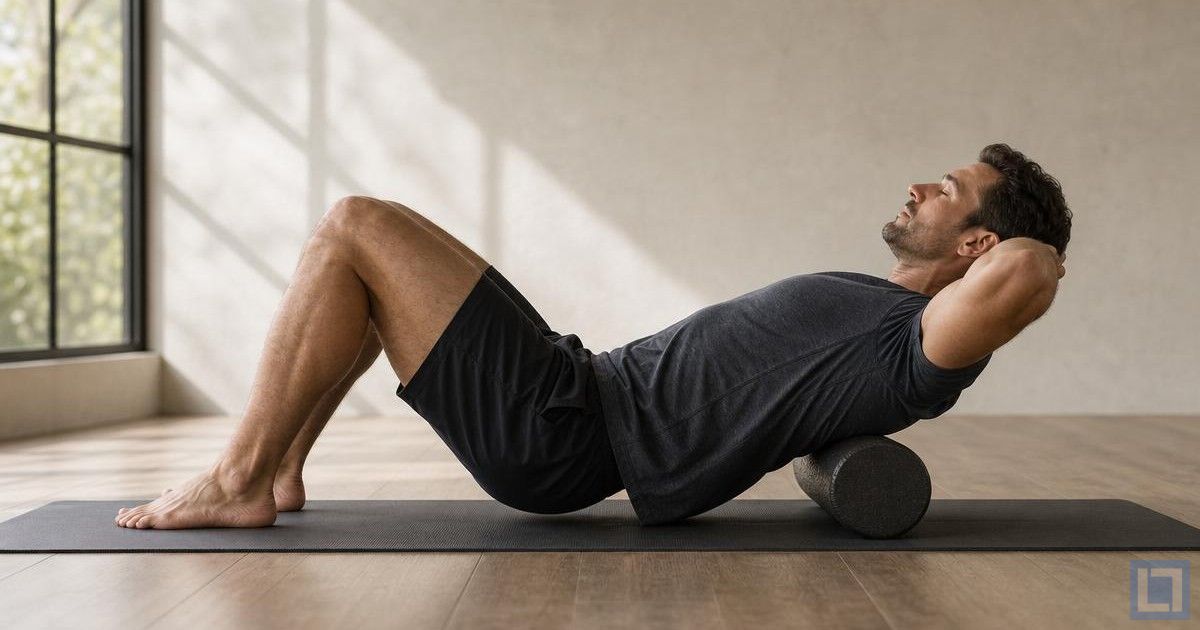
Foam roller recovery stretches produce real tissue health and mobility improvements through self-myofascial release (the technical term for foam rolling). The format works because the foam roller applies sustained pressure to tight tissue areas, which improves blood flow, releases muscular tension, and helps restore normal muscle function after heavy training. Most lifters who consistently incorporate foam roller recovery into their training programs see measurable improvements in mobility, reduced post-workout soreness, and better movement quality within 2 to 4 weeks. The format works particularly well as a daily 10 to 15-minute practice attached to training sessions or as morning or evening recovery work.
Below are ten effective foam roller recovery exercises that cover hip and glute work (hip stretch, pigeon stretch, glute roll), lower-leg recovery (calves, foot), upper-body recovery (upper back, biceps, kneeling rotation), and shoulder mobility work (serratus wall slide, band-loaded wall slide). Together they form a complete foam roller recovery program that fits in any setting. A 10 to 15-minute session pulled from this list addresses the most common tight areas for lifters and athletes.
Foam Roll Hip Stretch

The Foam Roll Hip Stretch sits with one leg crossed over the opposite knee and rolls along the hip and outer thigh on a foam roller. The pattern releases tension in the hip flexors, IT band, and gluteal area.
For foam roller recovery, the hip stretch is foundational for lifters who spend significant time sitting (which tightens the hip flexors) or who train heavy squat and deadlift work. The pattern releases tension in the hip area that contributes to lower-back tightness and limited hip mobility. Run it for 2 to 3 sets of 30 to 60-second rolling intervals per side as primary hip recovery work.
Sit on a foam roller with one leg extended and the opposite leg bent (foot crossed over the extended leg). Lean toward the side of the bent leg to apply pressure on the outer hip. Roll slowly along the hip and outer thigh area. Pause on tender spots for 20 to 30 seconds. Switch sides between sets.
Foam Roll Pigeon Stretch

The Foam Roll Pigeon Stretch combines a pigeon yoga pose with foam rolling on the front leg, applying deep pressure to the hip rotators and glute medius. The pattern produces deep hip mobility work.
For foam roller recovery, the pigeon stretch produces deep hip mobility that traditional rolling cannot match. The combination of stretch position and direct pressure releases tension in the deep hip rotators. Run it for 2 to 3 sets of 30 to 60-second holds per side as deep hip recovery work.
Position a foam roller perpendicular under one leg in a pigeon yoga pose (front leg bent at 90 degrees, back leg extended behind). Lower the body onto the front leg, allowing the foam roller to apply pressure to the hip rotators and glute. Hold the position while breathing deeply. Switch sides between sets.
Foam Roll Serratus Wall Slide

The Foam Roll Serratus Wall Slide places a foam roller against a wall and slides the arm along the wall with the foam roller pinned by the forearm. The pattern improves shoulder mobility and serratus anterior function.
For foam roller recovery that includes shoulder mobility, the serratus wall slide is one of the most direct shoulder mobility exercises that exists. The pattern improves overhead mobility and reduces shoulder impingement risk. Run it for 2 to 3 sets of 8 to 10 reps per side as shoulder mobility work.
Stand facing a wall with a foam roller pinned vertically against the wall by one forearm. The arm should be in an L position with the elbow at shoulder height. Slide the foam roller up the wall by extending the arm overhead while keeping pressure on the roller. Lower under control. Switch sides between sets.
Roll Upper Back

The Roll Upper Back lies face-up with a foam roller positioned under the upper back (between the shoulder blades) and rolls along the upper back area. The pattern releases tension in the thoracic spine and upper back muscles.
For foam roller recovery, the upper back roll is foundational for lifters who spend significant time at desks (which contributes to upper back tightness) or who train heavy pressing exercises. The pattern releases tension that contributes to poor posture and limited overhead mobility. Run it for 2 to 3 sets of 30 to 60-second rolling intervals as primary upper back recovery work.
Lie face-up on the floor with a foam roller positioned horizontally under the upper back (between the shoulder blades). Bend the knees with feet planted. Cross the arms over the chest or place hands behind the head. Lift the hips slightly and roll slowly along the upper back area. Pause on tender spots.
Roll Calves

The Roll Calves sits with one or both legs extended on a foam roller and rolls along the calf area. The pattern releases tension in the gastrocnemius and soleus muscles.
For foam roller recovery, the calf roll is foundational for runners, athletes, and lifters who train heavy squat and deadlift work. The pattern releases tension in the lower legs that contributes to ankle stiffness and Achilles tendon strain. Run it for 2 to 3 sets of 30 to 60-second rolling intervals per side as primary lower-leg recovery work.
Sit on the floor with a foam roller positioned under the calves. Use the arms to lift the hips off the floor, transferring weight onto the calves. Roll slowly along the calf area from below the knee to above the ankle. Pause on tender spots for 20 to 30 seconds. Cross one leg over the other to apply additional pressure to the working calf.
Roll Foot

The Roll Foot stands or sits and rolls one foot at a time on a foam roller (or specialized foot roller), applying pressure to the plantar fascia and arch. The pattern releases tension in the foot and improves arch function.
For foam roller recovery, the foot roll is particularly valuable for runners, athletes, and lifters with foot pain, plantar fasciitis history, or ankle stiffness. The pattern releases tension in the foot that contributes to lower-leg tightness and arch dysfunction. Run it for 2 to 3 sets of 30 to 60-second rolling intervals per foot as foundational foot recovery work.
Stand or sit with a foam roller (or specialized small roller) under one foot. Roll slowly along the foot from the heel to the ball of the foot. Apply pressure by transferring more body weight onto the working foot. Pause on tender spots for 15 to 30 seconds. Switch feet between sets.
Roll Biceps Lying on Floor

The Roll Biceps Lying on Floor lies face-down with one arm extended forward and a foam roller positioned under the bicep, rolling along the arm. The pattern releases tension in the biceps and the front of the shoulder.
For foam roller recovery, the bicep roll is valuable for lifters who train heavy pulling exercises (which produce significant bicep fatigue) or who experience tightness in the front of the shoulder. The pattern releases tension that contributes to elbow stiffness. Run it for 2 sets of 30 to 45-second rolling intervals per arm as bicep and front shoulder recovery work.
Lie face-down on the floor with one arm extended forward and a foam roller positioned under the bicep. Use the opposite hand to support body weight. Roll slowly along the bicep from the shoulder to the elbow. Pause on tender spots for 15 to 30 seconds. Switch arms between sets.
Roll Glutes Sitting on Floor

The Roll Glutes Sitting on Floor sits with the glutes on a foam roller and rolls along the gluteal area, applying pressure to release glute tension. The pattern improves hip mobility and reduces lower-back tightness.
For foam roller recovery, the glute roll is foundational for lifters who spend significant time sitting or who train heavy lower-body work. The pattern releases tension in the gluteal area that contributes to lower-back tightness and limited hip mobility. Run it for 2 to 3 sets of 30 to 60-second rolling intervals per side as primary glute recovery work.
Sit on a foam roller with knees bent and feet planted. Cross one leg over the opposite knee to apply pressure to the working glute. Lean toward the working side. Roll slowly along the gluteal area, pausing on tender spots for 20 to 30 seconds. Switch sides between sets.
Roll Kneeling Upper Back Rotation

The Roll Kneeling Upper Back Rotation kneels on the floor with a foam roller under one side of the upper back and rotates the trunk to apply varied pressure. The pattern combines rolling with thoracic spine rotation for improved mobility.
For foam roller recovery that improves thoracic mobility, the kneeling rotation is one of the most direct thoracic mobility exercises that exists. The pattern combines tissue work with mobility through the rotation motion. Run it for 2 sets of 8 to 10 reps per side as advanced thoracic recovery work.
Kneel on the floor with a foam roller positioned vertically beside the body. Place one arm on the roller with the upper arm parallel to the floor. Rotate the trunk by reaching the free arm under the body and back overhead while the foam roller stays in contact with the upper back side. Switch sides between sets.
Resistance Band Serratus Wall Slide with Foam Roll

The Resistance Band Serratus Wall Slide with Foam Roll combines the foam roller wall slide with a resistance band wrapped around the wrists. The added band tension increases the demand on the serratus anterior throughout the wall slide motion.
For advanced foam roller recovery that includes shoulder strengthening, the band-loaded wall slide produces stronger shoulder mobility and serratus activation than the unloaded version. Run it for 2 to 3 sets of 8 to 10 reps as advanced shoulder mobility and strengthening work.
Set up like a standard foam roll serratus wall slide with the foam roller pinned vertically against a wall by both forearms. Loop a resistance band around both wrists at light tension. Slide the arms up the wall with the foam roller while maintaining outward band pressure. Lower under control. The band adds resistance throughout the rep.
How To Program These Workouts
A productive foam roller recovery session pulls six to eight exercises from the list above based on which areas need work. A standard 12 to 15-minute recovery session: lower body work (calves, glutes, hip stretch — 2 minutes per area per side), upper back work (upper back roll — 2 minutes), shoulder work (serratus wall slide — 1 minute per side), and finishing with feet (1 minute per foot). Sessions can be customized based on which body areas are tight or sore on a given day. Most successful recovery programs include daily 10 to 15-minute sessions or 3 to 5 longer sessions per week (20 to 30 minutes).
Train foam roller recovery sessions daily as part of broader recovery practices, before training (5 to 10 minutes for activation and tissue warming), after training (5 to 10 minutes for tissue recovery), or as standalone mobility sessions on rest days. The format produces no significant fatigue and can be performed daily without recovery concerns. Most successful programs include daily foam roller work alongside dedicated mobility training, sleep optimization, and appropriate nutrition for complete recovery practices.
For broader foam roller programming, see our best foam roller exercises. For specific stretch programming, see our best hamstring stretches and best lower back stretches.
Final Thoughts
The best foam roller recovery stretches deliver real tissue health and mobility improvements through self-myofascial release that addresses the most common tight areas for lifters and athletes. The combination of hip work, lower-leg recovery, upper-body recovery, and shoulder mobility covers every major tight-tissue area and produces broader recovery benefits than single-area rolling alone. For lifters who want better mobility, faster recovery from heavy training, reduced post-workout soreness, or improved movement quality, dedicated foam roller recovery practice is one of the most accessible and effective recovery tools available.
Stay focused on slow tempo and breathing on every roll. The most common foam rolling mistake is rolling too fast or holding tension during rolls, which prevents the tissue release that the practice should produce. The fix: roll slowly (1 to 2 inches per second) along each area and pause on tender spots for 20 to 30 seconds while breathing deeply. The slow tempo allows the nervous system to relax the tight tissue rather than guarding against the pressure. Quality slow rolls produce stronger tissue release than higher-speed rolling that maintains nervous system tension.
Frequently Asked Questions
How often should I foam roll?
Daily for 10 to 15 minutes works for most lifters. The practice produces no significant fatigue and can be performed daily without recovery concerns. Most successful programs include daily foam roller sessions attached to training (before, after, or both) or standalone mobility sessions on rest days. Lifters with significant tightness or soreness can roll multiple times per day; lifters with general fitness goals benefit from once-daily 10 to 15-minute practice.
How long should I roll each area?
Thirty to sixty seconds per area works for most tight tissue. Pause on tender spots (knots) for 20 to 30 seconds while breathing deeply to allow the tissue to release. Most successful foam rolling sessions cover 5 to 8 areas in 12 to 15 minutes. Spending more than 60 seconds on a single area typically produces diminishing returns; the tissue has either released or won’t respond further in that session.
Should I foam roll before or after workouts?
Both work effectively. Pre-workout rolling (5 to 10 minutes) warms tissue, improves blood flow, and prepares the body for movement. Post-workout rolling (5 to 10 minutes) addresses tissue tension from training and supports recovery. Many lifters benefit from doing both: brief rolling before training (focusing on areas that will be trained) and longer rolling after training (focusing on the worked muscles plus chronically tight areas).
Does foam rolling reduce muscle soreness?
Research suggests yes, but the effect is modest. Foam rolling typically reduces post-workout muscle soreness by 10 to 20 percent in the days following heavy training. Most lifters notice meaningful soreness reduction with consistent daily rolling practice. The combination of foam rolling, appropriate nutrition (especially adequate protein and hydration), and quality sleep produces the strongest soreness reduction; rolling alone without these other factors produces smaller benefits.
What kind of foam roller should I use?
Most lifters need either a standard density foam roller (smooth or moderately textured) for general use or a high-density roller for deeper pressure on chronic tight spots. Beginners should start with standard density; intermediate practitioners often progress to high-density rollers as tissue tolerance builds. Specialty rollers (vibrating rollers, deep tissue rollers, peanut rollers for upper back) provide additional options but aren’t required for effective practice. Most successful setups include 1 to 2 different rollers for varied tissue work.