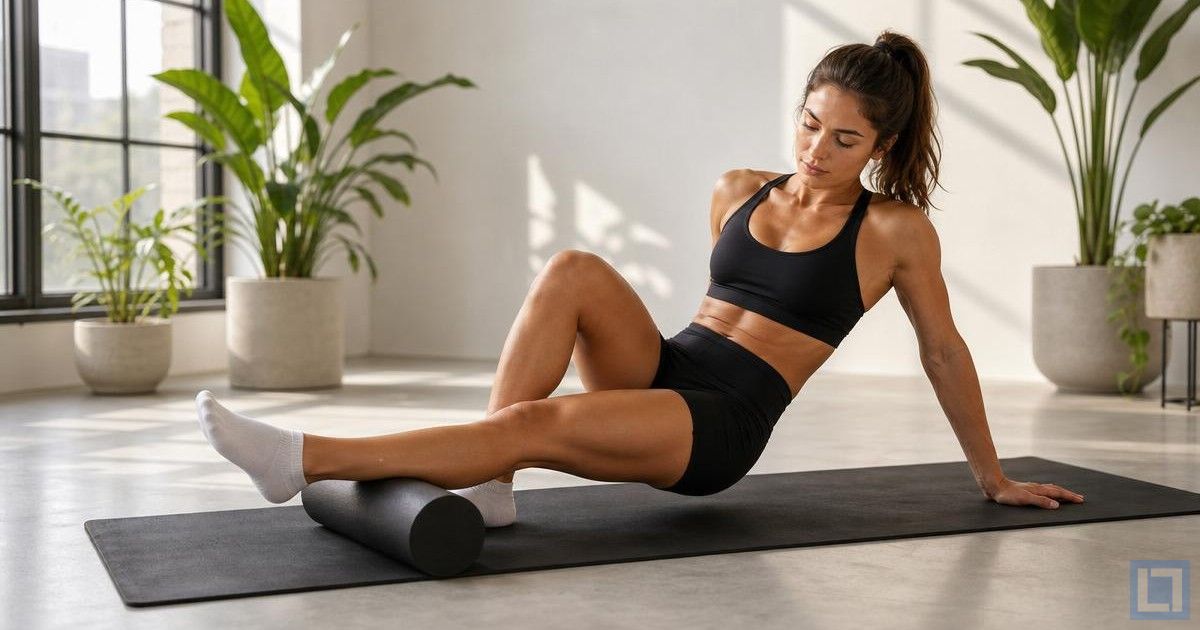
Foam rolling produces real mobility and recovery improvements when used consistently. The targeted pressure on tight tissues addresses chronic adhesions and muscle tension that passive stretching cannot reach as effectively, and the combination of foam rolling and stretching produces stronger flexibility gains than either alone. The best foam roller exercises target the regions that become chronically tight from desk work, heavy training, and athletic activities: hips, glutes, upper and middle back, calves, feet, biceps, and shoulder mobility.
Below are ten effective foam roller exercises that cover lower-body recovery (hips, glutes, calves, feet), upper-body recovery (upper back, middle back, biceps), shoulder mobility (serratus wall slides, kneeling rotations), and full-body deep tissue work (pigeon stretch). Together they form a complete foam roller program that fits in any home with a single foam roller and 10 to 15 minutes of daily practice. Most lifters who add consistent foam rolling to their routine see measurable mobility improvements within 4 to 8 weeks.
Foam Roll Hip Stretch

The Foam Roll Hip Stretch positions the foam roller under one hip and uses bodyweight to apply pressure while gently rolling and shifting position. The targeted pressure addresses the chronic tightness that desk work and prolonged sitting produce in the hip region.
For lifters who sit for long periods, the foam roll hip stretch is one of the most beneficial recovery exercises that exists. The hip flexors and gluteal tissues become chronically tight from sitting, and direct foam roller pressure addresses this tightness more effectively than passive stretching alone. Run it for 60 to 90 seconds per side as part of any warm-up or cool-down routine.
Lie on one side with a foam roller positioned under the side of the hip. Use bodyweight to apply pressure while shifting position slightly to find tight spots. Hold pressure on tight areas for 20 to 30 seconds at a time. Roll along the length of the side hip muscles. Switch sides.
Foam Roll Pigeon Stretch

The Foam Roll Pigeon Stretch combines the pigeon yoga pose with foam roller pressure on the gluteal region. The combined deep stretch and direct tissue pressure addresses the deep glute tightness that sitting and heavy lower-body training produce.
For deep glute tissue work, the foam roll pigeon stretch produces stronger relief than passive pigeon stretching alone. The added foam roller pressure gets into the deep gluteal tissues that surface stretching cannot reach. Run it for 60 to 90 seconds per side as part of any cool-down routine, particularly after leg training.
Set up in a pigeon yoga pose with one leg folded forward and the other extended back. Place a foam roller under the front leg’s hip area. Lower the body weight onto the foam roller, applying pressure to the gluteal region. Hold pressure on tight spots for 20 to 30 seconds. Switch sides.
Foam Roll Serratus Wall Slide

The Foam Roll Serratus Wall Slide places a foam roller against a wall and performs a wall slide motion with the forearms pressed against the foam roller. The exercise targets the serratus anterior and shoulder mobility through dynamic motion against tissue release.
For shoulder mobility and serratus activation, the foam roll wall slide is one of the most effective exercises that exists. The combination of dynamic shoulder motion and tissue release produces stronger shoulder mobility gains than either alone. Run it for 3 sets of 8 to 10 slow controlled wall slides as part of any shoulder warm-up.
Stand facing a wall with a foam roller pressed between the wall and the forearms. Slide the forearms up the wall by reaching overhead while maintaining contact with the foam roller. Slide back down to the start. Move slowly and deliberately rather than rushing.
Roll Upper Back

The Roll Upper Back lies on the back with a foam roller positioned under the upper back and rolls back and forth slowly while applying bodyweight pressure. The exercise addresses the chronic tightness in the thoracic spine that desk work produces.
The foam rolling of the upper back is essential for lifters who sit for long periods. The thoracic spine becomes stiff from prolonged seated posture, which limits overhead pressing and squat depth. Daily foam rolling for 60 to 90 seconds maintains thoracic mobility and prevents the stiffness that limits training. Use it as warm-up or cool-down.
Lie on the back with a foam roller positioned horizontally under the upper back. Cross the arms across the chest. Lift the hips off the floor. Roll slowly up and down along the upper back, pausing on tight spots for 20 to 30 seconds at a time.
Roll Calves

The Roll Calves places a foam roller under one calf and uses bodyweight to apply pressure while rolling along the length of the calf muscle. The exercise addresses the chronic tightness that running, walking, and lower-body training produce.
For calf recovery and ongoing flexibility, foam rolling is one of the most effective exercises that exists. The targeted pressure addresses muscle adhesions and tightness that passive stretching cannot reach as effectively. Run it for 60 to 90 seconds per side as part of any cool-down, particularly after running or leg training.
Sit on the floor with one leg extended forward and a foam roller positioned under the calf. Place the hands behind the body for support and lift the hips slightly off the floor to apply pressure. Roll slowly along the length of the calf, pausing on tight spots. Switch sides.
Roll Foot

The Roll Foot uses a foam roller (or a small ball, lacrosse ball, or tennis ball) positioned under the bottom of the foot and rolls back and forth. The exercise addresses plantar fascia tightness and foot tissue health.
For lifters who run or stand for long periods, foot rolling produces significant relief from plantar fascia tightness and chronic foot tension. The direct pressure addresses the tissue layer that supports nearly every athletic activity. Run it for 60 seconds per foot as part of any warm-up before lower-body training.
Stand or sit with a foam roller positioned under the bottom of one foot. Roll the foot back and forth along the foam roller, applying moderate pressure. Pause on tight spots for 10 to 20 seconds at a time. Cover the entire bottom of the foot from heel to toes. Switch feet.
Roll Biceps Lying on Floor

The Roll Biceps Lying on Floor positions a foam roller under the bicep with the body lying face-down, then rolls the arm along the foam roller. The exercise addresses bicep tightness that chronic curling work produces.
For lifters who train heavy biceps, the foam roll bicep is one of the most underrated recovery exercises that exists. The chronic tightness in the bicep from heavy curl work limits overhead mobility and produces forearm and elbow tension over time. Daily foam rolling for 60 seconds per side prevents these issues. Use it after arm training or as daily mobility work.
Lie face-down on the floor with one arm extended forward and a foam roller positioned under the bicep. Use the opposite hand and feet to control bodyweight pressure on the bicep. Roll the foam roller along the length of the bicep slowly, pausing on tight spots for 20 to 30 seconds. Switch arms.
Roll Glutes Sitting on Floor

The Roll Glutes Sitting on Floor sits on a foam roller with one ankle crossed over the opposite knee, creating a figure-4 position, and shifts the weight onto the working glute side. The targeted pressure addresses deep gluteal tightness.
For deep glute tissue work, the seated foam roll position produces stronger pressure than lying foam rolling because more bodyweight loads onto the working side. The pattern is particularly effective for lifters who sit for long periods or who train heavy lower-body. Run it for 60 to 90 seconds per side as part of any cool-down.
Sit on a foam roller with both legs in front of the body. Cross one ankle over the opposite knee in a figure-4 position. Shift the bodyweight onto the side of the working glute (the leg that has the ankle crossed over). Roll slowly along the gluteal area, pausing on tight spots. Switch sides.
Roll Kneeling Upper Back Rotation

The Roll Kneeling Upper Back Rotation kneels with a foam roller positioned across the upper back and performs a rotation motion through the thoracic spine. The combined foam roll pressure and dynamic rotation produces strong thoracic mobility benefits.
For thoracic spine mobility, the kneeling rotation with foam roller is one of the most effective exercises that exists. The combination of tissue release and dynamic rotation addresses the thoracic stiffness that desk work and lifting produce. Run it for 8 to 10 reps per side as part of any upper-body warm-up.
Kneel on the floor in a quadruped position. Place a foam roller across the upper back. Place one hand behind the head. Rotate the upper back to bring the elbow up toward the ceiling, then rotate to bring the elbow under the body. Move slowly and deliberately.
Roll Middle Back Lying on Floor

The Roll Middle Back Lying on Floor lies on the back with a foam roller positioned under the middle back and rolls slowly while applying bodyweight pressure. The exercise complements upper-back rolling by addressing the mid-thoracic region.
The middle back is one of the most commonly tight regions in lifters who sit a lot or do heavy pressing work. Foam rolling the middle back maintains mid-thoracic mobility and prevents the cumulative stiffness that limits overhead and rotational performance. Use it daily for 60 to 90 seconds as part of warm-up or recovery.
Lie on the back with a foam roller positioned horizontally under the middle back (around the bottom of the rib cage). Cross the arms across the chest. Lift the hips off the floor. Roll slowly along the middle back, pausing on tight spots for 20 to 30 seconds at a time.
How To Program These Workouts
A productive foam roller session pulls six to eight exercises from the list above. A balanced session includes hip and glute work (hip stretch, pigeon stretch, glute roll), upper-back work (upper back roll, middle back roll, kneeling rotation), lower-leg work (calves, feet), and shoulder mobility (serratus wall slide). Run each foam roller exercise for 60 to 90 seconds per side, or until the targeted tissue feels meaningfully released. Total session time runs 10 to 15 minutes.
Foam roller daily for best results. The targeted tissue work compounds with consistent practice; daily 10 to 15-minute sessions produce stronger mobility gains than infrequent longer sessions. Most successful programs use foam rolling as part of every warm-up (5 minutes targeting the muscles being trained) and every cool-down (5 to 10 minutes targeting the muscles just trained), plus a longer dedicated mobility session (15 to 20 minutes) once or twice per week.
For broader mobility programming, see our best hip mobility stretches and best shoulder mobility exercises. For specific stretching, see our best lower back stretches.
Final Thoughts
The best foam roller exercises produce real mobility and recovery improvements through targeted tissue work that addresses the chronic tightness that desk work, heavy training, and athletic activities produce. The combination of lower-body recovery, upper-body recovery, shoulder mobility, and deep tissue work covers every major region that benefits from foam rolling. For lifters who want to maintain mobility, prevent injury, and recover faster between training sessions, foam rolling is one of the most effective options available.
Stay consistent rather than chasing intensity. The most common foam rolling mistake is using too much pressure too quickly, which produces sharp pain that triggers the body’s protective response and reduces effective tissue release. The fix: use moderate pressure and pause on tight spots rather than rolling continuously through them. Consistent moderate-pressure rolling for 60 to 90 seconds per region produces stronger mobility gains than aggressive painful rolling for the same time. The 10-minute daily investment compounds dramatically over months.
Frequently Asked Questions
Does foam rolling actually work?
Yes for mobility and recovery. The targeted pressure addresses muscle adhesions and tissue tension that passive stretching cannot reach as effectively. Most lifters who add consistent foam rolling to their routine see measurable mobility improvements within 4 to 8 weeks and faster recovery between training sessions. The benefits are most pronounced for lifters who sit for long periods or train heavily; lifters with already excellent mobility may see smaller benefits.
How long should I foam roll?
60 to 90 seconds per region, 10 to 15 minutes total per session works for most lifters. Longer rolling per region produces diminishing returns; the tissue typically releases within 60 to 90 seconds of consistent pressure. Total daily foam rolling time should be 10 to 20 minutes for general mobility, or 20 to 30 minutes for lifters with specific mobility limitations.
Should I foam roll before or after workouts?
Both produce benefits. Pre-workout foam rolling (5 to 10 minutes targeting the muscles being trained) improves mobility and prepares the tissues for loading. Post-workout foam rolling (10 to 15 minutes targeting the muscles trained) supports recovery and prevents post-training stiffness. Most successful programs include both: brief targeted foam rolling in warm-ups, longer foam rolling sessions as cool-downs.
Can foam rolling replace stretching?
Partially yes for mobility maintenance, partially no for active flexibility development. Foam rolling addresses tissue adhesions and muscle tension; stretching produces active flexibility through nervous system adaptation. Most well-designed mobility programs include both: foam rolling for tissue work, dynamic and static stretching for flexibility development. Replacing one with the other produces incomplete mobility benefits.
How firm should my foam roller be?
Beginners should start with a soft to medium-firm foam roller; intermediate users typically progress to a medium-firm or firm roller; advanced users sometimes use textured rollers for deeper tissue work. The right firmness allows you to apply moderate pressure without sharp pain. Too soft produces inadequate pressure for tissue release; too firm produces protective tension that limits effectiveness. Most lifters do well with a medium-firm 6-inch diameter foam roller for general use.