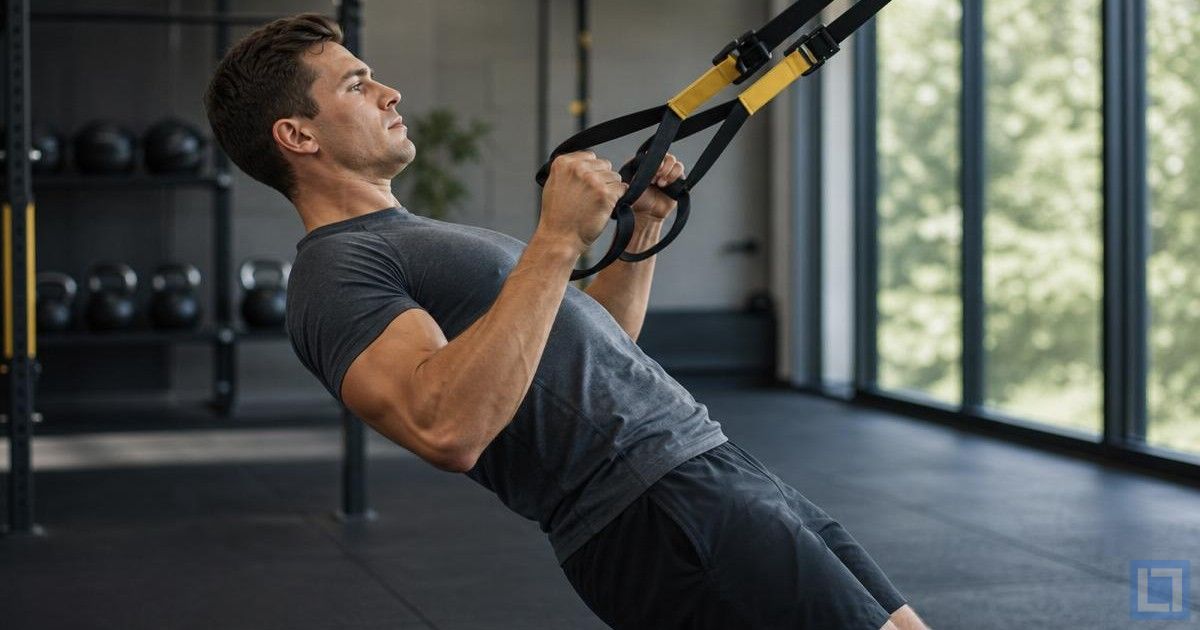
TRX ab training (using TRX or any suspension trainer) produces real core strength development through the unique unstable loading that suspension equipment creates. The combination produces particularly strong core activation per rep because the body must constantly stabilize against the swinging straps, which engages the deep core stabilizers (transverse abdominis, multifidus) more thoroughly than fixed-equipment ab training. The format also enables exercises that fixed equipment cannot match: suspended planks (with feet hanging in foot cradles), suspended pikes (inverted body position), pendulum motions (suspended dynamic rotation), and rollout patterns (using straps as wheel substitutes).
Below are ten effective TRX ab exercises that cover suspended planks (front plank), suspended crunches (suspender crunch, supine crunch), advanced suspended exercises (pike, rollout), suspended hip-flexion work (reverse crunch, sit-up), and rotational and oblique work (pendulum, twist). The list also includes ring rollout for lifters with gymnastic rings access. Together they form a complete TRX ab training program. Pull 5 to 7 exercises per session and rotate the selection across sessions for complete training.
Suspended Reverse Crunch

The Suspended Reverse Crunch hangs from a TRX or suspension trainer with feet in the foot cradles and performs a reverse crunch motion by pulling the knees toward the chest. The hanging position eliminates floor support and produces extreme lower-ab demand.
For TRX ab training, the suspended reverse crunch is one of the most demanding lower-ab exercises that exists. The pattern hits the lower abs through hip flexion under bodyweight loading. Run it for 3 to 4 sets of 8 to 12 reps as primary suspended lower-ab work.
Set up TRX foot cradles at low position. Get into a high plank position with feet in the cradles. Pull the knees toward the chest by contracting the lower abs, lifting the hips slightly. Return under control to plank position. Maintain plank stability throughout.
Ring Rollout

The Ring Rollout uses gymnastic rings or a TRX held at the hands and performs a rollout motion (similar to ab wheel rollout) by extending the arms forward while keeping the body in a straight line. The pattern produces extreme abdominal demand through anti-extension loading.
For TRX ab training that includes anti-extension work, the ring rollout is one of the most demanding ab exercises that exists. The pattern hits the entire core through extreme anti-extension loading. Run it for 3 sets of 6 to 10 reps as advanced TRX ab work.
Set TRX or rings at hip-to-chest height. Hold the handles with both hands, body in plank position with arms extended forward. Slowly roll the arms forward overhead while maintaining a straight body line, lowering the chest toward the floor. Pull back to the start by contracting the abs hard.
Suspender Rollout

The Suspender Rollout performs a rollout motion using a TRX or suspension trainer, similar to the ring rollout. The pattern produces extreme anti-extension core demand through bodyweight loading.
For TRX ab training, the suspender rollout is the foundational rollout exercise. The pattern produces strong full-core loading through anti-extension demand. Run it for 3 sets of 6 to 10 reps as primary TRX rollout work.
Set up TRX at hip-to-chest height. Hold the handles with both hands, body in plank position with arms extended forward. Slowly roll the arms forward overhead while maintaining a straight body line, lowering the chest toward the floor. Pull back to the start by contracting the abs hard.
Suspender Pendulum

The Suspender Pendulum hangs from a TRX with feet in the foot cradles and swings the legs side-to-side in a pendulum motion. The pattern produces strong oblique demand through dynamic rotation.
For TRX ab training that includes oblique work, the pendulum is one of the most direct rotational exercises that exists. The hanging position creates extreme rotational core demand. Run it for 3 sets of 8 to 10 reps per side as suspended oblique work.
Set up TRX foot cradles at low position. Get into a high plank position with feet in the cradles. Keeping legs together, swing the legs side-to-side in a pendulum motion while maintaining the plank position with the upper body. Switch sides on each rep.
Suspender Crunch

The Suspender Crunch performs a crunch motion while supported on a TRX with feet in the foot cradles. The hanging foot position produces stronger ab demand than floor crunches.
For TRX ab training, the suspended crunch produces stronger upper-ab loading than standard crunches. The unstable foot position increases the demand on the core stabilizers throughout the motion. Run it for 3 sets of 10 to 12 reps as suspended crunch work.
Set up TRX foot cradles at low position. Lie on the back with feet in the cradles, knees bent. Crunch the upper body up by contracting the abs, lifting the shoulder blades off the floor. Lower under control to the start.
Suspender Pike

The Suspender Pike hangs from a TRX with feet in the foot cradles and pikes the hips upward toward the ceiling, forming an inverted V shape. The pattern produces extreme abdominal and shoulder stability demand.
For advanced TRX ab training, the pike is one of the most demanding suspended ab exercises that exists. The pattern combines core demand with shoulder stability under the inverted body position. Run it for 3 sets of 6 to 10 reps as advanced TRX ab work.
Set up TRX foot cradles at low position. Get into a high plank position with feet in the cradles. Pike the hips up toward the ceiling by contracting the abs hard, forming an inverted V shape with the body. Lower under control to the plank position.
Suspender Sit-Up

The Suspender Sit-Up performs sit-ups while supported on a TRX, with the hands holding the handles for resistance and stability. The pattern allows variable difficulty by adjusting the body angle relative to the suspension anchor.
For TRX ab training that scales the difficulty, the suspender sit-up adjusts intensity through body angle changes. Easier angles allow beginners to build sit-up strength; harder angles produce advanced ab loading. Run it for 3 sets of 10 to 15 reps as variable-intensity TRX ab work.
Set up TRX with handles at chest height when standing. Hold the handles with both hands. Lean back until the body is at an angle (the more horizontal, the harder). Sit up by contracting the abs hard, pulling the body toward the anchor. Lower under control. Maintain controlled tempo.
Suspender Front Plank

The Suspender Front Plank holds a plank position with feet in TRX foot cradles. The unstable foot position produces extreme core demand alongside the standard plank loading.
For TRX ab training that includes plank work, the suspended plank produces stronger core loading than standard floor planks. The unstable foot position requires constant core stabilization. Run it for 3 sets of 30 to 60-second holds as primary TRX core stability work.
Set up TRX foot cradles at low position. Get into a high plank position with feet in the cradles. Hold the plank position while bracing the core hard. Maintain a straight body line from head to heels. End the hold when form breaks down.
Suspender Supine Crunch

The Suspender Supine Crunch lies on the back below a TRX with hands holding the handles overhead, then crunches the upper body up while maintaining handle contact. The pattern adds resistance to the standard crunch motion.
For TRX ab training that combines crunches with stability demand, the supine crunch produces unique loading through the overhead handle position. The pattern hits the upper abs while engaging the lats and shoulders. Run it for 3 sets of 10 to 12 reps as combined ab and stability work.
Lie on the back below a TRX with handles set to chest height. Hold the handles overhead with both hands, arms extended. Crunch the upper body up by contracting the abs while maintaining handle contact. Lower under control to the start.
Suspender Twist

The Suspender Twist holds a plank position with feet in TRX foot cradles and rotates the trunk side-to-side. The combination of plank stability and trunk rotation produces strong oblique demand.
For TRX ab training that includes rotational work, the suspended twist produces strong combined plank stability and rotational core loading. The pattern hits the obliques through controlled rotation under plank demand. Run it for 3 sets of 8 to 10 reps per side as suspended rotational work.
Set up TRX foot cradles at low position. Get into a high plank position with feet in the cradles. Rotate the trunk to one side by lifting the hip toward the ceiling, keeping the upper body relatively stable. Return to center. Rotate to the opposite side. Continue alternating.
How To Program These Workouts
A productive TRX ab session pulls five to seven exercises from the list above. A balanced session includes one suspended plank (front plank or pike), one rollout exercise (suspender rollout), one suspended crunch variation (suspender crunch or supine crunch), one suspended hip-flexion exercise (reverse crunch or sit-up), and one rotational exercise (pendulum or twist). Run plank holds for 3 sets of 30 to 60 seconds; rollouts and pikes for 3 sets of 6 to 10 reps; crunches and sit-ups for 3 sets of 10 to 15 reps; rotational work for 3 sets of 8 to 10 reps per side.
Train TRX ab sessions 2 to 3 times per week as dedicated sessions or integrated into broader training. The core recovers within 24 to 48 hours of moderate training, which allows higher frequency than larger muscle groups. Most successful programs include 2 to 3 dedicated TRX ab sessions per week alongside broader strength training. The format works particularly well for lifters with TRX setups at home or who train at gyms with suspension trainer access.
For broader TRX programming, see our best trx workouts. For broader core programming, see our best at home core workouts and how to get a stronger core.
Final Thoughts
The best TRX ab workouts deliver real core strength through suspension trainer loading that produces unique core activation through the unstable strap position. The combination of suspended planks, rollouts, crunch variations, hip-flexion work, and rotational exercises covers every major core function and produces complete development with a single piece of equipment. For lifters with TRX or suspension trainer access who want serious core training, want to add suspended work to existing programs, or need effective ab training in any setting (home, travel, outdoor), TRX ab training is one of the most versatile options available.
Stay focused on the body line throughout every rep. The most common TRX ab training mistake is allowing the hips to sag or pike during plank-position exercises (which reduces the actual core loading), or using momentum during rollouts and pikes (which reduces the abdominal stimulus). The fix: maintain a straight body line on plank-position exercises and execute rollouts and pikes with strict abdominal control rather than momentum. Quality reps with strict body position produce stronger results than higher rep counts with deteriorating form.
Frequently Asked Questions
Are TRX ab workouts effective?
Yes, very effectively. The unstable loading from the suspension straps produces stronger core activation than fixed-equipment ab training. Most lifters who consistently do TRX ab work see measurable core strength improvements within 6 to 8 weeks. The format works particularly well for combined core stability and ab development because the straps require constant stabilization throughout every exercise.
How often should I do TRX ab workouts?
Two to three times per week works for most lifters. The core recovers within 24 to 48 hours of moderate training, which allows higher frequency than larger muscle groups. Most successful programs include 2 to 3 dedicated TRX ab sessions per week alongside broader strength training. The format also works as a daily training practice for advanced practitioners who can manage the volume.
Do I need a TRX or can I use any suspension trainer?
Any suspension trainer works for these exercises. Brand alternatives like the Lifeline Jungle Gym, WOSS Attack Trainer, or the FitCord X9 produce comparable results to TRX brand products at lower cost. The exercises depend on the suspension format (two adjustable straps with handles and foot cradles), not the specific brand. Most home gym setups work with $30 to $200 suspension trainers from any major brand.
TRX or floor exercises for abs?
Different formats serve different goals. TRX ab work produces stronger core stabilizer engagement through the unstable strap loading. Floor ab work allows heavier loading (with weights) and more consistent positioning. Most successful core programs include both: TRX work for stability and engagement, floor work for direct loading and isolation. Lifters with only TRX access can build strong core development through dedicated TRX ab training.
Are TRX ab workouts good for beginners?
Yes with appropriate exercise selection. Beginners should start with the easier TRX ab exercises (suspender crunch with high anchor for less leaning, suspender front plank for short holds, suspender pendulum at slow tempo) before progressing to advanced work (rollouts, pikes). Most beginners can build to advanced TRX ab exercises within 6 to 8 weeks of consistent practice. The format scales naturally based on body angle and exercise selection.