Resistance band oblique training produces real oblique development through patterns that load all three oblique functions (lateral flexion, rotation, anti-rotation) with the unique advantages bands offer: progressive tension that increases through the concentric phase for strong peak contraction loading, accessible loading for home or travel training, the ability to anchor at multiple positions for varied angle work (overhead for woodchops, lateral for twists, vertical for Pallof presses), and dynamic combined patterns that integrate oblique work with athletic conditioning. The format works particularly well for obliques because the muscle group has multiple functions that all respond well to band loading patterns when leveraged through varied angles, and bands deliver dedicated patterns for lateral flexion (side bends), rotation (twists, woodchops), anti-rotation (Pallof presses), and combined dynamic work. Most lifters who consistently train resistance band oblique work 1 to 2 times per week alongside compound core movements (or even alone for home-only training) see measurable oblique development, improved rotational power for athletic performance, better core stability during compound lifting, and stronger overall trunk strength within 8 to 12 weeks. The combination of lateral flexion, rotational, anti-rotation, and dynamic patterns produces broader oblique development than crunch-only programs.
Below are ten effective resistance band oblique exercises that cover lateral flexion (band side bend, band overhead side bend, band side crunch), rotational work (band twist, band seated twist, band standing twisting crunch), woodchopper variations (band half kneeling chop, resistance band kneeling woodchop), anti-rotation (band vertical Pallof press), and dynamic combined work (band bicycle crunch). Together they form a complete band oblique program that hits all three oblique functions. A 25 to 35-minute session pulled from this list, performed 1 to 2 times per week, produces strong oblique development for home or travel-friendly training without requiring weights, dumbbells, or machines.
Band Side Bend

The Band Side Bend performs lateral flexion side bends with a resistance band underfoot. The pattern produces direct oblique loading through pure lateral flexion.
For resistance band oblique training, the band side bend is the foundational lateral flexion oblique exercise. The band tension increases through the bend. Run it for 4 sets of 12 to 15 reps per side as primary lateral flexion oblique work in any band oblique session.
Stand on a resistance band with one foot, gripping the band end with the same-side hand. Keep the other arm relaxed at the side or behind the head. Stand fully tall. Bend laterally to the same side as the gripped band by flexing the obliques on that side. Squeeze the obliques hard at peak lateral flexion. Return to upright by contracting the opposite obliques. Switch sides between sets. The pattern produces direct oblique loading through pure lateral flexion.
Band Twist

The Band Twist performs rotational oblique work with a resistance band anchored to the side. The pattern produces strong rotational oblique loading.
For resistance band oblique training, the band twist produces strong rotational oblique work. The band’s lateral anchor creates rotational resistance. Run it for 3 sets of 12 to 15 reps per side as rotational oblique work.
Anchor a resistance band to a sturdy point at chest height to one side. Stand sideways to the anchor with feet hip-width. Grip the band end with both hands at the chest. Step away from the anchor to create tension. Rotate the torso away from the anchor by contracting the obliques on the far side. The arms move with the torso (no independent arm motion). Squeeze hard at peak rotation. Return under control. Switch sides between sets. The pattern produces strong rotational oblique work.
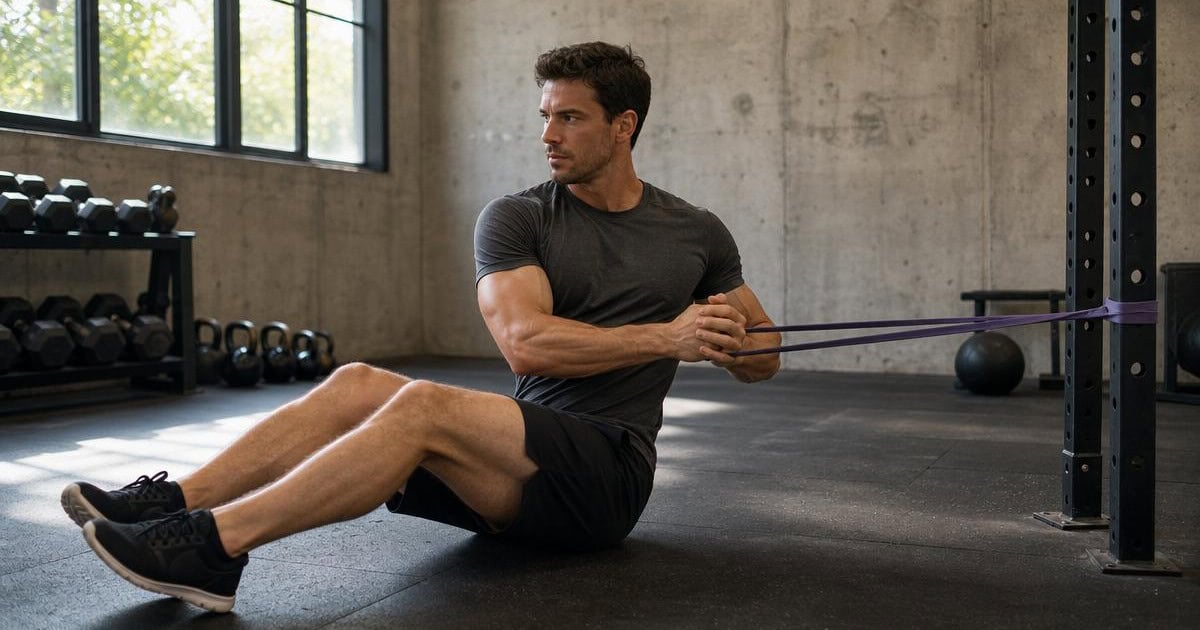
Band Seated Twist

The Band Seated Twist performs seated rotational oblique work with a resistance band. The seated position eliminates lower-body compensation and isolates the oblique work.
For resistance band oblique training, the seated twist produces strict rotational oblique work. The seated position is highly focused. Run it for 3 sets of 10 to 15 reps per side as strict rotational oblique work.
Sit on the floor with knees bent and feet planted. Anchor a resistance band to a sturdy point to one side at chest height. Grip the band end with both hands at the chest. Lean back slightly to engage the core. Rotate the torso away from the anchor by contracting the obliques. The seated position eliminates lower-body compensation. Squeeze hard at peak rotation. Return under control. Switch sides between sets.
Band Side Crunch

The Band Side Crunch performs side crunches with a resistance band for added resistance. The pattern produces oblique work through resisted lateral flexion.
For resistance band oblique training, the band side crunch produces direct oblique loading. The band adds progressive resistance. Run it for 3 sets of 12 to 15 reps per side as resisted oblique work.
Lie on one side with the body extended. Anchor a resistance band overhead and grip the band end with the top hand at the head level. Place the bottom hand on the floor for stability. Crunch the upper torso laterally toward the hip by flexing the obliques against band tension. Squeeze hard at peak contraction. Lower under control. Switch sides between sets. The pattern produces direct oblique loading with progressive band resistance.
Band Overhead Side Bend

The Band Overhead Side Bend performs side bends with a resistance band held overhead. The overhead position dramatically increases the lever arm and oblique demand.
For resistance band oblique training, the overhead side bend produces extreme oblique loading. The overhead position maximizes lever arm. Run it for 3 sets of 10 to 15 reps per side as advanced oblique work.
Stand on a resistance band with one foot. Grip the band end with the same-side hand and press it overhead with the arm fully extended. Keep the other arm at the side. Bend laterally to the same side as the planted foot by flexing the obliques on that side. The overhead band position dramatically increases lever arm and difficulty. Squeeze hard at peak lateral flexion. Return to upright. Switch sides between sets.
Band Bicycle Crunch

The Band Bicycle Crunch performs bicycle crunches with a resistance band held at the head/chest. The pattern produces dynamic combined oblique and ab work with band loading.
For resistance band oblique training, the band bicycle crunch produces dynamic combined oblique and ab work. The band adds progressive resistance. Run it for 3 sets of 12 to 16 reps total (alternating sides) as dynamic combined work.
Lie flat on the floor with hands gripping a band anchored behind the head (or holding band ends across the chest). Lift the upper torso off the floor and bring one knee toward the chest while rotating the opposite elbow toward that knee. Continue the bicycle motion alternating sides. The band tension adds progressive resistance to the rotational motion. The obliques work hard through the alternating rotation against band loading.
Band Half Kneeling Chop

The Band Half Kneeling Chop performs woodchopper motion from a half-kneeling position with a resistance band anchored high. The pattern produces strong combined oblique and core anti-rotation work.
For resistance band oblique training, the half kneeling chop produces strong combined oblique and core work. The half-kneeling position increases stability demand. Run it for 3 sets of 10 to 12 reps per side as combined oblique and core work.
Anchor a resistance band high to a sturdy point. Kneel in half-kneeling position (one knee down, one knee up at 90 degrees) facing perpendicular to the anchor. Grip the band end with both hands at the high shoulder. Pull the band diagonally across the body toward the opposite hip by rotating through the obliques and bringing the arms down. The half-kneeling position challenges core stability while the obliques work through rotation. Switch sides between sets.
Resistance Band Kneeling Woodchop

The Resistance Band Kneeling Woodchop performs full kneeling woodchopper motion with a band. The pattern produces dynamic rotational oblique work plus shoulder mobility.
For resistance band oblique training, the kneeling woodchop produces strong dynamic rotational work. The kneeling position eliminates leg compensation. Run it for 3 sets of 10 to 12 reps per side as dynamic rotational work.
Anchor a resistance band high to a sturdy point. Kneel on both knees facing perpendicular to the anchor. Grip the band end with both hands at the high shoulder. Pull the band diagonally across the body in a chopping motion toward the opposite hip. The obliques work through full rotation while the shoulders and arms move dynamically. The kneeling position keeps the body stable. Switch sides between sets. The pattern produces strong rotational oblique work plus athletic conditioning.
Band Vertical Pallof Press

The Band Vertical Pallof Press performs vertical Pallof presses with a resistance band anchored to the side. The pattern produces extreme core and oblique anti-rotation work.
For resistance band oblique training, the vertical Pallof press produces extreme oblique anti-rotation work. The pattern hits obliques through resisting rotation. Run it for 3 sets of 8 to 12 reps per side as anti-rotation oblique work.
Anchor a resistance band to a sturdy point at chest height to one side. Stand sideways to the anchor with feet hip-width. Grip the band end with both hands at the chest. Press the band straight overhead with arms fully extended. The band pulls the arms toward the anchor, creating rotational force. The obliques work extraordinarily hard to resist the rotation and keep the arms straight overhead. Hold briefly. Lower the band back to the chest under control. Switch sides between sets.
Band Standing Twisting Crunch

The Band Standing Twisting Crunch performs standing crunch with rotation against a band anchored high. The pattern produces dynamic combined oblique and ab work standing.
For resistance band oblique training, the standing twisting crunch produces dynamic combined oblique and ab work. The standing position adds athletic transfer. Run it for 3 sets of 10 to 12 reps per side as combined dynamic work.
Anchor a resistance band high to a sturdy point. Stand facing the anchor with feet hip-width. Grip the band end with both hands behind the head. Crunch the torso forward while rotating to bring one elbow toward the opposite hip. The obliques work hard through the rotation against band tension while the abs work through the crunch. Squeeze hard at peak contraction. Return under control. Switch sides between sets. The pattern produces strong combined dynamic work.
How To Program These Workouts
A productive resistance band oblique session pulls 4 to 6 exercises from the list above based on training goals. A common balanced session: band side bend (lateral flexion), band twist (rotation), resistance band kneeling woodchop (dynamic rotation), band vertical Pallof press (anti-rotation), band bicycle crunch (combined dynamic). For rotational focus: band twist, band seated twist, band half kneeling chop, resistance band kneeling woodchop, band standing twisting crunch. Run lateral flexion work for 3 to 4 sets of 12 to 15 reps per side, rotational work for 3 sets of 10 to 15 reps per side, anti-rotation work for 3 sets of 8 to 12 reps per side, and combined dynamic work for 3 sets of 12 to 16 reps. Total session covers 12 to 18 working sets focused on oblique development.
Train resistance band oblique work 1 to 2 times per week as part of broader core programming. The obliques recover reasonably quickly but accumulate fatigue from compound lifting and trunk work that activates them substantially. Most successful programs include band oblique work either: 1) at the end of any training day after compound work, 2) on a dedicated core day with abdominal and oblique focus, or 3) as part of athletic-performance training for sports requiring rotational power. Keep training time under 25 to 30 minutes per session.
For broader core programming, see our best oblique workouts and how to build a stronger core. For specific home work, see our best at home ab workouts.
Final Thoughts
The best resistance band oblique workouts deliver real oblique development through patterns that effectively load all three oblique functions (lateral flexion, rotation, anti-rotation) with the unique advantages bands offer: progressive tension, varied anchor positions for multi-angle work, and dynamic combined patterns. The combination of side bends, twists, woodchops, Pallof presses, and dynamic combined work covers every functional pattern of the obliques and produces broader development than crunch-only programs. The band’s progressive tension throughout the concentric phase produces strong peak contraction loading. For lifters who train at home, while traveling, or with limited equipment access, want to build stronger rotational power for athletic performance through woodchopper variations, want to improve compound core stability through Pallof press anti-rotation work, or want to develop a complete oblique program without equipment, dedicated resistance band oblique training is one of the most effective options available.
Stay focused on torso rotation and slow controlled tempo. The most common resistance band oblique training mistakes include using arms to drive rotational exercises (which limits oblique loading) and using too-fast tempo on rotational work (which uses momentum rather than oblique strength). The fix: keep arms relatively static during rotational exercises and let the torso rotation drive the motion through the obliques, and use slow controlled tempo with brief peak contraction holds. Quality reps with proper torso engagement and controlled tempo produce stronger oblique development than ego-driven volume.
Frequently Asked Questions
Are resistance bands effective for obliques?
Yes very effectively. Resistance bands produce real oblique development through lateral flexion (side bends), rotational work (twists, woodchops), anti-rotation (Pallof presses), and dynamic combined patterns. The band’s progressive tension increases through the concentric phase, producing strong peak contraction loading. Many lifters build excellent obliques through dedicated band training, particularly when combining all three oblique functions: lateral flexion, rotation, and anti-rotation. The pattern is particularly valuable for athletic performance.
Are woodchoppers effective for obliques?
Yes very effectively. Resistance band kneeling woodchops produce strong dynamic rotational oblique work that translates directly to athletic performance (sports requiring rotational power like golf, tennis, baseball, hockey). The pattern hits the obliques through their primary rotational function with band-progressive resistance. Most successful athletic-focused programs include woodchop variations as primary rotational work, typically 10 to 12 reps per side with controlled tempo. The kneeling position eliminates leg compensation.
What are Pallof presses?
Pallof presses are anti-rotation core exercises where you hold a band perpendicular to the body and resist the band’s pulling force trying to rotate you. The vertical Pallof press involves pressing the band overhead while the band pulls sideways, requiring the obliques and core to resist rotation. The pattern is one of the most effective anti-rotation core exercises that exists. Most successful programs include Pallof press variations as primary anti-rotation work, typically 8 to 12 reps per side with brief holds at peak press.
How heavy should bands be for obliques?
Light to medium for most exercises. Side bends use medium bands (25 to 50 pounds resistance). Twists and woodchops use light to medium bands (15 to 35 pounds) due to the rotational position. Pallof presses use light bands (15 to 30 pounds) due to the anti-rotation demand requiring control. Most successful programs progressively load all exercises until the working rep range becomes challenging. Excessive band tension on oblique work often shifts work to other muscles or produces compensation.
How often should I train obliques with bands?
One to two band oblique sessions per week works for most lifters. The obliques recover reasonably quickly but accumulate fatigue from compound lifting and trunk work that activates them substantially. Most successful programs include band oblique work either at the end of any training day, on a dedicated core day, or as part of athletic-performance training. Three or more weekly heavy oblique sessions can produce overuse issues, particularly given the obliques’ high activation in compound work.