Building a stronger core requires understanding both core anatomy (the core includes not just the abs but the obliques, transverse abdominis, deep stabilizers, lower back, and the entire trunk system) and the training principles that develop functional core strength: isometric anti-extension work (planks, hollow holds), anti-lateral flexion work (side planks, farmers walks), anti-rotation work (Pallof press, dead bug), rotational power work (Russian twists, woodchops), hanging core work (leg raises, toes-to-bar), and compound core loading (deadlifts, squats, farmers walks – which produce the heaviest possible core loading). Most lifters who want a stronger core but struggle to achieve it are making one or more of these mistakes: doing too many sit-ups and crunches (which mainly hit upper abs while missing functional core capacity), neglecting isometric and anti-rotation work, missing compound loading from heavy lifts, training only one core function, or running insufficient volume. The fix involves training all core functions: anti-extension (planks, hollow), anti-lateral flexion (side planks, farmers walks), anti-rotation (dead bugs), rotational (Russian twists, woodchops), hanging core (leg raises), and compound loading (deadlifts, squats, farmers walks).
Below are ten of the most effective exercises for building a stronger core, covering isometric anti-extension (front plank, hollow hold), lateral core/anti-lateral flexion (side plank, farmers walk), anti-rotation and deep core (dead bug), rotational core (dumbbell Russian twist, dumbbell lying woodchop), hanging core (hanging leg raise), and compound core loading (barbell deadlift, barbell squat). Together they form a complete core-strengthening program. A 20 to 30-minute core-focused session pulled from this list, performed 2 to 3 times per week (or as integrated core work in main lifting sessions), produces strong core development for any lifter or athlete focused on building functional core strength.
Front Plank
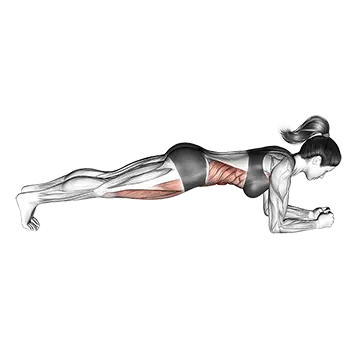
The Front Plank performs forearm plank holds. The pattern is foundational isometric core work.
For core strength, the plank is foundational. The pattern builds the deep isometric core capacity that supports all athletic movement. Run it for 3 to 4 sets of 30 to 90-second holds as primary core work.
Lie face-down on the floor. Prop up on the forearms with elbows under the shoulders. Lift the hips so the body forms a straight line from shoulders to ankles. The core works hard isometrically. Hold for the working interval. The pattern is foundational for core development – planks build the deep core stability that supports squats, deadlifts, all athletic movement, and proper posture. Progress with longer holds (90+ seconds) and weighted plank variations as base capacity becomes easy.
Side Plank
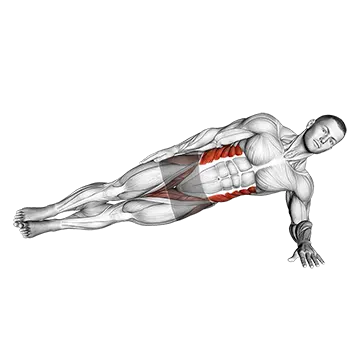
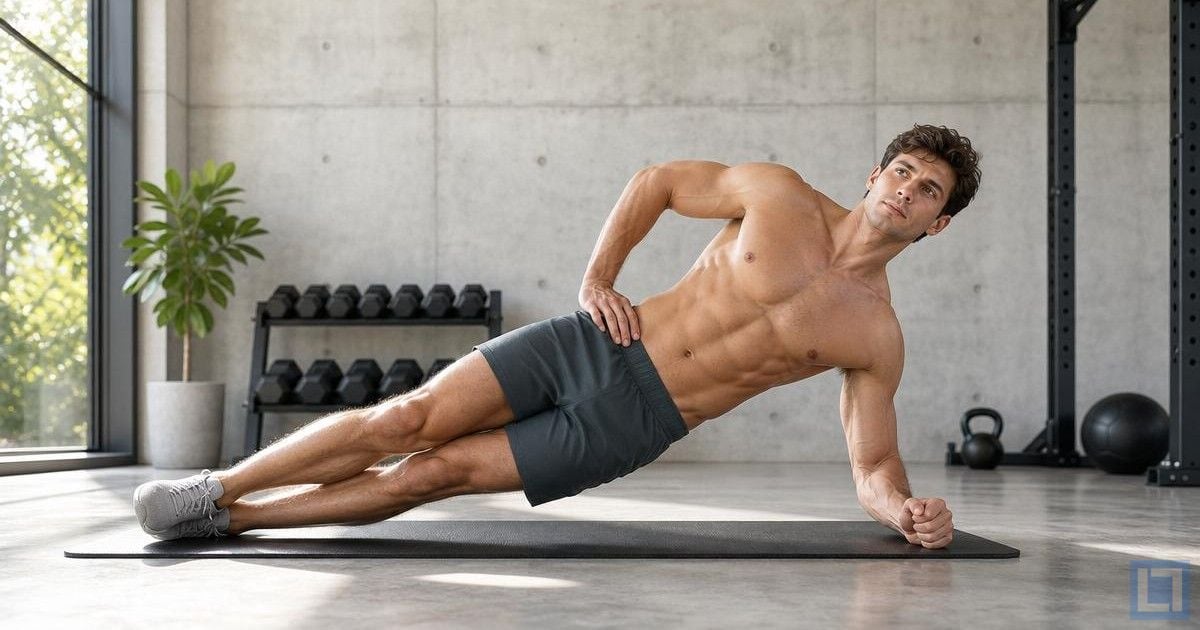
The Side Plank performs side plank holds. The pattern builds lateral core strength.
For core strength, the side plank builds the obliques and lateral core stability essential for balanced core development. Run it for 3 sets of 30 to 60-second holds per side as lateral core work.
Lie on one side with the body straight. Prop up on one forearm with the elbow under the shoulder. Lift the hips up so the body forms a straight line from feet to head. The obliques and glute medius work hard. Hold for the working interval. Switch sides between sets. The pattern builds the lateral core strength essential for complete core development – the obliques are critical for rotational stability, anti-lateral flexion, and the lateral core capacity that prevents hip drop during running and other unilateral movements.
Dead Bug

The Dead Bug performs dead bug core exercise. The pattern builds deep core stability with limb movement.
For core strength, the dead bug develops deep core stability against limb movement – critical for athletic performance. Run it for 3 sets of 10 to 12 reps per side as deep core work.
Lie on the back with arms extended toward the ceiling and knees bent at 90 degrees with shins parallel to the floor. Slowly extend one leg toward the floor while extending the opposite arm overhead. Keep the lower back pressed firmly into the floor (this is the key – if the lower back arches off the floor, the deep core is failing). Return to start and switch sides. The deep core works hard against the limb movement. The pattern builds the deep core stability that supports all athletic movement – maintaining trunk position against limb movement is foundational core capability.
Hanging Leg Raise

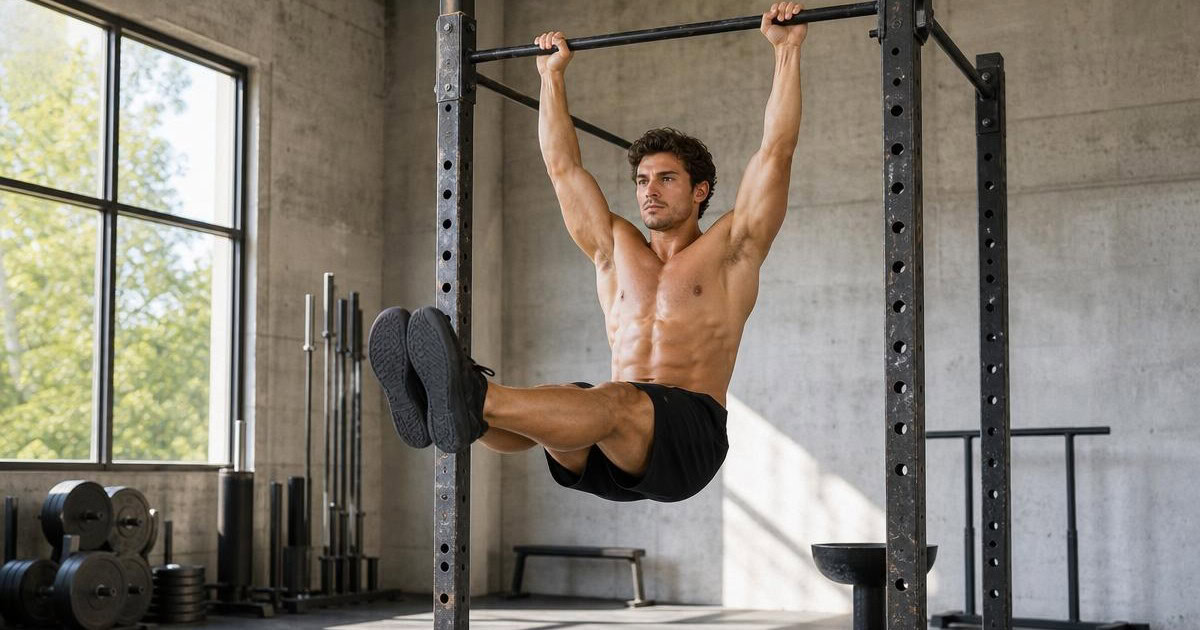
The Hanging Leg Raise performs leg raises hanging from a pull-up bar. The pattern builds hanging core strength.
For core strength, hanging leg raises build the hanging core strength foundational for advanced bodyweight skills. Run it for 3 to 4 sets of 8 to 15 reps as hanging core work.
Hang from a pull-up bar with arms straight. Raise the legs up by flexing the hips while keeping the legs straight (or with bent knees for easier variation). Raise until the legs reach 90 degrees or higher (full toe-to-bar for advanced). The hip flexors and core work hard. Lower under control. The pattern builds hanging core strength critical for athletic performance – hanging leg raises build the foundation for toes-to-bar, L-sit progressions, and the hanging strength that bar and ring routines demand.
Dumbbell Russian Twist

The Dumbbell Russian Twist performs Russian twists with a dumbbell. The pattern produces strong rotational core work.
For core strength, the Russian twist builds the rotational core strength used in athletic rotation. Run it for 3 sets of 12 to 16 reps total as rotational core work.
Sit on the floor with knees bent and feet planted. Hold a dumbbell at the chest with both hands. Lean back slightly to engage the core. Rotate the torso to one side, then the other. The obliques and core work hard through rotation. The pattern develops the rotational core strength critical for athletic performance – rotational power supports throwing, swinging, kicking, fighting, and many sport-specific movements. Strong rotational core is also essential for preventing rotational injuries.
Barbell Deadlift

The Barbell Deadlift performs barbell deadlifts. The pattern produces extreme isometric core loading.
For core strength, the deadlift produces extreme isometric core loading that builds functional core capacity. Run it for 3 to 4 sets of 3 to 6 reps as compound core work.
Stand with feet hip-width with a barbell on the floor over the mid-foot. Hinge at the hips and bend the knees to grip the bar. Drive through the heels while extending the hips and knees to lift the bar from the floor. Stand fully tall at the top. Lower under control. The pattern produces extreme isometric core loading – the entire core works hard to maintain spinal position throughout the heavy pull. Heavy deadlift training is one of the most effective core-strengthening exercises that exists, building functional core capacity that translates to all athletic and life demands.
Barbell Squat

The Barbell Squat performs back squats. The compound pattern produces strong isometric core loading.
For core strength, the squat produces strong isometric core loading throughout the lift. Run it for 3 to 4 sets of 5 to 8 reps as compound core work.
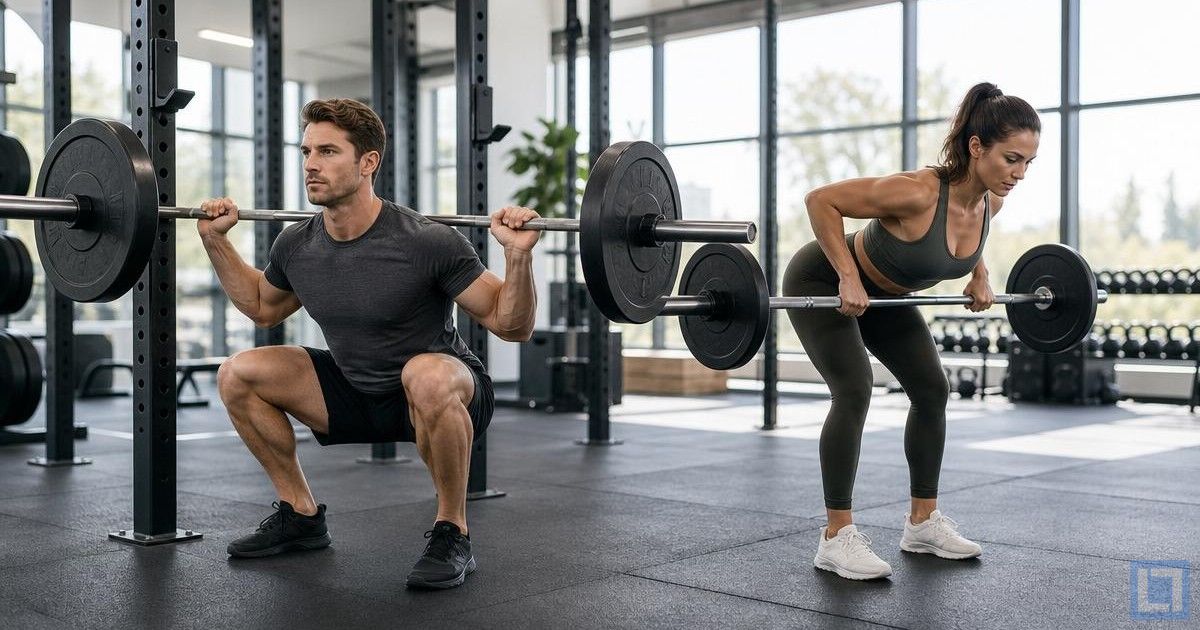
Set up a barbell on a rack at upper back height. Position the bar across the upper back. Step back with feet shoulder-width. Squat down by bending the knees and hips. Lower until the thighs are parallel to the floor. Drive back up through the heels. The pattern produces strong isometric core loading – the core works hard throughout the squat to maintain spinal position under heavy load. Heavy squat training builds the functional core stability that supports all athletic movement and provides core capacity that isolation exercises cannot match.
Farmers Walk
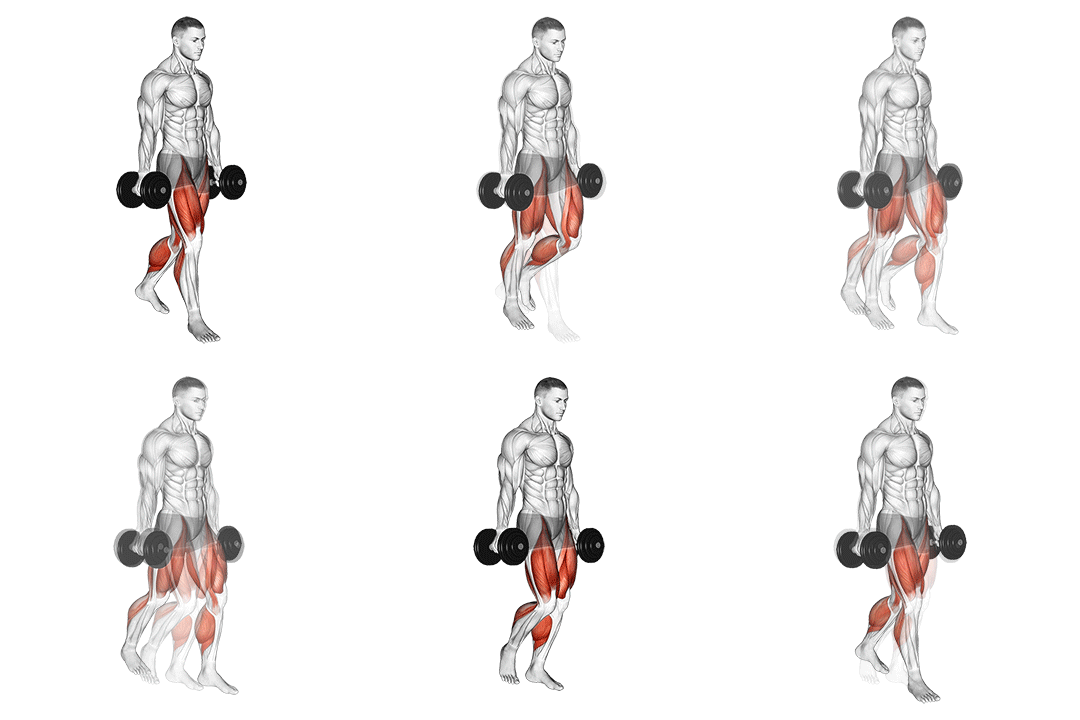
The Farmers Walk performs loaded carries. The pattern builds combined core stability under dynamic loading.
For core strength, farmers walks build core stability under dynamic loading. Run it for 3 to 5 sets of 30 to 60-second walks as dynamic core work.
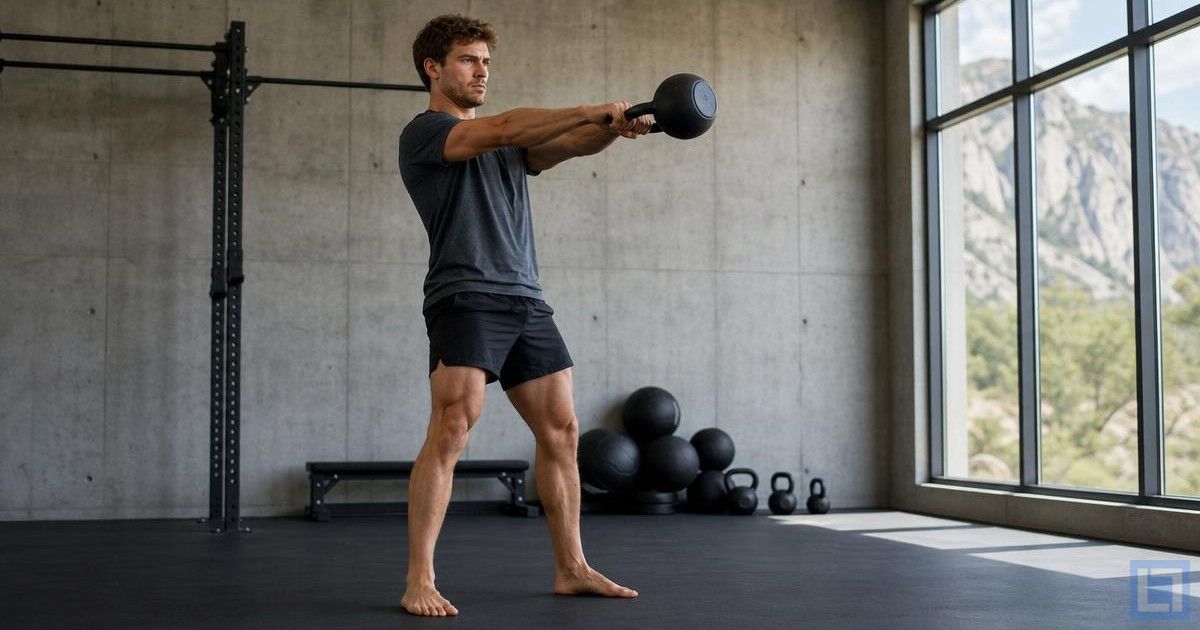
Stand holding heavy weights (dumbbells, kettlebells, or trap bar) in each hand at the sides. Walk forward with controlled steps, maintaining tall posture and tight core. Continue for the working interval. The grip, core, traps, and posterior chain all work hard isometrically. The pattern is excellent core work – the core must work hard to maintain spinal position under heavy asymmetric load while walking. Farmers walks build functional core capacity that translates directly to athletic performance and life demands.
Dumbbell Lying Woodchop

The Dumbbell Lying Woodchop performs lying woodchops. The pattern produces dynamic rotational core work.
For core strength, the lying woodchop produces dynamic rotational core loading. Run it for 3 sets of 10 to 12 reps per side as dynamic rotational core work.
Lie on the back with knees bent and feet planted. Hold a dumbbell with both hands extended overhead. Rotate the torso while bringing the dumbbell across the body in a chopping motion – from one upper position to the opposite hip. The obliques and core work hard through rotation. Reverse the motion. The pattern produces dynamic rotational core loading that mirrors many athletic movements. Excellent for rotational core development and translating gym strength to functional rotational power.
Hollow Hold
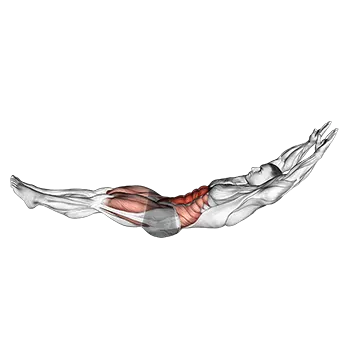
The Hollow Hold performs hollow body holds. The pattern is foundational gymnastics-style core work.
For core strength, the hollow hold produces foundational deep core loading – one of the most effective core exercises that exists. Run it for 3 to 4 sets of 20 to 60-second holds as deep core work.
Lie on the back. Press the lower back firmly into the floor by tilting the pelvis and contracting the abs. Lift the legs slightly off the floor (about 6 inches). Lift the upper back and shoulders slightly off the floor. Extend the arms overhead. The body forms a “hollow” curved shape with the lower back pressed into the floor. Hold for the working interval. The deep core works extremely hard to maintain the position. The pattern is foundational for advanced bodyweight skills and produces extreme deep core loading – the hollow position is the foundation of gymnastics training and produces strong deep core development that translates to all athletic performance.
How To Program These Workouts
A productive core session pulls 5 to 7 exercises from the list above, covering all core functions. A common balanced session: front plank (anti-extension), side plank (anti-lateral flexion), dead bug (anti-rotation), hanging leg raise (hanging core), dumbbell Russian twist (rotational), farmers walk (compound loading). For functional strength focus: front plank, side plank, dead bug, hanging leg raise, hollow hold. For rotational power focus: dumbbell russian twist, dumbbell lying woodchop, side plank. For maximum loading focus: barbell deadlift, barbell squat, farmers walk produce the heaviest core loading possible. Run isometric holds for 3 to 4 sets of 30 to 90 seconds, dynamic core work for 3 to 4 sets of 8 to 16 reps, compound loading for 3 to 4 sets at appropriate rep ranges for each lift.
Train core 2 to 3 times per week as part of complete programming. Most successful core-strengthening programs incorporate core work as: 1) dedicated core sessions (3 to 4 exercises covering different core functions), 2) integrated core work at the end of main lifting sessions (2 to 3 core exercises after squats/deadlifts), 3) compound loading providing core stimulus through main lifts (heavy squats, deadlifts, and farmers walks all produce extreme core loading). The core recovers reasonably quickly and tolerates higher frequency for those wanting accelerated development. Most elite athletes train core in some form 4 to 6 times per week through combined dedicated and integrated work.
For broader programming, see our best core workouts and best ab exercises. For specific work, see our best workouts for athletes.
Final Thoughts
Building a stronger core requires applying the right training principles consistently over time: isometric anti-extension work for foundational core stability, anti-lateral flexion work for lateral core capacity, anti-rotation work for rotational stability, rotational power work for athletic transfer, hanging core work for advanced capacity, and compound loading for the heaviest possible core stimulus. The combination of planks, side planks, dead bugs, hanging leg raises, Russian twists, deadlifts, squats, farmers walks, woodchops, and hollow holds covers every functional pattern of the core and produces broader core development than crunch-focused training would suggest. Most lifters and athletes who consistently apply these principles see measurable core strength improvements within 8 to 12 weeks – not just visible ab development but functional core capacity that translates to better squat, deadlift, athletic performance, and reduced lower back issues. For lifters and athletes seeking functional core strength, better lift performance, or broader athletic capability, dedicated core training across all functions is one of the most effective interventions available.
Stay focused on functional core capacity over visible ab development. The most common mistake lifters make in core training is over-emphasizing aesthetic ab work (crunches, sit-ups, leg raises) at the expense of functional core training (planks, anti-rotation, compound loading). The fix: prioritize functional core work that translates to athletic performance and life demands – isometric stability, anti-lateral flexion, anti-rotation, rotational power, and compound loading. Visible abs come from low body fat (not from ab exercises), while functional core strength comes from quality programming across all core functions. Combined with progressive overload and adequate volume, functional core training produces both performance benefits AND visible abs (when combined with appropriate body composition).
Frequently Asked Questions
How can I get a stronger core?
Train all core functions, not just crunches. The core has multiple functions: anti-extension (resisting backward bending – planks), anti-lateral flexion (resisting sideways bending – side planks, farmers walks), anti-rotation (resisting twisting – dead bugs), rotational power (producing rotation – Russian twists), hanging core (leg raises), and compound loading (deadlifts, squats). Train all of these for complete core development. Most lifters who stick to crunches alone never build the functional core strength that supports athletic performance. The fix: include exercises from each core function category.
How often should I train core?
2 to 3 dedicated sessions per week, plus integrated work in main lifts. Most successful core-strengthening programs include 2 to 3 weekly dedicated core sessions (3 to 5 exercises covering different core functions) PLUS integrated core work at the end of main lifting sessions PLUS compound loading from heavy squats, deadlifts, and farmers walks. The core recovers reasonably quickly. Athletes prioritizing core strength often train core in some form 4 to 6 times per week through combined dedicated and integrated work.
Are crunches good for the core?
Limited – they only train upper abs. Crunches and sit-ups primarily train the upper rectus abdominis (six-pack visible muscle) while missing most other core functions: lateral core, anti-rotation, rotational power, deep stabilizers, and isometric capacity. Most successful core programs include limited crunches as one component but emphasize functional core work (planks, anti-rotation, rotational, hanging) that builds athletic performance. Visible abs come from low body fat, not from doing endless crunches.
What’s the best core exercise?
Heavy compound lifts produce the most core loading possible. Barbell deadlifts and squats produce extreme isometric core loading – the entire core works to maintain spinal position under heavy weight. Combined with isometric work (planks, hollow holds), anti-rotation (dead bugs), lateral core (side planks, farmers walks), rotational (Russian twists), and hanging core (leg raises), these form the foundation of complete core development. The fastest gains come from combining heavy compound work with dedicated core training across all functions.
Will a strong core help my back pain?
Often yes for non-structural back pain. Many cases of lower back pain stem from weak core stability that fails to maintain proper spinal position during daily activities and athletic movement. Dedicated core strengthening (planks, dead bugs, side planks, anti-rotation work, compound loading) often resolves non-structural back pain within 8 to 12 weeks of consistent work. However, structural back issues (disc problems, facet joint issues, structural alignment) require medical evaluation – persistent severe back pain warrants professional assessment rather than self-treatment with exercise alone.