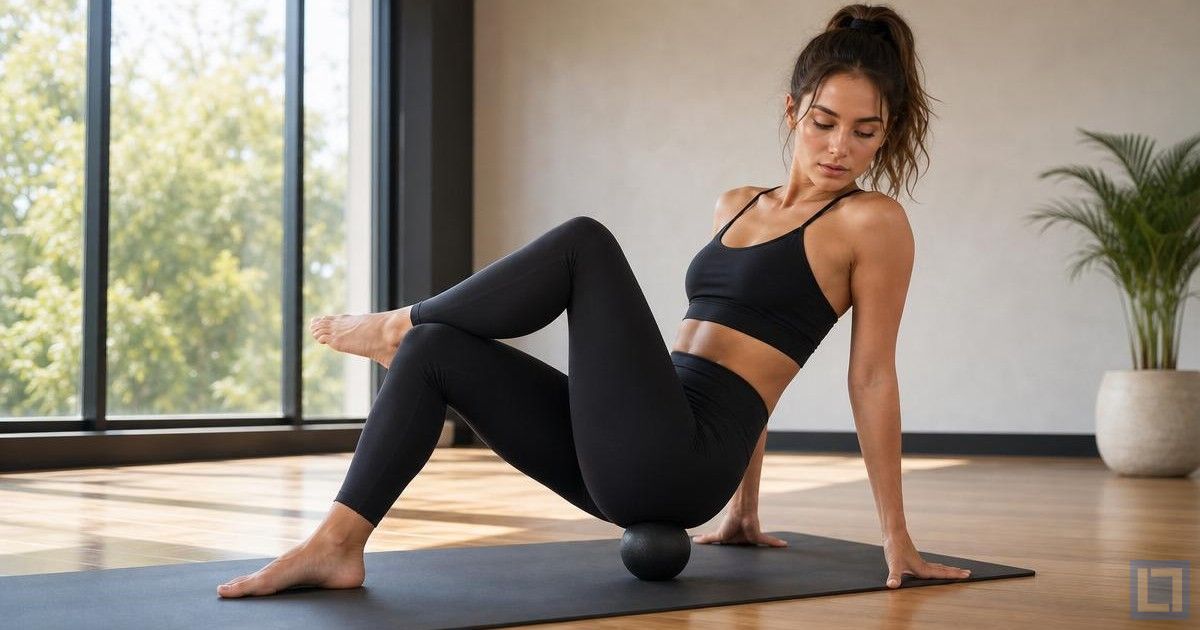
Massage ball recovery training produces real recovery and mobility improvements through targeted soft tissue release that addresses muscle tension and restricted mobility traditional foam rolling rarely reaches. The format works particularly well for recovery because the small ball size enables deeper, more precise pressure on specific muscles and trigger points (rhomboids between shoulder blades, iliopsoas deep in hip flexors, piriformis deep in glutes) that larger foam rollers cannot target effectively. The combination of broad foam rolling for general muscle release plus massage ball work for specific high-tension areas produces broader recovery and mobility benefits than either approach alone. Most lifters who consistently use massage ball recovery 3 to 5 times per week see measurable mobility improvements, reduced muscle tension, and better recovery between training sessions within 4 to 8 weeks.
Below are ten effective massage ball recovery techniques that cover the diaphragm and breathing mechanics, upper back tension (rhomboids, infraspinatus), lower body tension (calves, plantar fascia, peroneus, popliteal), deep hip work (iliopsoas, piriformis), and inner thigh release (adductors). Together they form a complete massage ball recovery program that addresses every major tension area in the body. A 15 to 25-minute session pulled from this list, performed 3 to 5 times per week, produces strong recovery improvements that complement strength training, cardio work, and daily mobility.
Roll Ball Diaphragm

The Roll Ball Diaphragm uses a small massage ball to release tension in the diaphragm and surrounding ribcage muscles by lying face-down with the ball positioned just below the ribcage. The pattern improves breathing mechanics and releases tension that contributes to upper back tightness.
For massage ball recovery work, the diaphragm release improves breathing capacity and reduces tension that often contributes to neck and upper back stiffness. The pattern targets a frequently neglected area that affects posture and recovery quality. Run it for 60 to 120-second holds with deep breathing as foundational diaphragm release work.
Lie face-down on the floor and place a small firm massage ball just below the ribcage on one side (about 2 inches below the bottom rib). Apply gentle body weight onto the ball. Take slow deep breaths, allowing the ball to gently press into the diaphragm during inhalation. Hold for 60 to 120 seconds. Switch sides. Avoid pressing directly on internal organs or bones.
Roll Ball Rhomboid

The Roll Ball Rhomboid releases tension in the rhomboid muscles between the shoulder blades by positioning a massage ball against a wall (or on the floor) at the rhomboid location and applying body weight. The pattern releases the tension that contributes to upper back stiffness from desk work and heavy training.
For massage ball recovery work, the rhomboid release is one of the most effective tension-relief exercises that exists for desk workers and lifters. The pattern targets the rhomboids that hold significant tension from sustained postures. Run it for 60 to 90 seconds per side as targeted upper back release work.
Stand with back against a wall and place a massage ball between the shoulder blade and spine on one side (in the rhomboid area). Apply body weight by leaning into the wall. Slowly roll the ball up and down the rhomboid area, pausing on tight spots for 30 to 60 seconds. The pressure releases knots in the rhomboid muscle. Switch sides. Adjust pressure by adjusting body weight on the ball.
Roll Ball Calf

The Roll Ball Calf releases tension in the calf muscles by sitting on the floor with one leg extended and rolling a massage ball under the calf. The pattern releases the calf tightness that contributes to running and squat performance issues.
For massage ball recovery work, the calf release is one of the most useful tension-relief exercises for runners and squatters. The pattern targets the gastrocnemius and soleus that hold significant tension from training. Run it for 60 to 90 seconds per leg as targeted calf release work.
Sit on the floor with one leg extended forward and a massage ball positioned under the calf. Apply body weight by lifting the hips off the floor and shifting weight onto the ball. Slowly roll the ball up and down the calf, pausing on tight spots for 30 to 60 seconds. Cross the other leg over the working leg to add additional pressure. Switch sides.
Roll Ball Infraspinatus

The Roll Ball Infraspinatus releases tension in the infraspinatus rotator cuff muscle on the back of the shoulder blade. The pattern releases the rotator cuff tension that contributes to shoulder pain and limited overhead mobility.
For massage ball recovery work, the infraspinatus release improves shoulder mobility and reduces pain from rotator cuff tightness. The pattern targets a muscle that holds significant tension from pressing and pulling work. Run it for 60 to 90 seconds per side as targeted shoulder release work.
Lie on the side or stand with back against a wall. Place a massage ball on the back of the shoulder blade (in the infraspinatus area, just below the spine of the scapula). Apply body weight by leaning into the wall or floor. Slowly roll the ball, pausing on tight spots for 30 to 60 seconds. The pressure releases knots in the rotator cuff. Switch sides.
Roll Ball Foot

The Roll Ball Foot releases tension in the plantar fascia and foot muscles by rolling a massage ball under the foot. The pattern releases foot tension that contributes to plantar fasciitis, calf tightness, and reduced running performance.
For massage ball recovery work, the foot release is one of the most useful tension-relief exercises for runners and walkers. The pattern targets the plantar fascia that runs along the bottom of the foot. Run it for 60 to 90 seconds per foot as foundational foot release work.
Sit on a chair with feet planted on the floor. Place a massage ball under one foot. Apply moderate body weight by pressing down. Slowly roll the ball forward and backward along the bottom of the foot, pausing on tight spots for 30 to 60 seconds. The pressure releases the plantar fascia. Switch feet. Use a tennis ball, lacrosse ball, or specialized massage ball.
Roll Ball Iliopsoas

The Roll Ball Iliopsoas releases tension in the iliopsoas (deep hip flexor) muscle by lying face-down with a massage ball positioned at the deep hip flexor location. The pattern releases hip flexor tension that contributes to lower back pain and limited squat depth.
For massage ball recovery work, the iliopsoas release improves hip mobility and reduces lower back pain from hip flexor tightness. The pattern targets one of the most commonly tight muscles in modern lifters and desk workers. Run it for 60 to 120 seconds per side as targeted hip flexor release work.
Lie face-down on the floor and place a massage ball just inside the hip bone (about 2 inches medial to the front hip bone). Apply gentle body weight by pressing down with the hands. Take slow deep breaths to relax the iliopsoas. Hold for 60 to 120 seconds. Switch sides. The iliopsoas is deep so use gentle to moderate pressure only. Avoid bony structures.
Roll Ball Peroneus

The Roll Ball Peroneus releases tension in the peroneus muscles on the outside of the lower leg. The pattern releases tension that contributes to ankle instability and shin splints in runners.
For massage ball recovery work, the peroneus release improves ankle mobility and reduces tension that contributes to ankle injuries. The pattern targets a frequently neglected muscle that affects running mechanics. Run it for 60 to 90 seconds per side as targeted lateral lower leg release work.
Sit on the floor with one leg extended and crossed over the other. Place a massage ball on the outside of the lower leg (along the peroneus muscle running down the outside of the shin). Apply body weight by pressing down on the ball. Slowly roll the ball up and down the peroneus, pausing on tight spots for 30 to 60 seconds. Switch legs.
Roll Ball Popliteal

The Roll Ball Popliteal releases tension in the muscles behind the knee (popliteal area). The pattern releases tension that contributes to knee pain and limited knee flexion mobility.
For massage ball recovery work, the popliteal release improves knee mobility and reduces tension behind the knee. The pattern targets a frequently neglected area that contributes to knee pain. Run it for 30 to 60 seconds per side as targeted knee mobility work. Use gentle pressure due to sensitive structures behind the knee.
Sit on the floor with one knee bent and a massage ball positioned in the popliteal area (the soft area behind the knee). Bend the knee further to apply pressure on the ball through the bent position. Hold for 30 to 60 seconds. Avoid pressing directly on the popliteal pulse or nerves. Use gentle pressure only. Switch sides.
Roll Ball Piriformis

The Roll Ball Piriformis releases tension in the piriformis muscle deep in the glutes. The pattern releases the piriformis tightness that contributes to hip pain, lower back stiffness, and sciatic nerve irritation.
For massage ball recovery work, the piriformis release is one of the most effective tension-relief exercises for sitting-heavy lifestyles and lower back pain. The pattern targets a deep glute muscle that holds significant tension. Run it for 60 to 120 seconds per side as targeted deep glute release work.
Sit on the floor and place a massage ball under one glute, positioning it at the piriformis location (deep in the glute, slightly off-center toward the outside). Cross the other leg over the working leg to add additional pressure. Slowly roll the ball, pausing on tight spots for 30 to 60 seconds. The pressure releases the deep piriformis muscle. Switch sides.
Roll Ball Adductors

The Roll Ball Adductors releases tension in the inner thigh adductor muscles. The pattern releases adductor tightness that contributes to limited hip mobility and groin pain in athletes.
For massage ball recovery work, the adductor release improves hip mobility and reduces inner thigh tension. The pattern targets the adductors that hold significant tension from squatting and athletic activity. Run it for 60 to 90 seconds per side as targeted inner thigh release work.
Lie face-down on the floor with one leg bent out to the side at a 45-degree angle. Place a massage ball under the inner thigh of the bent leg. Apply gentle to moderate body weight by leaning into the ball. Slowly roll the ball up and down the inner thigh, pausing on tight spots for 30 to 60 seconds. Switch sides.
How To Program These Workouts
A productive massage ball recovery session pulls 5 to 8 techniques from the list above based on current tension and recovery needs. A common general recovery session includes upper back work (rhomboid, infraspinatus), hip work (iliopsoas, piriformis), lower body work (calf, plantar fascia), and breathing work (diaphragm). Hold each release for 60 to 120 seconds, focusing on relaxed breathing and gradual tension release. Total session duration is typically 15 to 25 minutes. For specific tension issues (like persistent shoulder tightness or hip pain), focus 2 to 3 of the techniques on the relevant area for longer durations.
Train massage ball recovery 3 to 5 times per week as part of broader recovery and mobility programming. The technique works on demand (use as tension arises) or on regular schedule (post-workout, before bed, morning routine). Most successful programs include massage ball recovery integrated into existing training routines: 5 to 10 minutes pre-workout for targeted activation, 10 to 15 minutes post-workout for recovery, or 15 to 25 minutes as standalone recovery sessions on rest days. Use moderate pressure that produces ‘good pain’ without sharp pain or numbness.
For broader recovery programming, see our best mobility workouts and best foam roller workouts. For specific recovery work, see our best stretching workouts.
Final Thoughts
The best massage ball recovery workouts deliver real recovery and mobility improvements through targeted soft tissue release that addresses muscle tension traditional foam rolling rarely reaches. The combination of upper back work, hip and core release, lower body work, and breathing improvement covers every major tension area and produces broader recovery benefits than single-modality approaches. For lifters who want better recovery between training sessions, want to address chronic muscle tension or mobility limitations, or want to extend their training career through smart recovery practices, dedicated massage ball recovery is one of the most accessible and effective options available.
Stay focused on relaxed breathing and gradual release. The most common massage ball recovery mistake is applying too much pressure or rushing through techniques, which causes the muscles to tense up against the pressure (defeating the release goal). The fix: use moderate pressure that produces ‘good pain’ without making you wince, breathe slowly and deeply throughout each release, and hold positions for 60 to 120 seconds to allow the muscles to genuinely relax. Quality slow releases produce stronger long-term mobility and recovery improvements than aggressive rapid pressure. The goal is gradual tension release, not muscle bruising.
Frequently Asked Questions
What’s the best massage ball for recovery?
Most lifters benefit from a small firm massage ball roughly the size of a tennis ball or lacrosse ball (2.5 to 3 inches in diameter). Lacrosse balls are popular as they are firm enough to apply meaningful pressure without being so hard they bruise. Specialized massage balls (with bumps or different firmness levels) work well for advanced users. Most quality massage balls cost $5 to $20 and last for years of consistent use.
How often should I use a massage ball?
Three to five times per week works for most lifters. The technique works on demand (use as tension arises) or on regular schedule (post-workout, before bed, morning routine). Most successful programs include massage ball recovery integrated into existing training routines. Daily use is fine for general maintenance; using a massage ball only on rest days works well for lifters who prefer concentrated recovery sessions.
Can massage ball replace foam rolling?
They serve complementary roles. Foam rolling is faster for general muscle release across large muscle groups (quads, hamstrings, lats, IT band). Massage balls produce deeper, more precise pressure for specific high-tension spots (rhomboids, piriformis, plantar fascia, rotator cuff). Most successful recovery programs include both: foam rolling for broad muscle release and massage balls for targeted trigger point work and specific tension areas.
Does massage ball recovery actually work?
Yes effectively. Research shows that self-myofascial release (which includes massage ball work) produces measurable improvements in muscle flexibility, perceived recovery, and reduction in delayed-onset muscle soreness. The mechanism involves both mechanical pressure on muscle tissue and neurological responses that signal muscles to relax. Most lifters report measurable benefits (less tension, better mobility, improved recovery) within 2 to 4 weeks of consistent practice.
Are there areas to avoid with a massage ball?
Yes several areas require caution: avoid direct pressure on the spine, joints, bones, kidneys (lower back near spine), neck (especially the front and sides), and major arteries (front of throat, inner upper thigh, behind knee). Avoid pressing through bruises or recent injuries. Use gentle pressure only on the diaphragm and iliopsoas (deep abdomen). When in doubt, work the muscle belly rather than the joint area, and stop if you feel sharp pain, numbness, or tingling.