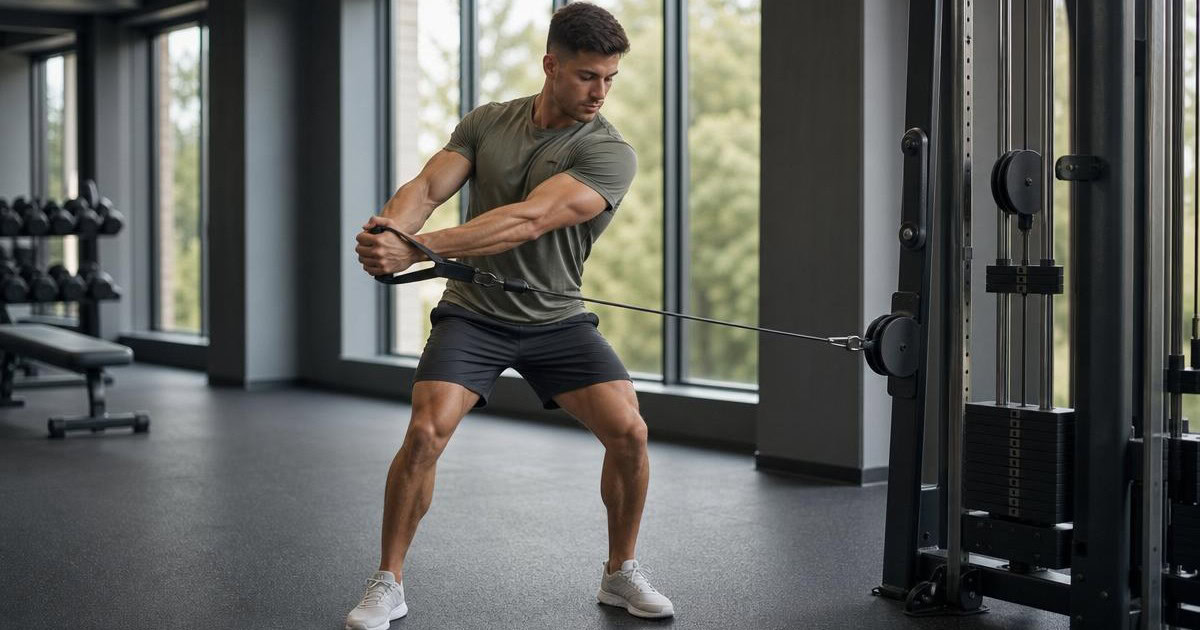
Cable core training produces real core development through patterns that load the core with the unique advantages cables offer: constant tension throughout the entire range of motion, easy progressive loading through pin-stack adjustments, and the ability to anchor at multiple heights and angles for direct loading of every core function. The format works particularly well for the core because the muscle group has multiple primary functions (spinal flexion, anti-rotation, lateral flexion, rotation, lower abs hip flexion) that each benefit from different cable positions and angles, and the cable’s constant tension produces stronger loading throughout the range of motion than free weights or bands. Most lifters who consistently train cable core work 1 to 2 times per week alongside compound lifting see measurable core strength improvements, better midsection definition (combined with proper nutrition), improved athletic stability, and reduced lower-back compensation issues within 6 to 10 weeks. The combination of cable crunches, Pallof presses, twists, and reverse crunches produces broader core development than bodyweight crunches alone for many lifters.
Below are ten effective cable core exercises that cover dynamic spinal flexion (cable kneeling crunch, cable standing crunch, cable seated crunch), anti-rotation stability (cable half kneeling Pallof press, cable lying Pallof press, cable vertical Pallof press), oblique rotation (cable kneeling twist, cable seated twist), and lower abs (cable tuck reverse crunch, cable reverse crunch). Together they form a complete cable core program that hits every core function. A 20 to 30-minute session pulled from this list, performed 1 to 2 times per week, produces strong core development that complements compound lifting.
Cable Kneeling Crunch

The Cable Kneeling Crunch performs a crunch motion in a kneeling position with a rope attachment held behind the head. The pattern produces strong rectus abdominis loading through pure spinal flexion against constant cable tension.
For cable core training, the kneeling crunch is the foundational mass-building exercise. The constant cable tension produces strong rectus abdominis loading through full range of motion. Run it for 4 sets of 12 to 15 reps as primary upper abs mass work in any cable core session.
Attach a rope handle to a high cable pulley. Kneel facing away from the cable with the rope ends gripped behind the neck or sides of the head. Crunch down by flexing the spine forward, bringing the elbows toward the thighs. Squeeze hard at the bottom. Return under control. Maintain hip position throughout (avoid using hip flexion to do the work). The cable tension produces direct upper abs loading.
Cable Half Kneeling Pallof Press

The Cable Half Kneeling Pallof Press performs anti-rotation pressing motion from a half-kneeling position with a cable anchored at chest height. The pattern produces strong anti-rotation core loading critical for athletic performance.
For cable core training, the half-kneeling Pallof press is one of the most important anti-rotation exercises that exists. The half-kneeling position challenges hip stability along with anti-rotation core work. Run it for 3 sets of 8 to 10 reps per side as primary anti-rotation core work.
Attach a single handle to a cable pulley at chest height. Kneel sideways to the pulley with one knee on the floor and the other foot planted in front (half-kneeling position). Grip the handle with both hands at the chest. Press the hands straight out from the chest until the arms are fully extended, fighting the cable tension that wants to rotate the torso. Hold briefly. Return to the chest under control. Switch sides between sets.
Cable Standing Crunch

The Cable Standing Crunch performs a crunch motion from a standing position with a cable anchored high. The pattern produces upper abs loading combined with standing core stability work.
For cable core training, the standing crunch produces upper abs loading combined with full-body core stability work. The pattern hits the upper abs through spinal flexion in a more functional standing position. Run it for 3 sets of 12 to 15 reps as standing abs work.
Attach a rope or D-handle to a high cable pulley. Stand facing away from the cable with the rope ends gripped behind the neck. Crunch down by flexing the spine forward, bringing the elbows toward the thighs. Avoid hip flexion (the work should come from spinal flexion). Return to standing under control. The standing position adds full-body stability work to the abs loading.
Cable Tuck Reverse Crunch

The Cable Tuck Reverse Crunch performs reverse crunch motion with the feet attached to a low cable. The pattern produces strong lower abs and hip flexor loading through cable resistance during hip flexion.
For cable core training, the tuck reverse crunch produces strong lower abs and hip flexor loading. The pattern hits the lower abs through hip flexion against cable resistance. Run it for 3 sets of 10 to 15 reps as primary lower abs work.
Attach an ankle cuff to a low cable pulley and secure it around the working foot (or both feet for harder variations). Lie flat on the back with feet pointing toward the cable. Tuck the knees up toward the chest by flexing the hips and bending the knees against the cable resistance. Lift the hips off the floor at the top of the motion. Lower under control until the legs are extended. The cable tension produces direct lower abs loading.
Cable Kneeling Twist

The Cable Kneeling Twist performs rotational core motion from a kneeling position with a cable anchored at chest or shoulder height. The pattern produces strong oblique loading through pure rotation against cable tension.
For cable core training, the kneeling twist is one of the most effective oblique exercises that exists. The constant cable tension produces strong oblique loading through full rotation. Run it for 3 sets of 10 to 12 reps per side as primary oblique work.
Attach a single handle or rope to a cable pulley at shoulder height. Kneel sideways to the pulley with both knees on the floor. Grip the handle with both hands extended in front of the chest. Rotate the torso away from the cable, pulling the handle across the body until the hands reach the opposite hip. Return under control. The cable tension produces strong oblique work through rotation. Switch sides between sets.
Cable Reverse Crunch

The Cable Reverse Crunch performs reverse crunch motion with the legs attached to a high cable from above. The downward cable resistance loads the lower abs and hip flexors through hip flexion.
For cable core training, the cable reverse crunch produces strong lower abs and hip flexor loading. The pattern hits the lower abs through hip flexion against cable resistance pulling from above. Run it for 3 sets of 10 to 15 reps as primary lower abs work.
Attach an ankle cuff to a high cable pulley and secure it around the working foot. Lie on the floor or a flat bench with feet pointing toward the cable. Pull the knees up toward the chest by flexing the hips and bending the knees against the cable resistance. The high cable position produces unique loading angle. Lower under control. The cable tension produces direct lower abs loading throughout.
Cable Seated Twist
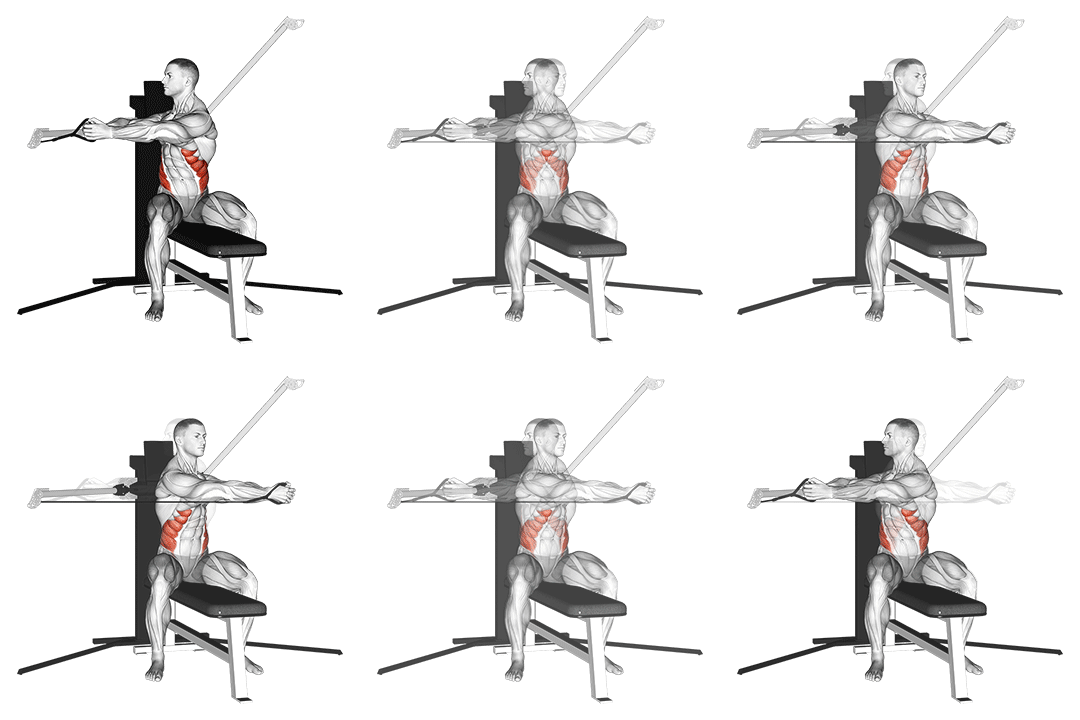
The Cable Seated Twist performs rotational core motion from a seated position with a cable anchored at chest height. The seated position eliminates lower body involvement and isolates the obliques.
For cable core training, the seated twist produces clean oblique isolation. The seated position eliminates compensation. Run it for 3 sets of 10 to 12 reps per side as oblique isolation work.
Attach a single handle to a cable pulley at chest height. Sit on a bench or stability ball sideways to the pulley. Grip the handle with both hands extended toward the cable. Rotate the torso away from the cable, pulling the handle across the body. Return under control. The seated position keeps the focus on pure oblique rotation without lower-body involvement. Switch sides between sets.
Cable Seated Crunch

The Cable Seated Crunch performs a crunch motion from a seated position with a cable anchored high. The seated position provides stable support for the abs work.
For cable core training, the seated crunch produces clean abs isolation. The seated position eliminates compensation. Run it for 3 sets of 12 to 15 reps as abs isolation work.
Attach a rope handle to a high cable pulley. Sit on a bench facing away from the cable with the rope ends gripped behind the neck. Crunch down by flexing the spine forward, bringing the elbows toward the thighs. Squeeze hard at the bottom. Return under control. The seated position provides stable support for clean abs loading. Maintain hip position throughout.
Cable Lying Pallof Press

The Cable Lying Pallof Press performs anti-rotation pressing motion while lying on the back with a cable anchored low at one side. The pattern produces strong anti-rotation core work in the supine position.
For cable core training, the lying Pallof press produces unique anti-rotation core work. The supine position challenges core stability against the lateral cable pull. Run it for 3 sets of 8 to 10 reps per side as anti-rotation core work.
Attach a single handle to a cable pulley at low position. Lie flat on the back perpendicular to the pulley with the cable to one side. Grip the handle with both hands at the chest. Press the hands straight up from the chest until the arms are fully extended, fighting the cable tension that wants to pull the arms toward the cable. Hold briefly. Return to the chest under control. Switch sides between sets.
Cable Vertical Pallof Press

The Cable Vertical Pallof Press performs anti-rotation pressing with the cable anchored low and pressed overhead. The pattern produces strong combined anti-rotation core loading and overhead stability work.
For cable core training, the vertical Pallof press produces strong anti-rotation core work combined with overhead stability. The pattern hits the core through anti-rotation while challenging shoulder stability. Run it for 3 sets of 8 to 10 reps per side as anti-rotation work.
Attach a single handle to a cable pulley at low position. Stand sideways to the pulley and grip the handle with both hands at the chest. Press the hands overhead until the arms are fully extended above the head. Hold briefly while resisting the pull of the cable toward the pulley. Lower under control. Switch sides between sets. The overhead position challenges shoulder stability along with anti-rotation core work.
How To Program These Workouts
A productive cable core session pulls 5 to 7 exercises from the list above based on training goals. A common balanced session: cable kneeling crunch (upper abs mass), cable half kneeling Pallof press (anti-rotation), cable kneeling twist (oblique rotation), cable tuck reverse crunch (lower abs), cable seated twist (oblique isolation), cable lying Pallof press (advanced anti-rotation). Run dynamic abs work for 3 to 4 sets of 12 to 15 reps, anti-rotation work for 3 sets of 8 to 10 reps per side, rotational work for 3 sets of 10 to 12 reps per side, and lower abs work for 3 sets of 10 to 15 reps. Total session covers 14 to 20 working sets focused on core development. The core responds well to high frequency and varied loading angles.
Train cable core work 1 to 2 times per week as part of broader training programming. The core recovers quickly between sessions but accumulates fatigue from compound lifting (squats, deadlifts, presses) that already activates it substantially. Most successful programs include cable core work either: 1) at the end of a training session as a 15 to 20-minute finisher, 2) on a dedicated core day, or 3) integrated with arm or shoulder work for shorter focused sessions. Keep core training time under 25 to 30 minutes per session. Always include both dynamic flexion work and anti-rotation stability work for balanced core development.
For broader core programming, see our best ab workouts for men and best core workouts. For specific oblique work, see our best resistance band core workouts.
Final Thoughts
The best cable core workouts deliver real core development through patterns that load the core effectively in every primary function: spinal flexion, anti-rotation, rotation, and lower abs. The combination of cable crunches, Pallof presses, twists, and reverse crunches covers every functional pattern and produces broader core development than crunches alone. The cable’s constant tension throughout the range of motion produces stronger loading than free weights or bands for many core movements. For lifters who want measurable core strength and definition (combined with proper nutrition), want to improve athletic stability and lower-back health, want to add progressive resistance to core training, or want to make full use of cable equipment for core work, dedicated cable core training is one of the most effective options available.
Stay focused on spinal flexion mechanics and anti-rotation work. The most common cable core training mistakes include using hip flexion instead of spinal flexion to perform crunches (which limits abs loading and shifts work to hip flexors) and over-prioritizing dynamic crunch work while skipping anti-rotation stability work (which limits core function for athletic performance). The fix: focus on spinal flexion (rounding the back) rather than hip flexion (folding at the hips) on every crunch variation, and include Pallof press variations in every core session for anti-rotation stability. Quality reps with proper mechanics produce stronger core development than high-volume crunches with poor form.
Frequently Asked Questions
Are cables effective for core training?
Yes very effectively. Cables produce real core development through dynamic spinal flexion (kneeling and standing crunches), anti-rotation work (Pallof presses), rotational work (twists), and lower abs work (reverse crunches). The cable’s constant tension throughout the range of motion produces stronger loading than bodyweight crunches alone. Most successful core programs include cable work alongside compound lifting that activates the core as a stabilizer. Cables are particularly effective for adding progressive resistance to core training that bodyweight alone can not match.
Cable crunches or sit-ups for abs?
Cable crunches for most lifters. Cable crunches produce stronger abs loading than bodyweight sit-ups due to the progressive cable resistance that scales to your strength level. Sit-ups have limited progressive overload (you can only do more reps or add weight in awkward positions). Cable crunches also keep the focus on spinal flexion (which trains the abs) rather than hip flexion (which trains the hip flexors). Most successful core programs include cable crunch variations as primary abs mass work.
How heavy should cable core work be?
Moderate to heavy depending on the exercise. Cable crunch variations can use heavy weights (typically 50 to 150+ pounds for advanced lifters). Anti-rotation work like Pallof presses uses lighter weights (20 to 50 pounds) because the work is about resisting rotation rather than creating force. Rotation work uses moderate weights (20 to 60 pounds). Most successful programs progressively load all exercises until 10 to 15 reps becomes challenging, then increase weight by 5 to 10-pound increments. Form quality matters more than absolute weight.
How often should I train core with cables?
One to two cable core sessions per week works for most lifters. The core recovers quickly between sessions but accumulates fatigue from compound lifting that already activates it substantially. Most successful programs include direct core work either at the end of training sessions (as a 15 to 20-minute finisher), on dedicated core days, or integrated with arm or shoulder work. Three or more weekly dedicated core sessions can work for some lifters but typically produces diminishing returns through accumulated fatigue.
What’s the best cable core exercise?
The cable kneeling crunch is arguably the most foundational and effective. The pattern produces strong rectus abdominis loading through pure spinal flexion against constant cable tension, allowing progressive overload that drives growth. Most successful programs include cable kneeling crunches as primary abs mass work. Other strong choices include cable Pallof press variations (anti-rotation), cable twist variations (rotation), and cable reverse crunch variations (lower abs). Most successful cable core programs include 5 to 7 different exercises per session.