Fixing tight hamstrings requires understanding both the contributing factors (most tight hamstrings develop from a combination of: 1) prolonged sitting from desk work, driving, and modern lifestyles producing hamstring shortening, 2) inadequate stretching frequency or duration, 3) weak hamstrings producing protective tightness, 4) lower back tightness or dysfunction creating posterior chain compensation, 5) glute weakness causing hamstring overcompensation, 6) inadequate hip mobility limiting hamstring function, 7) repetitive activities that shorten hamstrings without offsetting flexibility work, or 8) the cumulative effect of multiple factors) and the training principles that resolve them: daily passive stretching as foundational intervention (standing, seated, lying hamstring stretches with adequate hold duration), strengthening through full range (Romanian deadlifts, single-leg RDLs, glute ham raises) addressing the strength component of flexibility, posterior chain integration work (knee-to-chest, child pose) addressing the entire posterior chain, spinal mobility (cat-cow, open book) supporting proper hamstring function, and consistent daily practice over weeks. Most cases of tight hamstrings improve substantially within 6 to 12 weeks of consistent intervention. Note: severe hamstring tightness, persistent pain, or cases following acute injury warrant medical evaluation – this article addresses general approaches for typical chronic hamstring tightness from lifestyle factors.
Below are ten of the most effective exercises for fixing tight hamstrings, covering primary hamstring stretching (standing hamstring stretch, seated single leg hamstring stretch, assisted lying hamstring stretch), strengthening through full range (barbell Romanian deadlift, bodyweight single leg RDL, glute ham raise), posterior chain support (knee-to-chest stretch, child pose), and spinal mobility (cat-cow stretch, open book stretch). Together they form a complete tight hamstring correction program. A 15 to 25-minute session pulled from this list, performed daily during initial correction phase, produces measurable hamstring flexibility improvement within 6 to 12 weeks of consistent practice. Combine flexibility work with strengthening through full range for maximum effectiveness – passive stretching alone produces slower results than combined stretching plus full-range strengthening.
Standing Hamstring Stretch

The Standing Hamstring Stretch performs standing hamstring stretching. The pattern is foundational for tight hamstring correction.
For tight hamstring correction, the standing hamstring stretch is foundational. Run it for 3 sets of 30 to 60-second holds per side, multiple times daily.
Stand tall. Place one heel on a slightly elevated surface (small step, low bench, or chair) with the leg straight. Hinge forward at the hips while keeping the back flat to feel deep stretch through the hamstring of the elevated leg. Hold for 30 to 60 seconds. Switch sides. The pattern is foundational for tight hamstring correction – daily standing hamstring stretching addresses hamstring tightness through the most accessible position. Multiple daily practice sessions accelerate flexibility improvement. The most accessible hamstring stretch that can be done anywhere with minimal equipment.
Seated Single Leg Hamstring Stretch
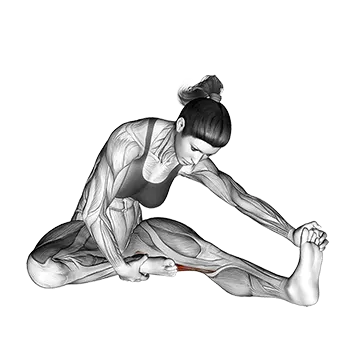
The Seated Single Leg Hamstring Stretch performs seated hamstring stretching. The pattern produces direct hamstring loading.
For tight hamstring correction, the seated single leg hamstring stretch produces direct hamstring stretch. Run it for 3 sets of 30 to 60-second holds per side, daily.
Sit on the floor with one leg extended straight in front and the other leg bent inward (sole of foot touching the inner thigh of the extended leg). Hinge forward at the hips while keeping the back flat to reach toward the toes of the extended leg. Feel deep stretch through the hamstring. Hold for 30 to 60 seconds. Switch sides. The pattern produces direct hamstring stretching through the seated position – excellent variation alongside standing stretches. The seated position eliminates body english and isolates the hamstring effectively.
Assisted Lying Hamstring Stretch
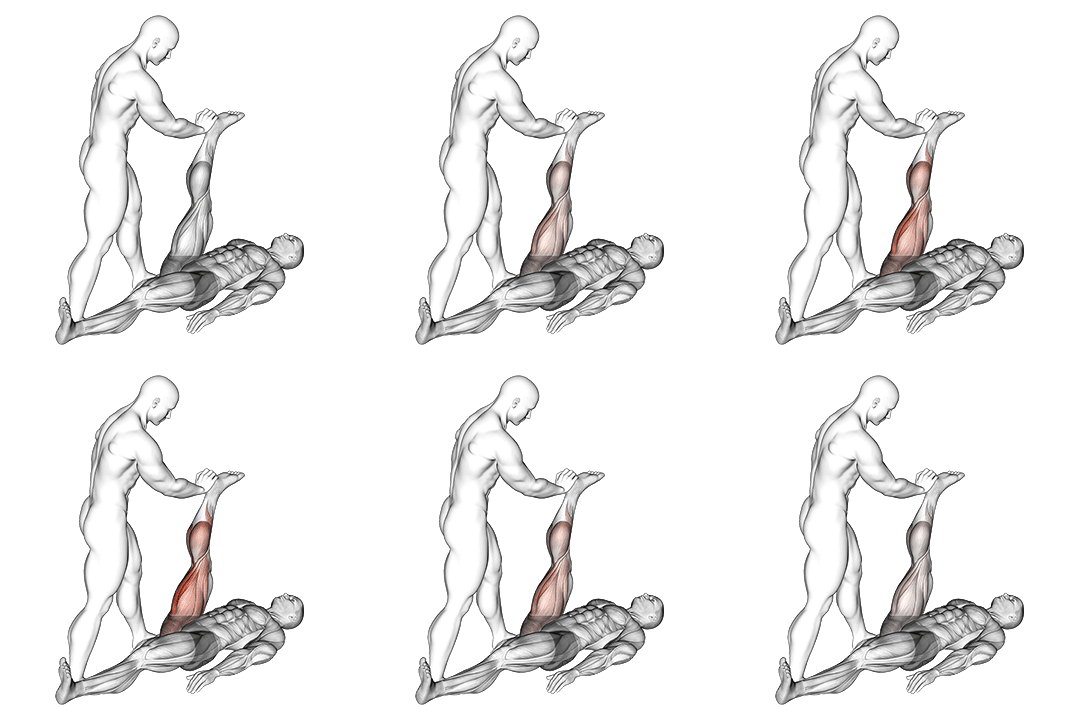
The Assisted Lying Hamstring Stretch performs lying hamstring stretching with assistance. The pattern produces deep hamstring stretching.
For tight hamstring correction, the assisted lying hamstring stretch produces deep hamstring stretching. Run it for 3 sets of 30 to 60-second holds per side, daily.
Lie on the back with both legs extended on the floor. Loop a strap, towel, or band around one foot (or use the hands if flexibility allows). Lift the leg straight up while pulling gently with the strap to feel deep stretch through the hamstring. Hold for 30 to 60 seconds. Switch sides. The pattern produces deep assisted hamstring stretching – excellent for tight hamstrings because the lying position with assistance allows deeper stretch than self-stretching while keeping the lower back protected on the floor. The most effective hamstring stretch for tight hamstrings.
Barbell Romanian Deadlift

The Barbell Romanian Deadlift performs Romanian deadlifts. The pattern produces hamstring strengthening through stretch.
For tight hamstring correction, the RDL produces hamstring strengthening through deep stretch range. Run it for 3 sets of 8 to 12 reps as posterior chain work.
Stand with feet hip-width holding a barbell at the front of the thighs. Hinge at the hips by sending them backward while keeping the back flat and legs nearly straight. Lower the barbell along the legs until the hamstrings stretch deeply. Drive back to standing by extending the hips. The pattern produces hamstring strengthening through the deepest possible stretch position – critical for tight hamstring correction because tight hamstrings benefit from strengthening through full range. Strong hamstrings through full range produce better flexibility than passive stretching alone. Combined with passive stretching, RDLs produce comprehensive hamstring development.
Bodyweight Single Leg Rdl

The Bodyweight Single Leg RDL performs unilateral RDL. The pattern produces unilateral hamstring loading.
For tight hamstring correction, the bodyweight single leg RDL produces unilateral hamstring strengthening. Run it for 3 sets of 8 to 10 reps per leg as unilateral hamstring work.
Stand on one leg with slight bend in the standing knee. Hinge forward at the hips while extending the opposite leg backward, keeping the body in a straight line from the extended leg to the head. Reach the hands toward the floor. Feel deep stretch in the standing leg hamstring. Return to standing. Switch legs. The pattern produces unilateral hamstring loading through full range – excellent for tight hamstrings because the unilateral nature addresses left/right hamstring asymmetries while strengthening through stretch. Combined with bilateral RDLs, single-leg RDLs produce complete hamstring development.
Glute Ham Raise

The Glute Ham Raise performs glute-ham raises. The pattern produces direct hamstring loading.
For tight hamstring correction, the glute ham raise produces direct hamstring loading. Run it for 3 sets of 6 to 10 reps as direct hamstring work.
Position on a glute-ham raise machine with the feet anchored and the hips on the pad. Lower the body forward by extending at the knees while maintaining straight hip position. The hamstrings work hard eccentrically. Pull back to starting position by flexing the knees and engaging the hamstrings. The pattern produces direct hamstring loading through the knee flexion pattern – excellent for hamstring strengthening because it specifically targets the hamstring function (knee flexion). Combined with hip extension hamstring work (RDLs), glute ham raises produce complete hamstring development.
Cat Cow Stretch

The Cat Cow Stretch performs cat-cow spinal mobility. The pattern produces spinal mobility supporting hamstring flexibility.
For tight hamstring correction, the cat-cow stretch produces spinal mobility supporting proper hamstring stretching. Run it for 3 sets of 8 to 12 reps as spinal mobility work, daily.
Position on hands and knees with hands under shoulders and knees under hips. Inhale and arch the back, lifting the head and tailbone (cow position). Exhale and round the back, tucking the chin to chest and tailbone under (cat position). Continue alternating slowly. The pattern produces spinal mobility – critical for tight hamstring correction because tight hamstrings often correlate with limited spinal mobility, and improved spinal mobility supports proper hamstring stretching mechanics. Daily cat-cow practice supports overall posterior chain flexibility.
Knee to Chest Stretch

The Knee To Chest Stretch performs knee-to-chest stretching. The pattern produces gentle hamstring and back flexibility.
For tight hamstring correction, the knee to chest stretch addresses lower back tightness contributing to hamstring tightness. Run it for 3 sets of 30 to 60-second holds per side as gentle flexibility work.
Lie on the back with both legs extended. Bring one knee up toward the chest, hugging the knee with both hands. Pull the knee gently toward the chest. Feel stretch through the glute and lower back. Hold for 30 to 60 seconds. Switch sides. The pattern produces gentle lower back and glute stretch – critical for tight hamstring correction because tight lower back and glutes often accompany tight hamstrings, and addressing the entire posterior chain supports better hamstring flexibility than hamstring stretching alone.
Child Pose

The Child Pose performs the child pose stretch. The pattern produces gentle full-body relaxation.
For tight hamstring correction, the child pose produces gentle posterior chain stretching. Run it for 2 to 3 sets of 60-second holds, daily.
Kneel on the floor with knees wide and big toes touching. Sit back on the heels and reach the arms forward extending the spine. Allow the chest to lower toward the floor between the thighs. Allow the head to relax. Hold for 60 seconds. The pattern produces gentle posterior chain relaxation – excellent for tight hamstrings because the position allows the entire posterior chain (lower back, glutes, hamstrings) to relax simultaneously. Daily practice supports overall posterior chain relaxation that complements direct hamstring stretching.
Open Book Stretch

The Open Book Stretch performs thoracic mobility stretching. The pattern produces thoracic mobility supporting posterior chain function.
For tight hamstring correction, the open book stretch produces thoracic mobility supporting hamstring function. Run it for 3 sets of 8 to 10 reps per side, daily.
Lie on one side with knees bent at 90 degrees and hips stacked. Extend both arms straight in front at shoulder height with palms together. Slowly rotate the top arm and torso open toward the floor behind, opening like a book. Reach the top arm to touch the floor on the opposite side. Hold briefly. Return to start. Switch sides. The pattern produces thoracic rotation mobility – supports the integrated posterior chain function that tight hamstrings benefit from. Daily thoracic work addresses spinal mobility limitations that often accompany hamstring tightness.
How To Program These Workouts
A productive tight hamstring session pulls 5 to 7 exercises from the list above. A common balanced session: standing hamstring stretch (mobility primary – daily), seated single leg hamstring stretch (variation), assisted lying hamstring stretch (deep stretch), barbell Romanian deadlift (strengthening through full range), knee-to-chest stretch (posterior chain), child pose (relaxation), cat-cow stretch (spinal mobility). For tight hamstring correction phase: emphasize daily multi-session stretching (3+ sessions per day with 30 to 60-second holds) plus 2 to 3 weekly RDL sessions for strengthening through full range. For maintenance phase: 1 to 2 daily stretching sessions plus 2 weekly RDL sessions. Run hamstring stretching for 3 sets of 30 to 60-second holds per side, RDL work for 3 sets of 8 to 12 reps, supporting work for 3 sets of 30 to 60-second holds.
Train tight hamstring correction with daily high-frequency stretching plus 2 to 3 weekly strengthening sessions. The condition responds best to consistent multi-session daily stretching plus full-range strengthening. Most successful tight hamstring programs include: 1) daily multi-session hamstring stretching (3+ stretching sessions per day with 30 to 60-second holds – frequency matters more than total duration per session), 2) 2 to 3 weekly RDL sessions for strengthening through full range, 3) regular posterior chain work (single-leg RDLs, glute ham raises), 4) regular spinal mobility (cat-cow, open book), 5) reducing prolonged sitting where possible, 6) addressing related limitations (lower back, glute weakness). Most cases improve substantially within 6 to 12 weeks of consistent practice. The combination of stretching plus full-range strengthening produces faster results than stretching alone.
For broader programming, see our best workouts for flexibility and how to grow your hamstrings. For specific work, see our best hamstring exercises.
Final Thoughts
Fixing tight hamstrings requires applying the right intervention principles consistently over time: daily passive stretching as foundational intervention with multi-session frequency, strengthening through full range (Romanian deadlifts, single-leg RDLs, glute ham raises), posterior chain integration for the entire posterior chain, spinal mobility supporting hamstring function, and consistent daily practice over weeks. The combination of standing hamstring stretches, seated stretches, lying assisted stretches, RDLs, single-leg RDLs, glute ham raises, knee-to-chest, child pose, cat-cow, and open book covers every functional pattern needed for tight hamstring correction and produces broader posterior chain function, mobility, and strength than stretching alone. Most individuals with tight hamstrings who consistently apply these principles see measurable improvement within 6 to 12 weeks – including reduced hamstring tightness, better forward bend flexibility, less lower back tightness, more powerful hamstrings, better running mechanics, more comfortable daily activities, and the integrated posterior chain function that supports overall movement quality. For most cases of tight hamstrings from lifestyle factors, dedicated combined stretching plus strengthening is one of the most effective interventions available.
Stay focused on combining stretching with full-range strengthening as the priority for tight hamstring correction. The most common mistake people make in tight hamstring correction is doing only passive stretching without strengthening through full range, which produces slow flexibility gains because hamstring tightness often involves both shortening AND weakness through full range. The fix: prioritize daily multi-session passive stretching (3+ sessions per day) PLUS 2 to 3 weekly Romanian deadlift sessions for strengthening through full range. The combination produces faster flexibility gains than stretching alone because: 1) strong muscles through full range hold flexibility better, 2) eccentric loading at end-range improves tissue length, 3) building strength reduces protective tightness. Combined stretching plus strengthening produces the hamstring flexibility that stretching-only training never achieves.
Frequently Asked Questions
How do I fix tight hamstrings fast?
Daily multi-session stretching plus full-range strengthening. Daily multi-session hamstring stretching (3+ sessions per day with 30 to 60-second holds) addresses the flexibility component. RDLs and single-leg RDLs strengthen the hamstrings through full range, supporting flexibility through both lengthening AND strengthening. Combined with knee-to-chest stretches, child pose, cat-cow, and open book for posterior chain integration, this comprehensive approach produces accelerated correction. Most cases see measurable improvement within 4 to 8 weeks. Frequency matters more than session duration.
What causes tight hamstrings?
Multiple contributing factors. Most tight hamstrings develop from: 1) prolonged sitting from desk work and modern lifestyles, 2) inadequate stretching frequency, 3) weak hamstrings producing protective tightness, 4) lower back tightness creating posterior chain compensation, 5) glute weakness causing hamstring overcompensation, 6) inadequate hip mobility, 7) repetitive activities shortening hamstrings, 8) cumulative effect of multiple factors. Most cases involve multiple factors. The fix combines daily stretching, full-range strengthening, posterior chain work, and addressing related limitations.
How long does it take to fix tight hamstrings?
6 to 12 weeks for measurable improvement, ongoing for substantial change. Most people who consistently apply daily multi-session stretching plus 2 to 3 weekly RDL sessions see measurable hamstring flexibility improvement within 6 to 12 weeks. Beginners often see initial gains within 4 to 6 weeks. Substantial flexibility change typically takes 3 to 6+ months of consistent practice. The longer hamstring tightness has been established, the longer correction takes. Daily consistency matters more than session intensity for sustainable hamstring flexibility.
Should I stretch tight hamstrings every day?
Yes – daily multi-session stretching is most effective. Most successful programs include: 1) daily multi-session hamstring stretching (3+ sessions per day with 30 to 60-second holds – frequency matters more than total duration), 2) 2 to 3 weekly RDL sessions for strengthening through full range, 3) regular posterior chain and spinal mobility work, 4) consistent practice over 6 to 12+ weeks. Daily practice prevents the accumulation of stiffness while consistently addressing the underlying tightness. Quality matters more than quantity – gentle consistent daily practice produces lasting results.
What’s the best stretch for tight hamstrings?
Daily multi-session hamstring stretching plus RDLs. Daily multi-session standing or seated hamstring stretching (30 to 60-second holds) provides the foundational flexibility intervention. The assisted lying hamstring stretch produces the deepest stretch for severely tight hamstrings. Combined with RDLs (full-range strengthening), single-leg RDLs (unilateral), glute ham raises (knee flexion), knee-to-chest (posterior chain), child pose (relaxation), cat-cow (spinal), and open book (thoracic mobility), passive stretching forms the foundation. Combining stretching with full-range strengthening produces faster results than stretching alone.