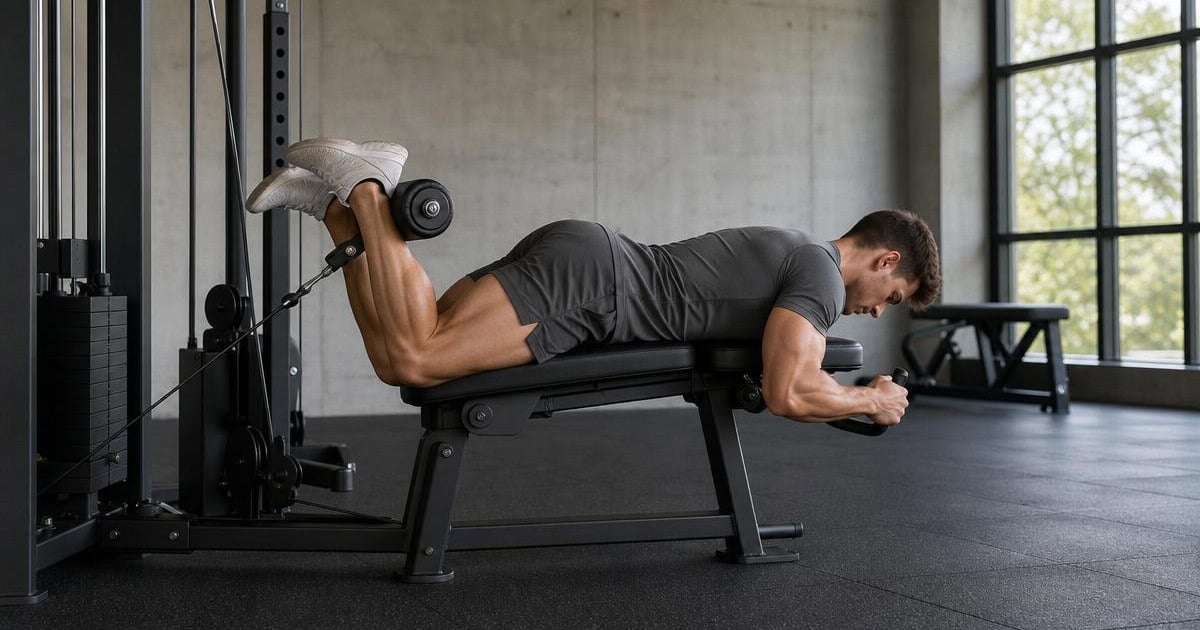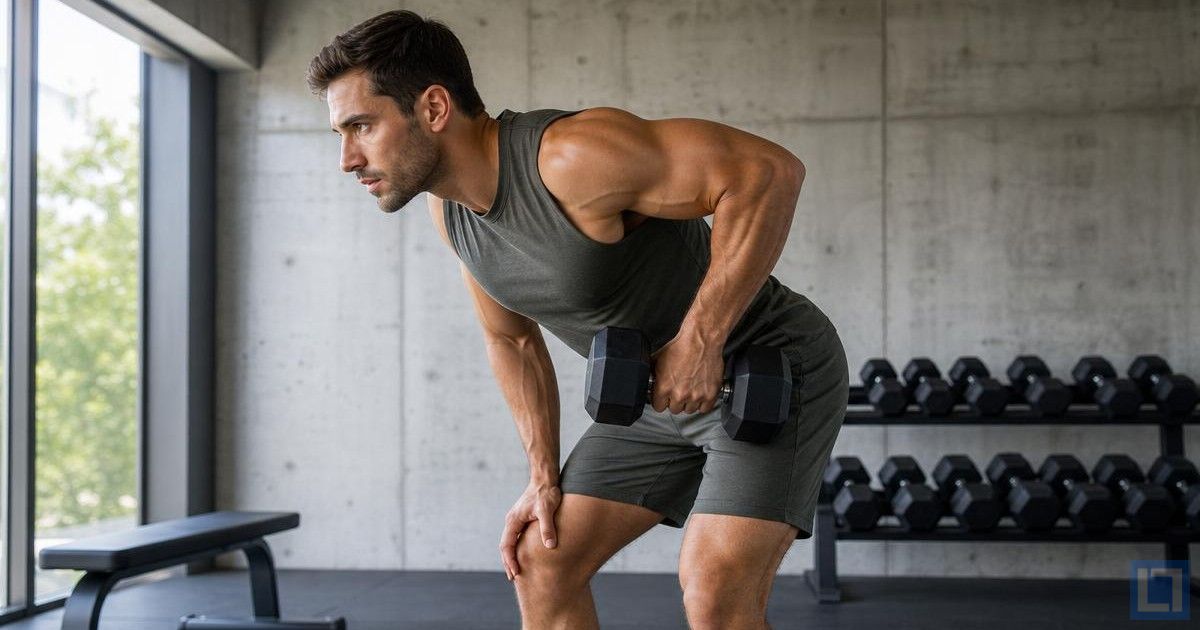
A complete upper-body program covers chest, back, shoulders, and arms with enough variety to develop each muscle from multiple angles. The best upper body dumbbell workouts use the natural advantages of dumbbells (independent arm work, longer range of motion, joint-friendly loading) to deliver that variety in a single training session.
Below are ten effective upper-body dumbbell exercises that cover every major muscle in the upper body. Together they form a complete upper-body routine that fits in 45 to 60 minutes and requires nothing more than a pair of dumbbells and a bench.
Dumbbell Cross Body Hammer Curl

The Dumbbell Cross Body Hammer Curl performs a hammer curl that crosses the body at the top instead of staying at the side. The cross-body angle increases the stretch on the brachialis at the bottom and produces a stronger contraction at the top, where the dumbbell ends up across the chest.
Standard hammer curls hit the brachialis well, but the cross-body version intensifies the work by adjusting the angle. For lifters chasing visible upper-arm thickness (the brachialis is what pushes the biceps up to look bigger), this variation is one of the higher-value tools in any program.
Stand with dumbbells at the sides, palms facing each other. Curl one dumbbell across the body toward the opposite shoulder, keeping the elbow pinned to the side. Lower under control and switch sides on the next rep. The wrists stay neutral throughout.
Dumbbell Bench Dip

The Dumbbell Bench Dip places the hands on a bench behind the body and the feet on another bench in front, then dips the body down by bending the elbows. Adding a dumbbell on the lap loads the movement, building the chest and triceps as a unit.
Bench dips fit any upper-body dumbbell program because they hit the lower chest and triceps in a way most pressing exercises miss. The hand position behind the body changes the angle of pull on the chest, and adding load via a dumbbell keeps the movement progressing past pure bodyweight.
Hands grip the back bench with fingers forward. Lower the body until the elbows reach roughly 90 degrees, keeping the elbows tucked behind the body rather than flaring out. Press back to lockout. Add load by setting a dumbbell on the lap.
Dumbbell Decline Shrug

The Dumbbell Decline Shrug performs a shrug while lying face-down on a decline bench, isolating the upper traps and rhomboids without the load on the spine that standing shrugs create. The decline angle changes the line of pull, hitting the upper back from a different angle than upright shrug variations.
Most lifters either skip trap work entirely or default to standing shrugs, which load the spine heavily. The decline shrug fixes that by taking the spine out of the equation while still loading the traps with significant weight. It is a strong choice for anyone with lower-back issues that standing shrugs aggravate.
Lie face-down on a decline bench with dumbbells hanging straight down toward the floor. Shrug the shoulder blades up and back, squeezing the traps hard at the top. Lower under control. Avoid jerking the dumbbells with momentum.
Dumbbell Bench Press

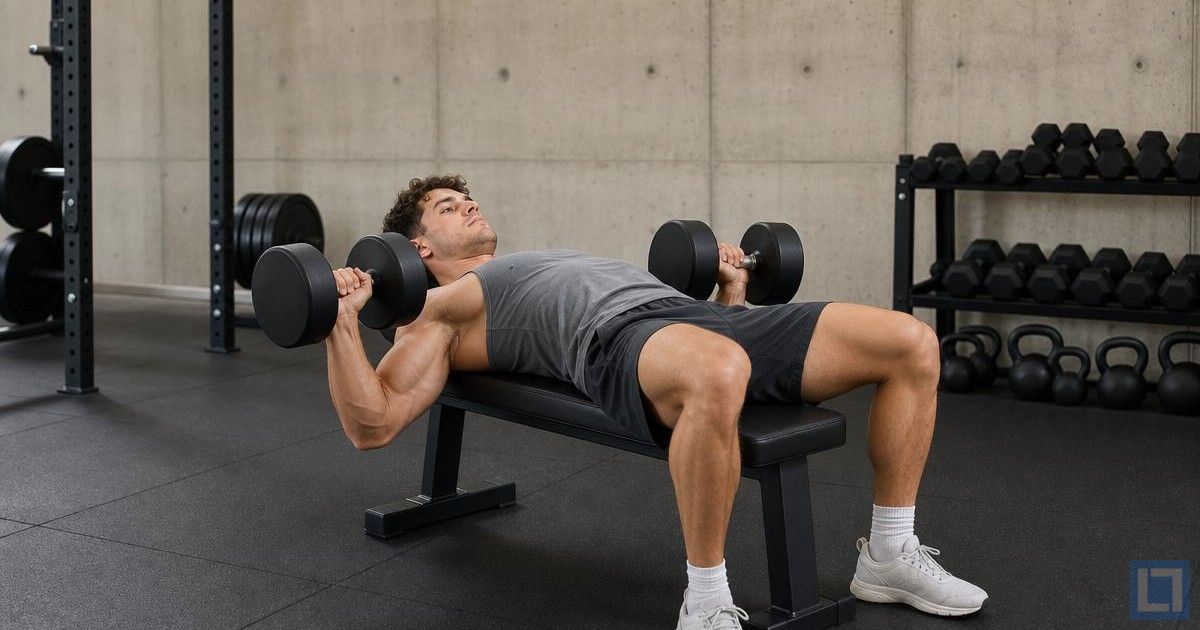
The Dumbbell Bench Press is the foundational upper-body pressing exercise. Lying flat with a dumbbell in each hand, you press the bells to lockout above the chest, then lower them under control. The independent dumbbells allow a longer range of motion than a barbell can match.
No upper-body dumbbell program is complete without bench pressing. The deeper stretch at the bottom hits more chest fibers than barbell pressing, the independent arms catch strength imbalances, and the lighter individual loads tend to be safer for the shoulders.
Plant the feet flat and pull the shoulder blades together hard. Press the dumbbells up and slightly together at the top. Lower under control to a deep stretch position before pressing the next rep. Avoid letting the elbows flare straight out from the body.
Dumbbell Lying Pronation

The Dumbbell Lying Pronation lies on the side with a dumbbell in the top hand, elbow tucked at 90 degrees, and rotates the wrist forward (pronates) against the dumbbell weight. It targets the rotator cuff muscles directly, specifically the internal rotators.
Most upper-body programs ignore the rotator cuff entirely until something hurts. Direct rotator cuff work like the lying pronation is preventive care: it strengthens the small shoulder stabilizers that protect the joint during heavy pressing. Two sets of 12 to 15 reps per side, two or three times per week, is enough to make a measurable difference in shoulder health.
Lie on the side with the working arm on top, elbow tucked at the waist, and the forearm pointing up toward the ceiling. Rotate the dumbbell forward (toward the floor in front of the body) by rotating only at the shoulder. Use very light weight; this is a precision movement, not a strength movement.
Dumbbell Arnold Press
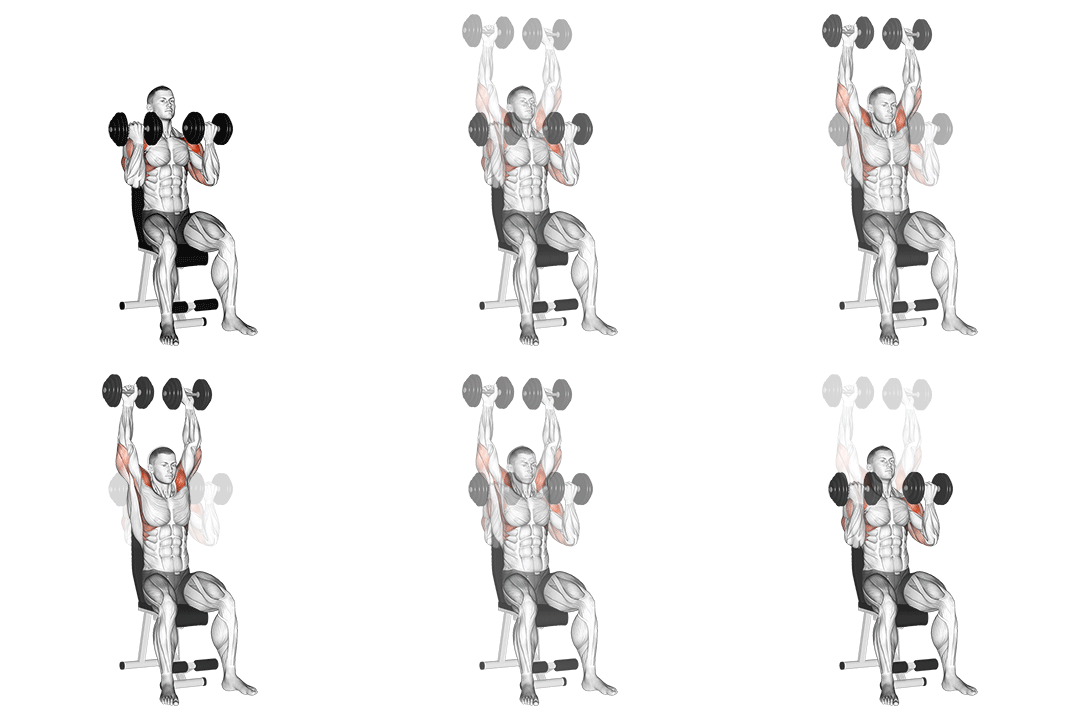
The Dumbbell Arnold Press starts with palms facing the body at shoulder level, then rotates the wrists outward as the dumbbells press overhead, ending with palms facing forward. The wrist rotation through the press hits the front and side delts in one combined motion.
Standard overhead presses hit the front delts heavily but mostly miss the side delts. The Arnold press fixes that by adding the rotation, which engages the side delts as the wrists turn. It is a strong substitute for the standard shoulder press when total shoulder development is the goal.
Start at shoulder level with palms facing the body. As you press up, rotate the wrists outward so palms face forward at lockout. Reverse the rotation as the dumbbells lower back to the start. Move smoothly to control both the press and the rotation.
Dumbbell External Rotation

The Dumbbell External Rotation lies on the side with the dumbbell in the top hand, elbow tucked, and rotates the forearm outward against the weight. It directly targets the rotator cuff muscles responsible for external rotation, the most commonly weak group in any pressing-heavy program.
Where the lying pronation hits internal rotators, the external rotation hits the opposite side. Both directions need direct work for complete rotator cuff health. Combined with the lying pronation, two minutes of rotator cuff work twice per week protects the shoulders for years of heavy pressing.
Lie on the side with the working arm on top, elbow tucked at the waist, forearm across the body. Rotate the dumbbell upward and out by rotating only at the shoulder, ending with the forearm pointing toward the ceiling. Use very light weight; this is a stability exercise, not a strength exercise.
Dumbbell Good Morning

The Dumbbell Good Morning holds a dumbbell at the chest in goblet position and hinges at the hips with a flat back, returning to standing by driving the hips forward. It builds the lower back, glutes, and hamstrings through a hip-hinge pattern with no spinal compression.
Where the barbell good morning loads the spine through a bar across the shoulders, the dumbbell version loads through the chest, which avoids the spinal compression that aggravates many lifters’ lower backs. It is a strong choice as a posterior chain builder in upper-body programs that want to include some hinge work without going to a barbell.
Hold the dumbbell tight against the chest. Hinge at the hips with a flat back and a slight knee bend. Lower the chest forward until the hamstrings stretch significantly. Drive the hips forward to stand back up. The back stays flat throughout; do not round under the load.
Dumbbell Seated Kickback

The Dumbbell Seated Kickback hinges over from a seated position and extends the arms back behind the body in a kickback motion, isolating the long head of the triceps. The seated position keeps body sway out of the equation completely.
Tricep kickbacks are often dismissed as “ego” exercises because the load tends to be light, but the loaded stretch and contraction pattern produces real growth on the long head of the triceps when done with strict form. The seated version eliminates the swaying that plagues standing kickbacks.
Sit on a bench with feet planted and torso hinged forward. Hold the dumbbells at the sides with elbows tucked. Extend the arms back behind the body until they reach full extension, then return under control. The upper arms stay still throughout; only the elbows move.
Dumbbell High Curl
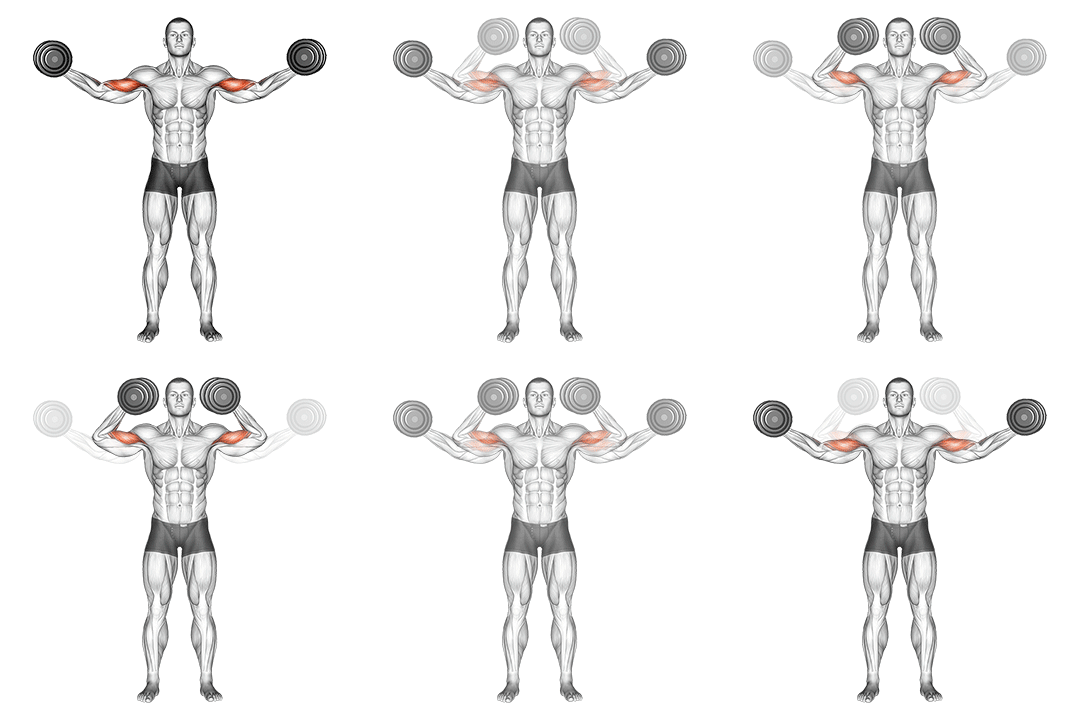
The Dumbbell High Curl performs a curl variation where the dumbbells stop at chest height instead of fully curling to the shoulders. The shorter range loads the bicep peak position with heavier weight than full-range curls allow, making it a strength variation for lifters who can already curl significant weight.
For advanced lifters, partial-range curls let you load the strongest portion of the curl arc with maximum weight. The full curl forces the load to be lighter to clear the weak point at the bottom; the high curl skips that weak point and loads the contraction directly. Use it as a heavy strength variation rather than a primary mass-builder.
Stand with dumbbells at the sides. Curl up to roughly chest height (90 degrees of elbow flexion) and pause briefly. Lower under control to a slight bend rather than full extension, keeping continuous tension on the biceps. Use heavier weight than your full-range curls.
How To Program These Workouts
A productive upper-body dumbbell session pulls five to seven exercises from the list above. A balanced session includes one heavy compound (bench press), one back exercise (decline shrug or good morning for posterior chain), one shoulder press (Arnold press), one direct arm pair (cross-body curl plus seated kickback), and rotator cuff work for shoulder health.
Train upper body two to three sessions per week. Spacing volume across multiple sessions produces faster growth than cramming everything into a single session. The chest, shoulders, and arms recover within 48 to 72 hours of moderate training, so a Monday/Thursday or Tuesday/Friday split works well for most lifters.
For more dumbbell-specific programming, see our best dumbbell chest workouts and best dumbbell bicep workouts. To browse the equipment library, explore our dumbbell exercises collection.
Final Thoughts
The best upper body dumbbell workouts deliver complete development with the most accessible weight room equipment available. A pair of dumbbells covers chest, back, shoulders, and arms with enough exercise variety to keep most lifters challenged for years.
Stay strict on form, especially on the rotator cuff work and the smaller-muscle exercises like external rotations and kickbacks. Light weight done right produces better results than heavy weight done sloppy, and the smaller exercises in particular are about precision rather than load.
Frequently Asked Questions
How heavy should my dumbbells be for upper body workouts?
Pick a weight that lets you complete clean sets in your target rep range with one or two reps left in the tank. For most intermediate lifters, that means 30 to 60 pounds for bench press, 20 to 40 pounds for shoulder presses, 15 to 35 pounds for curls, and 5 to 15 pounds for rotator cuff work. Lighter is better than heavier when in doubt.
How often should I train upper body?
Two to three times per week works for most lifters. Total weekly volume matters more than session count: aim for somewhere between 12 and 20 working sets per week per major muscle group, including both heavy compound work and isolation exercises.
Do I really need rotator cuff work?
Yes, especially if your program includes any heavy pressing. The rotator cuff stabilizes the shoulder during every push and pull, and untrained rotator cuffs are one of the most common sources of nagging shoulder pain in lifters. Two minutes of light rotator cuff work twice per week prevents most issues.
Can dumbbells alone build a complete upper body?
Yes for beginners and intermediates. Advanced lifters chasing maximum strength sometimes benefit from adding barbell work for heavier loading, but consistent dumbbell training produces real upper-body development for years before that ceiling becomes meaningful.
Should I do upper body workouts on the same day as legs?
If you train three days per week or fewer, full-body workouts (combining upper and lower) work better than splitting them. If you train four or more days per week, an upper/lower split or a push/pull/legs structure produces faster results because each session can focus more intensely on its target muscles.