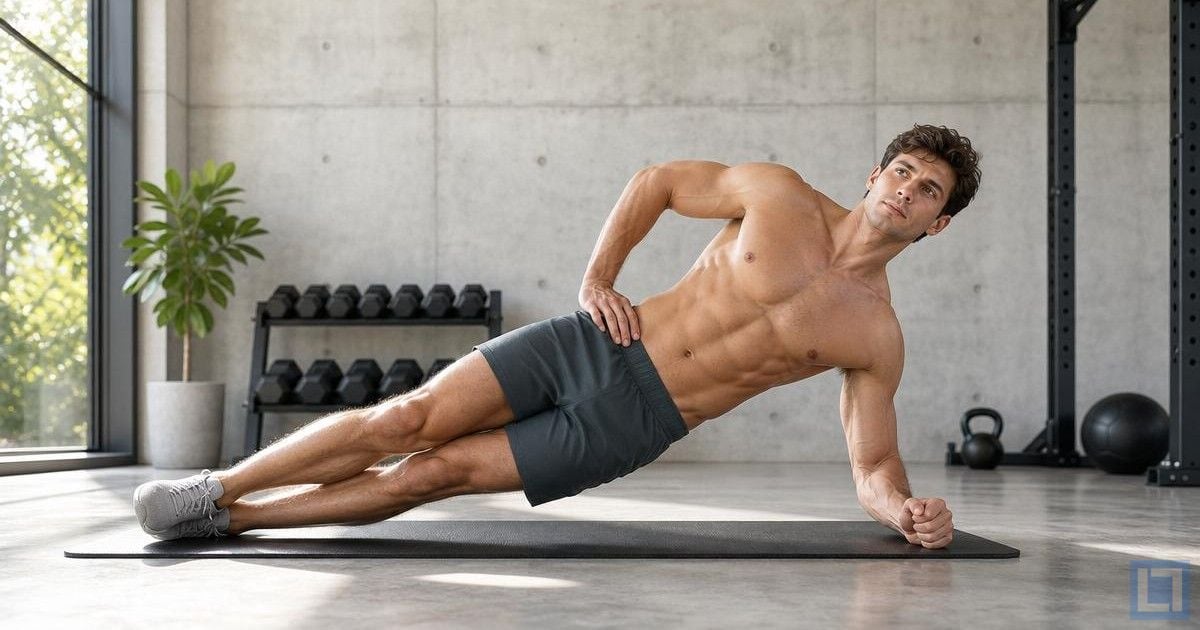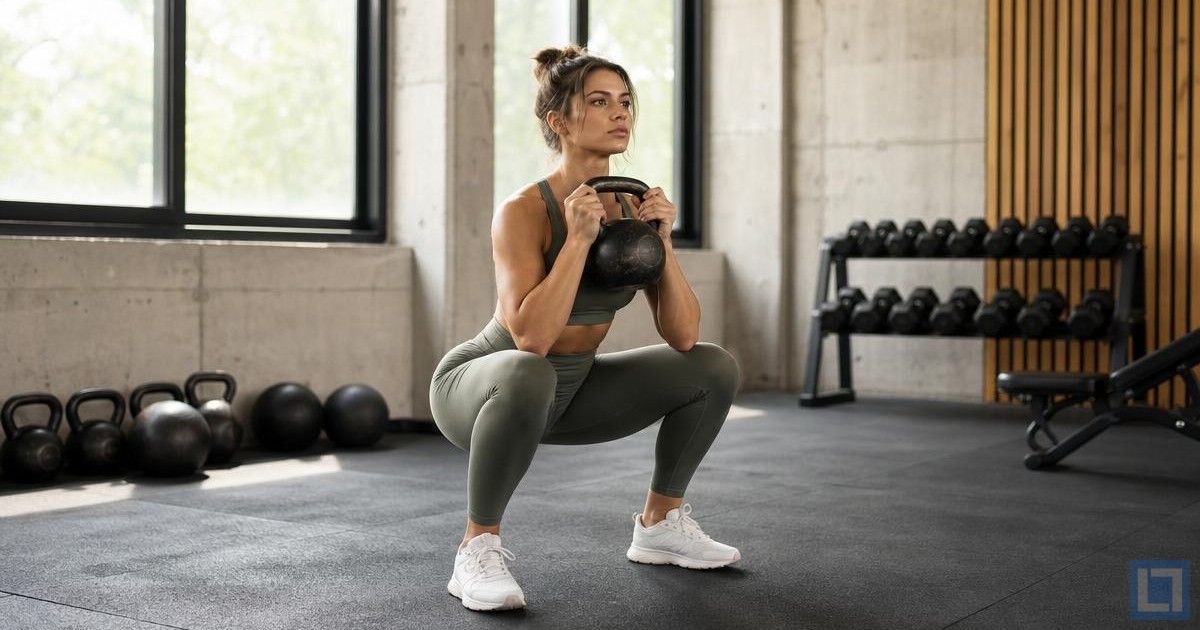
Kettlebell glute training produces real glute development through a unique combination of ballistic hip-extension work (swings, snatches, cleans) and loaded hip-extension exercises (squats, lunges, glute bridges). The kettlebell handle distribution and ballistic potential give kettlebell glute training advantages that pure barbell or dumbbell programs cannot match. The swing alone is one of the most effective glute exercises that exists for building both glute strength and explosive hip power, and the combination with loaded squat and lunge variations produces complete glute development.
Below are ten effective kettlebell glute exercises that cover ballistic hip-extension work (swing, snatch, dead clean, double snatch, split snatch), loaded squatting (goblet squat, split squat), unilateral lunges (forward lunge, backward lunge), combined patterns (thruster), and direct glute work (single leg glute bridge pullover). Together they form a complete kettlebell glute training program that fits in any home gym with one or two kettlebells. A 30 to 45-minute session produces strong glute stimulus across every major glute function.
Kettlebell Single Leg Glute Bridge Pullover

The Kettlebell Single Leg Glute Bridge Pullover lies on the back with one leg lifted and a kettlebell extended overhead, then performs a glute bridge while simultaneously pulling the kettlebell down to the chest. The combined motion produces strong glute activation along with core demand.
For kettlebell glute training, the single leg glute bridge pullover is one of the most demanding glute exercises that exists. The combined hip extension, single-leg loading, and overhead pullover produces extreme glute and core loading per rep. Run it for 3 sets of 8 to 10 reps per side.
Lie on the back with one leg lifted off the floor and the other foot planted. Hold a kettlebell extended overhead with both hands. Drive the planted-leg hip up while simultaneously pulling the kettlebell over and down to the chest. Reverse the motion under control. Switch sides between sets.
Kettlebell Goblet Squat

The Kettlebell Goblet Squat holds a kettlebell at the chest with both hands and performs a squat motion. The front-loaded position emphasizes the quads and glutes through the full squat range.
For kettlebell glute training, the goblet squat is the foundational compound exercise. The pattern hits the glutes through the squat’s primary hip extension function. Run it for 3 to 4 sets of 10 to 15 reps as foundational lower-body work.
Hold a kettlebell at the chest with both hands cupping the top end. Stand with feet shoulder-width or slightly wider. Squat down by sitting the hips back while bending the knees, keeping the kettlebell at the chest. Drive back to standing through the whole foot.
Kettlebell Split Squat

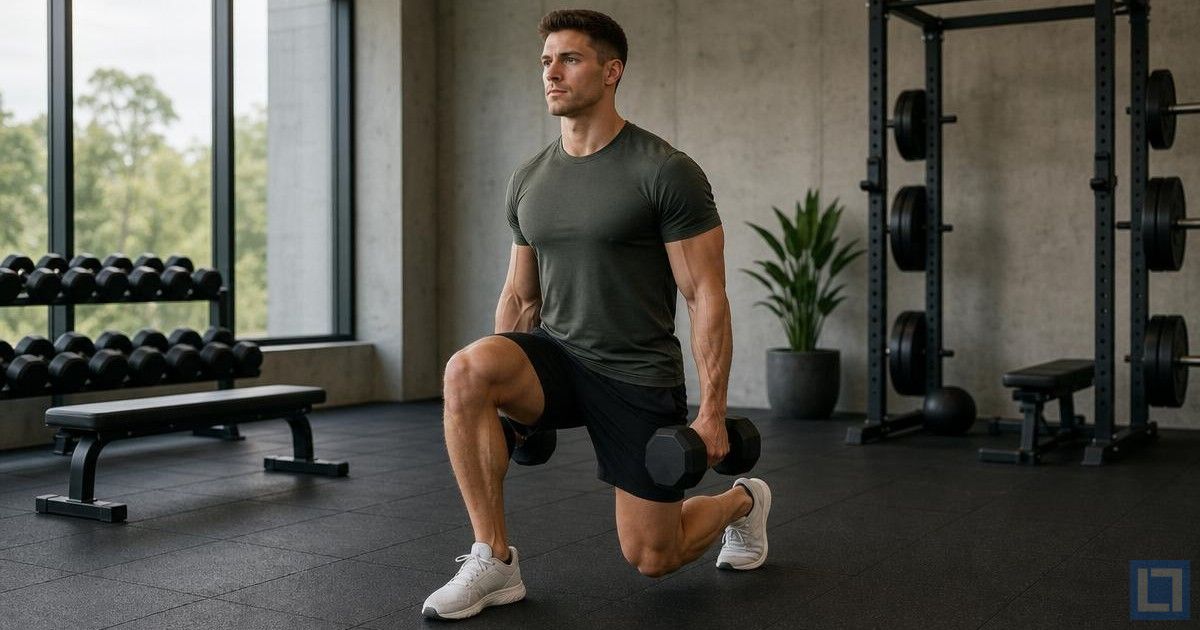
The Kettlebell Split Squat sets up in a split stance and drops straight down by bending both knees while holding kettlebells at the sides or in goblet position. The unilateral pattern produces strong single-leg glute loading.
For kettlebell glute training, the split squat produces stronger unilateral glute development than bilateral squatting alone. The pattern catches strength imbalances and produces broader development per rep. Run it for 3 sets of 8 to 12 reps per leg.
Stand in a split stance with one foot forward and one back. Hold kettlebells at the sides. Drop straight down by bending both knees, lowering the back knee toward the floor. Drive back to the start through the front foot. Complete all reps on one leg before switching.
Kettlebell Forward Lunge

The Kettlebell Forward Lunge steps forward into a lunge while holding kettlebells at the sides or in goblet position. The dynamic forward step produces strong glute and quad loading on the lead leg.
For kettlebell glute training, the forward lunge produces strong unilateral glute work through the dynamic step pattern. Run it for 3 sets of 8 to 10 reps per leg as primary unilateral glute work.
Stand tall with kettlebells held at the sides. Step forward into a long lunge stance, lowering the back knee toward the floor while bending the front knee. Drive through the front foot to step back to standing. Alternate sides on each rep.
Kettlebell Double Snatch

The Kettlebell Double Snatch lifts two kettlebells from between the legs to overhead lockout in one continuous explosive motion. The full-body explosive pattern produces strong glute drive along with cardiovascular demand.
For kettlebell glute training that includes ballistic work, the double snatch produces strong hip extension power that translates to broader athletic function. The explosive nature drives stronger glute adaptation than slower controlled lifts. Run it for 3 sets of 5 to 8 reps as explosive glute work.
Stand with two kettlebells between the legs. Hinge at the hips, then drive the hips forward explosively to swing both kettlebells up. Pull both kettlebells close to the body, transitioning to overhead lockout. Lower under control through the legs.
Kettlebell Thruster

The Kettlebell Thruster combines a front squat (with kettlebells in the rack position) and an overhead press in one continuous motion. The combined leg drive and overhead press produces full-body conditioning along with strong glute loading.
For kettlebell glute training that includes overhead pressing, the thruster works the glutes through the squat portion while adding overhead pressing demand. The pattern produces strong hip extension under significant load. Run it for 3 sets of 8 to 10 reps as combined conditioning and glute work.
Stand with kettlebells in the rack position at the shoulders. Squat down to a deep front squat. Drive up explosively while pressing the kettlebells overhead in one continuous motion. Lower the kettlebells to the rack position. Repeat immediately into the next squat.
Kettlebell Swing

The Kettlebell Swing hinges at the hips and swings a kettlebell from between the legs to chest height (or overhead in the American style) using powerful hip drive. The pattern is the foundational kettlebell glute exercise and one of the most effective glute exercises that exists.
For kettlebell glute training, the swing is the absolute cornerstone exercise. The pattern produces stronger glute power development per rep than nearly any other movement. The hip-hinge mechanics specifically develop the glutes through their primary hip extension function. Run it for 3 to 4 sets of 15 to 20 reps as primary glute work.
Stand with feet shoulder-width and a kettlebell between the legs. Hinge at the hips and let the bell swing back between the legs. Drive the hips forward explosively to swing the bell up to chest height. Let the bell return through the legs by hinging back at the hips. The motion comes from the hips, not the arms.
Kettlebell Split Snatch

The Kettlebell Split Snatch performs a snatch motion while landing in a split stance with one foot forward. The combined explosive snatch and split landing produces strong glute and full-body coordination demand.
For advanced kettlebell glute training, the split snatch produces unique loading that combines explosive hip extension with deceleration in the split position. Run it for 3 sets of 5 to 8 reps per side as advanced explosive work.
Stand with feet shoulder-width and a kettlebell between the legs. Grip with one hand. Hinge at the hips, then drive the hips forward explosively while pulling the kettlebell up. Land in a split stance with one foot forward and the kettlebell locked out overhead. Return to standing. Switch sides between sets.
Kettlebell Backward Lunge

The Kettlebell Backward Lunge steps backward into a lunge while holding kettlebells at the sides or in goblet position. The backward step pattern produces stronger glute loading than forward lunges because the front leg works harder during the eccentric phase.
For kettlebell glute training, the backward lunge produces stronger glute loading than the forward variation due to the loading mechanics of the backward step. Run it for 3 sets of 8 to 10 reps per leg.
Stand tall with kettlebells held at the sides. Step backward into a long lunge stance, dropping the back knee toward the floor while bending the front knee. Drive through the front foot to step back to standing. Alternate sides on each rep.
Kettlebell Dead Clean
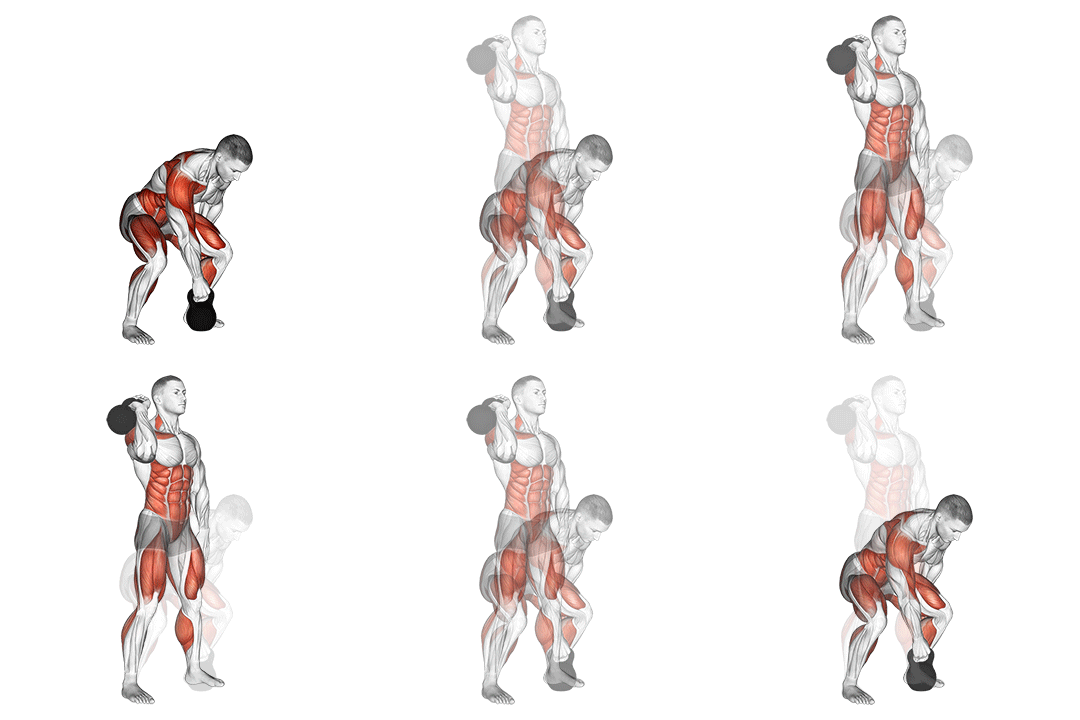
The Kettlebell Dead Clean lifts a kettlebell from a dead-stop position on the floor to the rack position at the shoulder. The dead-stop start eliminates the hip-swing rebound and forces pure explosive hip extension.
For kettlebell glute training that includes explosive work, the dead clean produces strong glute power development through the dead-stop pulling pattern. The exercise translates to athletic explosive movements. Run it for 3 sets of 5 to 8 reps per side.
Stand with feet shoulder-width and a kettlebell between the legs on the floor. Squat to grip the bell with one hand. Drive explosively through the legs and hips to lift the bell to the rack position at the shoulder. Lower back to the floor and reset before each rep.
How To Program These Workouts
A productive kettlebell glute session pulls six to eight exercises from the list above. A balanced session includes one ballistic exercise (swing as primary), one loaded squat (goblet squat), one unilateral exercise (split squat or backward lunge), one explosive exercise (snatch or clean), one combined pattern (thruster), and one direct glute exercise (single leg glute bridge pullover). Run swings for 3 to 4 sets of 15 to 20 reps; squats and lunges for 3 sets of 8 to 12 reps; explosive work for 3 sets of 5 to 8 reps per side.
Train kettlebell glutes 2 to 3 times per week as part of broader lower-body or full-body programming. The glutes recover within 48 to 72 hours of moderate training, and they get significant indirect work from any kettlebell hinging or squatting exercise. Most successful programs include 2 to 3 kettlebell glute sessions per week alongside dedicated strength training. The format also fits naturally as a glute-focused finisher attached to other workouts.
For broader kettlebell programming, see our best kettlebell leg workouts and best kettlebell swing workouts. For other glute training, see our best at home glute workouts.
Final Thoughts
The best kettlebell glute workouts deliver real glute development through the combination of ballistic hip-extension work (which kettlebells are uniquely suited for) and loaded glute training (which builds foundational mass and strength). The combination produces broader glute development than pure dumbbell or barbell programs because kettlebells excel at the ballistic patterns that drive explosive hip extension. For lifters with kettlebell access who want serious glute training, this format is one of the most effective options available.
Stay focused on the hip drive throughout every exercise. The most common kettlebell glute training mistake is letting the arms or quads take over the work that the glutes should be doing. The fix: actively squeeze the glutes hard at the lockout of every swing, snatch, squat, and lunge. The hips drive the kettlebell upward; the arms only catch and guide. Keeping the focus on hip extension throughout produces stronger glute development than mechanical exercise execution that lets larger surrounding muscles dominate.
Frequently Asked Questions
Are kettlebells good for glute training?
Yes, very good. The combination of ballistic hip-extension work (swings, snatches, cleans) and loaded glute training (squats, lunges, bridges) produces broader glute development than pure dumbbell or barbell programs. The kettlebell swing alone is one of the most effective glute exercises that exists for building both strength and explosive hip power. Most lifters who add kettlebell glute work to their training see measurable glute development within 8 to 12 weeks.
How heavy should kettlebells be for glute training?
Most beginners work with 12 to 16 kg kettlebells (26 to 35 pounds) for swing-based glute exercises; intermediates work with 20 to 24 kg (44 to 53 pounds) and advanced trainees work with 28 to 32 kg (62 to 70 pounds) for swings and primary lifts. The right weight is whatever allows clean reps in your target range with strong hip drive. Heavy kettlebells with poor form produce weaker glute development than moderate weight with strict technique.
How often should I do kettlebell glute workouts?
Two to three times per week works for most lifters. The glutes recover within 48 to 72 hours of moderate training, and they get significant indirect work from any kettlebell hinging or squatting exercise. Most successful programs include 2 to 3 kettlebell glute sessions per week alongside broader lower-body or full-body training.
Are kettlebell swings the best glute exercise?
One of the best, particularly for explosive hip-extension power. The kettlebell swing produces strong glute power development per rep through the ballistic hip-hinge pattern. The pattern also builds the kind of explosive glute strength that translates to athletic performance, which loaded squat and lunge work develops less directly. Most successful kettlebell glute programs include swings as the cornerstone exercise alongside loaded squat and lunge work.
Can I build glutes with only kettlebells?
Yes for general glute development. The combination of progressive kettlebell training, appropriate volume, and consistent nutrition produces real glute development for years of consistent practice. Advanced lifters chasing maximum glute size eventually benefit from heavy barbell hip thrusts and squats that allow loads kettlebells cannot match, but consistent kettlebell glute training produces measurable development at every level for general goals.