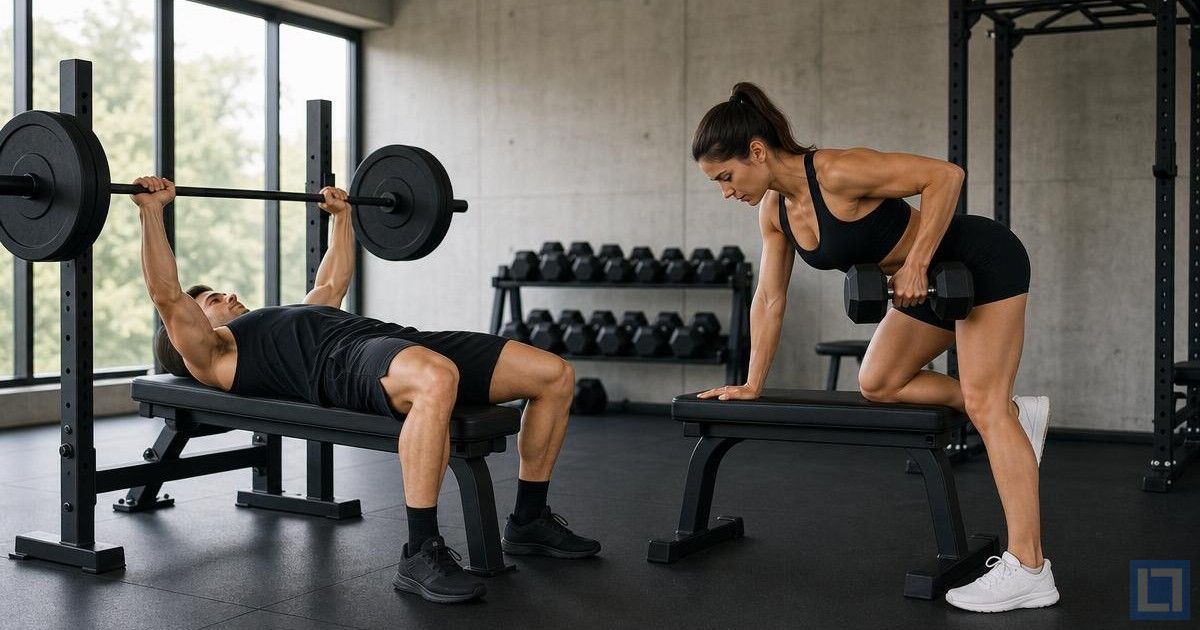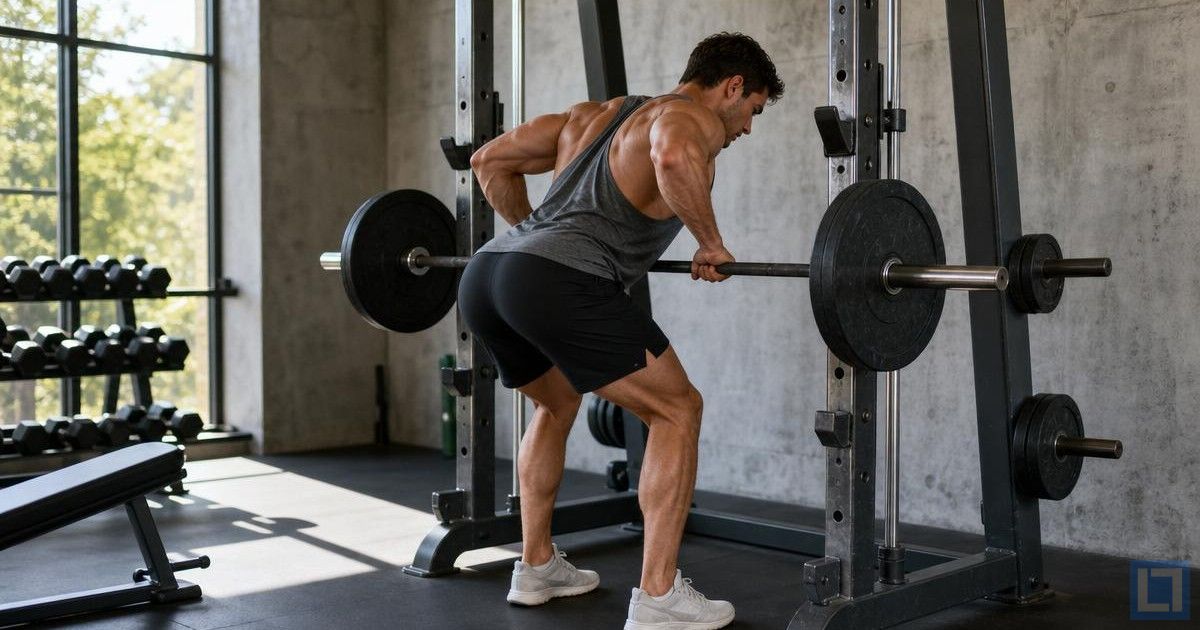
Smith machine back training produces real back development through guided-bar pulling that removes stabilization demand and allows lifters to focus purely on back loading. The fixed bar path makes Smith machine pulling particularly valuable for lifters wanting to push hard sets to failure with reduced injury risk, beginners learning rowing and deadlift technique (the fixed path simplifies the motion), and lifters with mobility limitations that make free-weight pulling uncomfortable. The Smith machine also enables unilateral variations that combine the safety of fixed-path loading with the strength-balancing benefits of unilateral work, plus shrug variations that hit the traps from multiple angles.
Below are ten effective Smith machine back exercises that cover trap-emphasis work (back shrug, back wide shrug, wide shrug, standard shrug), heavy pulling (deadlift, stiff-legged deadlift), unilateral work (one-leg deadlift, one-arm row), foundational rowing (bent-over row), and rear delt and upper back work (rear delt row). The selection is heavy on shrugs because the Smith machine’s fixed path is particularly well-suited to heavy isolated trap work. Together they form a complete Smith machine back training program for lifters with Smith machine access. A 60 to 75-minute session pulled from this list produces strong back stimulus across upper, mid, and lower back regions.
Smith Back Shrug

The Smith Back Shrug holds the Smith machine bar behind the body at hip level and shrugs the shoulders up toward the ears. The behind-the-body bar position produces unique upper-trap loading from a different angle than standard shrugs.
For Smith machine back training, the back shrug produces strong upper-trap loading from the unique behind-body angle. The pattern complements standard shrugs by hitting the traps from a different position. Run it for 3 to 4 sets of 10 to 15 reps as variation upper-trap work.
Stand in front of a Smith machine with the bar set behind the body at hip level. Grip the bar behind the body with overhand grip slightly wider than shoulder-width. Unrack the bar by twisting it. Shrug the shoulders straight up toward the ears as high as possible. Squeeze the upper traps at the top. Lower under control.
Smith Back Wide Shrug

The Smith Back Wide Shrug performs back shrugs with a wider grip than standard back shrugs. The wider grip biases loading toward the upper traps with slightly different angle emphasis.
For Smith machine back training that includes varied trap loading, the wide-grip back shrug produces stronger upper-trap loading at the wider angle. The pattern works as variation alongside standard back shrugs. Run it for 3 sets of 10 to 12 reps as variation trap work.
Stand in front of a Smith machine with the bar set behind the body at hip level. Grip the bar with hands placed wider than shoulder-width (roughly 1.5 times shoulder-width). Unrack and shrug the shoulders straight up. Squeeze the upper traps at the top. Lower under control.
Smith Wide Shrug

The Smith Wide Shrug performs front shrugs with the bar in front of the body and a wider grip than standard shrugs. The wider grip produces unique upper-trap loading angle.
For Smith machine back training, the wide-grip front shrug produces strong upper-trap loading with the wider grip variation. The pattern hits the upper traps slightly differently than standard-grip front shrugs. Run it for 3 sets of 10 to 12 reps as wide-grip trap work.
Stand inside a Smith machine with the bar set in front of the body at hip level. Grip the bar with overhand grip placed wider than shoulder-width. Unrack and shrug the shoulders straight up toward the ears as high as possible. Squeeze the upper traps at the top. Lower under control.
Smith Shrug

The Smith Shrug performs standard shrugs with the bar in front of the body at hip level. The Smith machine’s fixed bar path eliminates side-to-side stabilization demand and allows lifters to focus purely on trap loading.
For Smith machine back training, the standard shrug is the foundational upper-trap exercise. The fixed bar path makes the exercise accessible for heavy loading. Run it for 4 sets of 10 to 15 reps as primary upper-trap work in any Smith machine back session.
Stand inside a Smith machine with the bar set at hip level. Grip the bar with overhand grip slightly wider than shoulder-width. Unrack the bar. Shrug the shoulders straight up toward the ears as high as possible while keeping the arms straight. Squeeze the upper traps at the top. Lower under control.
Smith Deadlift

The Smith Deadlift performs deadlifts on a Smith machine with the fixed bar path. The fixed motion path makes the deadlift more accessible for beginners or for lifters wanting to focus on specific aspects of the deadlift pattern without side-to-side stabilization demand.
For Smith machine back training, the deadlift produces strong full posterior chain loading. The fixed bar path makes heavy pulling more accessible than free-weight deadlifts for lifters still learning the pattern. Run it for 4 sets of 5 to 8 reps as primary heavy pulling work.
Stand inside a Smith machine with feet hip-width and the bar at the floor. Hinge at the hips and bend the knees to grip the bar with shoulder-width grip. Drive through the legs and pull the bar up close to the body until standing fully upright. Reverse the motion under control. Reset before each rep.
Smith One Leg Deadlift

The Smith One Leg Deadlift performs deadlifts on a Smith machine while balancing on one leg. The unilateral pattern combined with the fixed bar path produces strong unilateral posterior-chain loading with reduced balance demand than free-weight single-leg deadlifts.
For Smith machine back training that includes unilateral work, the one-leg deadlift catches strength imbalances that bilateral pulling cannot match. The Smith machine eliminates the balance demand of free-weight single-leg deadlifts while preserving the unilateral loading benefits. Run it for 3 sets of 6 to 10 reps per leg as unilateral posterior-chain work.
Stand inside a Smith machine on one leg with the bar at hip level. Grip the bar. Hinge at the hips while extending the free leg behind for balance, lowering the bar toward the floor. Keep the back flat and the working leg with a slight knee bend. Drive the hips forward to stand back up. Switch sides between sets.
Smith Bent Over Row
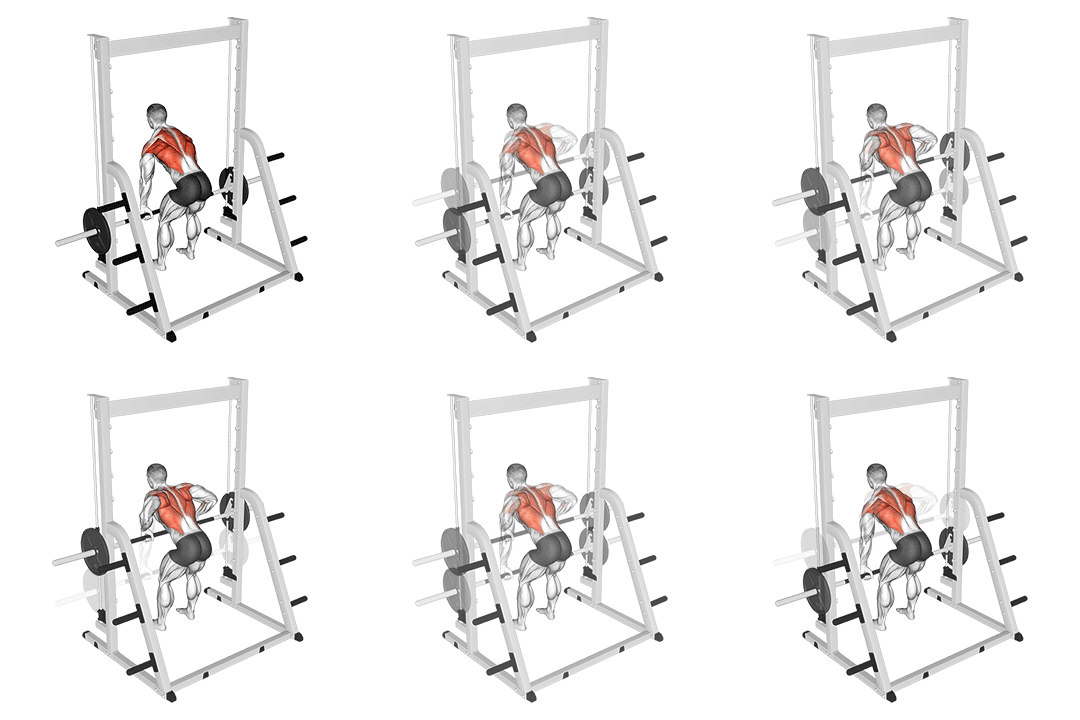
The Smith Bent Over Row hinges over with the Smith machine bar held at the front of the legs and rows the bar to the lower chest by pulling the elbows back. The fixed bar path simplifies the rowing motion compared to free-weight variations.
For Smith machine back training, the bent-over row is the foundational horizontal pulling exercise. The fixed bar path allows lifters to focus on pulling mechanics without side-to-side stabilization. Run it for 4 sets of 8 to 10 reps as primary horizontal pulling work.
Stand inside a Smith machine with feet hip-width holding the bar at the front of the legs. Hinge over by pushing the hips back and bending the knees slightly, lowering the torso to roughly 45 degrees. Row the bar to the lower chest by pulling the elbows back. Lower under control. Keep the back flat throughout.
Smith One Arm Row

The Smith One Arm Row performs rows on a Smith machine with one arm at a time, similar to dumbbell rows but with the Smith machine bar replacing the dumbbell. The unilateral pattern allows focus on the working side and catches strength imbalances.
For Smith machine back training that includes unilateral work, the one-arm row produces strong unilateral pulling without the balance demand of dumbbell rows. The pattern catches strength imbalances and allows full focus on each side. Run it for 3 sets of 8 to 12 reps per arm as unilateral pulling work.
Stand sideways to a Smith machine with the bar at hip level. Bend forward and grip the bar with one hand. Brace the free hand against a bench or knee for support. Row the bar up to the lower chest by pulling the elbow back. Lower under control. Switch sides between sets.
Smith Rear Delt Row
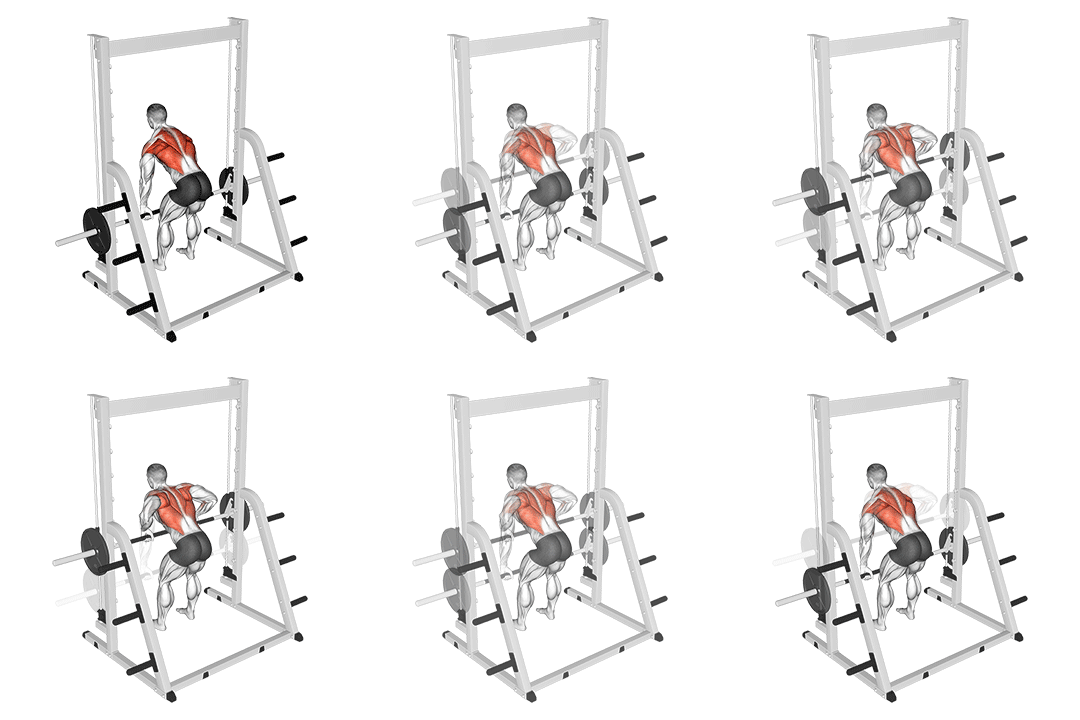
The Smith Rear Delt Row performs rows on a Smith machine with elbows flared outward and the bar pulled toward the upper chest or face level. The high pulling angle biases loading toward the rear delts and upper back rather than the lats.
For Smith machine back training that includes rear delt work, the rear delt row produces strong upper-back and rear delt loading from a different angle than standard rows. The pattern complements standard rowing for complete back development. Run it for 3 sets of 10 to 12 reps as rear delt and upper back work.
Set up like a standard Smith bent-over row but plan to pull the bar to the upper chest or face level. Hinge over with the bar held at the front. Row the bar up high (toward the upper chest or face) with elbows flared outward at the top of the rep. Squeeze the rear delts at the contracted position. Lower under control.
Smith Stiff Legged Deadlift
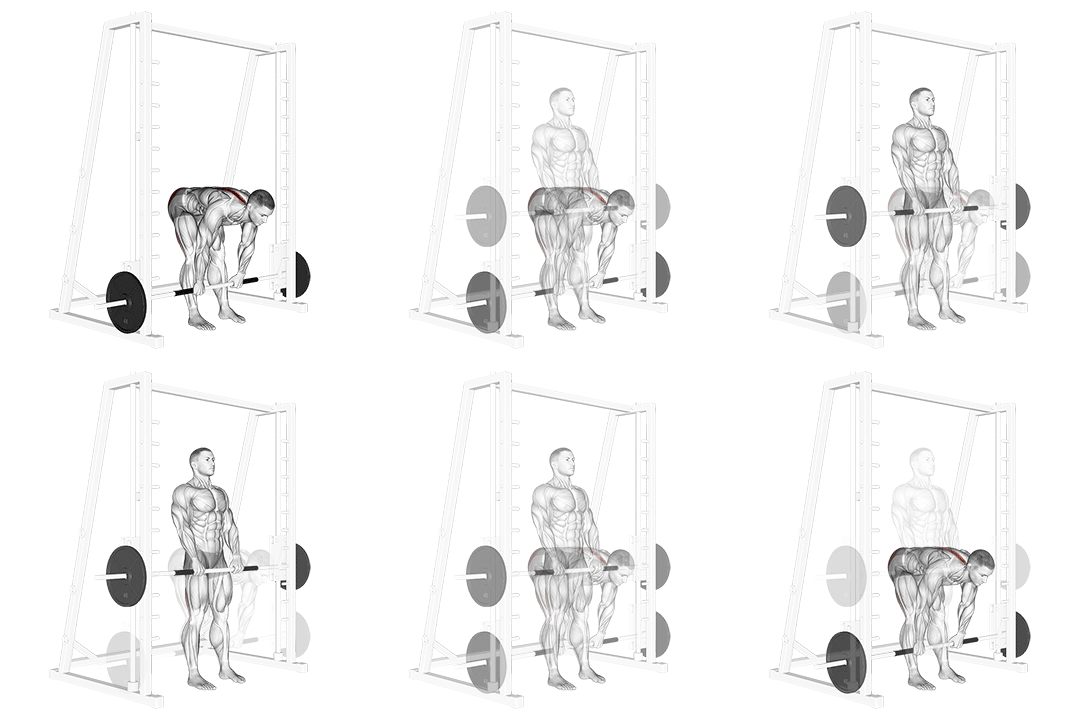
The Smith Stiff Legged Deadlift performs deadlifts on a Smith machine with the legs nearly fully extended (slight knee bend only). The combination of fixed bar path and stiff-leg pattern produces strong hamstring and lower back loading.
For Smith machine back training that includes posterior-chain stretch work, the stiff-legged deadlift produces strong hamstring stretch loading along with lower back development. The fixed bar path makes the demanding stiff-leg pattern more accessible. Run it for 3 sets of 8 to 10 reps as posterior-chain stretch work.
Stand inside a Smith machine with feet hip-width and the bar at hip level. Stand with legs nearly straight (slight knee bend only). Hinge at the hips by pushing the hips back, lowering the bar in a path close to the legs. Drive back to standing. Use lighter loads than conventional deadlift due to the increased range of motion.
How To Program These Workouts
A productive Smith machine back session pulls six to eight exercises from the list above. A balanced session includes one heavy pull (Smith deadlift), one foundational row (bent-over row), one unilateral exercise (one-arm row or one-leg deadlift), one shrug variation (smith shrug or back shrug), one rear delt exercise (rear delt row), and one stretch-focused exercise (stiff-legged deadlift). Run heavy compounds for 4 sets of 5 to 8 reps; rows for 3 to 4 sets of 8 to 12 reps; shrugs for 3 to 4 sets of 10 to 15 reps; unilateral work for 3 sets of 8 to 10 reps per side.
Train Smith machine back sessions 1 to 2 times per week as part of broader back or pull-day programming. The back recovers within 48 to 72 hours of moderate training. Most successful programs include 1 to 2 back sessions per week with appropriate volume distributed across pulling and shrug variations. The Smith machine works particularly well for the volume-focused back session of the week (when the first session uses free-weight pulling for primary stability development) or as the primary back day for lifters who prefer the fixed-path safety profile.
For broader back programming, see our best dumbbell back workouts and how to build a bigger back. For specific lat development, see our how to grow your lats.
Final Thoughts
The best Smith machine back workouts deliver real back development through guided-bar pulling that removes stabilization demand and enables varied shrug and rowing work. The combination of trap-emphasis exercises, heavy pulling, unilateral variations, foundational rowing, and rear delt work covers every major back region and produces complete development. For lifters with Smith machine access who want safe heavy pulling, beginners learning deadlift and row technique, or anyone wanting to add Smith machine variety to existing back programs, this format is one of the most effective options available.
Stay focused on the controlled descent on every rep. The most common Smith machine back training mistake is taking advantage of the fixed bar path to use momentum or bouncing during exercises (especially shrugs and rows), which reduces the actual back stimulus and increases joint strain. The fix: lower the bar under control on every rep with deliberate eccentric tempo (2 to 3 seconds for the descent). The Smith machine’s safety benefits enable harder training; respect that by emphasizing strict eccentric control rather than reps powered by momentum.
Frequently Asked Questions
Are Smith machines good for back training?
Yes for most back exercises. Research shows Smith machine pulling produces comparable back activation to free-weight pulling. The reduced stabilization demand allows lifters to focus more force on the back specifically. Most successful back programs include both Smith machine and free-weight pulling for complete development. Programs that completely avoid Smith machines miss out on safer training to failure and useful unilateral variations.
Smith machine deadlift or barbell deadlift?
Different exercises serve different goals. Free-weight deadlifts produce stronger overall posterior chain development through bilateral stabilization demand. Smith machine deadlifts allow safer training to failure and reduce stabilization fatigue. Most successful back programs include both: free-weight deadlifts for foundational strength, Smith machine deadlifts for additional volume and specialized variations like one-leg deadlifts. Beginners often do better starting with Smith machine deadlifts before progressing to free-weight.
How heavy should I shrug on the Smith machine?
Most lifters can shrug significantly more than they can deadlift due to the smaller range of motion and pure trap focus. For training, work in the 10 to 15 rep range with weights that allow strict form. Heavy shrugs (5 to 8 reps with very heavy loads) produce strong strength development. High-rep shrugs (15 to 20 reps with moderate loads) produce strong trap hypertrophy. The combination produces broader development than either rep range alone.
How often should I train back with the Smith machine?
One to two times per week as part of broader back training. The back recovers within 48 to 72 hours of moderate training. Most successful programs include 1 to 2 back sessions per week with appropriate volume distributed across pulling and shrug variations. The Smith machine works particularly well for the volume-focused back session of the week when paired with free-weight pulling in another session.
Can beginners use the Smith machine for back training?
Yes, the Smith machine is one of the best back training introductions for beginners. The fixed bar path eliminates the side-to-side stabilization that beginners often struggle with on rows and deadlifts, which allows them to focus on the basic pulling motion. Most beginners can build to moderately heavy Smith machine deadlifts (1 to 1.25x bodyweight) within 8 to 12 weeks of consistent practice. The Smith machine pattern translates well to free-weight technique once the fundamentals are established.