
The latissimus dorsi (lats) are the largest muscles of the back and the foundation of the V-taper that produces the wide-back-narrow-waist appearance most lifters want. The lats run from the upper humerus down to the lower spine and pelvis, with primary functions of shoulder adduction (pulling the arms toward the body, as in pull-ups) and shoulder extension (pulling the arms backward, as in rowing). Effective lat training hits both functions: vertical pulling (pull-ups, pulldowns) for shoulder adduction and lat width, plus horizontal rowing (bent-over rows, seated rows) for shoulder extension and lat thickness. The combination produces complete lat development from every visual angle.
Below are ten foundational lat-building exercises that cover vertical pulling (pull-up, wide grip pull-up, cable pulldown, wide grip lat pulldown, reverse grip pulldown), horizontal rowing (barbell bent-over row, dumbbell bent-over row, cable seated row, T-bar reverse grip row), and direct lat-stretch loading (dumbbell pullover). Together they form the complete lat-building exercise foundation for any productive back program. Pull 5 to 7 exercises per back session and rotate the selection across sessions for complete development.
Pull Up

The Pull Up grips an overhead bar with palms facing away and pulls the body up until the chin clears the bar. The exercise is the foundational vertical pulling movement and one of the strongest single lat-builders that exists.
For lat growth, pull-ups are non-negotiable. The pattern hits the lats more directly than horizontal rowing because the vertical pull pattern matches the lat’s primary shoulder adduction function. Run pull-ups for 4 to 5 sets of 6 to 10 reps as foundational lat work in every back session.
Hang from an overhead bar with palms facing away (overhand grip), hands shoulder-width apart. Pull the body up by driving the elbows down and back, focusing on pulling with the lats rather than the arms. Continue until the chin clears the bar. Lower under control to a full hang.
Wide Grip Pull Up

The Wide Grip Pull Up performs pull-ups with hands wider than shoulder-width on the bar. The wider grip emphasizes the lats more directly by reducing the bicep contribution and forcing the lats to do most of the pulling work.
For specific lat development, the wide grip pull-up is one of the most direct lat-builders that exists. The wider grip biases loading toward the lats over the biceps and traps. Run it for 3 to 4 sets of 6 to 8 reps as primary lat width work.
Hang from an overhead bar with palms facing away and hands wider than shoulder-width (roughly 1.5 times shoulder-width). Pull the body up by driving the elbows down and back, focusing on lat contraction. Continue until the chin clears the bar. Lower under control. The wider grip reduces the range of motion slightly but increases lat-specific loading.
Cable Pulldown

The Cable Pulldown sits at a cable machine with overhead pulley and pulls a bar or handle down to the chest while seated. The pattern hits the lats through the same vertical pulling mechanics as pull-ups but with adjustable loading.
For lat growth at any strength level, the cable pulldown is one of the most accessible lat-builders that exists. The adjustable load lets beginners build pull-up strength while advanced lifters add volume beyond what pull-ups alone allow. Run it for 4 to 5 sets of 8 to 12 reps as primary lat work.
Sit at a cable pulldown machine with thighs anchored under the pads. Grip the bar slightly wider than shoulder-width with palms facing away. Pull the bar down to the chest by driving the elbows down and back, focusing on lat contraction. Squeeze the lats at the bottom. Return under control to full extension.
Cable Wide Grip Lat Pulldown
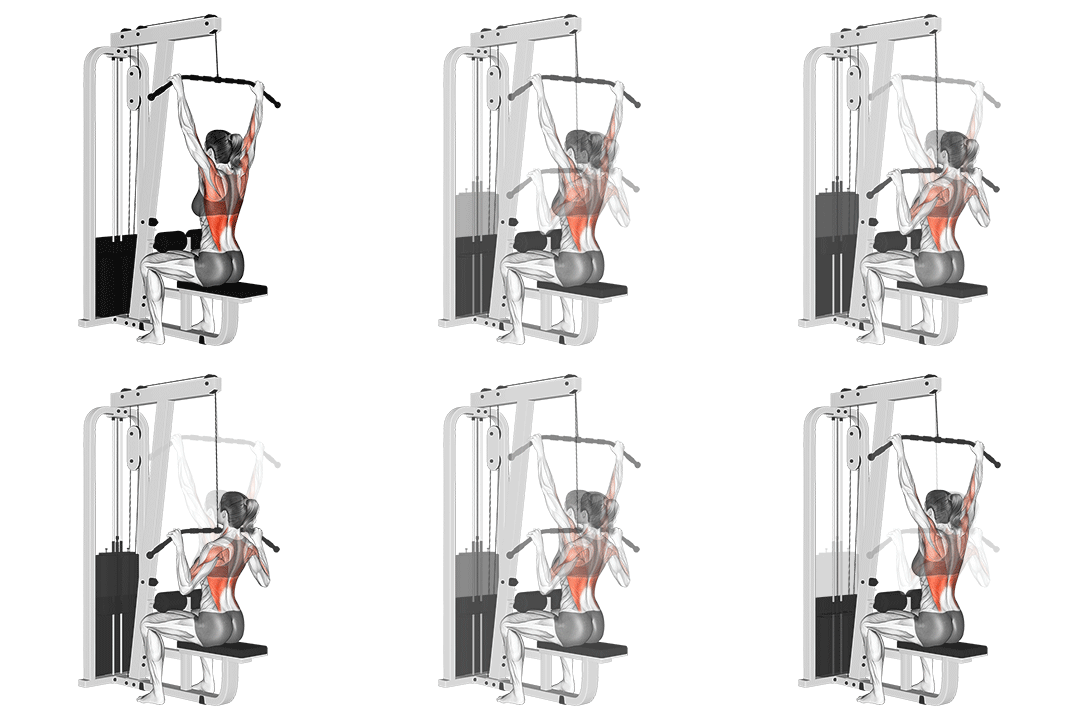
The Cable Wide Grip Lat Pulldown performs the pulldown with hands wider than shoulder-width on the bar. The wider grip variation biases loading more heavily toward the lats over the biceps.
For maximum lat width development, the wide grip lat pulldown is one of the most direct exercises that exists. The wider grip emphasizes the lats over the surrounding back muscles. Run it for 3 to 4 sets of 8 to 12 reps as primary lat width work.
Sit at a cable pulldown machine. Grip the bar significantly wider than shoulder-width (roughly 1.5 times shoulder-width). Pull the bar down to the upper chest by driving the elbows down and out. Squeeze the lats hard at the bottom. Return under control to full extension.
Cable Reverse Grip Pulldown

The Cable Reverse Grip Pulldown performs the pulldown with palms facing the body (underhand grip). The reverse grip increases bicep involvement while still hitting the lats heavily through the vertical pulling motion.
For combined lat and bicep development, the reverse grip pulldown produces strong dual loading per rep. The pattern also hits the lower lats more directly than overhand variations. Run it for 3 to 4 sets of 8 to 12 reps as combined lat and bicep work.
Sit at a cable pulldown machine. Grip the bar with hands shoulder-width apart and palms facing the body (underhand grip). Pull the bar down to the upper chest by driving the elbows down and back. Squeeze the lats and biceps at the bottom. Return under control to full extension.
Barbell Bent Over Row

The Barbell Bent Over Row hinges over with a barbell held at hip level and rows the bar to the lower chest by pulling the elbows back. The horizontal pulling pattern complements vertical pulling for complete lat development.
For lat thickness development, the bent-over row produces stronger lat loading from a different angle than vertical pulling exercises. The combination of pull-ups (lat width) and bent-over rows (lat thickness) covers both major dimensions of lat development. Run it for 4 to 5 sets of 6 to 10 reps as primary horizontal pull work.
Stand with feet hip-width holding a barbell at the front of the thighs. Hinge over by pushing the hips back and bending the knees slightly, lowering the torso to roughly 45 degrees. Row the bar to the lower chest by pulling the elbows back. Squeeze the lats hard at the top. Lower under control. Keep the back flat throughout.
Dumbbell Bent Over Row

The Dumbbell Bent Over Row hinges over with dumbbells held at the sides and rows them to the ribs by pulling the elbows back. The unilateral handle position allows greater range of motion than barbell rowing.
For lat development with full range of motion, the dumbbell bent-over row produces stronger stretch loading at the bottom than barbell rowing. The pattern also catches strength imbalances between sides. Run it for 3 to 4 sets of 8 to 10 reps as supplementary horizontal pull work.
Stand with feet hip-width holding dumbbells at the sides. Hinge over by pushing the hips back and bending the knees slightly, lowering the torso to roughly 45 degrees. Row the dumbbells to the ribs by pulling the elbows back. Squeeze the lats at the top. Lower under control to full stretch.
Cable Seated Row

The Cable Seated Row sits at a cable row station and pulls a handle to the abdomen by retracting the shoulder blades and pulling the elbows back. The seated position eliminates lower-back demand and isolates the rowing muscles.
For pure lat thickness development, the cable seated row is one of the most direct exercises that exists. The seated position eliminates compensation patterns and produces strong direct lat loading. Run it for 3 to 4 sets of 10 to 12 reps as primary horizontal pull work.
Sit at a cable row machine with feet planted on the foot platform. Grip the handle and lean back slightly to neutral spine. Pull the handle to the abdomen by retracting the shoulder blades and pulling the elbows back. Squeeze the lats hard at the contracted position. Return under control.
Lever T-Bar Reverse Grip Row

The Lever T-Bar Reverse Grip Row uses a T-bar row machine with reverse (underhand) grip to row the weight to the chest. The reverse grip hits the lower lats more directly than overhand T-bar rowing.
For lower-lat development, the reverse grip T-bar row is one of the most direct exercises that exists. The pattern hits the often-undertrained lower lats that produce the V-taper visible from behind. Run it for 3 to 4 sets of 8 to 10 reps as accessory lat thickness work.
Set up at a T-bar row machine with chest braced against the pad. Grip the handle with palms facing up (reverse grip). Row the weight up by pulling the elbows back, focusing on lat contraction. Squeeze the lats hard at the contracted position. Return under control to full stretch.
Dumbbell Pullover

The Dumbbell Pullover lies across a bench with a dumbbell held above the chest and lowers the dumbbell behind the head in an arc, then pulls back to the start. The pattern hits the lats through their secondary shoulder extension function with deep stretch loading.
For lat stretch loading and chest expansion, the dumbbell pullover is one of the most unique lat-building exercises that exists. The deep stretch position at the bottom produces strong lat loading that pure rowing cannot match. Run it for 3 sets of 10 to 12 reps as accessory lat work.
Lie perpendicular across a bench with shoulders supported and hips lower than shoulders. Hold a dumbbell above the chest with both hands cupped under the top weight. Lower the dumbbell behind the head in an arc until you feel a deep stretch in the lats and chest. Pull back to the start by contracting the lats.
How To Program These Workouts
A productive lat-building program organizes these exercises across 1 to 2 back-focused sessions per week. A standard back session: pull-ups (4 sets of 6 to 10), barbell bent-over rows (4 sets of 6 to 10), cable lat pulldowns (3 sets of 8 to 12), cable seated rows (3 sets of 10 to 12), and dumbbell pullovers (3 sets of 10 to 12). The combination produces 17 to 22 weekly sets of direct lat work, which sits in the high range for hypertrophy progression. Some advanced lifters benefit from running 2 lat sessions per week with different exercise emphasis.
Run primary compound lifts (pull-ups, bent-over rows) for 4 to 5 sets of 5 to 10 reps with 2 to 3 minutes rest. Run secondary exercises (pulldowns, seated rows) for 3 to 4 sets of 8 to 12 reps with 60 to 90 seconds rest. Run isolation work (pullovers, T-bar rows) for 3 sets of 10 to 12 reps with 60 to 90 seconds rest. Track every set in a training log and aim to add weight, reps, or sets every 1 to 2 weeks for sustainable lat growth.
For complete back development, see our how to build a bigger back and best dumbbell back workouts. For pull-up specific training, see our how to do a pull up.
Final Thoughts
Growing your lats requires consistent training of both vertical pulling (for lat width) and horizontal rowing (for lat thickness) across multiple weekly sessions. The combination of pull-ups, lat pulldowns, bent-over rows, seated rows, and pullovers covers every major lat function and produces complete development from every visual angle. For lifters who want serious lat growth that produces the V-taper most physique goals require, dedicated lat training following the structure outlined here is one of the most effective approaches available.
Stay focused on the lat contraction throughout every rep. The most common lat training mistake is letting the biceps and traps take over the work that the lats should be doing, which produces strong arms and traps but underdeveloped lats. The fix: actively visualize pulling with the lats (driving the elbows down and back rather than pulling with the arms) on every rep. The mind-muscle connection matters significantly for lat development; lifters who consciously focus on lat contraction produce stronger lat development than those who execute the same exercises mechanically.
Frequently Asked Questions
How long does it take to grow your lats?
Most lifters see meaningful lat strength improvements within 6 to 8 weeks of dedicated lat training. Visible lat width changes appear within 12 to 16 weeks combined with appropriate nutrition. Major lat development (significantly wider back from front-on view, visible V-taper) takes 6 to 12 months of consistent practice. Year-over-year lat growth continues for the first 5 to 8 years of training before the rate naturally slows.
Pull-ups or lat pulldowns for lat growth?
Both work; pull-ups produce slightly stronger development through bodyweight loading and full-body bracing. The combination is most effective: pull-ups as the primary heavy compound and lat pulldowns for additional volume at adjustable loads. Most successful lat-building programs include both exercises in different sessions or alternate between them across weeks for variety.
How often should I train lats?
One to two times per week works for most lifters. The lats recover within 48 to 72 hours of moderate training, and they get significant indirect work from any back-focused exercise. Most successful programs include 1 to 2 dedicated back sessions per week with 12 to 20 weekly sets of direct lat work. Advanced lifters with good recovery often benefit from 2 lat sessions per week.
Why won’t my lats grow?
The most common reasons lats fail to grow are insufficient mind-muscle connection (biceps doing the work instead of lats), insufficient volume (under 10 weekly sets), insufficient progressive overload (same weights week after week), or too short a training timeframe (under 12 weeks of consistent practice). The fix usually involves slowing down rep tempo, focusing on lat contraction, increasing volume to 12 to 20 weekly sets, and committing to 6 to 12 months of consistent training.
Do deadlifts grow your lats?
Yes, partially. Heavy deadlifts produce significant lat loading because the lats stabilize the bar against the body throughout the lift. However, the lats work isometrically (without moving) during deadlifts, which produces moderate growth stimulus. Deadlifts complement direct lat work but do not replace it; lifters serious about lat growth need dedicated pull-up, pulldown, and rowing work alongside heavy deadlifting.