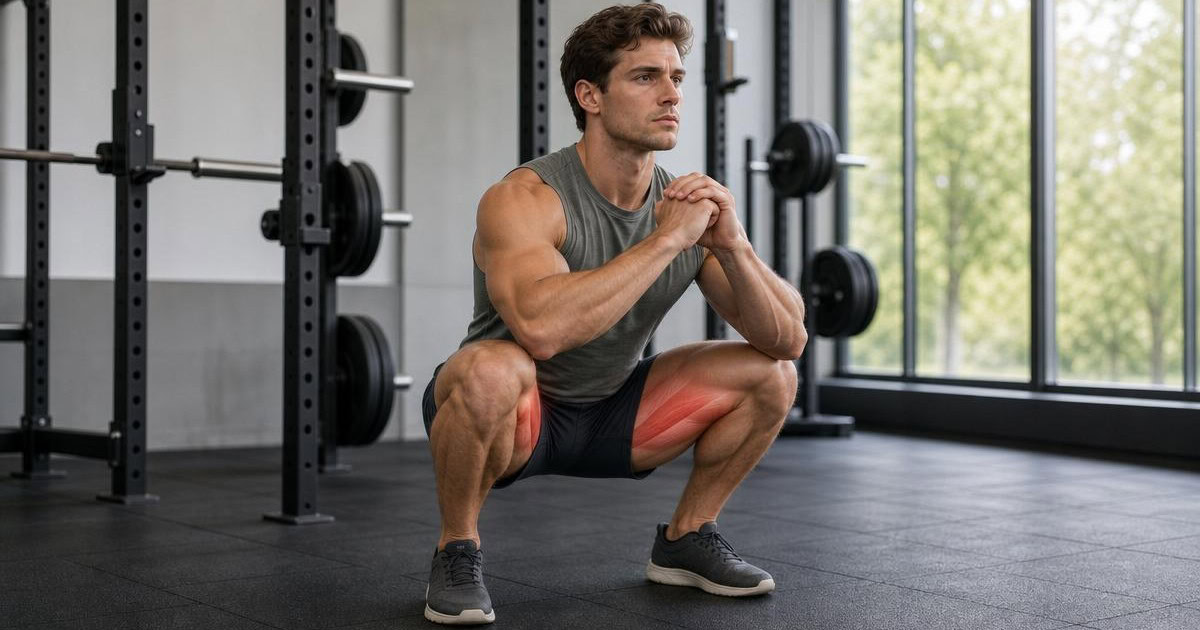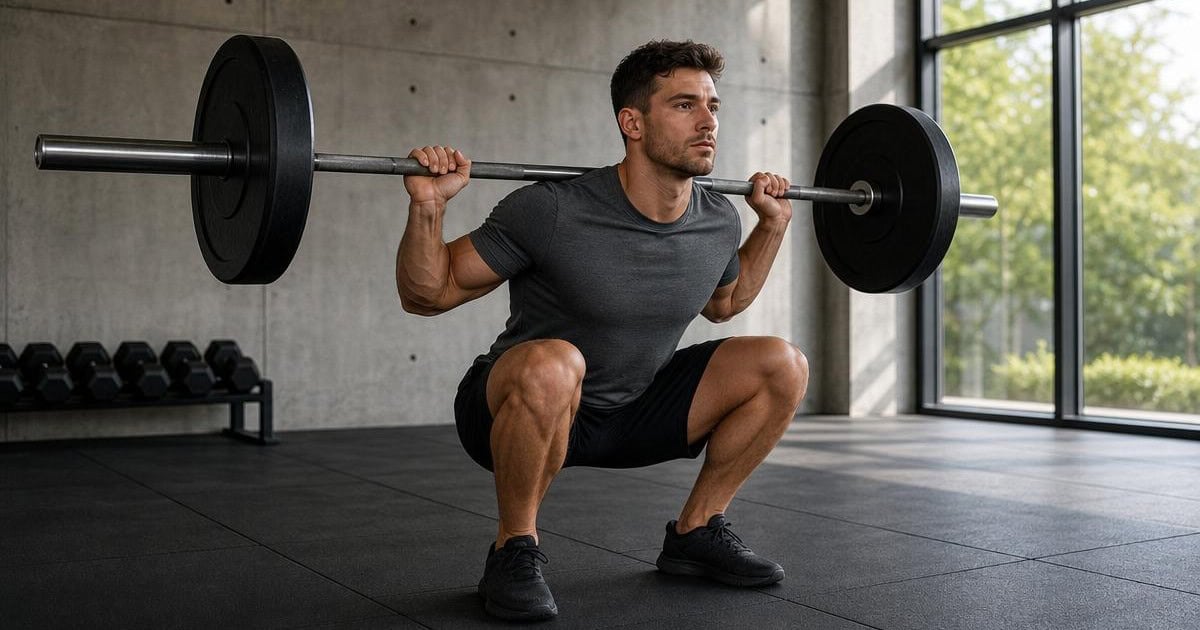
Barbell quad training produces real quad development through patterns that load the quads with maximum progressive overload that no other modality can match: back squats and front squats for compound mass loading, lunge variations for unilateral strength, Anderson squats for bottom-end power, and pause variations for time under tension. The format works particularly well for quads because the muscle responds best to heavy progressive overload over time, and the barbell allows continuous loading increases (5-pound jumps weekly) that dumbbells and bodyweight cannot match. Most lifters who consistently train barbell quad work 1 to 2 times per week see measurable quad development, increased squat strength, improved athletic capacity, and stronger leg drive within 8 to 12 weeks. The combination of bilateral compound work (squats), unilateral work (lunges, step-ups, split squats), and specialty variations (Anderson squats, elevated heel squats) produces broader quad development than any single exercise alone.
Below are ten effective barbell quad exercises that cover compound mass loading (back squat, front squat, elevated heel squat, Anderson squat), unilateral strength (front rack lunge, step-up, low split squat, curtsey lunge, walking lunge), and depth-controlled work (front bench squat). Together they form a complete barbell quad program that hits the quads through every available barbell pattern. A 35 to 50-minute session pulled from this list, performed 1 to 2 times per week, produces strong quad development that drives both strength and aesthetic goals.
Barbell Squat

The Barbell Squat performs full-depth squats with a barbell across the upper back. The pattern produces foundational lower body mass loading and is the most important quad-building exercise that exists in barbell training.
For barbell quad training, the back squat is the foundational mass-building exercise that drives quad development. The pattern hits the quads through heavy bilateral loading. Run it for 4 to 5 sets of 5 to 8 reps as primary heavy strength work in any barbell quad session.
Set up a barbell at the back of a power rack at upper back height. Position the bar across the upper back (high or low bar position) and grip just outside shoulder-width. Step back from the rack and stand with feet shoulder-width. Squat down by sitting the hips back and bending the knees until the thighs are at least parallel to the floor. Drive back to standing through the heels by extending the knees and hips. Maintain neutral spine throughout.
Barbell Front Rack Lunge

The Barbell Front Rack Lunge performs lunges with the barbell racked on the front of the shoulders. The front rack position keeps the torso upright, shifting more loading to the quads compared to back-rack variants.
For barbell quad training, the front rack lunge produces strong unilateral quad loading. The front rack position emphasizes quad-dominant movement. Run it for 3 sets of 6 to 8 reps per leg as primary unilateral quad work.
Set up a barbell on a rack at shoulder height. Step under the bar and rack it across the front of the shoulders with elbows pointing forward (clean grip front rack). Step back. Step one foot forward into a lunge by bending both knees until the back knee approaches the floor. Drive back to standing by pushing through the front foot. Switch legs between sets or alternate. The front rack maintains upright torso for quad emphasis.
Barbell Clean Grip Front Squat

The Barbell Clean Grip Front Squat performs squats with the barbell racked on the front of the shoulders using a clean grip. The pattern produces strong quad-dominant squat loading through the upright torso position.
For barbell quad training, the front squat is one of the most effective quad-building exercises that exists. The upright torso position shifts the load directly onto the quads. Run it for 4 sets of 5 to 8 reps as primary quad-focused squat work.
Set up a barbell on a rack at shoulder height. Step under the bar with feet shoulder-width and rack the bar across the front of the shoulders with elbows pointing forward (clean grip with fingertips on the bar). Step back. Squat down by bending the knees while keeping the torso upright and the elbows high. Descend until thighs are at least parallel to the floor. Drive back to standing through the heels. The upright torso position maximizes quad recruitment.
Barbell Step Up

The Barbell Step Up performs step-ups onto an elevated surface with a barbell across the upper back. The pattern produces strong unilateral quad loading with progressive heavy overload.
For barbell quad training, the barbell step-up produces strong unilateral quad loading. The pattern hits the quads through pure single-leg drive with heavy overload potential. Run it for 3 sets of 6 to 8 reps per leg as primary unilateral quad work.
Set up a barbell at the back of a power rack at upper back height. Position the bar across the upper back. Step back from the rack to stand in front of a sturdy bench (12 to 18 inches high). Place one foot fully on the bench. Drive through the heel of the planted (top) foot to lift the body up onto the bench. Avoid pushing off the bottom foot. Step back down under control with the same leg. Switch legs between sets.
Barbell Elevated Heel Squat

The Barbell Elevated Heel Squat performs back squats with the heels elevated on weight plates. The heel elevation shifts loading further forward onto the quads, producing more quad-biased squat loading.
For barbell quad training, the elevated heel squat produces quad-biased squat loading. The pattern hits the quads more than standard squats by forcing a more upright torso and forward knee tracking. Run it for 4 sets of 8 to 12 reps as quad-focused squat work.
Set up a barbell at the back of a power rack and place small plates (5 to 10 pounds) under each heel. Position the bar across the upper back. Step back with heels on the plates and balls of the feet on the floor. Squat down by sitting straight down (less hip hinge), keeping the torso more upright. Descend until thighs are at least parallel to the floor. Drive back to standing through the balls of the feet. The elevated heels maximize quad loading.
Barbell Front Bench Squat

The Barbell Front Bench Squat performs front squats descending to a controlled bench touch. The pattern produces strong quad loading with controlled depth and pause potential.
For barbell quad training, the front bench squat produces controlled quad loading with depth verification. The pattern hits the quads through front squat mechanics with reliable depth. Run it for 3 to 4 sets of 5 to 8 reps as quad-focused squat work with built-in depth control.
Set up a barbell on a rack at shoulder height with a sturdy bench (about thigh height) positioned behind. Rack the bar in front rack position. Step back to stand in front of the bench. Squat down by bending the knees while keeping the torso upright until the hips touch the bench. Pause briefly (or come straight back up). Drive back to standing through the heels. The bench provides consistent depth and an optional pause for additional difficulty.
Barbell Curtsey Lunge

The Barbell Curtsey Lunge performs curtsy lunges with a barbell across the upper back. The crossing motion adds gluteus medius loading along with the standard quad work.
For barbell quad training, the curtsey lunge produces combined quad and gluteus medius loading. The pattern hits the quads while adding lateral hip work. Run it for 3 sets of 8 to 10 reps per leg as combined quad and gluteus medius work.
Set up a barbell across the upper back as in standard barbell squat setup. Step one foot back and across behind the other leg into a curtsy position. Bend both knees to lower into a curtsy lunge. Drive back to standing through the front foot. Switch legs between sets or alternate per rep. The crossing motion adds gluteus medius loading beyond what straight lunges produce.
Barbell Front Rack Walking Lunge

The Barbell Front Rack Walking Lunge performs walking lunges with the barbell in front rack position. The pattern produces strong combined unilateral quad strength and conditioning loading.
For barbell quad training, the front rack walking lunge produces strong combined quad and athletic conditioning work. The pattern hits each quad through alternating unilateral loading combined with forward motion. Run it for 3 sets of 16 to 20 alternating reps total as combined quad and conditioning work.
Set up a barbell on a rack at shoulder height. Rack the bar across the front of the shoulders with elbows pointing forward. Step back from the rack with clear walking space ahead. Step one foot forward into a deep lunge. Drive up by extending the front leg and immediately step the back foot forward into the next lunge. Continue alternating in a forward walking pattern. Maintain upright torso throughout.
Barbell Anderson Squat

The Barbell Anderson Squat performs back squats starting from the bottom position (bar resting on safety pins) with no eccentric phase. The pattern produces strong concentric-only quad loading that builds bottom-end squat strength.
For barbell quad training, the Anderson squat produces strong concentric-only loading that builds bottom-end strength specifically. The pattern hits the quads through pure concentric work from the most disadvantaged position. Run it for 3 sets of 4 to 6 reps as bottom-end strength work.
Set up a power rack with safety pins at the depth you would reach in a normal squat (thighs parallel or slightly below). Set the barbell on the safety pins. Step under the bar in standard squat position with the bar across the upper back. From the dead-stop bottom position, drive up explosively to standing. Lower the bar back to the pins. Reset for each rep. The dead-stop start eliminates the stretch-shortening cycle.
Barbell Low Split Squat

The Barbell Low Split Squat performs split squats with the back knee dropping deep below the front foot level. The deeper range produces stronger quad loading than standard split squats.
For barbell quad training, the low split squat produces strong unilateral quad loading through deep range of motion. The pattern hits the quads through deep knee flexion. Run it for 3 sets of 6 to 8 reps per leg as primary unilateral quad work.
Set up a barbell across the upper back as in standard barbell squat setup. Step one foot back into a long split stance. Drop straight down by bending both knees until the back knee approaches or touches the floor. The front knee tracks forward over the toes. Drive back up through the front foot by extending the knee and hip. Maintain the long split stance throughout. Switch legs between sets.
How To Program These Workouts
A productive barbell quad session pulls 4 to 6 exercises from the list above based on training goals. A common mass-building session: barbell squat (heavy mass), front squat (quad emphasis), front rack lunge (unilateral), elevated heel squat (high-rep quad pump). A strength-focused session: back squat (heavy 3 to 5 reps), front squat (5 to 8 reps), Anderson squat (heavy 3 to 5 reps), step-up (unilateral). Run heavy mass work for 4 to 5 sets of 5 to 8 reps, unilateral work for 3 sets of 6 to 10 reps per leg, and high-rep quad work for 3 sets of 10 to 15 reps. Total session covers 14 to 20 working sets focused on quad development.
Train barbell quad work 1 to 2 times per week as part of broader lower-body programming. The quads are a large muscle group that recovers from heavy training in 48 to 72 hours, so 1 to 2 weekly sessions allow full recovery between training stimulus. Most successful programs include barbell quad work either: 1) on a dedicated leg day with squat as the primary movement, 2) split across 2 leg days (heavy squat day + lighter unilateral day), or 3) integrated with hamstring or glute work for complete lower-body sessions. Keep training time under 40 to 50 minutes per session. Always include 2 to 3 minutes rest between heavy squat sets for full strength recovery.
For broader leg programming, see our best leg workouts for mass and how to grow your quads. For specific posterior chain work, see our best workouts for explosive legs.
Final Thoughts
The best barbell quad workouts deliver real quad development through patterns that load the quads with maximum progressive overload through compound and unilateral exercises. The combination of back squats, front squats, lunges, step-ups, and specialty variations covers every angle of quad development and produces broader results than dumbbell or bodyweight work alone for lifters who can access barbells consistently. For lifters who want measurable quad size and strength improvements, want to break through plateaus in leg development, or want to build the foundational lower-body strength that supports all athletic performance, dedicated barbell quad work is one of the most effective options available.
Stay focused on squat depth and proper bar position. The most common barbell quad training mistakes include shallow squat depth (which limits quad loading) and improper bar position for the goal (back squats with heels rising or torso collapsing forward shifts work to glutes; front squats with elbows dropping shift work to lower back). The fix: descend to at least thigh-parallel on every squat, maintain proper bar position throughout the set (high or low bar with neutral spine for back squats; elbows up with upright torso for front squats), and use weights light enough to maintain strict form across the working range. Quality reps with progressive overload produce stronger quad development than ego-driven heavy weights with sloppy form.
Frequently Asked Questions
Are barbell back squats or front squats better for quads?
Front squats for direct quad emphasis, but both for complete quad development. Front squats produce more quad-biased loading through the upright torso position. Back squats produce more total leg loading and allow heavier weights, building overall leg strength that supports continued quad development. Most successful programs include both: heavy back squats as primary mass and strength work, plus front squats as quad-emphasis work. The combination produces broader quad development than either alone.
How many barbell quad exercises should I do per session?
Four to six exercises produces the strongest quad development for most lifters. A common structure: 1) one heavy compound (back squat or front squat), 2) one unilateral (front rack lunge or step-up), 3) one specialty variation (Anderson squat or elevated heel squat), 4) optional: high-rep quad pump finisher (high-rep elevated heel squat or split squat). Most successful programs include 4 to 6 quad exercises per session totaling 14 to 20 working sets focused on quad development. More than 6 exercises typically produces diminishing returns through accumulated fatigue.
How often should I train quads with a barbell?
One to two barbell quad sessions per week works for most lifters. The quads are a large muscle group that recovers from heavy training in 48 to 72 hours. Most successful programs include barbell quad work either on a dedicated leg day, or split across 2 days (heavy squat day + lighter unilateral day). Three or more weekly heavy barbell quad sessions typically produces overuse injuries (especially knee issues) and accumulated systemic fatigue rather than accelerated growth.
What’s the best barbell quad exercise for hypertrophy?
The barbell back squat or front squat as primary mass work, supplemented with high-rep quad-focused variations. Most successful quad programs build foundational mass through 5 to 8 rep heavy back squats or 5 to 8 rep front squats, then add high-rep quad pumping work (10 to 15 rep elevated heel squats or split squats) to accumulate metabolic stress. The combination of heavy compound work plus high-rep finishing produces broader quad hypertrophy than either alone.
Should I do high bar or low bar squats for quads?
High bar for quad emphasis. The high bar position keeps the torso more upright through the squat, shifting more loading to the quads compared to low bar (which produces more torso forward lean and posterior chain emphasis). Most successful quad-focused programs use high bar squats as primary work. Low bar is preferred for lifters whose primary goal is maximum squat strength (powerlifting) or balanced posterior chain emphasis. Most lifters benefit from primarily high bar squats supplemented with front squats for maximum quad development.