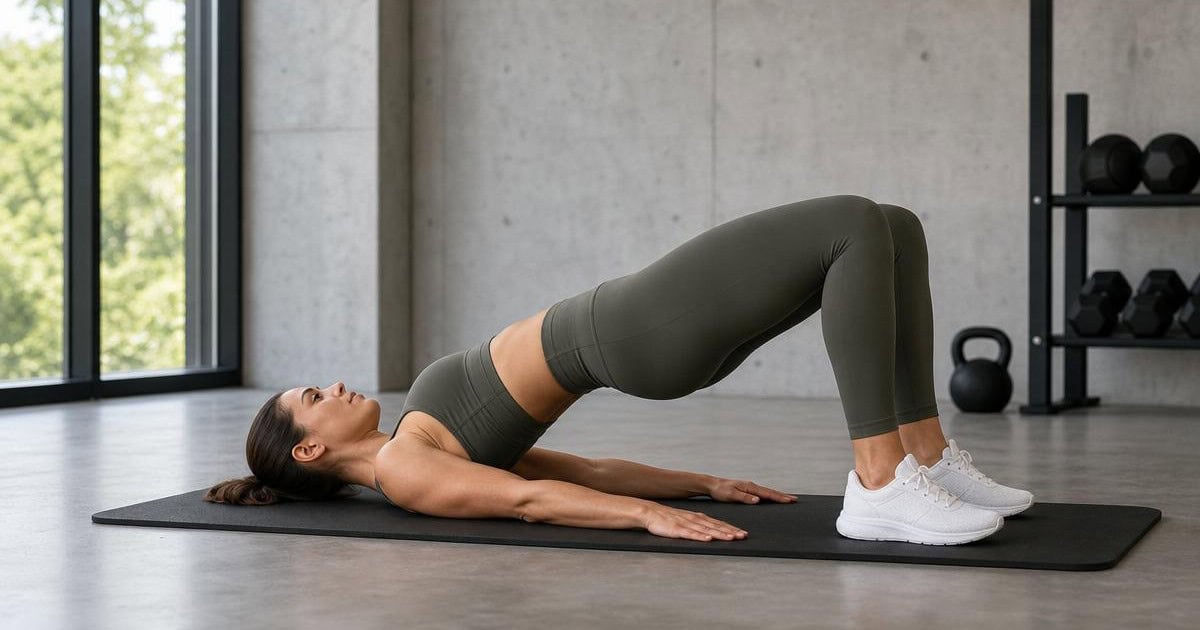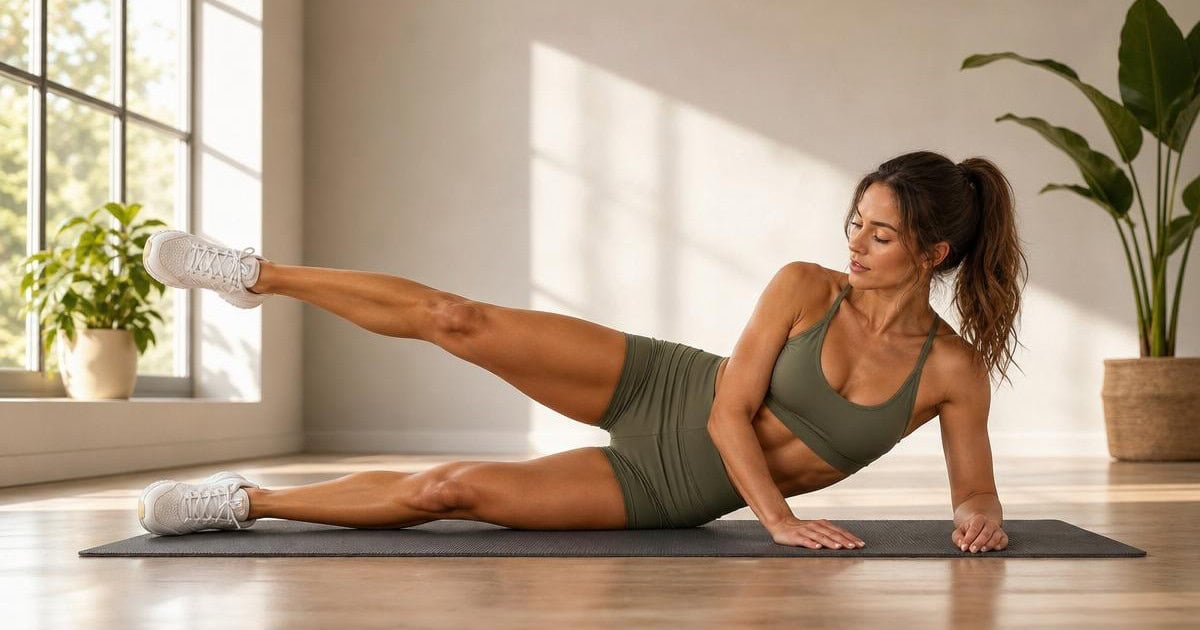
The glute medius is the muscle on the upper outer hip responsible for hip abduction (lifting the leg sideways), hip stabilization (preventing hip drop during walking and running), and external rotation. A strong glute medius produces: better walking and running mechanics through prevented hip drop, reduced IT band issues and knee pain through proper hip alignment, improved athletic performance through better lateral stability, reduced lower back pain through balanced hip mechanics, and better hip shape through complete glute development. Most lifters and runners have undertrained the glute medius relative to overall glute work, producing the hip drop pattern that contributes to common injuries (IT band syndrome, runner’s knee, lower back pain). The right glute medius training combines isometric work (side planks), dedicated isolation (clam shells, hip abductions), unilateral patterns (single-leg glute bridges, step-ups), and accessible high-frequency work that produces real glute medius strength without requiring complex equipment.
Below are ten of the most effective exercises for glute medius development, covering isometric work (side plank), unilateral compound work (single leg glute bridge with external rotation, dumbbell step up), direct isolation patterns (hip clam shell, resistance band standing hip abduction, side hip abduction, standing side leg raise, cable kneeling hip abduction), heavy machine work (lever seated hip abduction), and combined patterns (side plank bent leg lift). Together they form a complete glute medius training program. A 15 to 25-minute glute medius session pulled from this list, performed 2 to 3 times per week, produces strong glute medius development for any lifter or athlete focused on injury prevention, hip stability, or addressing existing hip drop issues.
Side Plank
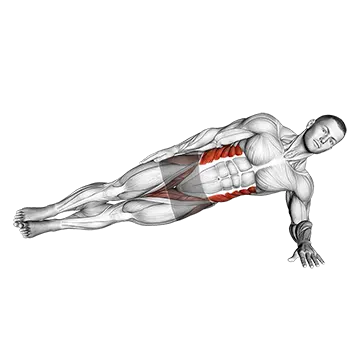
The Side Plank performs side plank holds. The pattern produces strong glute medius isometric loading.
For glute medius development, the side plank produces strong isometric glute medius loading. Run it for 3 sets of 30-second holds per side as primary glute medius work.
Lie on one side with the body straight. Prop up on one forearm with the elbow under the shoulder. Lift the hips up so the body forms a straight line from feet to head. The glute medius works hard to maintain hip position. Hold for the working interval. Switch sides between sets. The pattern is foundational glute medius work – the muscle works isometrically to prevent hip drop and maintain side plank position. Strong glute medius from side plank training prevents IT band issues, knee pain, and hip drop during walking and running.
Single Leg Glute Bridge with External Rotation

The Single Leg Glute Bridge with External Rotation performs unilateral glute bridges with external hip rotation. The rotation emphasizes glute medius.
For glute medius development, the single-leg glute bridge with external rotation produces direct glute medius loading. Run it for 3 sets of 10 to 12 reps per leg as primary glute medius work.
Lie on the back with one knee bent and foot planted on the floor. Lift the opposite leg off the floor and externally rotate the hip slightly. Drive through the heel of the planted foot to lift the hips up by extending the hip. The working glute medius works hard through the unilateral hip extension plus rotation. Squeeze at peak. Lower under control. The rotation component adds significant glute medius activation beyond standard glute bridges. Switch legs between sets.
Hip Clam Shell

The Hip Clam Shell performs clam shell exercise (lying on side with knees bent, opening top knee). The pattern produces direct glute medius isolation.
For glute medius development, the clam shell is foundational direct glute medius work. Run it for 3 sets of 12 to 15 reps per side as primary glute medius isolation.
Lie on one side with knees bent at 90 degrees and feet stacked. Keep the feet together. Lift the top knee up by externally rotating at the hip while keeping the feet in contact. The glute medius works hard through hip abduction and external rotation. Squeeze at peak. Lower under control. Switch sides between sets. The pattern is foundational glute medius isolation work – the side-lying position with knees bent isolates the glute medius effectively. Add a resistance band around the knees for added difficulty.
Resistance Band Standing Hip Abduction

The Resistance Band Standing Hip Abduction performs standing hip abductions with a resistance band. The pattern produces direct glute medius work in standing position.
For glute medius development, the standing hip abduction with band produces glute medius isolation in functional standing position. Run it for 3 sets of 12 to 15 reps per side as standing glute medius work.
Anchor a resistance band low. Stand sideways to the anchor with the band around the ankle of the working leg (the leg farthest from the anchor). Keep the working leg straight. Lift the working leg out to the side by abducting at the hip. The glute medius works hard through hip abduction. Squeeze at peak. Lower under control. Switch legs between sets. The pattern produces functional standing glute medius work that translates to walking and running mechanics.
Side Hip Abduction

The Side Hip Abduction performs lying side hip abduction (lying on side, lifting top leg). The pattern produces direct glute medius isolation.
For glute medius development, the side hip abduction is foundational lying glute medius work. Run it for 3 sets of 12 to 15 reps per side as foundational glute medius work.
Lie on one side with the body straight and legs straight. Lift the top leg straight up by abducting at the hip while keeping the leg straight. The glute medius works hard through hip abduction. Squeeze at peak. Lower under control. Switch sides between sets. The pattern is foundational glute medius isolation – the side-lying position with straight legs produces direct glute medius loading. Add ankle weights for advanced loading. The pattern is highly accessible and effective.
Cable Kneeling Hip Abduction

The Cable Kneeling Hip Abduction performs hip abductions with a cable in kneeling position. The pattern produces continuous tension glute medius work.
For glute medius development, the cable hip abduction provides continuous tension throughout the range. Run it for 3 sets of 12 to 15 reps per side as cable glute medius work.
Set a cable to the lowest setting with an ankle attachment. Attach the cable to one ankle. Kneel sideways to the cable on the leg closest to the cable. Lift the working leg (the leg attached to the cable, away from the cable) out to the side by abducting at the hip. The glute medius works hard through hip abduction with continuous cable tension. Squeeze at peak. Return under control. Switch sides between sets. The continuous cable tension produces unique glute medius loading.
Standing Side Leg Raise

The Standing Side Leg Raise performs standing side leg raises. The pattern produces functional standing glute medius work.
For glute medius development, standing side leg raises produce accessible standing glute medius work. Run it for 3 sets of 12 to 15 reps per side as standing glute medius work.
Stand with feet hip-width holding onto a support for balance if needed. Keep the working leg straight. Lift the working leg out to the side by abducting at the hip. The glute medius works hard through hip abduction. Squeeze at peak. Lower under control. Switch legs between sets. The pattern is highly accessible (requires no equipment), produces direct glute medius work in standing position, and is excellent as a warm-up for any leg or hip session. Add ankle weights for advanced loading.
Lever Seated Hip Abduction

The Lever Seated Hip Abduction performs hip abductions on a lever machine. The pattern produces direct heavy glute medius loading.
For glute medius development, the lever hip abduction machine allows heavy direct glute medius loading. Run it for 3 to 4 sets of 12 to 15 reps as heavy glute medius work.
Sit on a lever hip abduction machine with the back against the pad and outer thighs against the pads. Push the pads outward by abducting at the hips. The glute medius works hard through bilateral hip abduction under load. Squeeze hard at peak. Return under control. The pattern allows heavy progressive loading on the glute medius – one of the few exercises that allows truly heavy direct glute medius loading. The machine stability supports proper isolation work.
Side Plank Bent Leg Lift

The Side Plank Bent Leg Lift performs side plank with the top leg lifted. The combined pattern produces extreme glute medius isometric and dynamic loading.
For glute medius development, the side plank with bent leg lift produces combined extreme glute medius work. Run it for 3 sets of 8 to 10 reps per side as advanced glute medius work.
Get into a side plank position with one forearm on the floor and the body forming a straight line from feet to head. Keep the bottom leg bent slightly. Lift the top knee up while maintaining the side plank position – bend the top leg slightly at the knee for the lift. The glute medius works hard isometrically (maintaining the side plank) plus dynamically (lifting the top leg). Lower under control. Switch sides between sets. The pattern produces some of the most extreme glute medius work available.
Dumbbell Step Up

The Dumbbell Step Up performs step-ups onto a bench with dumbbells. The unilateral pattern produces functional glute medius work.
For glute medius development, step-ups produce functional unilateral glute medius work through hip stabilization during the step. Run it for 3 sets of 10 to 12 reps per leg as functional glute medius work.
Stand in front of a sturdy bench or platform holding dumbbells in each hand at the sides. Place one foot fully on the platform. Drive through the heel of the platform foot to step up. The glute medius of the working leg works hard to stabilize the hip during the unilateral step (preventing hip drop on the working side). Squeeze at the top with the body fully tall. Step back down to the floor under control. The pattern produces functional glute medius work that translates to walking, running, and athletic movement.
How To Program These Workouts
A productive glute medius session pulls 4 to 6 exercises from the list above. A common balanced session: side plank (isometric), hip clam shell (direct isolation), single leg glute bridge with external rotation (unilateral compound), resistance band standing hip abduction (functional), dumbbell step up (functional). For prehab focus: side plank, hip clam shell, side hip abduction, standing side leg raise. For mass focus: lever seated hip abduction, single leg glute bridge with external rotation, cable kneeling hip abduction. Run isometric work for 3 sets of 30-second holds per side, isolation work for 3 sets of 12 to 15 reps per side, unilateral compound work for 3 sets of 10 to 12 reps per leg, machine work for 3 to 4 sets of 12 to 15 reps. Keep most loads light to moderate.
Train glute medius 2 to 3 times per week as part of complete leg programming. Most successful programs incorporate glute medius work as: 1) warm-up before leg sessions (clam shells, side leg raises, side hip abductions), 2) accessory blocks at the end of leg sessions (lever hip abduction, cable hip abduction), or 3) standalone short sessions on rest days. The high-frequency, lower-volume approach produces better glute medius development than infrequent heavier sessions. Always prioritize form over load – glute medius work with too-heavy loads produces compensation from larger muscles that defeats the purpose.
For broader glute programming, see our best glute workouts and how to build bigger glutes. For specific hip work, see our best hip mobility exercises.
Final Thoughts
The best glute medius exercises deliver real hip stability improvements and reduced injury risk through training that targets the specific glute medius functions: isometric work for side plank stabilization, dedicated isolation through hip abduction patterns, unilateral compound work through single-leg patterns, and supporting hip stability work. The combination of side planks, clam shells, hip abductions (band, cable, machine, standing), single-leg glute bridges with rotation, step-ups, and side plank variations covers every functional pattern of the glute medius and produces broader hip stability than overall glute work alone would suggest. Many runners, lifters, and athletes discover reduced IT band issues, reduced runner’s knee, better walking and running mechanics, and reduced lower back pain within 8 to 12 weeks of adding consistent glute medius work. For lifters dealing with hip drop issues, IT band pain, knee pain, lower back issues, or wanting balanced glute development, dedicated glute medius training is one of the most effective interventions available.
Stay focused on form and feel rather than load on glute medius work. The most common mistake lifters make in glute medius training is using too-heavy loads on hip abductions, forcing compensation from the TFL and larger muscles that defeats the purpose. The fix: use light to moderate loads (resistance bands, ankle weights, or moderate cable/machine loads) with strict form and intentional glute medius focus. Combined with high frequency (2 to 3 times per week) and adequate volume across multiple patterns, proper light-load high-rep work produces the glute medius strength that prevents hip drop and reduces injury risk.
Frequently Asked Questions
What’s the best exercise for the glute medius?
Side planks and hip abduction work are most effective. Side planks produce strong isometric glute medius loading that builds the stabilization function critical for preventing hip drop. Hip clam shells and standing hip abductions provide direct glute medius isolation. Single-leg glute bridges with external rotation combine unilateral glute work with glute medius emphasis. Combined with lever hip abduction (heavy machine work), these form the foundation of complete glute medius development. Most successful programs include all of these patterns.
How do I know if my glute medius is weak?
Common signs of glute medius weakness: 1) hip drop during walking or running (the hip on the non-stance side drops below horizontal), 2) IT band tightness or pain, 3) runner’s knee or knee pain during running, 4) lateral hip pain, 5) difficulty maintaining single-leg balance, 6) Trendelenburg gait pattern (waddle-like walking). The simple test: stand on one leg in front of a mirror – if your hip on the non-stance side drops below horizontal, your glute medius is likely weak. Most people have some degree of glute medius weakness from sedentary lifestyle and overuse.
How often should I train glute medius?
2 to 3 times per week minimum. Most successful programs incorporate glute medius work as: 1) warm-up before leg sessions, 2) accessory blocks at the end of leg sessions, or 3) standalone short sessions on rest days. The high-frequency, lower-volume approach produces better glute medius development than infrequent heavier work. Athletes dealing with active hip issues often train glute medius daily with light loads. The glute medius responds well to high-frequency low-load training.
Will glute medius training help my running?
Yes substantially for most runners. Strong glute medius produces: prevented hip drop during running stride, reduced IT band syndrome and runner’s knee, better running economy through proper hip mechanics, reduced lower back pain from running, and improved running form. Most runners who add consistent glute medius work see measurable improvements in running form and reduced injury rates within 8 to 12 weeks. The connection between glute medius weakness and running injuries is well-established in sports science literature.
How heavy should I lift for glute medius?
Light to moderate loads with strict form. Hip clam shells use bodyweight or light bands. Hip abductions use light to moderate band tension or light ankle weights. Lever hip abduction machine allows heavier progressive loading (moderate to moderately heavy). Side planks use bodyweight (add weight only if very advanced). Side leg raises use bodyweight or light ankle weights. The glute medius is small relative to glute maximus and responds best to lighter loads with higher reps and strict form. Heavier loads force compensation that defeats the purpose.