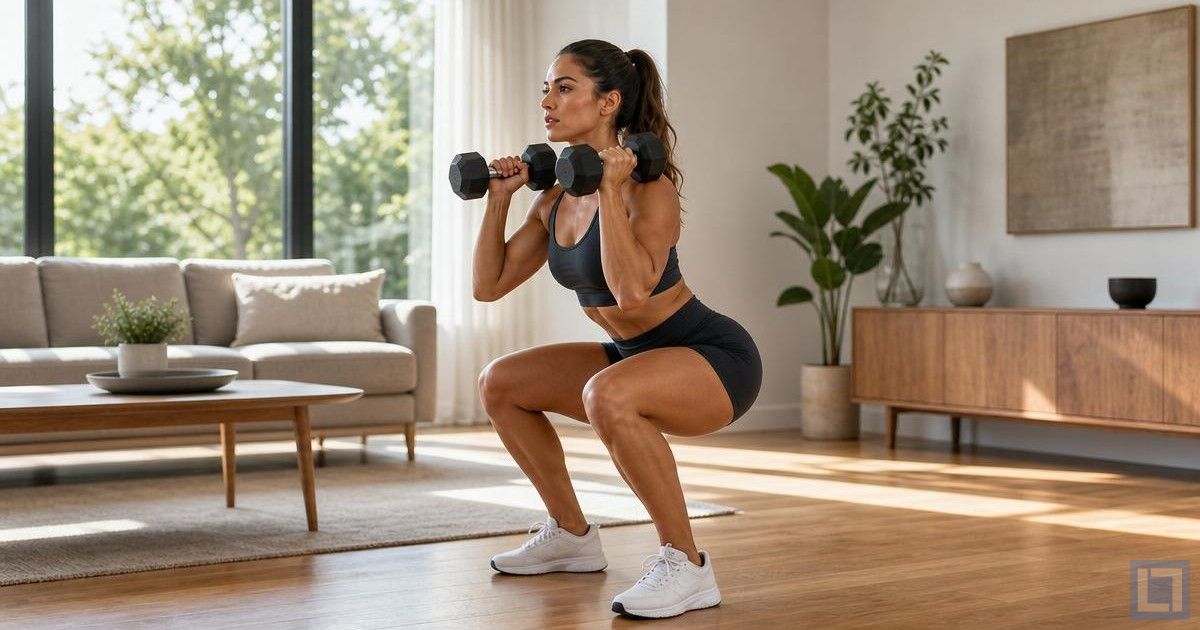
Dumbbell glute training at home produces real glute development through bilateral and unilateral loading patterns that target the glutes from every angle. The dumbbell-only format keeps the equipment requirements minimal (just a pair of dumbbells, ideally adjustable, plus a bench or sturdy box) while still allowing the kind of progressive overload that drives long-term glute development. The combination of glute bridges (direct glute contraction), squats (compound glute work), step-ups (unilateral glute drive), and lunges (asymmetric glute loading) covers every major glute function in a single session.
Below are ten effective dumbbell glute exercises that cover bridge variations (dumbbell glute bridge, two-dumbbell glute bridge), squat variations (sumo squat, counterbalanced squat, dumbbell sumo squat), unilateral exercises (glute-dominant step-up, static lunge, split squat), and combined patterns (thruster, stretch lunge). Together they form a complete at-home dumbbell glute training program. A 30 to 45-minute session pulled from this list produces strong glute stimulus across every major glute function.
Dumbbells Glute Bridge

The Dumbbells Glute Bridge lies on the back with knees bent and feet planted, with dumbbells held across the hips, then drives the hips up by squeezing the glutes. The added load increases glute activation throughout the hip extension motion.
For at-home dumbbell glute training, the glute bridge with dumbbells is one of the most direct glute exercises that exists. The pattern hits the glutes at the contracted position with maximum loading. Run it for 3 to 4 sets of 10 to 15 reps as primary glute work.
Lie flat on the back with knees bent and feet planted shoulder-width apart. Hold dumbbells across the hips with both hands. Drive the hips up by squeezing the glutes hard until the body forms a straight line from shoulders to knees. Lower under control.
Dumbbell Glute Bridge

The Dumbbell Glute Bridge variation lies on the back with knees bent and a single dumbbell held across the hips. The single-dumbbell variation works for lifters with limited equipment and produces direct glute loading.
For at-home glute training when only one dumbbell is available, the single-dumbbell bridge variation works as an alternative to two-dumbbell loading. The pattern produces strong glute development with reduced equipment requirements. Run it for 3 sets of 12 to 15 reps.
Lie flat on the back with knees bent and feet planted. Hold a single dumbbell across the hips with both hands. Drive the hips up by squeezing the glutes until the body forms a straight line from shoulders to knees. Lower under control.
Dumbbell Glute Dominant Step Up

The Dumbbell Glute Dominant Step Up performs step-ups with the box height set deliberately high to emphasize glute activation over quad work. The high step forces the glutes to drive the body up rather than the quads pushing through extension.
For at-home glute training, the glute-dominant step-up is one of the most direct glute exercises that exists. The pattern hits the glutes through their primary hip extension function. Run it for 3 sets of 10 to 12 reps per leg as primary unilateral glute work.
Hold dumbbells at the sides. Stand in front of a high box or bench (knee height or higher). Step up onto the box with one foot, driving through the heel and pushing the body up primarily through hip extension rather than quad push. Step back down. Alternate sides.
Dumbbells Sumo Squat
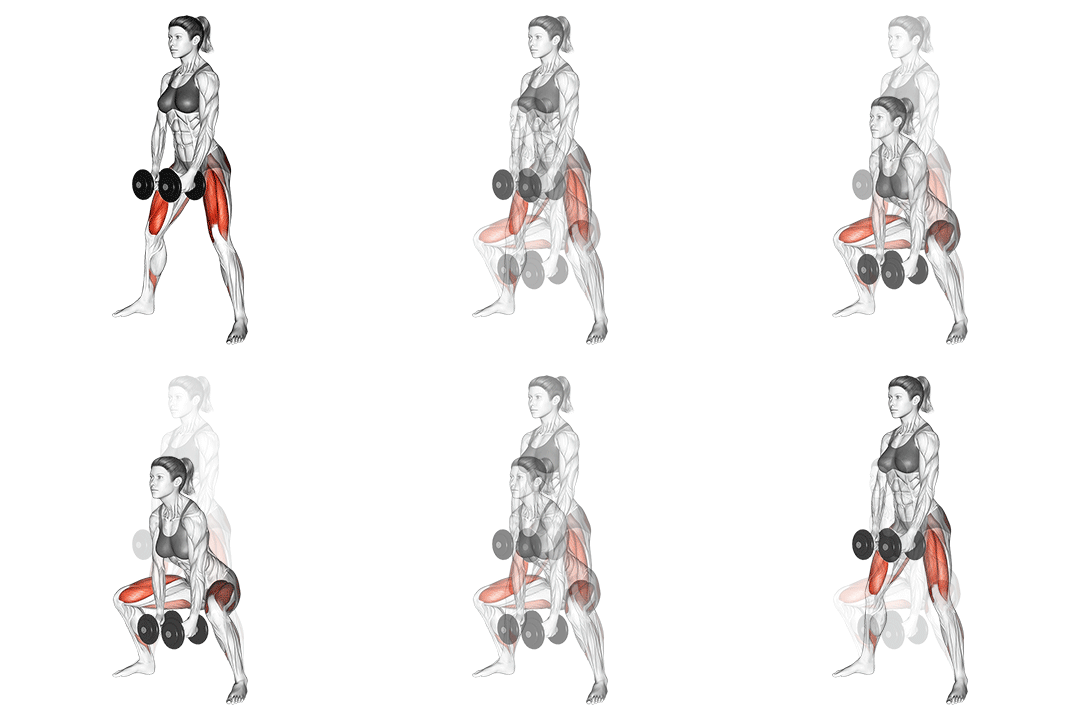
The Dumbbells Sumo Squat takes a wide stance with toes pointed slightly outward and squats while holding dumbbells at the sides or in goblet position. The wide stance produces stronger inner-thigh and glute loading than narrow squatting.
For at-home glute development, the sumo squat is one of the most effective glute-and-adductor exercises that exists. The wide stance hits the glutes from a different angle than standard squatting. Run it for 3 to 4 sets of 10 to 12 reps as primary lower-body work.
Stand with feet wider than shoulder-width and toes pointed slightly outward. Hold dumbbells at the sides or one dumbbell in goblet position at the chest. Squat down by sitting the hips back while bending the knees, keeping the chest tall. Drive back to standing through the whole foot.
Weighted Counterbalanced Squat

The Weighted Counterbalanced Squat holds a dumbbell extended in front of the body and squats while using the front-loaded weight as a counterbalance. The pattern allows lifters to squat deeper and more upright than they could with body weight alone.
For at-home squat training, the counterbalanced squat is one of the most accessible squat variations that exists. The front-loaded weight helps the lifter sit back into a deeper squat. Run it for 3 sets of 10 to 12 reps as foundational squat work.
Hold a dumbbell extended in front of the body with both hands. Stand with feet shoulder-width. Squat down by sitting the hips back while bending the knees, using the dumbbell weight as a counterbalance. Drop to deep squat depth. Drive back to standing through the whole foot.
Weighted Stretch Lunge

The Weighted Stretch Lunge performs deep lunges with dumbbells, emphasizing the stretched position at the bottom rather than the standing position. The deep lunge pattern produces strong glute and hip flexor stretching along with the loading.
For at-home glute training that includes mobility work, the stretch lunge produces strong glute development with the bonus of hip mobility. The pattern translates well to athletic positions. Run it for 3 sets of 8 to 10 reps per leg.
Stand tall with dumbbells at the sides. Step forward into a long lunge stance, dropping the back knee toward the floor. Hold the bottom position briefly to feel the stretch in the back hip. Drive through the front foot to step back to standing. Alternate sides.
Dumbbell Static Lunge

The Dumbbell Static Lunge sets up in a split stance and drops straight down by bending both knees, then drives back to the start. The static stance allows heavier loading than walking lunges.
For at-home glute training, the static lunge produces strong unilateral glute loading. The fixed split stance allows lifters to focus on the glute drive without the dynamic movement of walking lunges. Run it for 3 sets of 8 to 12 reps per leg.
Stand in a split stance with one foot forward and one back, holding dumbbells at the sides. Drop straight down by bending both knees, lowering the back knee toward the floor. Drive back to the start through the front foot. Complete all reps on one leg before switching.
Dumbbell Thruster
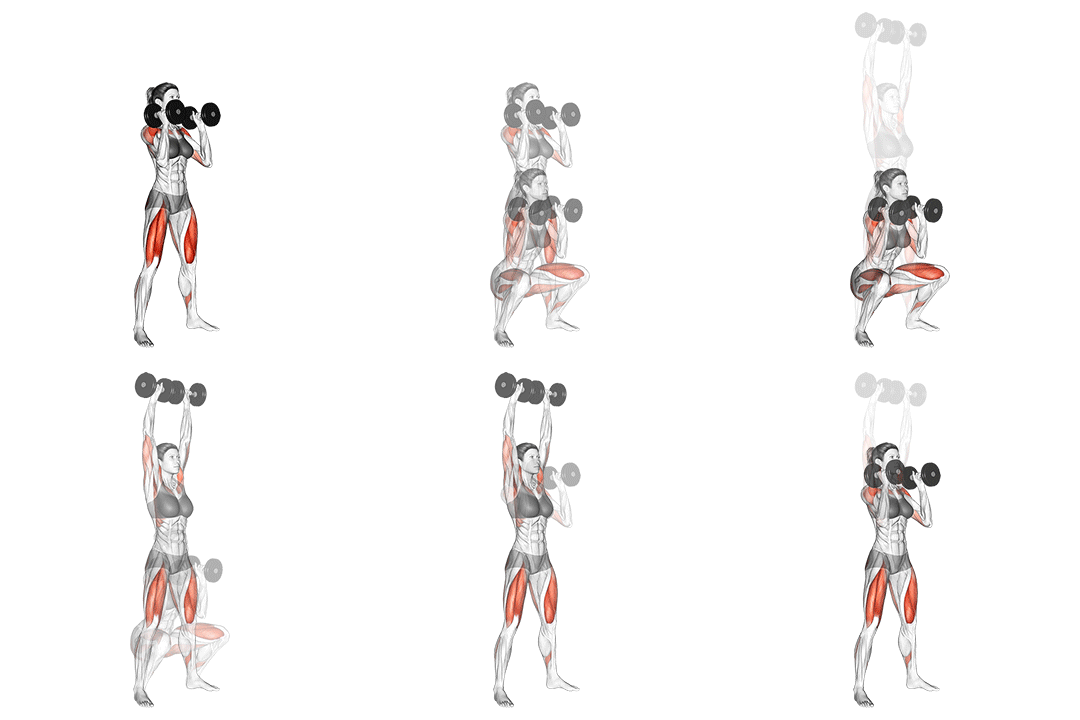
The Dumbbell Thruster combines a front squat (with dumbbells held at the shoulders) and an overhead press in one continuous motion. The combined leg drive and overhead press produces full-body conditioning along with strong glute loading.
For at-home glute training that includes conditioning, the thruster works the glutes through the squat portion while adding overhead pressing demand. The pattern produces broader fitness adaptations than pure glute exercises. Run it for 3 sets of 8 to 10 reps as combined conditioning and glute work.
Stand with dumbbells held at the shoulders. Squat down to a deep front squat. Drive up explosively while pressing the dumbbells overhead in one continuous motion. Lower the dumbbells to the shoulders. Repeat immediately into the next squat.
Dumbbell Sumo Squat

The Dumbbell Sumo Squat takes a wide stance with toes pointed slightly outward and squats with a single dumbbell held in goblet position at the chest. The single-dumbbell variation works for lifters with limited equipment.
For at-home glute training when only one dumbbell is available, the dumbbell sumo squat in goblet position is the most accessible loaded squat variation. The wide stance hits the glutes and adductors heavily. Run it for 3 sets of 10 to 12 reps.
Stand with feet wider than shoulder-width and toes pointed slightly outward. Hold a single dumbbell in goblet position at the chest. Squat down by sitting the hips back while bending the knees. Drive back to standing through the whole foot.
Dumbbell Split Squat
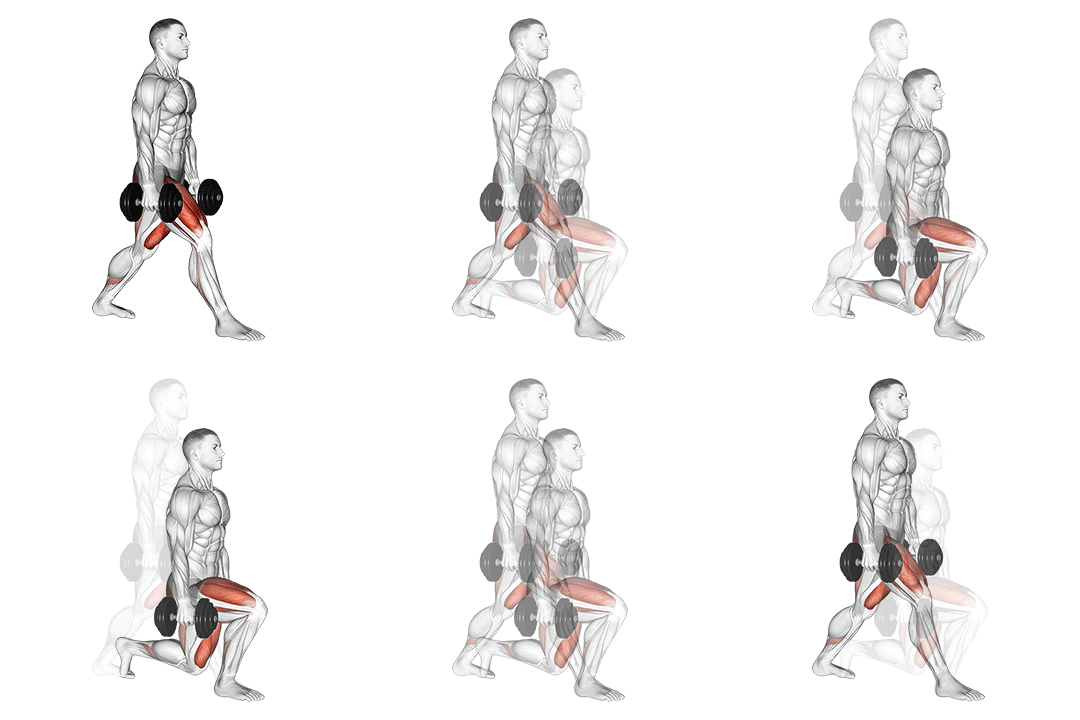
The Dumbbell Split Squat sets up in a split stance with the back foot elevated on a bench or step (Bulgarian-style) and squats while holding dumbbells at the sides. The elevated rear foot increases the loading on the front leg.
For maximum at-home unilateral glute loading, the elevated split squat (Bulgarian split squat) is one of the most demanding glute exercises that exists. The unilateral pattern produces stronger glute development per rep than bilateral squatting. Run it for 3 sets of 8 to 10 reps per leg.
Stand in a split stance with the back foot elevated on a bench or step behind the body. Hold dumbbells at the sides. Drop straight down by bending the front knee, lowering the back knee toward the floor. Drive through the front foot to push back to standing. Complete all reps on one side before switching.
How To Program These Workouts
A productive at-home dumbbell glute session pulls six to eight exercises from the list above. A balanced session includes one bridge variation (glute bridge), one bilateral squat (sumo squat or counterbalanced squat), one unilateral exercise (glute-dominant step-up or split squat), one lunge variation (static lunge or stretch lunge), and one combined pattern (thruster). Run loaded movements for 3 to 4 sets of 10 to 15 reps; bridges for 3 sets of 12 to 15 reps; unilateral work for 3 sets of 8 to 12 reps per leg.
Train at-home dumbbell glutes 2 to 3 times per week. The glutes recover within 48 to 72 hours of moderate training, and they get significant indirect work from any squat or hinge exercise. Most lifters do well with 2 to 3 dedicated glute sessions per week alongside broader lower-body or full-body training. The format also fits naturally into upper-lower or full-body splits with glute exercises attached to lower-body or legs days.
For other glute programming, see our best at home glute workouts and best resistance band glute workouts. For broader leg training, see our best dumbbell leg workouts.
Final Thoughts
The best glute workouts at home with dumbbells deliver real glute development through accessible equipment and proven exercises. The combination of bridge variations, squat patterns, unilateral work, and combined movements covers every major glute function and produces measurable glute development over months of consistent practice. For lifters who want serious glute training without commercial gym access, dumbbell-based glute training is one of the most effective options available.
Stay focused on the mind-muscle connection. The most common at-home glute training mistake is performing exercises mechanically without conscious glute contraction, which lets larger surrounding muscles (quads, lower back) take over the work. The fix: deliberately squeeze the glutes hard at the top of every rep (especially on bridges and lunges). Research consistently shows that glute-focused intent during exercise produces stronger glute activation than identical exercises performed without that focus. The mental component matters significantly for glute development.
Frequently Asked Questions
Can I build glutes at home with just dumbbells?
Yes for most general glute development goals. The combination of progressive dumbbell training, appropriate volume, and consistent nutrition produces real glute development for years of consistent practice. Advanced lifters chasing maximum glute size eventually benefit from heavy barbell hip thrusts and squats that allow loads dumbbells cannot match, but consistent at-home dumbbell glute training produces measurable development at every level.
How heavy should dumbbells be for glute exercises?
Most beginners work with 15 to 25-pound dumbbells for glute exercises; intermediates work with 25 to 50-pound dumbbells. The right weight is whatever allows clean reps in your target range with strict form and good glute activation. For glute bridges and Bulgarian split squats specifically, advanced lifters often progress to 40 to 75-pound dumbbells. The dumbbells should be heavy enough to challenge the glutes without compromising form.
How often should I do glute workouts at home?
Two to three times per week works for most lifters. The glutes recover within 48 to 72 hours of moderate training, and they get significant indirect work from any squat or hinge exercise. Most successful at-home programs include 2 to 3 dedicated glute sessions per week alongside broader lower-body or full-body training.
Are glute bridges or squats better for glutes?
Both work; the choice depends on the lifter and goals. Glute bridges hit the glutes at the contracted position (top of the rep) with maximum loading, which produces strong glute activation. Squats hit the glutes through the full range with lower peak loading but broader functional pattern. Most successful glute programs include both: bridges for direct glute work, squats for compound development. The combination produces broader glute development than either alone.
How long until I see glute results from dumbbell training?
Most lifters feel meaningful glute strength improvements within 4 to 6 weeks of consistent dumbbell training. Visible glute shape changes appear within 8 to 12 weeks combined with appropriate nutrition. Major glute development takes 6 to 12 months of dedicated practice. The combination of consistent training and sustainable nutrition produces stronger long-term results than aggressive short-term programs.