
Barbell back training produces real back development through patterns that load the back with maximum progressive overload that other modalities cannot match: bent-over rows for compound mass, deadlifts for total back loading, grip variations for targeted lat or upper-back emphasis, deadstop rows for concentric strength, pullovers for lat stretch work, and clean pulls for explosive upper-back power. The format works particularly well for back development because the back has multiple muscle groups (lats, mid-traps, rhomboids, rear delts, lower traps, erectors) that benefit from different angles, grip widths, and pulling patterns — all of which barbell exercises can deliver effectively. Most lifters who consistently train barbell back work 1 to 2 times per week see measurable back development, increased pulling strength, improved posture, better deadlift performance, and broader back width within 8 to 12 weeks. The combination of compound rows, deadlifts, grip variations, pullovers, and explosive pulls produces broader back development than dumbbell or machine work alone for many lifters.
Below are ten effective barbell back exercises that cover compound mass loading (bent over row, deadlift), grip variations (wide grip row, narrow grip row, reverse grip incline row), advanced loading (deadstop row), upper-back isolation (incline rear delt row), pullovers for lat stretch (pullover to press, bent-arm pullover), and explosive pulling (clean pull). Together they form a complete barbell back program that hits every part of the back through every available barbell pattern. A 35 to 50-minute session pulled from this list, performed 1 to 2 times per week, produces strong back development that drives both strength and aesthetic goals.
Barbell Bent Over Row

The Barbell Bent Over Row performs rowing motion with the barbell, hinged forward at the hips with the bar pulled to the lower abdomen. The pattern is one of the most effective compound back-building exercises that exists.
For barbell back training, the bent-over row is the foundational mass-building exercise. The pattern hits the entire back including lats, mid-traps, rhomboids, and rear delts. Run it for 4 sets of 6 to 10 reps as primary mass work in any barbell back session.
Stand with feet hip-width holding a barbell with an overhand grip just outside shoulder-width. Hinge at the hips with a flat back until the torso is at about 45 degrees (or close to parallel to the floor for advanced). Pull the bar up to the lower abdomen by retracting the shoulder blades and driving the elbows back. Squeeze hard at the top with the bar against the body. Lower under control. The full back recruitment produces strong mass work.
Barbell Deadlift

The Barbell Deadlift performs a full conventional deadlift, pulling the barbell from the floor to standing. The pattern produces strong combined back, hamstring, and total-body loading.
For barbell back training, the conventional deadlift produces strong upper-back, mid-back, and lat loading combined with full posterior chain work. The pattern hits the back through static holding under heavy load. Run it for 4 to 5 sets of 3 to 6 reps as primary heavy strength work.
Set up a barbell with weight plates at the floor. Stand with feet hip-width and the bar over the midfoot. Hinge at the hips with a flat back and grip the bar just outside the legs. With chest up and shoulders over the bar, drive through the legs to pull the bar up the body until standing fully tall with hips locked out. The static back-holding work under heavy load produces significant back development. Lower under control.
Barbell Bent Over Wide Grip Row

The Barbell Bent Over Wide Grip Row performs bent-over rows with a wider-than-shoulder-width grip. The wide grip emphasizes the upper back, rear delts, and rhomboids more than standard rows.
For barbell back training, the wide-grip row produces stronger upper-back loading than standard rows. The pattern hits the rhomboids, rear delts, and upper traps. Run it for 3 to 4 sets of 8 to 12 reps as upper-back emphasis work.
Stand with feet hip-width holding a barbell with a wide overhand grip (wider than shoulder-width). Hinge at the hips with a flat back until the torso is at about 45 degrees. Pull the bar up to the upper chest or lower neck area by driving the elbows wide and high. The wide elbow path emphasizes the upper back. Lower under control. The wide grip produces strong upper back work that complements standard rows.
Barbell Narrow Row

The Barbell Narrow Row performs bent-over rows with a narrow grip (hands inside shoulder-width). The narrow grip emphasizes the lats and biceps more than standard rows.
For barbell back training, the narrow-grip row produces stronger lat loading than standard rows. The pattern hits the lats through full range of motion combined with substantial bicep work. Run it for 3 sets of 8 to 12 reps as lat emphasis work.
Stand with feet hip-width holding a barbell with an overhand grip narrower than shoulder-width. Hinge at the hips with a flat back. Pull the bar up to the lower abdomen by keeping the elbows close to the body and driving them back behind the torso. The narrow grip and tight elbow path produce strong lat recruitment. Lower under control. The pattern produces strong back-thickness work.
Barbell Deadstop Row With Rack

The Barbell Deadstop Row with Rack performs rows with the bar resting on safety pins at each rep, eliminating the eccentric phase. The pattern produces strong concentric-only rowing strength.
For barbell back training, the deadstop row produces strong concentric-only loading that builds bottom-end rowing strength. The pattern hits the back through pure pulling work with no stretch reflex. Run it for 3 to 4 sets of 5 to 8 reps as concentric-focused strength work.
Set up safety pins in a power rack at about knee height. Place a barbell on the pins with weight plates loaded. Stand with feet hip-width and hinge at the hips with a flat back to grip the bar. Pull the bar up to the lower abdomen explosively from the dead-stop position. Lower the bar back to the pins and reset for each rep. The dead-stop start eliminates the eccentric stretch reflex, requiring pure concentric strength.
Barbell Incline Rear Delt Row

The Barbell Incline Rear Delt Row performs rows while lying chest-down on an incline bench. The chest support eliminates lower-back involvement and isolates the upper back and rear delts.
For barbell back training, the incline rear delt row produces clean upper-back and rear delt isolation. The chest-supported position eliminates compensation. Run it for 3 sets of 10 to 15 reps as upper-back isolation work.
Set an incline bench to about 30 to 45 degrees. Lie chest-down on the bench with a barbell hanging below. Grip the bar with an overhand grip slightly wider than shoulder-width. Pull the bar up to the chest by retracting the shoulder blades and driving the elbows back. Squeeze the upper back and rear delts hard at the top. Lower under control. The chest support isolates the back without lower-back involvement.
Barbell Pullover to Press

The Barbell Pullover to Press combines a pullover (lat-stretch motion) with a chest press in one fluid movement. The pattern produces strong combined lat, serratus, and chest loading.
For barbell back training, the pullover to press produces strong combined lat and chest loading. The pattern hits the lats through stretched-position work followed by pressing. Run it for 3 sets of 8 to 12 reps as combined lat and chest work.
Lie flat on a bench holding a barbell with a narrow overhand grip and arms extended above the chest. Lower the barbell back over the head by allowing the arms to move back, feeling a deep stretch in the lats. Pull the barbell back over the chest. From there, immediately press the bar straight up like a chest press. Lower the bar back to the chest, then perform the pullover motion again. The combined movement produces strong lat and chest work.
Barbell Clean Pull
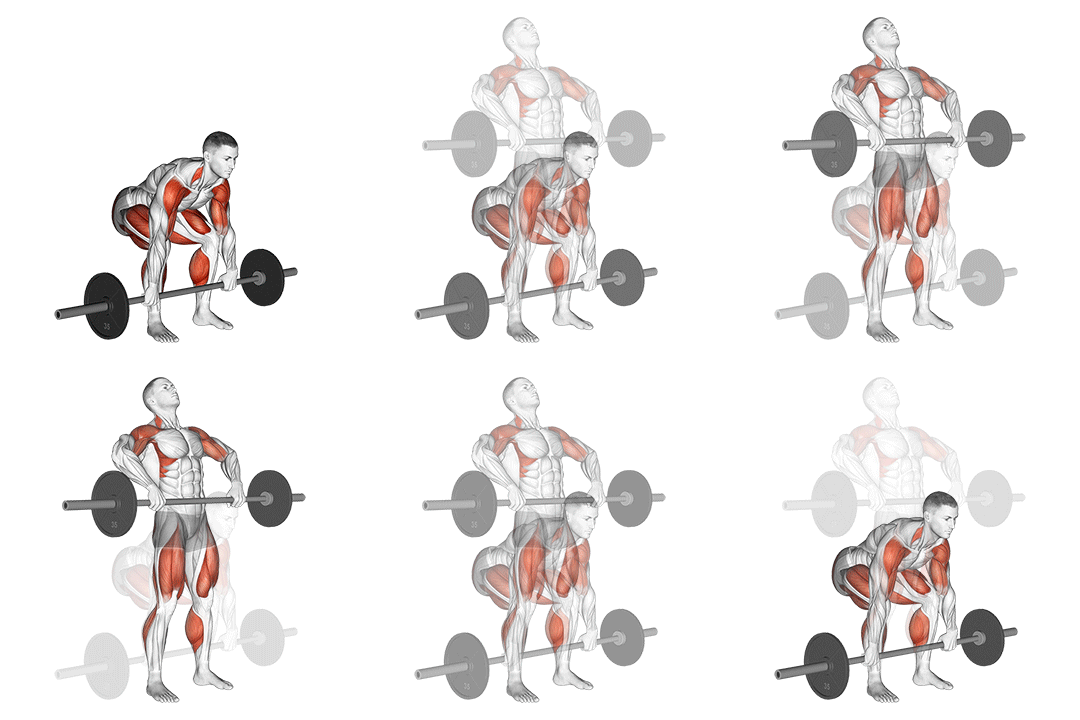
The Barbell Clean Pull performs the pulling phase of a clean without the catch, emphasizing explosive triple extension and high pull. The pattern produces strong upper-back, trap, and pulling power loading.
For barbell back training, the clean pull produces strong combined upper-back, trap, and pulling power work. The pattern hits the back through explosive pulling motion. Run it for 3 to 4 sets of 3 to 5 reps as explosive back and trap work.
Set up a barbell at the floor. Stand with feet hip-width and grip the bar with a clean grip (slightly wider than shoulder-width). Hinge at the hips with neutral spine. Pull the bar up the thighs explosively by extending hips, knees, and ankles (triple extension) while shrugging the shoulders. The bar should reach hip or upper waist height. Lower under control. The explosive pulling produces strong upper-back and trap loading.
Barbell Bent Arm Pullover

The Barbell Bent Arm Pullover performs pullovers with the elbows bent at about 90 degrees, lowering the bar behind the head. The pattern produces strong lat and serratus loading through stretched-position work.
For barbell back training, the bent-arm pullover produces strong lat stretch loading. The pattern hits the lats through stretched-position work that emphasizes the lower fibers. Run it for 3 sets of 10 to 12 reps as lat stretch work.
Lie flat on a bench holding a barbell with a narrow overhand grip and elbows bent at 90 degrees. Start with the bar over the chest and elbows pointing up. Lower the barbell back behind the head while maintaining the bent elbow position, feeling a deep stretch in the lats. Pull the barbell back over the chest by contracting the lats. The bent-arm position emphasizes the lats over the chest compared to straight-arm pullovers.
Barbell Reverse Grip Incline Bench Row

The Barbell Reverse Grip Incline Bench Row performs bench-supported rows with an underhand (supinated) grip. The reverse grip emphasizes the lower lats and biceps while the chest support isolates the back.
For barbell back training, the reverse grip incline bench row produces strong lower lat and bicep loading. The pattern hits the lats through underhand pulling with chest support eliminating compensation. Run it for 3 sets of 10 to 12 reps as lower lat emphasis work.
Set an incline bench to about 30 to 45 degrees. Lie chest-down on the bench with a barbell hanging below. Grip the bar with an underhand grip (palms facing forward) at shoulder-width. Pull the bar up to the chest by retracting the shoulder blades and driving the elbows back and close to the body. The reverse grip emphasizes the lower lats. Lower under control. The chest-supported position isolates back work.
How To Program These Workouts
A productive barbell back session pulls 4 to 6 exercises from the list above based on training goals. A common mass-building session: barbell deadlift (heavy 3 to 5 reps), barbell bent-over row (mass 6 to 10 reps), barbell wide grip row (upper back 8 to 12 reps), barbell incline rear delt row (isolation 10 to 15 reps), barbell bent-arm pullover (lat stretch 10 to 12 reps). A strength-focused session: deadlift, deadstop row, bent-over row, narrow grip row. Run heavy strength work for 4 to 5 sets of 3 to 6 reps, mass work for 3 to 4 sets of 6 to 10 reps, and isolation or stretch-emphasis work for 3 sets of 10 to 15 reps. Total session covers 14 to 20 working sets focused on back development.
Train barbell back work 1 to 2 times per week as part of broader pulling-day or upper-body programming. The back is a large muscle group with multiple muscle areas that recovers from training in 48 to 72 hours. Most successful programs include barbell back work either: 1) on a dedicated pull day with deadlift as the primary movement, 2) split across 2 pull days (heavy deadlift day + row volume day), or 3) integrated with bicep work for back-bicep day programming. Keep training time under 40 to 50 minutes per session. Always include 3 to 4 minutes rest between heavy deadlift sets and 2 to 3 minutes rest between heavy row sets for full strength recovery.
For broader back programming, see our best back workouts and how to build a bigger back. For specific lat development, see our best lat workouts.
Final Thoughts
The best barbell back workouts deliver real back development through patterns that load the back with maximum progressive overload through compound and specialized exercises. The combination of bent-over rows, deadlifts, grip variations, deadstop work, pullovers, and explosive pulls covers every angle of back development and produces broader results than dumbbell or machine work alone for lifters who can access barbells consistently. For lifters who want measurable back size and width improvements, want to break through plateaus in pulling strength, want to build the foundational upper-body strength that supports all athletic performance, or want to fix posture issues through balanced back training, dedicated barbell back work is one of the most effective options available.
Stay focused on shoulder blade movement and proper rowing mechanics. The most common barbell back training mistakes include rowing with the arms instead of the back (which limits back recruitment and shifts work to biceps) and rounding the lower back during bent-over rows (which creates injury risk and reduces back loading). The fix: initiate every row by retracting the shoulder blades before the elbows move (think ‘pull the back, not the arms’), and maintain a flat back position with hinge mechanics throughout every bent-over rowing exercise. Quality reps with progressive overload produce stronger back development than ego-driven heavy weights with sloppy form.
Frequently Asked Questions
Are barbell rows or pull-ups better for back?
Both for complete back development. Barbell rows produce strong horizontal pulling work that builds back thickness and density (mid-traps, rhomboids, mid-lats). Pull-ups produce vertical pulling work that builds back width (lats, especially the upper portions). Most successful back programs include both: rows for thickness, pull-ups for width. The combination produces broader back development than either alone. Barbell rows also allow heavier progressive loading than bodyweight pull-ups for many lifters.
How heavy should I row for back growth?
Heavy enough to challenge the working rep range but light enough to maintain strict form. Most successful back programs use: 1) heavy strength work in the 5 to 8 rep range for foundational strength, 2) moderate volume work in the 8 to 12 rep range for hypertrophy, and 3) lighter higher-rep work in the 12 to 15 rep range for finishing volume. Form quality matters more than absolute weight; rowing with poor form (using the lower back to swing the bar) limits back recruitment regardless of weight used.
Should deadlifts count as back exercises?
Yes substantially. Deadlifts produce strong upper-back, mid-back, and lat loading combined with full posterior chain work. The static back-holding under heavy load produces significant back development. Most successful back programs include deadlifts as a primary back exercise, typically as the first or second exercise of a pull-focused session. Some programs separate deadlifts onto a dedicated lower-body day to manage fatigue, but the back work value of deadlifts is significant either way.
Wide grip or narrow grip rows for back?
Both for complete back development. Wide grip rows emphasize the upper back, rear delts, and rhomboids through wider elbow path. Narrow grip rows emphasize the lats and biceps through tighter elbow path and longer range of motion. Most successful back programs include both grip variations to hit the back from different angles. The combination produces broader back development than either grip alone. Most successful programs include 4 to 6 different back exercises per session covering multiple grips and angles.
How often should I train back with a barbell?
One to two barbell back sessions per week works for most lifters. The back is a large muscle group with multiple muscle areas that recovers from training in 48 to 72 hours. Most successful programs include barbell back work either on a dedicated pull day, or split across 2 days (heavy deadlift day + row volume day, or back-bicep day twice per week). Three or more weekly heavy barbell back sessions typically produces overuse issues and accumulated fatigue rather than accelerated growth.