The lower traps (lower fibers of the trapezius) are the muscles that depress the scapulae downward and rotate them upward, supporting healthy shoulder mechanics during overhead pressing, pulling, and reaching. Strong lower traps produce: better posture (reducing upper trap dominance and shoulder shrugging), improved overhead pressing capacity through better scapular mechanics, reduced shoulder impingement risk through proper scapular rotation, support for rotator cuff function, and better-balanced upper-back development. Most lifters have severely undertrained lower traps relative to upper traps, producing the upper-trap-dominant pattern that contributes to chronic neck tension, shoulder shrugging, and impingement risk. The right lower trap training protocol corrects these imbalances and builds the overhead position support that long training careers require. The most effective lower trap training prioritizes Y raise variations across multiple positions (band, prone, cable, standing), face pull patterns for combined scapular work, rear delt fly variations with lower trap focus, and accessible high-frequency work that produces real lower trap strength.
Below are ten of the most effective exercises for lower trap development, covering Y raise variations across positions (band Y raise, prone Y raise, cable Y raise, standing Y raise), face pull patterns (band face pull, cable standing face pull), rear delt and scapular work with lower trap focus (dumbbell rear delt fly, dumbbell bent over alternate rear delt fly, band pull apart), and supporting shoulder work (cable lateral raise). Together they form a complete lower trap training program. A 15 to 25-minute lower trap-focused session pulled from this list, performed 2 to 3 times per week, produces strong lower trap development for any lifter focused on improving posture, supporting overhead capacity, or addressing upper-trap dominance.
Band Y Raise

The Band Y Raise performs Y raises with a resistance band. The pattern produces strong lower trap work in the overhead Y position.
For lower trap development, the band Y raise is foundational. The Y position directly targets the lower trap fibers. Run it for 3 to 4 sets of 10 to 15 reps as primary lower trap work.
Anchor a resistance band low. Hold the band ends with both hands. Stand with feet hip-width and hinge forward slightly with a flat back. Raise the arms up and out at about 45 degrees to form a Y shape with the body. Keep the arms straight throughout. The lower traps work hard through the overhead Y position. Squeeze at peak with focus on the lower trap contraction. Return under control. The pattern is the foundational lower trap exercise – the Y position directly targets the lower trap fibers that other rowing patterns miss.
Band Face Pull

The Band Face Pull performs face pulls with a resistance band. The pattern combines retraction and external rotation that involves lower trap activation.
For lower trap development, the band face pull combines scapular work with external rotation that engages lower traps. Run it for 3 sets of 12 to 20 reps as supporting work.
Anchor a resistance band at upper chest height. Stand facing the anchor holding the band ends with both hands. Pull the band toward the face by retracting the shoulder blades and externally rotating the upper arms. The lower traps work as part of the scapular control and depression that face pulls require. Squeeze the shoulder blades hard at peak. Lower under control. The pattern provides accessible lower trap support work alongside rhomboid and rear delt training.
Prone Y Raise

The Prone Y Raise performs Y raises while lying face-down on a bench. The pattern produces direct lower trap work in the overhead Y position.
For lower trap development, the prone Y raise is one of the most lower-trap-effective exercises. The chest-supported Y position eliminates compensation. Run it for 3 to 4 sets of 10 to 12 reps as primary lower trap work.
Lie face-down on an incline bench (set at about 30 to 45 degrees) with the chest supported and arms hanging down. Hold light dumbbells (or no weight) in each hand. Raise the arms up and out at about 45 degrees to form a Y shape relative to the body, with thumbs pointing up. The lower traps work hard through the prone Y motion. Squeeze at peak position with focus on lower trap contraction (not the upper trap). Lower under control. The chest-supported position eliminates compensation and isolates the lower trap effectively.
Cable Standing Face Pull

The Cable Standing Face Pull performs face pulls with a cable. The pattern produces continuous-tension scapular work that involves lower trap activation.
For lower trap development, the cable face pull provides continuous tension scapular control work. Run it for 3 sets of 12 to 15 reps as cable retraction work.
Set a cable to upper chest height with a rope attachment. Stand facing the cable holding the rope with both hands and arms extended forward. Pull the rope toward the face by retracting the shoulder blades and externally rotating the upper arms. The lower traps work as part of scapular depression and control during the pull. Squeeze hard at peak. Return under control. The continuous cable tension provides excellent scapular control work that builds lower trap strength as part of complete back training.
Dumbbell Rear Delt Fly
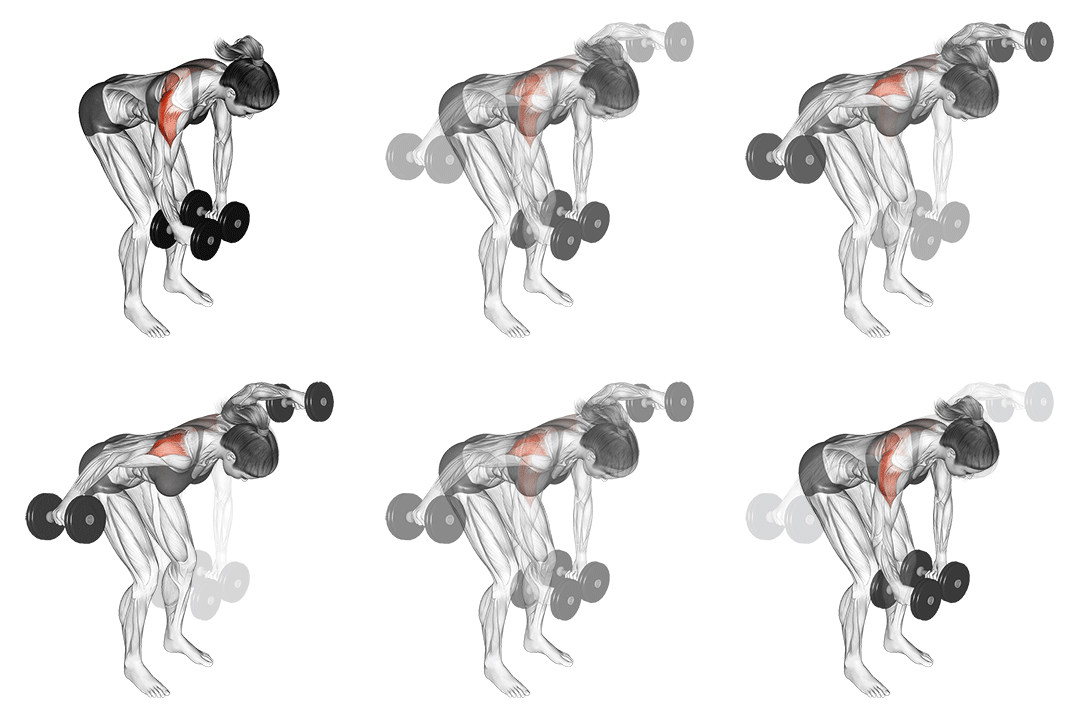
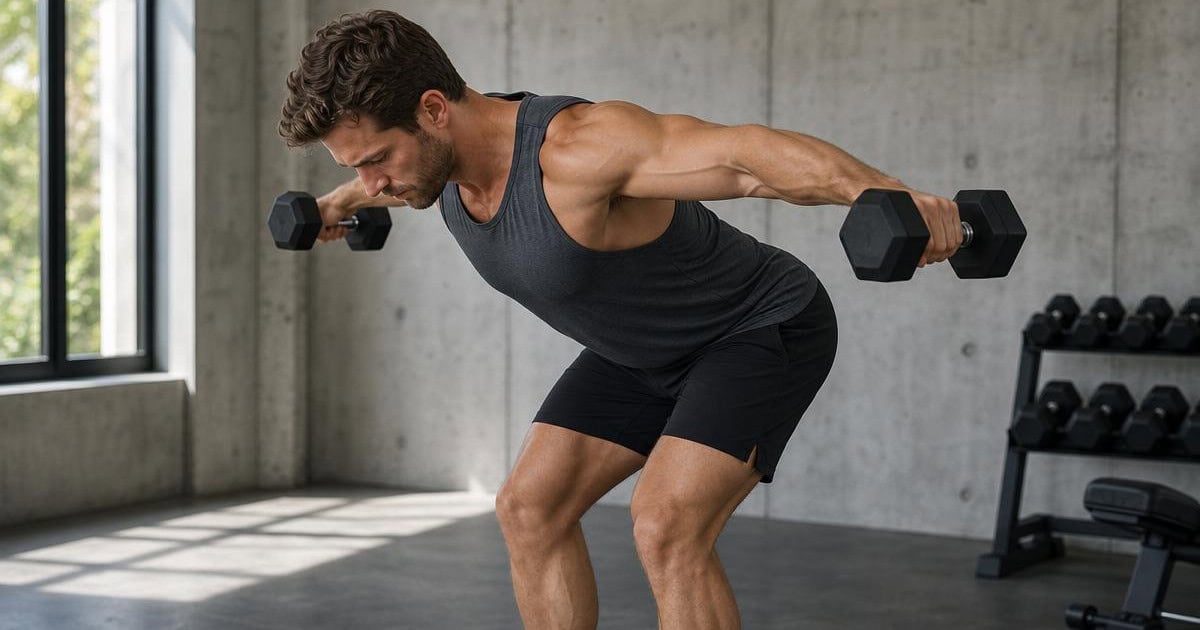
The Dumbbell Rear Delt Fly performs rear delt flies with dumbbells. The pattern produces rear delt work with lower trap involvement through scapular control.
For lower trap development, the rear delt fly provides scapular work that involves lower trap activation. Run it for 3 sets of 12 to 15 reps as supporting work.
Stand with feet hip-width holding dumbbells. Hinge forward at the hips with a flat back so the torso is parallel to the floor. Let the arms hang straight down. Keep slight bend in the elbows. Lift the arms out to the sides in a reverse fly motion until they reach shoulder height. The rear delts work hard through the lateral motion with lower trap activation supporting scapular position. Squeeze at peak contraction with focus on full retraction without shrugging. The pattern provides supporting work for lower trap development.
Band Pull Apart
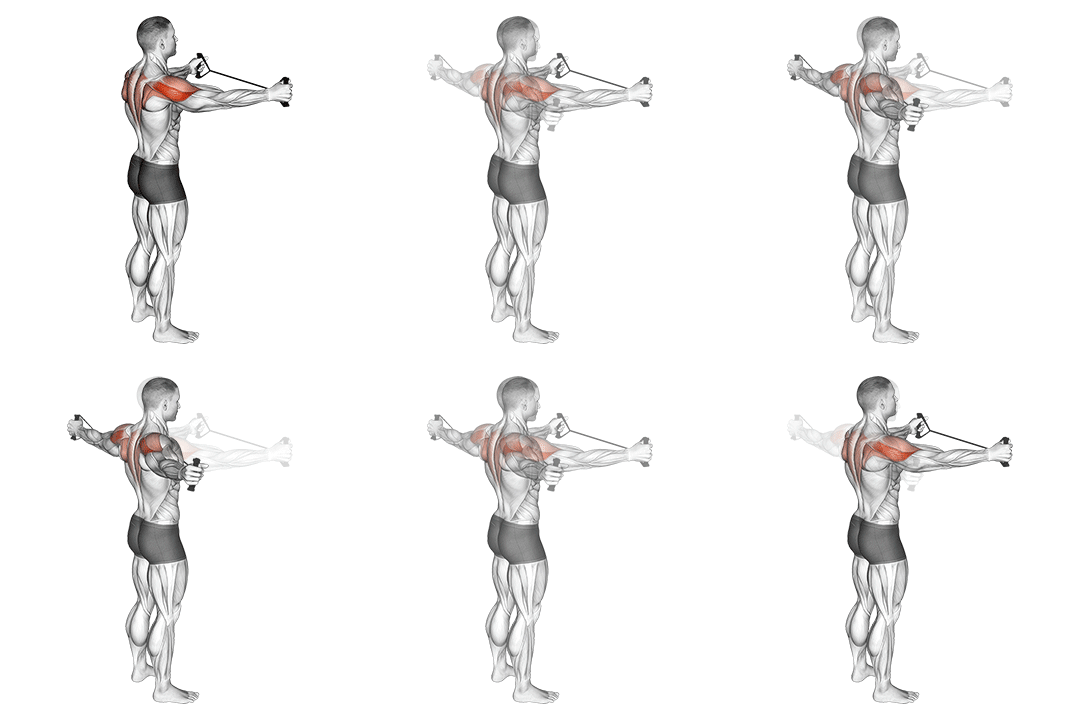
The Band Pull Apart performs band pull-aparts with a resistance band. The pattern produces scapular retraction with lower trap involvement.
For lower trap development, band pull-aparts provide accessible high-volume scapular work. Run it for 3 sets of 15 to 25 reps as accessible scapular work.
Stand holding a resistance band with both hands at shoulder height with arms straight in front. Pull the band apart by retracting the shoulder blades and bringing the arms out to the sides. The lower traps work as part of scapular control during retraction (focus on retraction without shrugging – shrugging defeats the lower trap focus). Squeeze the shoulder blades hard at peak with shoulders down. The pattern provides accessible high-volume scapular work that supports lower trap development.
Cable Y Raise

The Cable Y Raise performs Y raises with a cable. The pattern produces continuous-tension lower trap work in the overhead Y position.
For lower trap development, the cable Y raise provides continuous tension Y-position loading. Run it for 3 sets of 10 to 12 reps as cable lower trap work.
Set a cable to the lowest setting. Stand facing the cable holding the cable handle in one hand with arm at the side. Raise the arm up and out at about 45 degrees to form half of a Y position. Switch sides between sets, or use two cables for both arms simultaneously. The lower traps work hard through the overhead Y position with continuous cable tension. Squeeze at peak with focus on the lower trap. Return under control. The continuous tension provides unique loading complementary to band Y raises.
Standing Y Raise

The Standing Y Raise performs Y raises while standing. The pattern produces lower trap work with athletic standing position.
For lower trap development, the standing Y raise provides accessible bodyweight lower trap work. Run it for 3 sets of 12 to 15 reps as accessible lower trap work.
Stand with feet hip-width and hinge forward slightly with a flat back. Hold light dumbbells (or no weight) in each hand. Raise the arms up and out at about 45 degrees to form a Y shape with the body. Keep the arms straight throughout. The lower traps work through the overhead Y position. Squeeze at peak with focus on lower trap. Return under control. The standing version is highly accessible (no equipment needed beyond optional light dumbbells) and provides effective lower trap work.
Cable Lateral Raise

The Cable Lateral Raise performs lateral raises with a cable. The pattern produces side delt work that involves lower trap stabilization.
For lower trap development, the cable lateral raise involves lower trap stabilization during the lateral arm raise. Run it for 3 sets of 12 to 15 reps as supporting shoulder work.
Set a cable to the lowest setting. Stand sideways to the cable machine with the working arm farthest from the cable. Hold the handle in front of the body with arm straight. Raise the arm out to the side until it reaches shoulder height. The side delt works hard with lower trap stabilizing scapular position throughout the lateral motion. Squeeze at peak with shoulders down (avoid shrugging). Lower under control. The lower trap activation comes from maintaining scapular depression throughout the lateral raise pattern.
Dumbbell Bent Over Alternate Rear Delt Fly

The Dumbbell Bent Over Alternate Rear Delt Fly performs alternating rear delt flies in bent-over position. The pattern provides direct rear delt work with lower trap involvement.
For lower trap development, the alternating rear delt fly provides scapular work with lower trap activation. Run it for 3 sets of 12 to 15 reps per arm as supporting work.
Stand with feet hip-width holding dumbbells. Hinge forward at the hips with a flat back so the torso is parallel to the floor. Let the arms hang straight down. Keep slight bend in the elbows. Lift one arm out to the side in a reverse fly motion until it reaches shoulder height. Lower under control while raising the other arm. The alternating pattern allows for greater range and focus on each side. The lower traps work as part of scapular control. Maintain shoulders down (no shrugging) for lower trap focus.
How To Program These Workouts
A productive lower trap session pulls 4 to 6 exercises from the list above. A common balanced session: prone Y raise (primary), band Y raise (support), band face pull (combined), dumbbell rear delt fly (rear delt with lower trap focus), band pull apart (scapular retraction). For pure lower trap focus: prone Y raise, band Y raise, cable Y raise, standing Y raise (all four Y variations). For combined posture work: band face pull, band pull apart, prone Y raise, dumbbell rear delt fly. Run Y raise variations for 3 to 4 sets of 10 to 15 reps with very light weights, face pull and pull apart work for 3 sets of 12 to 25 reps, rear delt fly for 3 sets of 12 to 15 reps. Keep weights light – the lower trap is small and responds best to higher rep, controlled work.
Train lower traps 2 to 3 times per week as part of complete shoulder and posture programming. Most successful lifters incorporate lower trap work as: 1) accessory blocks at the end of pull or shoulder sessions (10 to 15 minutes of focused work), 2) warm-up before pressing sessions (Y raises and face pulls), or 3) standalone short sessions on rest days. The high-frequency, lower-volume approach produces better lower trap development than infrequent heavier sessions. Always emphasize keeping shoulders down (no shrugging) during all lower trap work – shrugging activates upper traps instead and defeats the purpose of lower trap training.
For broader programming, see our how to build bigger traps and best workouts for posture. For shoulder support, see our best shoulder mobility exercises.
Final Thoughts
The best lower trap exercises deliver real posture improvements and overhead capacity through training that targets the specific lower trap functions: Y raise variations across multiple positions, face pull patterns for combined scapular work, rear delt fly with lower trap focus, and adequate frequency. The combination of band Y raises, prone Y raises, cable Y raises, standing Y raises, face pulls, pull aparts, and rear delt flies covers every functional pattern of the lower traps and produces broader shoulder health than upper-trap-only training would suggest. Many lifters discover better posture, reduced shoulder impingement risk, improved overhead pressing capacity, and reduced upper-trap tension within 8 to 12 weeks of adding consistent lower trap work. For lifters dealing with upper-trap dominance, shoulder impingement issues, poor overhead position, or wanting balanced upper-back development, dedicated lower trap training is one of the most effective interventions available.
Stay focused on shoulders-down position throughout every lower trap rep. The most common mistake lifters make in lower trap training is allowing the shoulders to shrug upward during Y raises and face pulls, which activates the upper traps instead of lower traps and defeats the purpose. The fix: consciously maintain depressed shoulders (shoulders pulled down away from the ears) throughout every rep, focusing on the lower trap contraction during peak position. Combined with light loads (very light dumbbells or band tension) and high-frequency work (2 to 3 times per week), proper shoulder position produces the lower trap strength that corrects upper-trap dominance and supports healthy overhead capacity.
Frequently Asked Questions
What’s the best exercise for lower traps?
Y raise variations are most effective. The Y position directly targets the lower trap fibers in the overhead position that other patterns miss. Prone Y raise (chest-supported on incline bench) provides isolated lower trap work without compensation. Band Y raise provides accessible variation. Standing Y raise allows for athletic position. Cable Y raise provides continuous tension. Combined with face pulls and rear delt flies, Y raises form the foundation of complete lower trap development.
Why are my lower traps so weak?
Most lifters have severely undertrained lower traps relative to upper traps. The pattern develops from: 1) upper-trap-dominant training (shrugs and heavy carries that build upper traps without lower trap balance), 2) excessive pressing volume creating forward shoulder posture, 3) avoiding direct Y raise work that targets lower traps specifically. The fix: include 2 to 3 weekly lower trap sessions emphasizing Y raise variations, face pulls, and rear delt flies with shoulders-down focus. Most lifters see measurable lower trap improvements within 6 to 8 weeks of consistent dedicated work.
Will lower trap training help my overhead press?
Yes substantially for most lifters. Strong lower traps produce: better scapular rotation during overhead pressing (essential for healthy shoulder mechanics), reduced shoulder impingement risk, better overhead position maintenance, and improved pressing capacity through better scapular control. Many lifters who plateau on overhead press discover that adding consistent lower trap work breaks through the plateau by improving the scapular mechanics that overhead pressing demands. Strong lower traps directly support healthy overhead position throughout pressing.
How heavy should I lift for lower traps?
Very light loads with strict form. Y raises use 2 to 10 lb dumbbells or no weight. Band Y raises use light to medium band tension. Face pulls and pull aparts use light to moderate band tension. Rear delt flies use 5 to 15 lb dumbbells. The lower trap is small and designed for postural support, not heavy loading – heavier weights force compensation from upper traps and rhomboids that defeats the purpose. Quality light-load high-rep work with proper shoulder-down position produces better lower trap development than heavy work.
How do I make sure I’m using lower traps and not upper traps?
Focus on shoulders-down position throughout every rep. Upper traps shrug shoulders upward (toward the ears); lower traps depress shoulders downward (away from the ears) and rotate them upward. During every Y raise, face pull, and rear delt fly, consciously maintain shoulders down position – if you feel the shoulders rising toward the ears, the upper traps are taking over. Use lighter weights that allow for proper form. Mind-muscle connection matters substantially for lower trap training – actively focus on the lower trap area during each rep.