Kettlebells are one of the most efficient pieces of equipment for full-body training, but the foundational movements take time to learn well. The best beginner kettlebell workouts focus on the swing, squat, deadlift, press, and row patterns that everything else builds on. Master these six movement patterns, and any other kettlebell exercise becomes accessible within a few practice sessions.
Below are ten effective beginner kettlebell exercises that cover hip-hinge swings, squat patterns, hinge deadlifts, vertical pressing, horizontal pulling, loaded carries, and rotational core work. Together they form a complete training program that builds the foundational skills for years of productive kettlebell training.
Kettlebell Swing

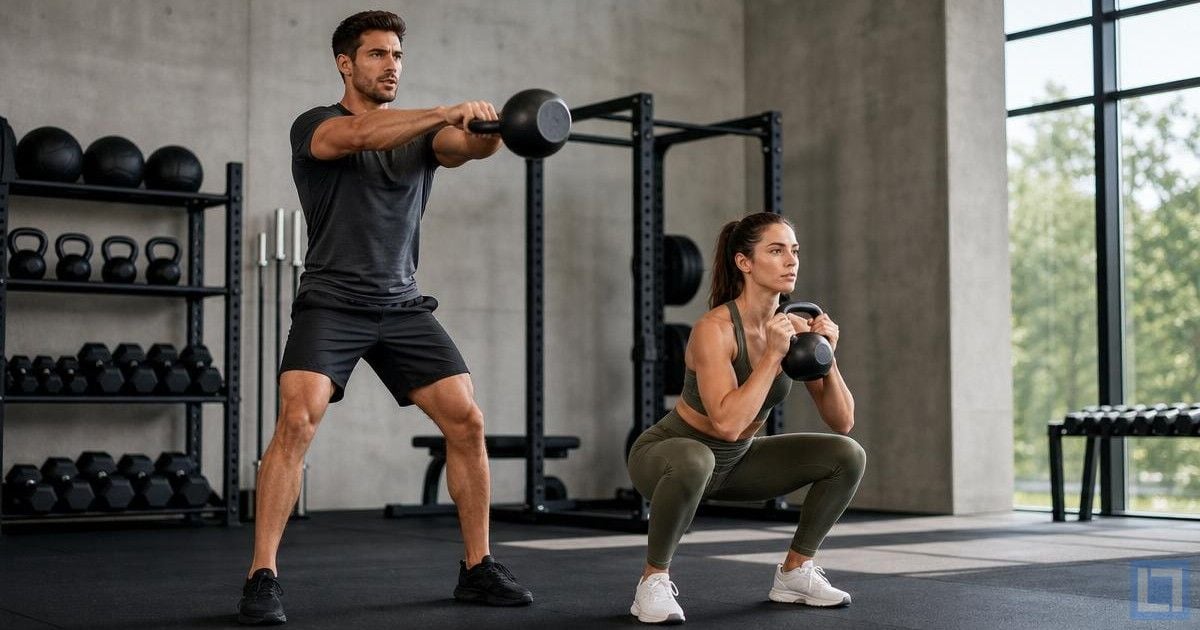
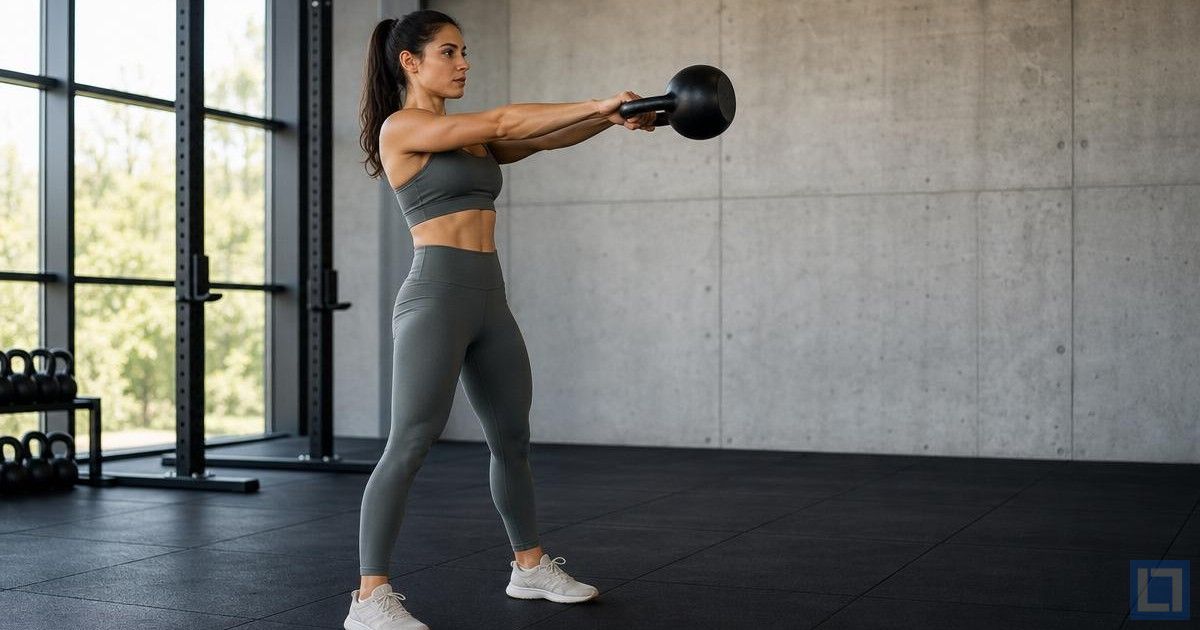
The Kettlebell Swing is the foundational movement of all kettlebell training. With a kettlebell held in both hands, you hinge at the hips and swing the bell back between the legs, then drive the hips forward explosively to swing the bell to chest height. It is the single most important exercise to master for beginner kettlebell training.
For absolute beginners, the swing teaches the hip-hinge pattern that nearly every other kettlebell exercise depends on. Spend the first 2 to 4 weeks of kettlebell training focused on swing technique before progressing to harder movements. Build to 5 sets of 15 to 25 reps with a moderate-weight bell.
Hinge at the hips and let the kettlebell swing back between the legs. Drive the hips forward explosively to launch the bell forward to chest height. The arms guide the bell but do not lift it; all the power comes from the hips. Reverse the swing back through the legs.
Kettlebell Goblet Squat

The Kettlebell Goblet Squat holds a single kettlebell at the chest with both hands and squats to roughly parallel depth. The chest-loaded position keeps the torso upright through the squat, which makes it one of the most accessible squat variations for beginners.
For beginner kettlebell training, the goblet squat is the foundational squat pattern. The vertical loading limits how heavy the weight can be (most beginners cap out at 16 to 24 kg in goblet position), but for beginner programming that range is more than enough to drive consistent strength gains. Build to 3 sets of 10 to 12 reps before adding load.
Hold the kettlebell at the chest with both hands cupping the top end. Squat to parallel depth or below with feet shoulder-width and chest tall. Drive up through the whole foot. Keep the elbows tucked inside the knees at the bottom.
Kettlebell Deadlift

The Kettlebell Deadlift positions a kettlebell between the feet and lifts it to standing position with a hip-hinge motion. The exercise teaches the deadlift pattern at moderate loads with a more accessible setup than barbell deadlifting.
For beginners, the kettlebell deadlift introduces the conventional deadlift pattern without the technical demands of barbell setup. The compact bell shape and centered loading make the exercise easier to perform with clean form than barbell variations, which makes it the perfect introduction to hip-hinge training for new lifters.
Stand with a kettlebell between the feet, slightly forward of center. Hinge at the hips with a flat back, grip the bell, and drive through the floor to stand. Lock out by squeezing the glutes at the top. Lower under control by hinging back at the hips.
Kettlebell Romanian Deadlift

The Kettlebell Romanian Deadlift performs a Romanian deadlift pattern with a kettlebell held in both hands. The hinge motion targets the hamstrings, glutes, and lower back through controlled lowering rather than ground-based pulling.
Where the standard kettlebell deadlift starts on the floor, the RDL starts standing and lowers the bell under control to mid-shin or wherever hamstring flexibility allows. Both patterns are foundational for beginners; the RDL specifically builds hamstring strength that supports nearly every other lower-body exercise. Build to 3 sets of 10 to 12 reps.
Hold the kettlebell with both hands at hip level. Hinge at the hips with a slight knee bend. Lower the bell in a path close to the legs until the hamstrings stretch. Drive the hips forward to stand back up. Keep the back flat throughout.
Kettlebell Strict Press

The Kettlebell Strict Press holds a single kettlebell in the rack position at the shoulder and presses it overhead to lockout. The strict version uses no leg drive; pure upper-body strength does all the work, which makes it the cleanest introduction to overhead pressing for beginners.
Vertical pressing is one of the foundational movement patterns every beginner should learn early. The single-arm kettlebell press demands both pressing strength and core stability against the asymmetric load, which produces stronger development than bilateral barbell pressing for beginners. Build to 3 sets of 6 to 10 reps per arm.
Hold a kettlebell in the rack position at the shoulder with the bell resting on the back of the forearm. Press the bell straight up to lockout overhead, keeping the body rigid throughout. Lower under control to the rack. The non-working arm stays at the side.
Kettlebell Bent Over Row

The Kettlebell Bent Over Row hinges at the hips and rows kettlebells to the lower chest or upper abdomen. The horizontal pulling pattern complements vertical pressing and builds the upper-back strength every program needs.
Pulling exercises balance the pressing volume that beginner programs accumulate. Without direct pulling work, lifters develop a forward-rounded shoulder posture and pressing-dominant imbalances. The kettlebell bent-over row fills that gap with a foundational pulling pattern that uses no equipment beyond the bells already used for pressing.
Hinge at the hips with a flat back and a slight knee bend, kettlebells hanging straight down. Pull the bells to the lower chest or upper abdomen, squeezing the shoulder blades together at the top. Lower under control. Avoid jerking the bells with body momentum.
Kettlebell Two Arm Clean

The Kettlebell Two Arm Clean swings two kettlebells from between the legs to the rack position at the shoulders in one explosive motion. The clean teaches the rapid transition from hip drive to overhead positioning that more advanced movements (jerks, snatches) depend on.
For beginners progressing past basic swings and presses, the clean is the bridge to more advanced kettlebell training. The two-arm version is significantly easier to learn than single-arm cleans because the bilateral loading reduces balance demand. Build the technique with light weight before chasing heavier loads.
Hold two kettlebells between the legs with arms extended. Hinge at the hips, then drive the hips forward explosively to launch the bells upward. As the bells rise, pull them in toward the chest and rotate the wrists so the bells land in the rack position at the shoulders. Lower under control to start the next rep.
Kettlebell Farmers Walk

The Kettlebell Farmers Walk holds heavy kettlebells at the sides and walks for distance or time. The continuous walking under heavy load trains the entire back, the grip, and the core in one combined exercise.
For beginners, loaded carries are one of the most underrated foundational exercises that exist. The heavy load forces the upper back to stay engaged through every step, the grip works continuously, and the core has to brace against the load. They make excellent finishers for beginner kettlebell sessions and produce strong real-world strength carryover.
Hold heavy kettlebells at the sides with a strong grip. Walk with normal posture: tall spine, shoulders back, eyes forward. End the set when grip gives out or form breaks down. Both indicators are good signals to stop.
Kettlebell Russian Twist

The Kettlebell Russian Twist sits on the floor with knees bent and feet lifted, then twists side to side with a kettlebell held in both hands. The rotation under load hits the obliques and rotational core stabilizers.
For complete core training, beginners need rotation work alongside the bracing patterns of planks. The Russian twist with a kettlebell adds load to the rotation, which produces stronger oblique development than bodyweight twists alone. Build to 3 sets of 12 to 16 alternating reps.
Sit on the floor with knees bent and heels lifted off the ground. Hold the kettlebell in both hands at chest level. Rotate the trunk side to side, touching the kettlebell to the floor on each side. Move under control rather than chasing speed.
Kettlebell Front Squat

The Kettlebell Front Squat holds two kettlebells in the rack position at the shoulders and squats to depth. The rack-loaded position emphasizes the upper back and core bracing demand on top of the standard squat pattern.
For beginners with two kettlebells available, the front squat is a strong progression past the goblet squat. The two-bell rack position allows heavier total loading and teaches the breathing and bracing patterns that more advanced lifts (clean and jerk, thrusters) depend on. Build to 3 sets of 8 to 10 reps once the goblet squat is solid.
Hold two kettlebells in the rack position at the shoulders. Squat to parallel depth or below with feet shoulder-width and chest tall. Drive up through the whole foot. The bracing demand is significantly higher than the goblet squat; expect the lower back to fatigue fast initially.
How To Program These Workouts
A productive beginner kettlebell session pulls six to eight exercises from the list above. A balanced session starts with the swing as the primary explosive movement, follows with squat and hinge patterns (goblet squat and Romanian deadlift), adds upper-body work (strict press and bent-over row), and finishes with a loaded carry (farmers walk). Run sets of 8 to 12 reps for strength exercises and 30 to 60 seconds for swings and carries.
Train kettlebells two to three times per week. Beginners need extra recovery time while learning new movement patterns; daily training is rarely productive in the first 4 to 8 weeks because form quality drops as fatigue accumulates. A Monday/Wednesday/Friday or Tuesday/Friday split works well. Pair kettlebell sessions with walking or light cardio on off days for active recovery.
For more kettlebell programming as you progress, see our best kettlebell workouts and best full body kettlebell workouts. To browse the equipment library, explore our kettlebell exercises collection.
Final Thoughts
The best beginner kettlebell workouts deliver complete training stimulus in minimal time and space. The combination of explosive ballistic work (swings, cleans), strength compounds (squats, presses, rows), and stability training (carries, twists) produces broader athletic adaptations than dedicated barbell programs at a fraction of the equipment cost. For new lifters with limited space or budget, kettlebells are the highest-leverage equipment investment available.
Stay focused on technique. Kettlebell exercises are more technical than barbell equivalents because the asymmetric load and ballistic patterns require precise body positioning. The lifters who get the most from kettlebell training are the ones who put the time into learning the foundational movements (swing, clean, press, snatch) rather than constantly chasing new variations. Master the basics first; everything else follows.
Frequently Asked Questions
What kettlebell weight should beginners start with?
Most beginner men start with a 16 kg (35 pound) kettlebell as their primary bell. Most beginner women start with 8 to 12 kg (18 to 26 pounds). The right starting weight is heavy enough that swings feel demanding but light enough for clean technique on presses and squats. Avoid the temptation to start too light; very light bells (under 8 kg for adults) often produce poor swing technique because the weight is not heavy enough to demand proper hip drive.
How often should beginners do kettlebell workouts?
Two to three times per week works for most beginners. The technical demand of kettlebell exercises means form quality matters more than total volume in the first 8 to 12 weeks. Three sessions per week with 48 hours between sessions allows recovery while building the practice volume needed to learn the movements.
How long until I learn the basic kettlebell movements?
Most beginners can perform clean swings, goblet squats, and deadlifts within 2 to 4 weeks of consistent practice. The strict press and clean typically take 4 to 8 weeks. Advanced movements (snatch, jerk, double bell variations) take 3 to 6 months. Patience matters more than effort; rushing through technique produces bad habits that get harder to fix later.
Are kettlebells safe for beginners?
Yes, when learning the proper hip-hinge technique. Most kettlebell injuries come from using the lower back to lift the bell rather than driving through the hips. Starting with the deadlift and Romanian deadlift to learn the hinge pattern, then progressing to the swing, prevents the most common technique mistake. Start with light weight while learning.
Can I get a full workout with just one kettlebell?
Yes for most beginner programming. A single moderate-weight bell covers the swing, goblet squat, single-arm deadlift, single-arm press, single-arm row, single-arm clean, and most other foundational kettlebell movements. A second bell of matching weight expands the program (allows double-bell variations like the front squat and clean and press), but is not required for the first 6 to 12 months of training.