The hamstrings are a group of three muscles (biceps femoris, semitendinosus, semimembranosus) that run along the back of the upper leg from the hips to the knees. They have two primary functions: hip extension (extending the leg backward, as in deadlifts and good mornings) and knee flexion (curling the heel toward the glute, as in leg curls). Effective hamstring training hits both functions because exercises that emphasize only one tend to produce uneven development. The combination of hip-hinge exercises (Romanian deadlift, conventional deadlift, good mornings) for hip extension plus leg curl variations (lying, seated, standing) for knee flexion produces complete hamstring development.
Below are ten foundational hamstring-building exercises that cover hip-extension work (barbell RDL, dumbbell RDL, conventional deadlift, good morning, stiff-leg good morning, kettlebell RDL), knee-flexion isolation (lying leg curl, seated leg curl, standing leg curl), and combined patterns (glute-ham raise). Together they form the complete hamstring-building exercise foundation for any productive leg program. Pull 5 to 6 exercises per leg session and rotate the selection across sessions for complete development.
Barbell Romanian Deadlift

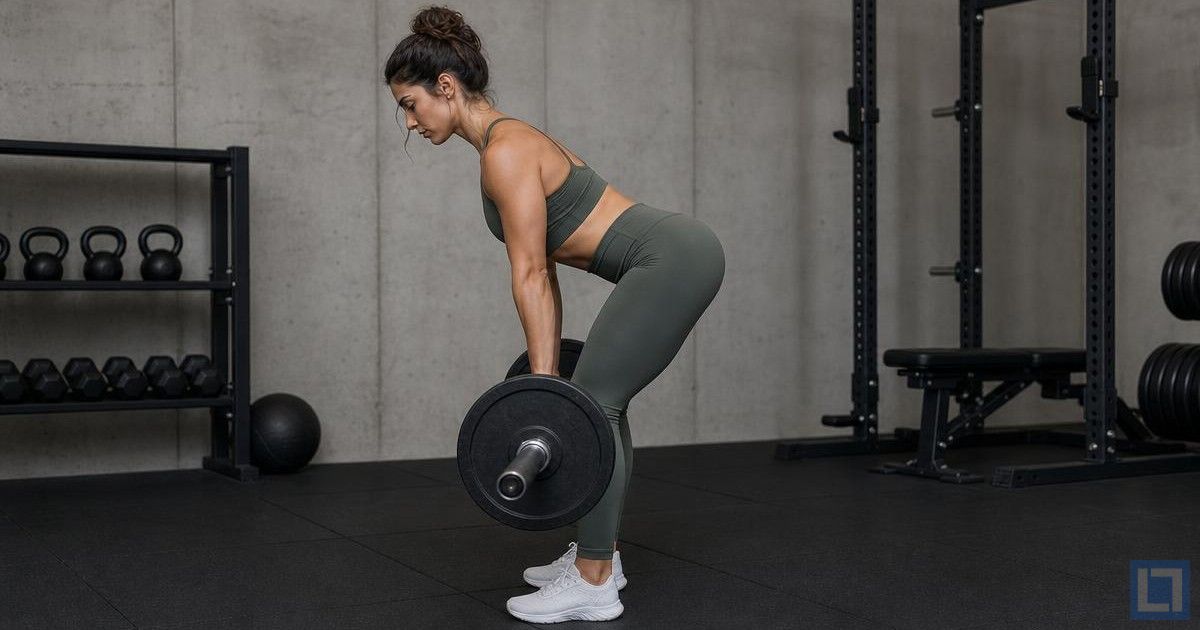
The Barbell Romanian Deadlift starts standing with the barbell at hip level and hinges at the hips with a slight knee bend, lowering the bar in a controlled motion before driving the hips forward to stand. The exercise produces extreme stretch loading on the hamstrings at the bottom position.
For hamstring growth, the Romanian deadlift is non-negotiable. The pattern hits the hamstrings through their primary hip-extension function while loading them in the stretched position where they grow most. Run it for 4 to 5 sets of 6 to 10 reps as foundational hamstring work in any productive hamstring program.
Stand tall holding a barbell at hip level with shoulder-width grip. Hinge at the hips with a slight knee bend, lowering the bar in a path close to the legs until the hamstrings stretch fully. Drive the hips forward to stand back up. Keep the back flat and bar close to the body throughout.
Dumbbell Romanian Deadlift
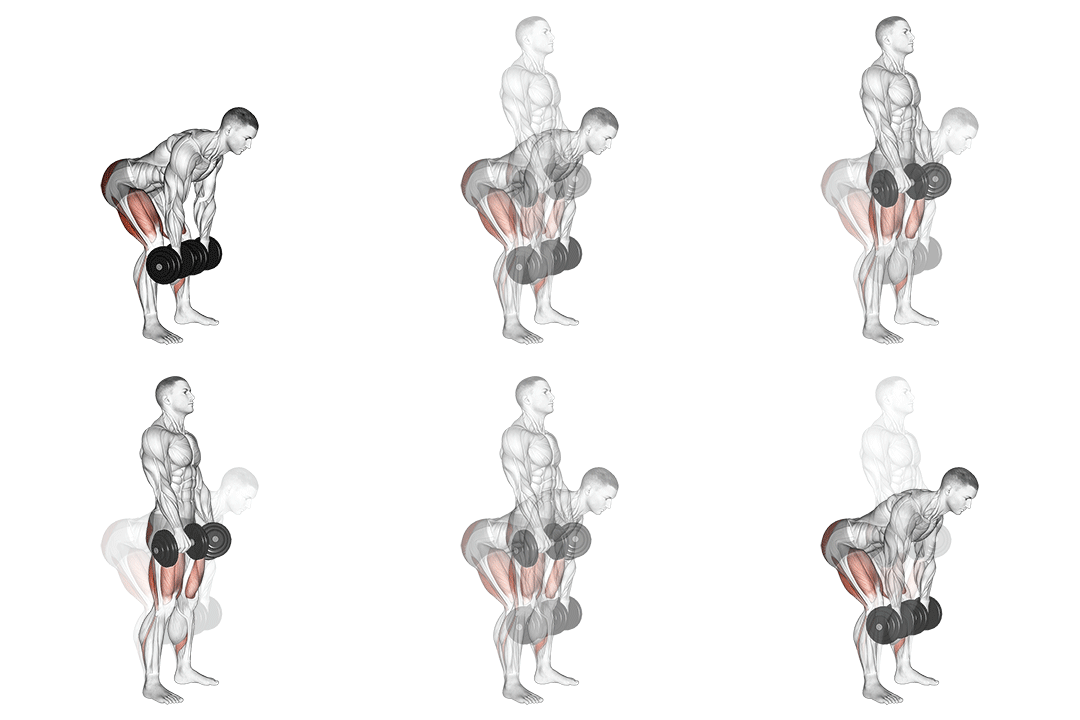
The Dumbbell Romanian Deadlift performs the Romanian deadlift pattern with dumbbells held at the sides instead of a barbell. The neutral grip position can be more comfortable than barbell variations and allows greater range of motion at the bottom.
For hamstring growth at lighter loads or with dumbbell-only access, the dumbbell Romanian deadlift produces the same primary stretch loading as the barbell version. The unilateral handle positions also catch strength imbalances. Run it for 3 to 4 sets of 8 to 12 reps as accessory hamstring work.
Stand tall with dumbbells held at the sides, palms facing the body. Hinge at the hips with a slight knee bend, lowering the dumbbells in a path close to the legs until the hamstrings stretch. Drive the hips forward to stand back up. Keep the back flat throughout.
Barbell Deadlift

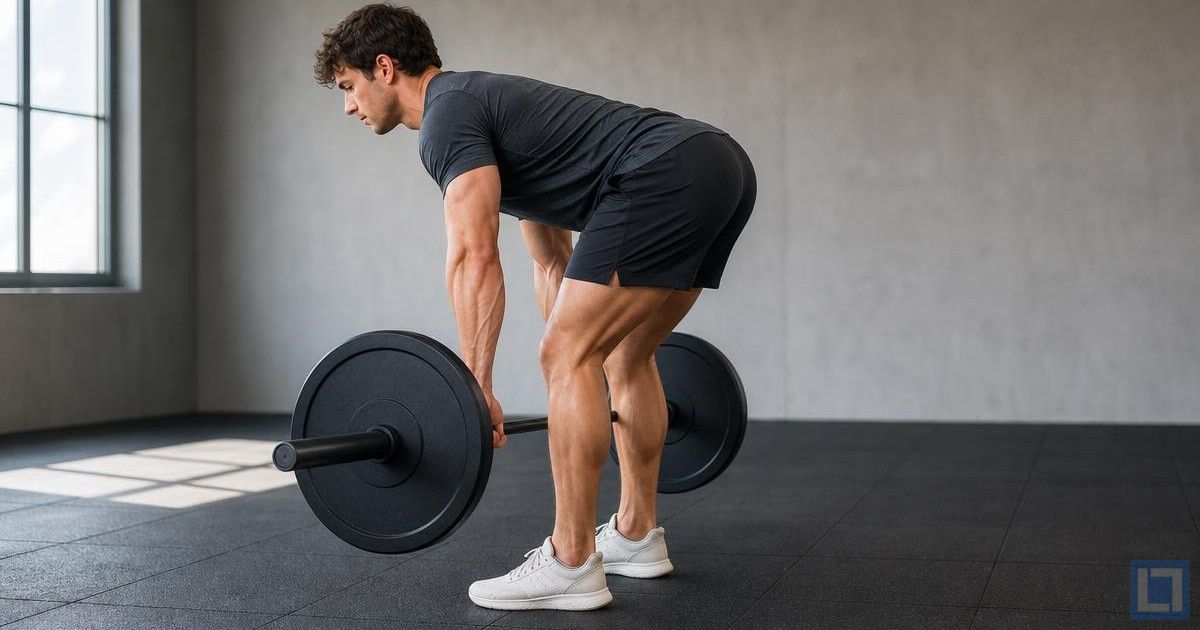
The Barbell Deadlift starts with the barbell on the floor and lifts it to standing position by hinging at the hips and extending through the legs. The exercise produces strong hamstring loading combined with full posterior chain demand.
For hamstring growth, the conventional deadlift produces strong hamstring loading along with broader posterior chain work. The pattern hits the hamstrings primarily through their hip-extension function. Run it for 3 to 4 sets of 4 to 6 reps as primary heavy posterior chain work.
Stand with feet hip-width with the barbell over the middle of the feet. Hinge at the hips and bend the knees to grip the bar with shoulder-width grip. Drive through the legs and pull the bar up close to the body until standing fully upright. Reverse the motion under control. Reset before each rep.
Lever Lying Leg Curl

The Lever Lying Leg Curl lies face-down on a lying leg curl machine and curls the heels toward the glutes against the lever resistance. The exercise isolates the hamstrings through pure knee flexion, the secondary function of the hamstrings.
For complete hamstring growth, the lying leg curl is the foundational knee-flexion exercise. The hamstrings have two primary functions (hip extension and knee flexion); deadlift-pattern exercises hit hip extension while leg curls hit knee flexion. Run it for 3 to 4 sets of 10 to 12 reps as primary knee-flexion hamstring work.
Lie face-down on a lying leg curl machine with the pad against the back of the lower legs. Curl the heels toward the glutes by contracting the hamstrings. Squeeze the hamstrings hard at the top. Lower under control to the start.
Lever Seated Leg Curl

The Lever Seated Leg Curl sits at a seated leg curl machine with the pad against the back of the lower legs and curls the heels back against the lever resistance. The seated position produces strong hamstring loading from a different position than lying variations.
For varied-angle hamstring training, the seated leg curl produces strong hamstring loading through the seated hip position. Most successful programs include both lying and seated leg curl variations because the different hip angles produce slightly different hamstring fiber recruitment. Run it for 3 to 4 sets of 10 to 12 reps as accessory hamstring work.
Sit at a seated leg curl machine with the back pad against the upper back and the leg pad against the back of the lower legs. Curl the heels back by contracting the hamstrings. Squeeze the hamstrings hard at the contracted position. Return under control.
Lever Standing Leg Curl

The Lever Standing Leg Curl stands at a standing leg curl machine and curls one leg back against the lever resistance, isolating the hamstring of the working leg unilaterally. The pattern produces strong unilateral hamstring loading.
For unilateral hamstring training, the standing leg curl catches strength imbalances that bilateral variations can hide. The pattern allows the working hamstring to receive full focus per rep. Run it for 3 sets of 10 to 12 reps per leg as unilateral hamstring work.
Stand at a standing leg curl machine with one leg positioned against the leg pad. Brace the body against the chest pad. Curl the heel back toward the glute by contracting the hamstring of the working leg. Squeeze hard at the contracted position. Return under control. Switch sides between sets.
Glute Ham Raise

The Glute Ham Raise sets up on a glute-ham developer (GHD) machine with the upper legs braced and lowers the body forward by extending at the knees, then pulls back up by contracting the hamstrings. The exercise hits the hamstrings through both knee flexion and hip extension simultaneously.
For complete hamstring growth, the glute-ham raise is one of the most demanding hamstring exercises that exists. The pattern combines both hamstring functions (knee flexion and hip extension) in a single rep. Run it for 3 sets of 6 to 10 reps as advanced hamstring work for lifters with GHD access.
Set up on a glute-ham developer with the upper legs braced against the leg pad and feet anchored. Start in an upright kneeling position. Lower the body forward by extending at the knees while maintaining a tight body line. Pull back to the upright position by contracting the hamstrings hard.
Barbell Good Morning

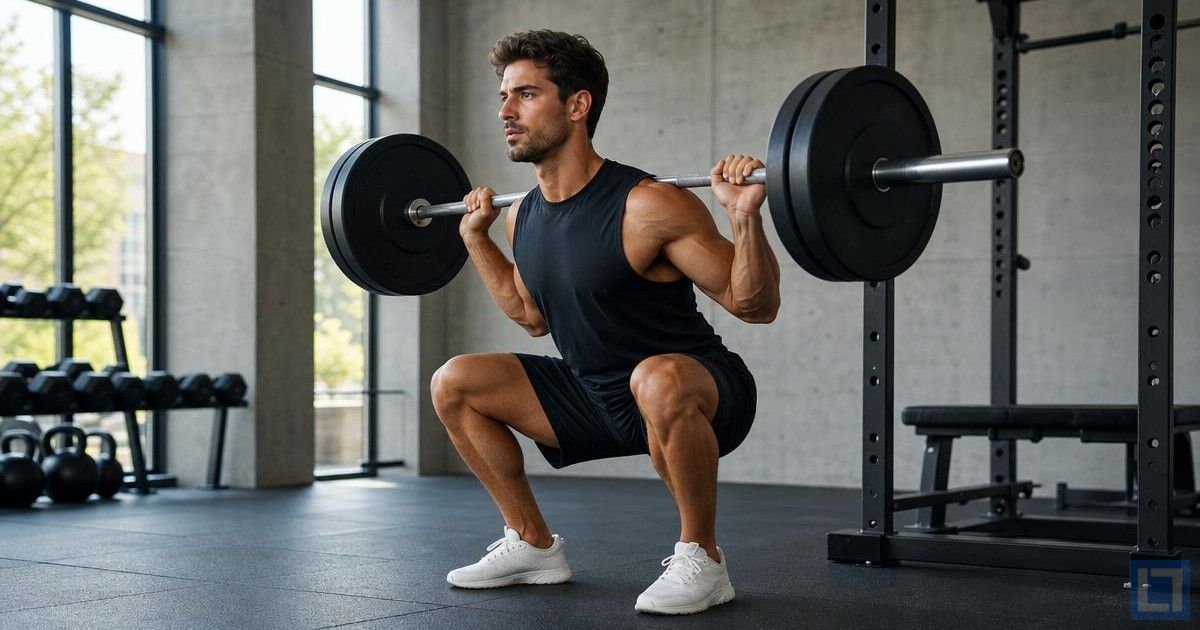
The Barbell Good Morning holds a barbell across the upper back and hinges at the hips while bending the knees slightly, lowering the torso forward before driving back to standing. The pattern produces strong hamstring and lower-back loading through the hinge motion.
For hamstring growth that includes broader posterior-chain work, the good morning produces stronger hamstring loading per rep than most other hamstring exercises because the bar position above the hips creates a long lever arm. The pattern requires careful technique. Run it for 3 sets of 8 to 10 reps as accessory hamstring work.
Set up under a barbell on a squat rack with the bar across the upper back. Step back to clear the rack. Stand with feet shoulder-width and a slight knee bend. Hinge at the hips by pushing the hips back, lowering the torso toward parallel to the floor. Drive the hips forward to stand back up. Keep the back flat throughout.
Barbell Stiff Leg Good Morning

The Barbell Stiff Leg Good Morning performs good mornings with the legs nearly fully extended, which increases the demand on the hamstrings by removing the knee-bend assistance. The pattern produces extreme hamstring stretch loading.
For maximum hamstring stretch loading, the stiff-leg good morning is one of the most direct hamstring exercises that exists. The straight legs eliminate the assistance from the quads and glutes, isolating the hamstrings under stretch. Run it for 3 sets of 6 to 8 reps with conservative loading as advanced hamstring work.
Set up under a barbell on a squat rack with the bar across the upper back. Step back to clear the rack. Stand with feet shoulder-width and legs nearly straight (slight knee bend only). Hinge at the hips by pushing the hips back, lowering the torso forward. Drive back to standing. Use lighter loads than standard good mornings.
Kettlebell Romanian Deadlift

The Kettlebell Romanian Deadlift performs the Romanian deadlift pattern with a kettlebell held in front of the body. The lighter loading and accessible setup make it ideal for beginners or as accessory work alongside heavier barbell variations.
For accessible hamstring training or warm-up work, the kettlebell Romanian deadlift produces strong hamstring stretch loading at lighter weights. The pattern works as foundational hamstring practice for lifters building toward heavier barbell work. Run it for 3 sets of 10 to 12 reps as accessible hamstring work.
Stand tall holding a kettlebell in front of the body with both hands. Hinge at the hips with a slight knee bend, lowering the kettlebell in a path close to the legs until the hamstrings stretch. Drive the hips forward to stand back up. Keep the back flat throughout.
How To Program These Workouts
A productive hamstring-building program organizes these exercises across 1 to 2 leg-focused sessions per week. A standard hamstring-emphasis leg session: barbell Romanian deadlift (4 sets of 6 to 10), lying leg curl (4 sets of 10 to 12), seated leg curl (3 sets of 10 to 12), barbell good morning (3 sets of 8 to 10), glute-ham raise or kettlebell RDL (3 sets of 8 to 10). The combination produces 17 to 21 weekly sets of direct hamstring work, which sits in the high range for hypertrophy progression. Some advanced lifters benefit from running hamstring-emphasis sessions twice per week with different exercise selection.
Run primary compound lifts (Romanian deadlift, conventional deadlift) for 4 to 5 sets of 5 to 10 reps with 2 to 3 minutes rest. Run leg curl variations for 3 to 4 sets of 10 to 12 reps with 60 to 90 seconds rest. Run good mornings for 3 sets of 8 to 10 reps with 90 seconds rest. Track every set in a training log and aim to add weight, reps, or sets every 1 to 2 weeks for sustainable hamstring growth. Most lifters can add 5 pounds to Romanian deadlift every 1 to 2 weeks during the first year of consistent training.
For broader leg programming, see our best dumbbell leg workouts and best barbell leg workouts. For glute training that complements hamstring work, see our how to grow your glutes.
Final Thoughts
Growing your hamstrings requires consistent training of both hip-extension exercises (for the primary hip-extension function) and knee-flexion exercises (for the secondary knee-flexion function) across multiple weekly sessions. The combination of Romanian deadlifts, conventional deadlifts, leg curls, good mornings, and glute-ham raises covers every major hamstring function and produces complete development. For lifters who want serious hamstring growth that produces the muscular separation and rear-leg shape most physique goals require, dedicated hamstring training following the structure outlined here is one of the most effective approaches available.
Stay focused on the stretch position of every hip-hinge rep. The most common hamstring training mistake is cutting the range of motion short on Romanian deadlifts (stopping the bar at mid-thigh instead of below the knees), which significantly reduces the actual hamstring stimulus. The fix: lower the bar until the hamstrings stretch fully (typically just below the knee for most lifters with good hip mobility) on every rep. Quality reps with full range produce stronger hamstring development than higher-weight reps with cut-short ranges. The hamstrings grow most when loaded under stretch; respecting that pattern through deliberate execution drives the development.
Frequently Asked Questions
How long does it take to grow your hamstrings?
Most lifters see meaningful hamstring strength improvements within 6 to 8 weeks of dedicated hamstring training. Visible hamstring development appears within 12 to 16 weeks combined with appropriate nutrition. Major hamstring development (significantly thicker upper rear legs, visible hamstring separation) takes 6 to 12 months of consistent practice. Year-over-year hamstring growth continues for the first 5 to 8 years of training before the rate naturally slows.
Romanian deadlifts or leg curls for hamstring growth?
Both work; the choice depends on goals. Romanian deadlifts produce stronger overall hamstring development through hip-extension loading and stretch positioning. Leg curls isolate the hamstrings through pure knee flexion and produce strong development of the lower hamstring fibers. Most successful hamstring programs include both: Romanian deadlifts for foundational mass and leg curls for direct knee-flexion isolation. Hamstring training using only one or the other produces uneven development.
How often should I train hamstrings?
One to two times per week works for most lifters. The hamstrings recover within 48 to 72 hours of moderate training, but heavy compound lifts (deadlifts, Romanian deadlifts) require longer recovery. Most successful programs include 1 to 2 dedicated hamstring sessions per week with 12 to 20 weekly sets of direct hamstring work. Advanced lifters with good recovery often benefit from twice-weekly hamstring sessions with different exercise emphasis.
Why won’t my hamstrings grow?
The most common reasons hamstrings fail to grow are insufficient volume (under 10 weekly sets), insufficient stretch loading on Romanian deadlift variations (cutting range of motion short), missing knee-flexion work (deadlifts only without leg curls), or insufficient progressive overload (same weights week after week). The fix usually involves increasing volume to 12 to 20 weekly sets, ensuring full range of motion on every rep, including both hip-extension and knee-flexion exercises, and committing to 6 to 12 months of consistent training.
Do squats grow your hamstrings?
Marginally. Squats produce primarily quad and glute development with minimal hamstring stimulus because the hamstrings work mostly to stabilize during squat motion rather than to produce force. Lifters relying only on squats for leg training develop strong quads and glutes but underdeveloped hamstrings. The fix: include dedicated hamstring exercises (Romanian deadlift, leg curls, good mornings) in every leg session alongside squat-pattern work for balanced leg development.