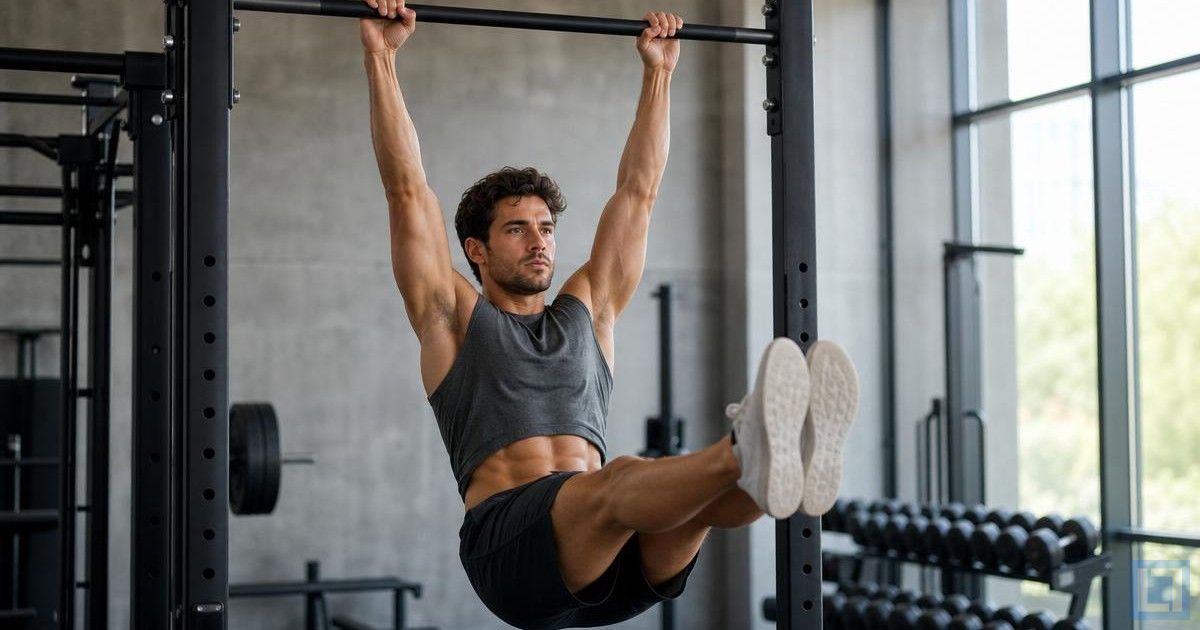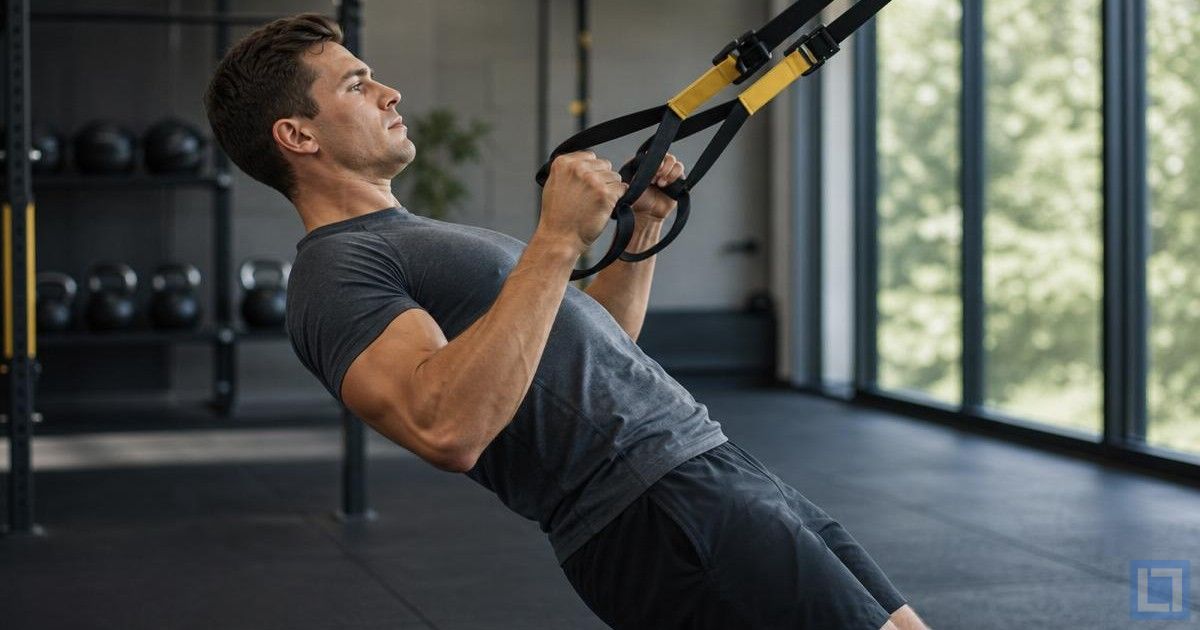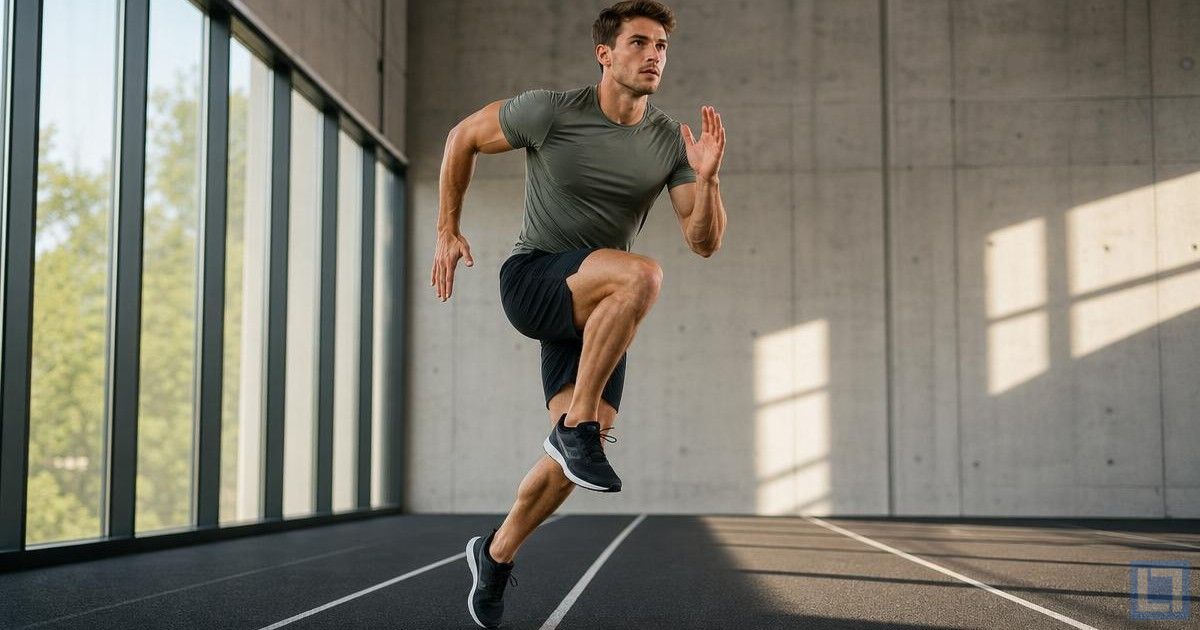
Track and field training produces real performance improvements through exercises that build the specific physical capacities track and field demands: maximum strength for force production across all events, explosive power for sprinting and jumping, rotational power for throwing events, plyometric ability for jumping events, and Olympic lifting power that translates across all running, jumping, and throwing events. The format works particularly well for track and field because the sport spans diverse events (sprints, distance, jumps, throws) that all benefit from common foundational strength and power capacities. Most track and field athletes who consistently train physical conditioning 3 to 4 times per week alongside event-specific practice see measurable performance improvements within 8 to 12 weeks. The combination of heavy strength work, Olympic lifts, plyometrics, and event-specific power training produces broader athletic development than event-specific practice alone.
Below are ten effective track and field exercises that cover heavy strength (barbell squat, deadlift, front squat), Olympic lifts (power snatch, clean and jerk), explosive jumping (jump squat, single-leg box jump, broad jump to vertical), and throwing power (medicine ball rotational throw, medicine ball overhead throw). Together they form a complete track and field training program that hits every physical demand of the sport across all events. A 60 to 90-minute session pulled from this list, performed 3 to 4 times per week alongside event practice, produces strong athletic foundation for track and field performance.
Barbell Squat

The Barbell Squat performs squat motion with a barbell across the upper back. The pattern is the foundational lower-body strength exercise that builds the leg power track and field athletes need across sprinting, jumping, and throwing events.
For track and field training, the barbell squat is the foundational lower-body strength exercise. The pattern hits the quads, glutes, and hamstrings through heavy compound loading that translates to all running, jumping, and throwing events. Run it for 4 sets of 4 to 6 reps as primary lower-body strength work in any track and field session.
Set up under a barbell positioned across the upper back at chest height in a squat rack. Step back to clear the rack with feet shoulder-width and toes pointing slightly out. Squat down by sitting the hips back and bending the knees, descending until the hip crease is below the knees. Drive back to standing through the heels while keeping the chest up.
Barbell Deadlift

The Barbell Deadlift performs hip-hinge motion to lift a barbell from the floor to standing. The pattern builds the total-body strength critical for sprinting acceleration, jumping power, and throwing events.
For track and field training, the deadlift is one of the most effective total-body strength exercises that exists. The pattern hits the entire posterior chain through heavy compound loading. Run it for 3 to 4 sets of 3 to 5 reps as primary posterior chain strength work in any track and field session.
Set up with feet hip-width and a loaded barbell on the floor close to the shins. Hinge at the hips and bend the knees to grip the bar with hands just outside the legs. Drive through the legs and pull the bar up close to the body until standing fully upright with shoulders back. Reverse the motion under control. Maintain neutral spine throughout.
Barbell Power Snatch
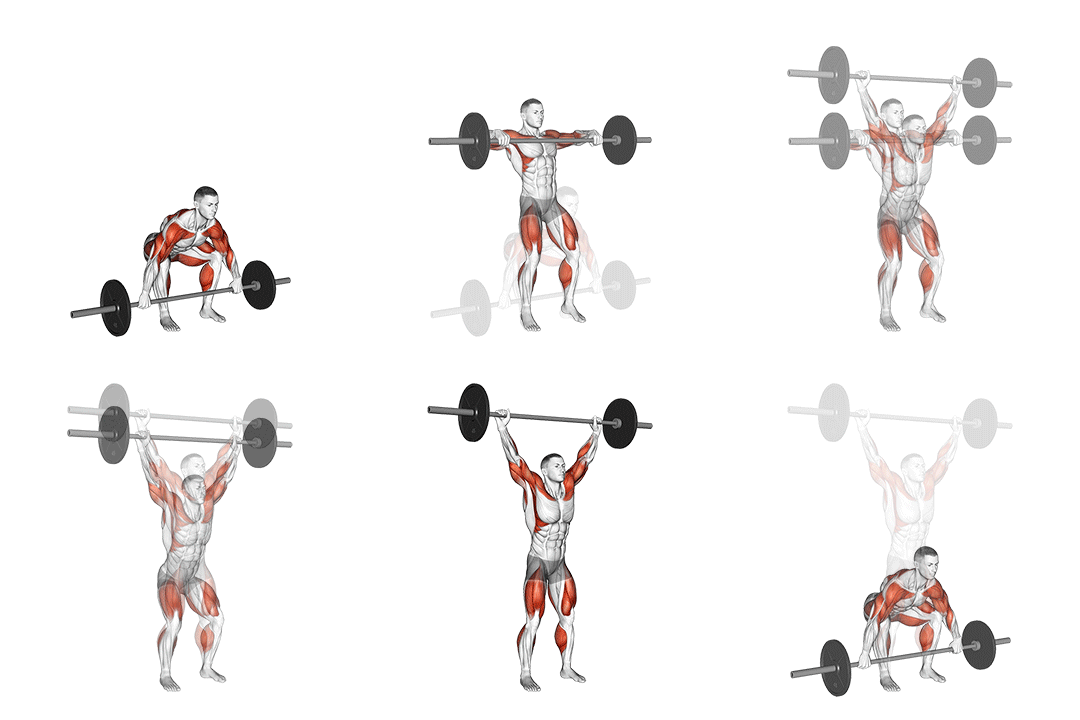
The Barbell Power Snatch lifts a barbell from the floor to overhead in one continuous motion without a full squat catch. The pattern produces explosive total-body power that translates directly to track and field acceleration and jumping events.
For track and field training, the power snatch is one of the most direct explosive power exercises that exists. The pattern hits the entire body through explosive total-body extension that mirrors sprint acceleration mechanics. Run it for 5 to 6 sets of 1 to 3 reps for explosive power training, with attention to technique quality.
Set up over a loaded barbell with feet hip-width and a wide overhead grip on the bar. Pull the bar from the floor explosively, extending through the legs, hips, and back, then catch the bar overhead in a quarter-squat position with arms locked. Stand up to complete the lift. The power version uses less depth than the full snatch, prioritizing explosive power over technique mastery. Olympic lifting requires extensive coaching to learn safely.
Barbell Clean and Jerk

The Barbell Clean and Jerk lifts a barbell from the floor to the front rack position (the clean), then drives it overhead (the jerk). The pattern is the second Olympic lift and a foundational track and field strength and power exercise.
For track and field training, the clean and jerk produces strong full-body power. The pattern hits the entire body through two explosive movements that translate to track and field events requiring total-body force production. Run it for 5 to 6 sets of 1 to 3 reps for power training, with attention to technique quality.
Set up over a loaded barbell with feet hip-width and a clean grip. Clean: explosively pull the bar from the floor, extending through the legs and hips, then drop under the bar to receive it in the front rack position. Stand up. Jerk: dip slightly at the knees, then explosively drive the bar overhead while splitting the legs into a split position. Recover to standing with the bar overhead. Olympic lifting requires extensive coaching to learn safely.
Jump Squat

The Jump Squat performs explosive squat motion ending with a vertical jump, then absorbs the landing back into the squat. The pattern produces explosive leg power that translates directly to track and field jumping and sprinting events.
For track and field training, the jump squat is one of the most direct power-development exercises that exists. The pattern hits the legs through high-intensity dynamic loading. Run it for 4 sets of 4 to 6 reps as primary explosive leg power work in any track and field training session.
Stand with feet shoulder-width. Squat down by sitting the hips back. Explosively extend the legs and hips to jump straight up vertically. Land softly with bent knees, immediately lowering into the next squat. Continue in a smooth tempo. The explosive extension produces strong leg power loading.
Single Leg Box Jump

The Single Leg Box Jump performs box jump motion off one leg, landing both feet on the box. The pattern produces strong unilateral leg power critical for triple jumping, long jumping, and sprint acceleration phases.
For track and field training, the single-leg box jump produces strong unilateral leg power that translates directly to jumping events and sprint mechanics. The pattern hits the legs through unilateral explosive loading. Run it for 3 sets of 4 to 6 reps per leg as advanced explosive leg work.
Stand 2 to 3 feet from a sturdy box (12 to 24 inches high depending on ability). Lift one leg slightly off the floor. Bend the planted leg slightly and explosively jump off that single leg, landing both feet softly on top of the box. Step back down and switch sides. Maintain controlled landing throughout.
Medicine Ball Rotational Throw
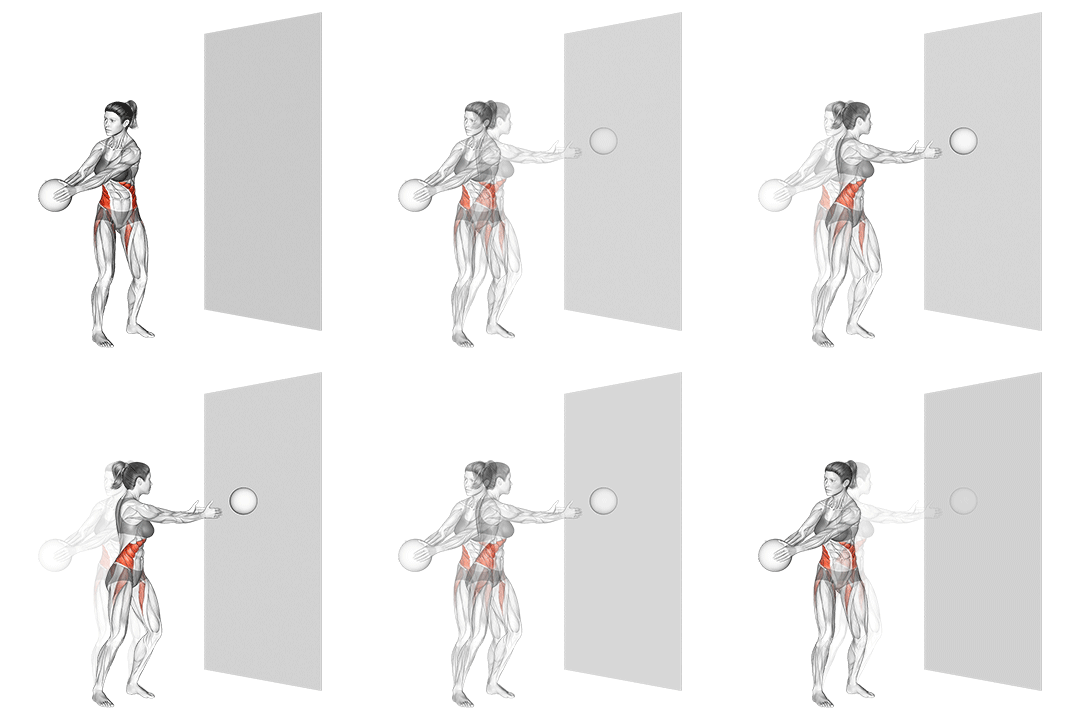
The Medicine Ball Rotational Throw stands sideways to a wall and throws a medicine ball into the wall using rotational hip and core power. The pattern produces explosive rotational power that translates directly to throwing events (shot put, discus, javelin).
For track and field training, the rotational throw is one of the most direct rotational power exercises that exists. The pattern hits the obliques and hips through explosive rotation that mirrors shot put, discus, and javelin throwing mechanics. Run it for 4 sets of 6 to 8 reps per side as primary explosive rotational work for throwers.
Stand sideways to a wall about 3 to 5 feet away with feet shoulder-width. Hold a medicine ball at the hip closer to the wall. Rotate explosively at the hips and core, throwing the ball into the wall. Catch the rebound and reset. Switch sides between sets. Use a medicine ball that can withstand impact.
Medicine Ball Overhead Throw

The Medicine Ball Overhead Throw stands holding a medicine ball overhead and throws it forward with full-body extension. The pattern produces explosive total-body power that translates directly to throwing events.
For track and field training, the overhead throw produces strong total-body power. The pattern hits the entire body through dynamic total-body extension that mirrors throwing event mechanics. Run it for 4 sets of 5 to 8 reps as primary explosive throwing work.
Stand with feet shoulder-width and a medicine ball held overhead with both hands. Drop slightly into a half-squat to load the throw. Explosively extend the legs, hips, and arms to throw the ball forward and upward into a wall (or open space). Reset between reps. Use a medicine ball that can withstand impact.
Broad Jump to Vertical

The Broad Jump to Vertical combines a horizontal broad jump with an immediate vertical jump upon landing. The pattern produces explosive horizontal-to-vertical power transitions critical for triple jumping and long jumping.
For track and field training, the broad jump to vertical produces strong combined horizontal and vertical jumping power. The pattern hits the legs through dynamic plyometric loading that translates directly to jumping events. Run it for 3 sets of 3 to 5 reps as advanced plyometric work for jumpers.
Stand with feet shoulder-width. Drop into a partial squat with arms swinging back. Explosively jump forward horizontally, landing softly with bent knees. Immediately upon landing, jump straight up vertically. Land softly. Reset between reps. The combined horizontal and vertical motion mimics triple jump and long jump mechanics.
Barbell Front Squat

The Barbell Front Squat performs squat motion with a barbell racked on the front of the shoulders rather than across the back. The pattern emphasizes the quads and core, both critical for track and field events requiring quick force production.
For track and field training, the front squat builds the quad strength and core stability that translate to sprinting, jumping, and throwing events. The pattern hits the quads heavily and builds the upright torso strength needed for explosive events. Run it for 3 to 4 sets of 5 to 8 reps as primary quad-emphasis squat work.
Set up with a barbell racked on the front of the shoulders (resting across the front delts and clavicles, with elbows pointed forward). Step back to clear the rack with feet shoulder-width. Squat down by sitting the hips back, keeping the elbows up to maintain bar position. Drive back to standing through the heels. Maintain upright torso position throughout.
How To Program These Workouts
A productive track and field program organizes these exercises across appropriate weekly splits based on event focus. A common 3-day strength split: Day 1 (Heavy Strength): barbell squat, barbell deadlift, barbell front squat. Day 2 (Olympic Lifts and Power): power snatch, clean and jerk, jump squat. Day 3 (Plyometric and Event-Specific): single-leg box jump, broad jump to vertical, plus event-specific throws (rotational throw for throwers, repeated jumps for jumpers). Run heavy strength work for 4 sets of 3 to 6 reps; Olympic lifts for 5 to 6 sets of 1 to 3 reps; plyometric work for 3 to 4 sets of 3 to 6 reps with full recovery between sets.
Train track and field strength sessions 3 to 4 times per week during off-season and base phases, reducing to 2 to 3 maintenance sessions during competitive season. The combination of heavy strength work, Olympic lifts, and plyometric training produces strong but recoverable training stimulus when properly programmed. Most successful track and field programs include 3 to 4 weekly strength sessions of 60 to 90 minutes each plus 3 to 4 event practice sessions per week. The format works particularly well when paired with appropriate periodization, proper nutrition, sufficient sleep, and proper warm-up and mobility work. Working with experienced track and field coaches significantly improves technique quality, especially for Olympic lifts and event-specific work.
For broader athletic programming, see our best workouts for athletes and best plyometric workouts. For specific power work, see our best olympic lifts.
Final Thoughts
The best track and field workouts deliver real performance improvements through exercises that build the specific physical capacities track and field demands across diverse events. The combination of heavy strength work, Olympic lifts, explosive jumping, and throwing power covers every physical demand of the sport and produces broader athletic development than event-specific practice alone. For track and field athletes who want measurable competition performance improvements, want to reduce injury risk through proper strength preparation, or want to extend their athletic career through smart training, dedicated track and field training is one of the most effective investments athletes can make.
Stay focused on technique and progression. The most common track and field training mistakes include either rushing Olympic lifts at the expense of proper technique (which significantly increases injury risk) or undertraining recovery (skipping rest days, neglecting mobility work). The fix: prioritize technique quality on every Olympic lift rep (start with PVC pipes, then empty barbell, then progressively load), and treat recovery as critical as training intensity. Quality reps with strict technique produce stronger long-term progress than ego-driven heavy weights with poor form. Track and field is a long-term pursuit; sustainable training over years produces better results than burning out in months.
Frequently Asked Questions
How often should track and field athletes train?
Three to four strength sessions per week alongside 3 to 4 event practice sessions works for most athletes during off-season. The combination of heavy strength work, Olympic lifts, plyometric training, and event-specific practice produces strong but recoverable training stimulus when properly programmed. Most successful programs include 3 to 4 weekly strength sessions of 60 to 90 minutes each. During competitive season, strength sessions typically reduce to 2 to 3 per week to support peak performance.
Are Olympic lifts essential for track and field?
Highly beneficial but not strictly essential. Olympic lifts (power snatch, clean and jerk) produce explosive total-body power that translates exceptionally well to track and field events. Most successful track and field programs include Olympic lifts as primary power-development exercises. Athletes who can’t access Olympic lifting coaching can substitute heavy compound lifts with explosive intent (jump squats with weights, weighted box jumps, kettlebell swings) for similar power benefits, though Olympic lifts produce superior carryover when properly executed.
Should sprinters and throwers train differently?
Yes with shared foundations. All track and field athletes benefit from heavy strength work (squats, deadlifts), explosive power training (Olympic lifts, jump squats), and core stability. Sprinters typically emphasize plyometric work (box jumps, broad jumps) and unilateral leg work (Bulgarian split squats, single-leg box jumps) for sprint mechanics. Throwers emphasize rotational power work (medicine ball throws, landmine rotations) and overhead pressing for shot put, discus, and javelin events. Distance runners emphasize lighter strength work with higher reps and more posterior chain work.
How long should track and field workouts be?
Sixty to ninety minutes per session works for most athletes. The format includes heavy strength work, Olympic lifts, plyometric training, and event-specific work, which requires 60 to 90 minutes for proper sets, rest, and warm-up. Shorter sessions (45 to 60 minutes) work for in-season maintenance; longer sessions (2+ hours) typically produce diminishing returns through accumulated fatigue.
Can track and field athletes train at home?
Yes for many components. Bodyweight training can develop substantial leg power (jump squats, broad jumps, single-leg box jumps using park benches), upper-body strength (push-up variations, pull-ups), and conditioning. Medicine ball work for rotational power requires only a medicine ball and wall. However, heavy strength training and Olympic lifts typically require gym access for proper equipment (barbells, plates, squat racks). Most successful track and field athletes benefit from gym access during off-season but can maintain fitness with home/outdoor training during travel or in-season periods.