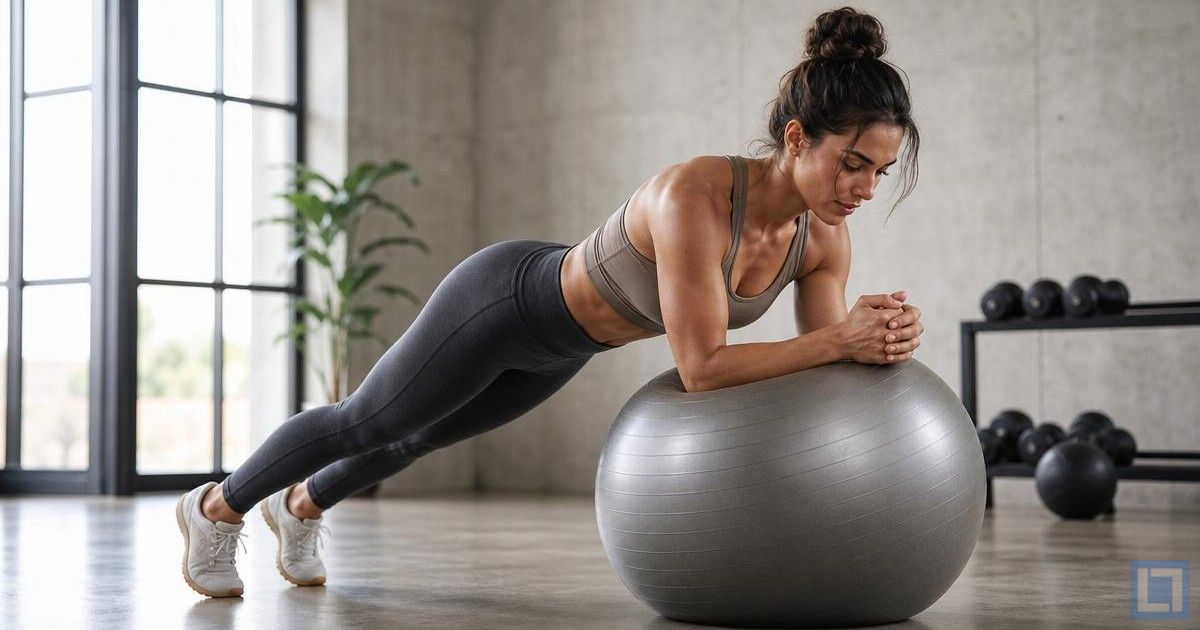
Stability ball training (using exercise balls, Swiss balls, or stability balls) produces real strength and stability development through unstable surface loading that engages the deep core stabilizers more thoroughly than fixed-equipment training. The format works because the ball requires constant micro-adjustments to maintain position throughout every exercise, which engages the transverse abdominis, multifidus, and other deep core muscles that traditional training often misses. The combination produces strong functional core development, improved balance and proprioception, and unique exercise variations (rollouts, dead bug variations, single-leg squats with rear foot on ball) that fixed equipment cannot replicate.
Below are ten effective stability ball exercises that cover advanced core work (rollout, dead bug variation), unilateral lower-body work (single-leg squat), upper-body strength work (bench dip on ball, exercise ball dip), chest engagement (ball hug), unique balance exercises (seated ballerina), posterior-chain work (band reverse hyper, prone leg raise), and recovery (chest stretch). Together they form a complete stability ball training program that fits any setting. A 30 to 45-minute session pulled from this list produces strong core, balance, and stability stimulus across multiple body areas.
Stability Ball Rollout
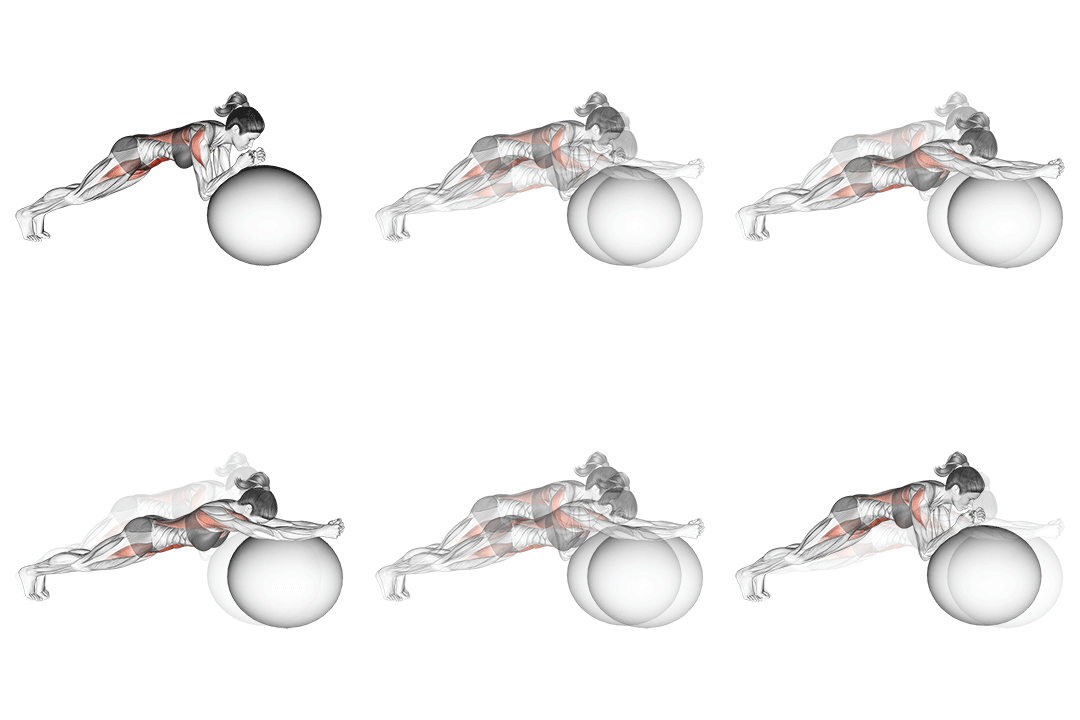
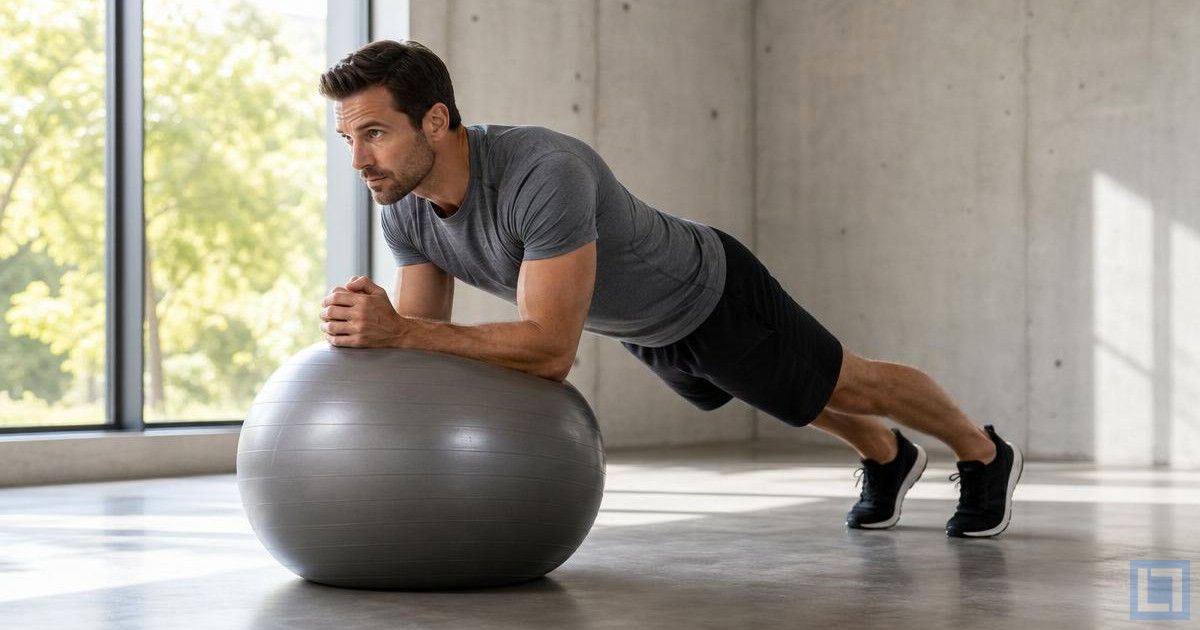
The Stability Ball Rollout kneels on the floor with the forearms on a stability ball and rolls the ball forward by extending the arms while keeping the body in a straight line. The pattern produces extreme abdominal demand through anti-extension loading similar to ab wheel rollouts.
For stability ball training, the rollout is one of the most demanding core exercises that exists. The pattern hits the entire core through extreme anti-extension loading. Run it for 3 sets of 6 to 10 reps as primary stability ball core work.
Kneel on the floor with the forearms on a stability ball, body in a straight line. Roll the ball forward by extending the arms overhead while maintaining the straight body line. Lower the chest toward the floor at the end position. Pull back to the start by contracting the abs hard.
Bench Dip on Stability Ball

The Bench Dip on Stability Ball performs bench dips with feet elevated on a stability ball. The unstable foot position adds significant core stability demand to the standard bench dip motion.
For stability ball training that includes upper-body work, the bench dip on stability ball produces stronger combined tricep and core loading than standard bench dips. The unstable foot position creates additional stabilization demand. Run it for 3 sets of 8 to 12 reps as combined tricep and stability work.
Position a stability ball 3 to 4 feet from a bench. Sit on the bench with hands gripping the edge beside the hips. Place the heels on the stability ball with legs extended. Lower the body by bending the elbows. Press back to lockout while maintaining ball stability with the feet.
Stability Ball Single Leg Squat
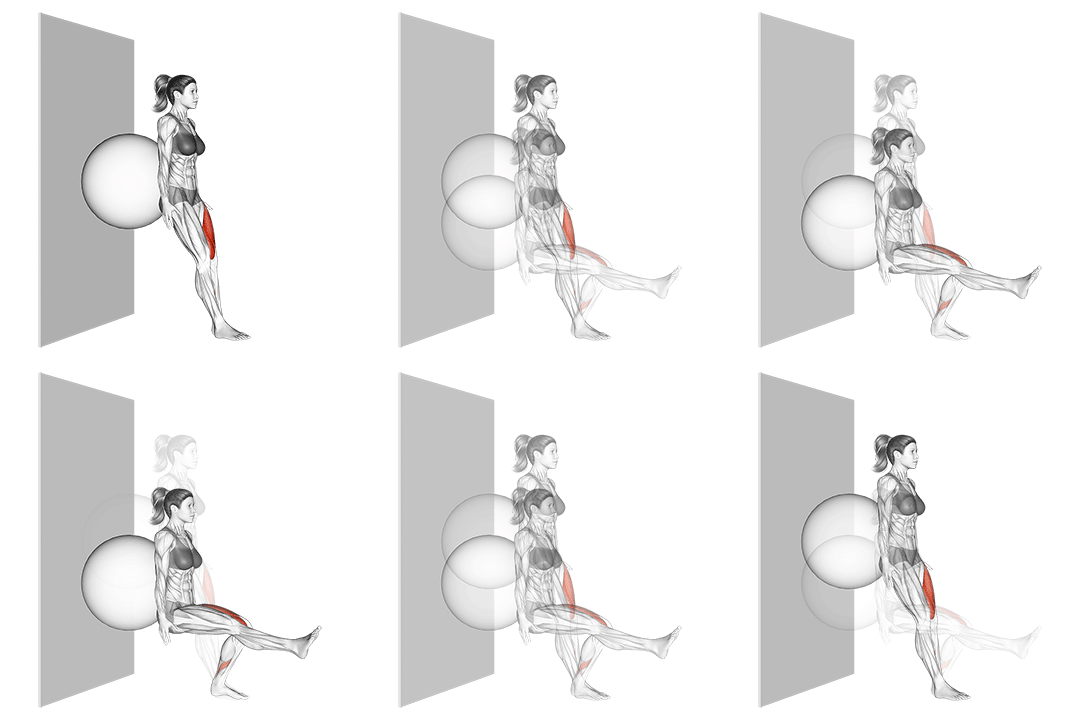
The Stability Ball Single Leg Squat performs single-leg squats with the rear foot resting on a stability ball behind the body, similar to a Bulgarian split squat with the rear foot on an unstable surface. The pattern produces strong unilateral leg loading along with significant balance demand.
For stability ball training that includes unilateral leg work, the single leg squat produces strong combined unilateral strength and balance loading. The unstable rear-foot position challenges balance significantly. Run it for 3 sets of 8 to 10 reps per leg as unilateral lower-body work.
Place the top of one foot on a stability ball positioned 2 to 3 feet behind the body. Stand tall with most weight on the front leg. Lower into a single-leg squat by bending the front knee. Drive through the front foot to push back to standing while maintaining ball stability with the rear foot. Switch sides between sets.
Dead Bug With Stability Ball

The Dead Bug With Stability Ball performs the dead bug pattern while squeezing a stability ball between one hand and the opposite knee, then alternates the squeeze pattern with each rep. The added stability ball creates additional core engagement.
For stability ball training that includes anti-extension work, the dead bug variation produces stronger anti-extension loading than the bodyweight version. The pattern hits the deep core stabilizers through the contralateral squeeze. Run it for 3 sets of 8 to 10 reps per side as anti-extension stability ball work.
Lie flat on the back with knees bent at 90 degrees. Hold a stability ball between one hand and the opposite knee, squeezing the ball. Slowly extend the free arm overhead and the free leg out toward the floor. Return to the squeeze position. Switch sides on each rep.
Resistance Band Reverse Hyper with Stability Ball on Flat Bench

The Resistance Band Reverse Hyper with Stability Ball on Flat Bench lies face-down on a flat bench with the hips at the edge and a stability ball squeezed between the legs, then performs reverse hyperextensions with band resistance. The pattern produces strong lower back, glute, and hamstring loading.
For stability ball training that includes posterior-chain work, the band reverse hyper with stability ball produces strong combined lower back, glute, and hamstring loading. The pattern works as advanced posterior-chain finishing work. Run it for 3 sets of 10 to 12 reps as advanced posterior-chain stability ball work.
Lie face-down on a flat bench with the hips at the edge and legs hanging off. Squeeze a stability ball between the lower legs. Anchor a resistance band around the ball and the bench legs for added resistance. Lift the legs up to horizontal by contracting the glutes and lower back. Lower under control.
Exercise Ball Hug

The Exercise Ball Hug stands tall holding a stability ball at chest level with both arms wrapped around the ball, then squeezes the arms together against the ball to engage the chest muscles. The pattern produces isometric chest loading through pure adduction.
For stability ball training that includes chest work, the ball hug produces strong inner-chest loading through isometric adduction. The pattern works particularly well as a warm-up or finisher exercise. Run it for 3 sets of 30 to 45-second holds as chest squeeze work.
Stand tall holding a stability ball at chest level with both arms wrapped around the ball. Squeeze the arms together hard against the ball to engage the chest muscles. Hold the squeeze isometrically while breathing normally. Maintain tension throughout the hold.
Seated Ballerina
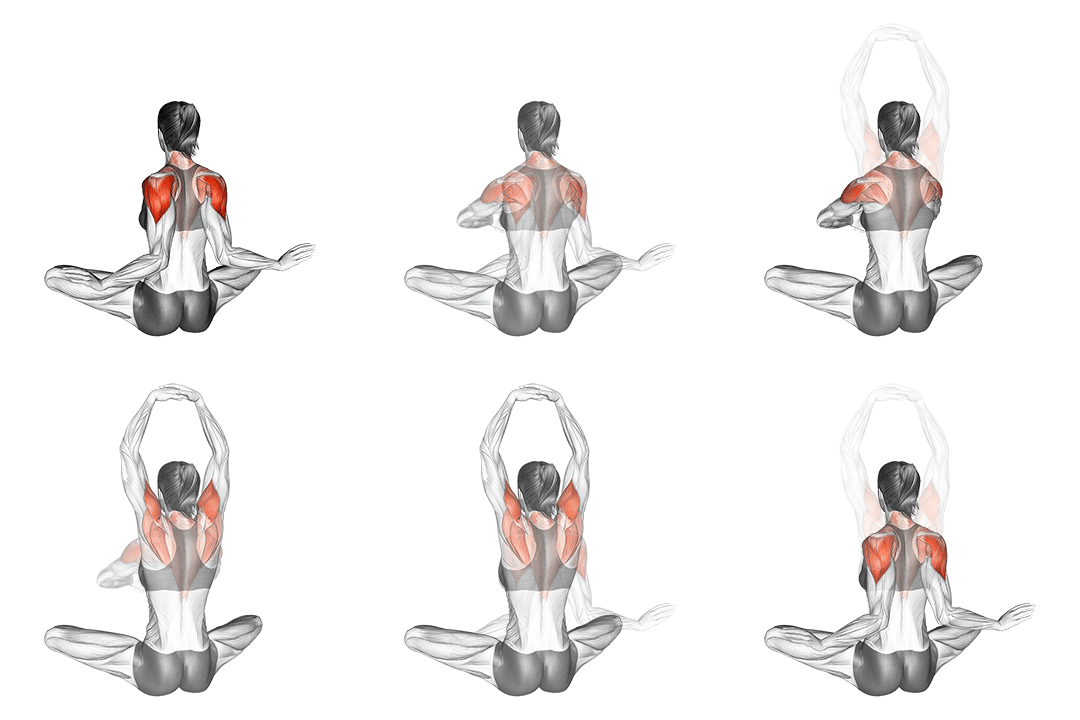
The Seated Ballerina sits on a stability ball with feet planted and performs lateral leg lifts (extending one leg out to the side) while maintaining ball balance. The pattern produces unilateral hip work alongside seated balance demand.
For stability ball training that includes hip and balance work, the seated ballerina produces unique loading through the combination of unstable seated position and unilateral hip motion. Run it for 3 sets of 10 to 12 reps per side as combined hip and balance work.
Sit on a stability ball with feet planted shoulder-width and hands at the sides for balance. Extend one leg out to the side while maintaining ball balance with the other foot. Hold briefly at the extended position. Return to start. Repeat with the opposite leg or alternate sides on each rep.
Exercise Ball Dip
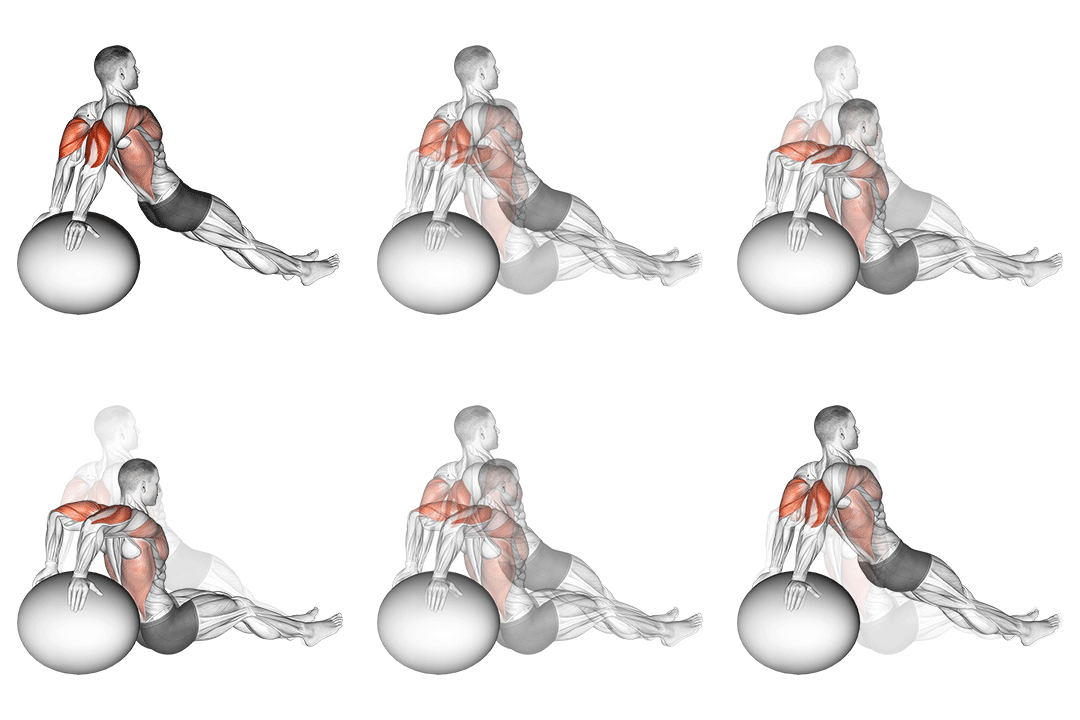
The Exercise Ball Dip performs dips with the hands on a stability ball instead of fixed bench or bars. The unstable hand position significantly increases shoulder stability demand and tricep engagement throughout the dip motion.
For stability ball training that includes upper-body strength work, the exercise ball dip produces stronger shoulder stability and tricep loading than standard bench dips. The unstable hand position adds significant stability challenge. Run it for 3 sets of 6 to 10 reps as advanced stability ball upper-body work.
Place hands on the top of a stability ball with body in a partial dip starting position (legs extended forward, hips off the ball). Lower the body by bending the elbows while maintaining ball stability with the hands. Press back to lockout. The unstable ball requires constant stabilization throughout.
Chest Stretch with Exercise Ball

The Chest Stretch with Exercise Ball lies face-up over a stability ball with the upper back arched over the ball and arms extended overhead. The supported back-arch position produces deep chest and shoulder stretch that is hard to achieve without equipment.
For stability ball training that includes recovery and mobility work, the chest stretch produces deep chest and shoulder mobility that complements pressing-focused training. The supported position allows deeper stretch than floor variations. Run it for 2 to 3 sets of 30 to 60-second holds as recovery work.
Lie face-up over a stability ball with the middle of the back resting on the ball. Allow the body to drape over the ball with the head tilted back and arms extended overhead toward the floor. Relax into the stretch and let gravity pull the chest open. Hold while breathing deeply.
Exercise Ball Prone Leg Raise

The Exercise Ball Prone Leg Raise lies face-down over a stability ball with the hips on the ball and lifts the legs alternately or together while keeping the body in a straight line. The pattern produces strong lower back and glute loading.
For stability ball training that includes posterior-chain work, the prone leg raise produces strong glute and lower back loading. The supported ball position allows comfortable lower back work for lifters who find traditional hyperextensions uncomfortable. Run it for 3 sets of 10 to 12 reps as accessible posterior-chain work.
Lie face-down over a stability ball with the hips on the ball and hands on the floor for support. Lift the legs alternately or together by contracting the glutes and lower back, raising them to roughly horizontal. Squeeze the glutes at the top. Lower under control.
How To Program These Workouts
A productive stability ball session pulls six to eight exercises from the list above. A balanced session includes one advanced core exercise (rollout or dead bug variation), one unilateral lower-body exercise (single-leg squat), one upper-body exercise (exercise ball dip or bench dip on ball), one balance exercise (seated ballerina), one posterior-chain exercise (band reverse hyper or prone leg raise), and one recovery or mobility exercise (chest stretch). Run rollouts for 3 sets of 6 to 10 reps; unilateral and bilateral exercises for 3 sets of 8 to 12 reps; balance and recovery work for 2 to 3 sets of 30 to 60 seconds.
Train stability ball sessions 1 to 3 times per week as dedicated sessions or integrated into broader training. The unstable loading produces moderate fatigue alongside strong nervous system demand, which limits how often the format can be trained at high intensity. Most successful programs include 1 to 2 dedicated stability ball sessions per week alongside broader strength training. The format also works well for rehabilitation, recovery work, and as warm-up or accessory work attached to traditional strength training.
For broader core programming, see our best at home core workouts and how to get a stronger core. For balance-focused training, see our best foam roller exercises.
Final Thoughts
The best stability ball workouts deliver real strength, balance, and core stability development through unstable surface training that fixed equipment cannot match. The combination of advanced core work, unilateral lower-body exercises, upper-body strength work, balance training, and posterior-chain loading covers a wide range of training functions and produces broader functional development than single-modality training alone. For lifters who want serious core training, want to add stability work to existing programs, or are recovering from injury and need lower-impact strength training, stability ball training is one of the most versatile options available.
Stay focused on the body line throughout every rep. The most common stability ball training mistake is allowing the hips to sag or the ball to drift during exercises (which reduces the actual stability stimulus and increases injury risk). The fix: maintain strict body position on every rep with active core bracing throughout the entire range of motion. Quality reps with strict form produce stronger development than higher-rep counts with deteriorating position. The unstable loading produces results specifically because of the constant stabilization demand; respecting that pattern through proper execution drives the unique benefits.
Frequently Asked Questions
Are stability balls effective for training?
Yes for specific training goals. Stability balls produce strong core stabilizer engagement, balance development, and unique exercise variations that fixed equipment cannot match. Most lifters who add stability ball work to their programs see measurable improvements in core stability and balance within 4 to 8 weeks. The format works particularly well for combined strength and stability training, rehabilitation, and accessory work to traditional strength training.
What size stability ball should I get?
Most lifters need 55 to 65 cm balls based on height. Lifters under 5’4 typically use 55 cm balls; 5’4 to 5’10 use 65 cm balls; over 5’10 use 75 cm balls. The right size allows the lifter to sit on the ball with knees bent at roughly 90 degrees and feet flat on the floor. Burst-resistant balls (rated to 1,000+ pounds) are safer than standard balls for training applications.
How often should I use a stability ball?
One to three times per week works for most lifters. The format produces moderate fatigue alongside significant nervous system demand, which limits how often it can be trained at high intensity. Most successful programs include 1 to 2 dedicated stability ball sessions per week alongside broader strength training. The format also works as accessory or warm-up work attached to traditional sessions for additional frequency at lower intensity.
Can I replace a chair with a stability ball?
Marginally. Sitting on a stability ball as a desk chair produces minimal training benefit because the body adapts to the position quickly and stops engaging the core actively. Most successful stability ball training uses the ball for active exercises rather than passive sitting. Lifters wanting core engagement during work hours do better with active microbreaks (standing, stretching, walking) than with stability ball desk chairs.
Stability ball or BOSU ball for training?
Different equipment serves different goals. Stability balls produce stronger core engagement and allow more exercises (rollouts, dead bug variations, prone leg raises). BOSU balls produce stronger balance demand on standing exercises (squats, lunges, balance work). Most successful programs include both: stability balls for core and supine work, BOSU balls for standing balance training. Lifters with limited equipment can build effective programs with either alone.