Building maximum strength through dedicated strength training requires understanding the principles that produce strength development (strength is driven primarily by mechanical tension produced by heavy progressive loading, neural adaptations from heavy training that improve motor unit recruitment and coordination, muscular hypertrophy that supports strength capacity, technical mastery of compound lifts, and the integration of these factors over consistent training time produces maximum strength) and the training principles that develop strength specifically: heavy compound lifts as the foundation (squats, deadlifts, bench press, overhead press, rows) for the heaviest possible compound loading, lower-rep training (3 to 6 reps for primary work) for strength-focused stimulus, progressive overload over time (gradually increasing weights), adequate rest periods (3 to 5 minutes between heavy sets) for full recovery, proper periodization across training blocks, technical mastery of the lifts, and complementary work for weak points. Most lifters who want maximum strength benefit from training each major lift 1 to 2 times per week with appropriate intensity and volume distribution.
Below are ten of the most effective exercises for strength development, covering the foundational compound lifts (barbell squat, barbell deadlift, barbell bench press, barbell seated overhead press, barbell bent over row, pull-up), key variations (barbell front squat, barbell Romanian deadlift), unilateral work (dumbbell Bulgarian split squat), and integrated stability (farmers walk). Together they form a complete strength program covering all major movement patterns. A 60 to 90-minute session pulled from this list, performed 3 to 4 times per week, produces strong strength development for any lifter focused on building maximum strength. Combined with progressive overload, proper periodization, technical mastery, adequate recovery, and consistent training over months and years, these exercises form the foundation of effective strength training – the same foundation used by powerlifters, strongman competitors, weightlifters, and general lifters seeking maximum strength.
Barbell Squat

The Barbell Squat performs back squats. The compound pattern is foundational for strength training.
For strength development, the back squat is foundational. Run it for 4 to 5 sets of 3 to 5 reps as primary lower-body strength work with progressive overload.
Set up a barbell on a rack at upper back height. Position the bar across the upper back. Step back with feet shoulder-width. Squat down by bending the knees and hips. Lower until the thighs are parallel to the floor. Drive back up through the heels. The pattern is foundational for strength – heavy back squats produce the heaviest possible compound lower-body loading, training quads, glutes, hamstrings, and core simultaneously through the most loaded human movement pattern. Most lifters with the most impressive overall strength have built it on consistent heavy back squat training. The compound nature plus heavy loading produces the foundational strength stimulus.
Barbell Deadlift

The Barbell Deadlift performs barbell deadlifts. The pattern produces extreme compound posterior chain strength.
For strength development, the deadlift produces extreme compound posterior chain loading. Run it for 3 to 4 sets of 3 to 5 reps as primary posterior chain strength work.
Stand with feet hip-width with a barbell on the floor over the mid-foot. Hinge at the hips and bend the knees to grip the bar. Drive through the heels while extending the hips and knees to lift the bar from the floor. Stand fully tall at the top. Lower under control. The pattern produces extreme compound loading on the entire posterior chain – the deadlift trains hamstrings, glutes, erector spinae, lats, and traps simultaneously through the heaviest possible pulling pattern. Most lifters with the most impressive overall strength have built substantial deadlift capacity. Combined with squats, deadlifts produce complete lower-body and posterior chain strength.
Barbell Bench Press

The Barbell Bench Press performs flat bench press. The pattern is foundational for upper-body strength.
For strength development, the bench press produces foundational upper-body pressing strength. Run it for 4 to 5 sets of 3 to 5 reps as primary chest/triceps strength work.
Lie on a flat bench with the eyes directly under the barbell. Grip the bar with hands wider than shoulder-width. Unrack the bar and position it over the chest. Lower the bar to the chest by bending the elbows. Press the bar back up by extending the arms. The pattern is foundational for upper-body strength – heavy bench press produces extreme compound chest, anterior delt, and tricep loading through the heaviest possible upper-body pressing pattern. Most lifters with the most impressive upper-body strength have built it on consistent heavy bench press training. The compound nature trains multiple muscle groups while producing foundational pressing strength.
Barbell Seated Overhead Press

The Barbell Seated Overhead Press performs strict overhead press. The pattern produces foundational shoulder strength.
For strength development, the overhead press produces foundational shoulder strength. Run it for 4 sets of 4 to 6 reps as primary shoulder strength work.
Sit on a bench with the back firmly against an upright pad. Grip a barbell slightly wider than shoulder-width with overhand grip. Unrack the bar to shoulder height. Press the bar straight overhead by extending the arms. Lower under control. The pattern produces foundational compound shoulder loading – heavy overhead pressing produces substantial loading on the anterior delts, medial delts, and triceps through the heaviest possible vertical pressing pattern. Critical for complete strength development because compound vertical pressing complements horizontal pressing (bench press) for balanced upper-body strength.
Barbell Bent Over Row

The Barbell Bent Over Row performs barbell rows. The pattern produces compound back strength.
For strength development, the bent-over row produces foundational back strength. Run it for 4 sets of 5 to 8 reps as primary horizontal back strength work.
Stand with feet hip-width holding a barbell at the front of the thighs with overhand grip. Hinge forward at the hips with a flat back so the torso is at about 45 degrees. Pull the bar to the lower chest by retracting the shoulder blades and pulling the elbows back. The lats, rhomboids, mid traps, and rear delts work hard. Squeeze the shoulder blades hard at peak. Lower under control. The pattern produces compound back loading – heavy rowing produces foundational strength stimulus across the back muscles (lats, rhomboids, mid traps, rear delts) through the heaviest possible horizontal pulling pattern. Critical for strength because the back is one of the largest muscle groups requiring substantial strength training.
Barbell Romanian Deadlift

The Barbell Romanian Deadlift performs Romanian deadlifts. The hip-hinge pattern produces extreme posterior chain strength.
For strength development, the RDL produces extreme posterior chain loading through hip-hinge. Run it for 3 to 4 sets of 5 to 8 reps as posterior chain strength.
Stand with feet hip-width holding a barbell at the front of the thighs. Hinge at the hips by sending them backward while keeping the back flat and legs nearly straight. Lower the barbell along the legs until the hamstrings stretch deeply. Drive back to standing by extending the hips. The pattern produces extreme hamstring and glute loading – the RDL specifically trains the hamstrings through deep stretch and the glutes through hip extension. Critical for strength development because regular deadlifts emphasize lockout work while RDLs emphasize the stretched portion that produces complete hip extension strength.
Pull Up

The Pull Up performs bodyweight pull-ups. The pattern produces vertical pulling strength.
For strength development, pull-ups (weighted as needed) produce foundational vertical pulling strength. Run it for 4 sets of 5 to 8 reps as primary vertical pulling strength work.
Hang from a pull-up bar with hands shoulder-width apart and palms facing away. Pull the body up by retracting the shoulder blades and pulling the elbows down toward the ribs until the chin reaches over the bar. Lower under control to full hang. The pattern produces compound vertical pulling – heavy pull-ups (weighted for advanced lifters) build foundational lat and back strength complementing the horizontal rowing. Combined with rows, pull-ups produce complete back strength. Most lifters with impressive back strength can perform multiple weighted pull-ups in addition to heavy rowing.
Barbell Front Squat

The Barbell Front Squat performs front-rack squats. The pattern produces variation squat strength.
For strength development, front squats provide squat variation work emphasizing the quads. Run it for 3 sets of 4 to 6 reps as squat variation work.
Set up a barbell on a rack at upper chest height. Position the bar across the front of the shoulders with elbows high. Step back with feet shoulder-width. Squat down by bending the knees and hips while keeping the torso upright. Lower until the thighs are parallel to the floor. Drive back up through the heels. The pattern produces variation squat loading – the front-rack position emphasizes the quads more than back squats, requires upright torso position, and demands more core strength than back squats. Excellent variation alongside back squats for complete leg strength development.
Dumbbell Bulgarian Split Squat
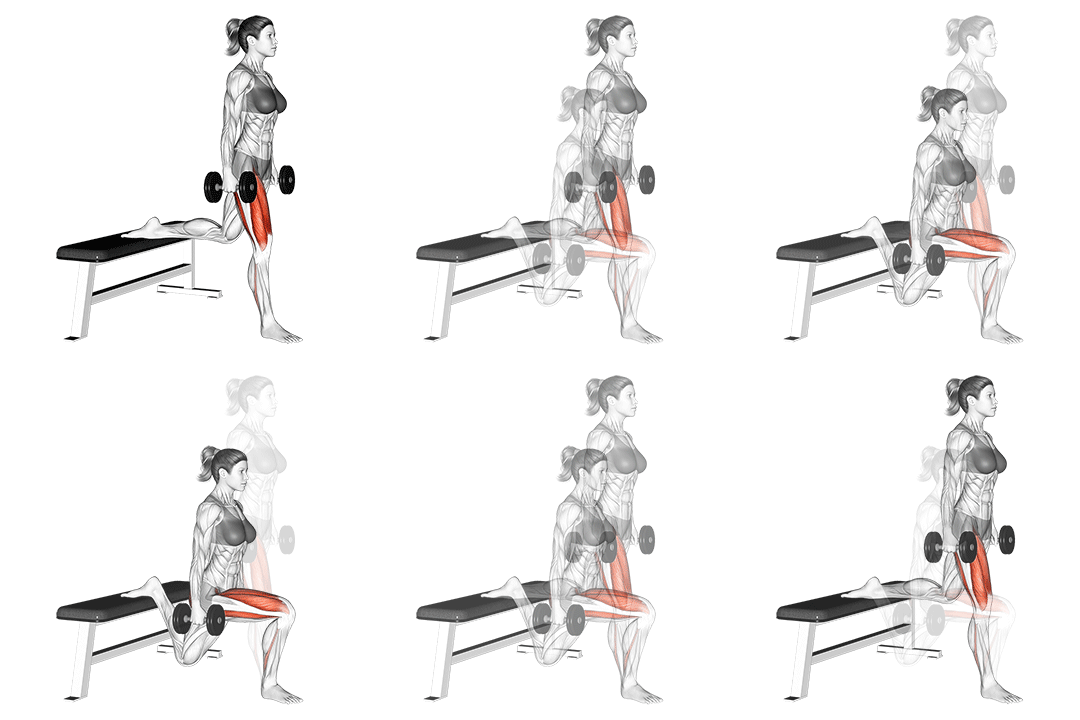
The Dumbbell Bulgarian Split Squat performs Bulgarian split squats. The unilateral pattern develops strength addressing asymmetries.
For strength development, Bulgarian split squats produce direct unilateral leg strength. Run it for 3 sets of 6 to 10 reps per leg as unilateral strength work.
Stand 2 to 3 feet in front of a bench. Place the top of the rear foot on the bench behind. Hold dumbbells in each hand at the sides. Squat down by bending the front knee deeply. Lower until the front thigh is parallel to the floor. Drive back up through the front heel. The pattern hits each leg individually with full loading – critical for complete strength development because unilateral training addresses left/right asymmetries common with bilateral-only training. Combined with bilateral squat and deadlift work, Bulgarian split squats produce balanced leg strength.
Farmers Walk
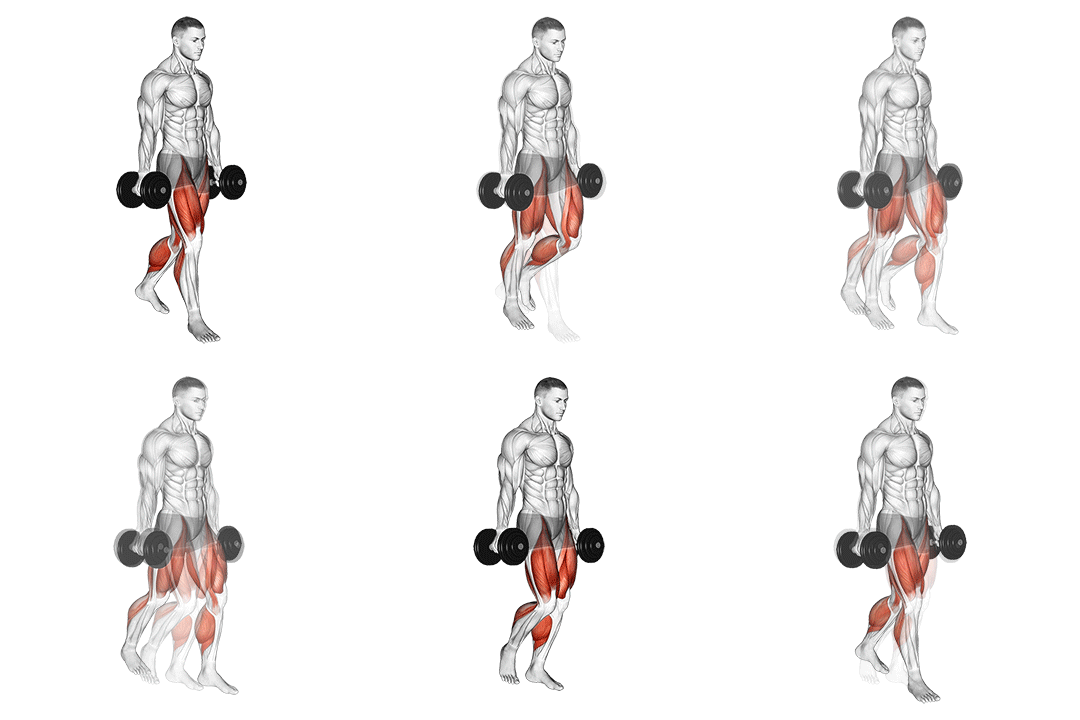
The Farmers Walk performs loaded carries. The pattern produces grip and core strength.
For strength development, farmers walks build grip strength and integrated stability. Run it for 3 to 4 sets of 30 to 45-second heavy carries as grip and core strength work.
Stand holding heavy weights (dumbbells, kettlebells, or trap bar) in each hand at the sides. Walk forward with controlled steps, maintaining tall posture and tight core. Continue for the working interval. The grip, core, traps, and posterior chain all work hard isometrically. The pattern produces excellent grip strength and integrated core stability – critical for complete strength development because grip strength supports all heavy lifting and core stability supports compound lift performance. Combined with the compound lifts, farmers walks build the integrated capacity that supports impressive overall strength.
How To Program These Workouts
Productive strength programming structures these exercises across multiple sessions per week. Common splits include: 1) Upper/Lower (4-day): upper days include bench press, overhead press, rows, pull-ups; lower days include squat, deadlift, RDL, Bulgarian split squat. 2) Push/Pull/Legs (3 to 6 days): push includes bench press, overhead press; pull includes deadlift, rows, pull-ups; legs include squat, front squat, RDL, Bulgarian split squat. 3) Powerlifting structure (3 to 4 days): primary squat day, primary bench day, primary deadlift day, accessory day. Run primary compound work for 4 to 5 sets of 3 to 5 reps with heavy loads (80 to 90% of 1RM range), with 3 to 5 minutes rest between sets. Variation work (front squats, RDLs) for 3 to 4 sets of 4 to 6 reps. Accessory work (Bulgarian split squats, farmers walks) for 3 sets of 6 to 10 reps.
Train strength 3 to 4 times per week with proper periodization. Most successful strength programs structure work as: 1) primary lift days hitting each major lift 1 to 2 times per week, 2) progressive overload over time (gradually adding weight to compound lifts), 3) periodization across training blocks (volume blocks, intensity blocks, peaking blocks), 4) deload weeks every 4 to 6 weeks for recovery, 5) adequate rest periods (3 to 5 minutes between heavy sets) for full recovery, 6) proper nutrition (adequate calories and protein for strength development), 7) adequate sleep and recovery. Combined with consistent training over months and years, dedicated strength training produces measurable strength improvements. Beginners often see substantial strength gains in the first 6 to 12 months; intermediate and advanced lifters see slower but continued progression with proper programming.
For broader programming, see our how to build a bigger squat and how to build a bigger deadlift. For specific work, see our how to build a bigger bench press.
Final Thoughts
The best workouts for strength deliver real strength development through training that targets the foundational principles of strength: heavy compound lifts for the heaviest possible loading, lower-rep training for strength-focused stimulus, progressive overload over time, adequate rest periods for full recovery, proper periodization, technical mastery of the lifts, and complementary work for weak points. The combination of squats, deadlifts, bench press, overhead press, rows, pull-ups, front squats, RDLs, Bulgarian split squats, and farmers walks covers every major movement pattern with the most efficient compound exercises possible and produces broader strength, muscle, and athletic development than partial training would suggest. Most lifters who consistently apply these principles see measurable strength improvements within 12 to 16 weeks – including heavier compound lifts, addressed weak points, technical improvements, and the integrated strength that defines impressive lifters. For lifters seeking maximum strength, dedicated comprehensive strength training is one of the most effective interventions available.
Stay focused on progressive overload as the priority for strength progression. The most common mistake lifters make in strength training is training without progressive overload (using the same weights without progressing) – which produces strength maintenance rather than continued improvement. The fix: prioritize progressive overload through one of these methods – 1) adding weight to the bar (most fundamental), 2) adding reps at the same weight, 3) adding sets, 4) improving technique/range of motion. Combined with adequate volume, proper periodization, technical mastery, adequate rest, and consistent training over time, progressive overload produces the strength that maintenance training never achieves. Strength is built through the integration of progressive overload plus volume plus technique plus periodization plus consistency over time.
Frequently Asked Questions
How can I get stronger?
Heavy compound lifts plus progressive overload plus proper periodization. Heavy compound lifts (squats, deadlifts, bench press, overhead press, rows) produce foundational strength stimulus across multiple movement patterns. Progressive overload (gradually adding weight) drives continued strength improvement. Proper periodization (volume blocks, intensity blocks, peaking) supports long-term progression. Combined with technical mastery, adequate rest periods (3 to 5 minutes between heavy sets), proper nutrition, and consistent training, these form the foundation of strength development.
What’s the best rep range for strength?
3 to 6 reps for primary strength work. Research consistently shows strength develops best with lower-rep work (3 to 6 reps) at heavy loads (80 to 90%+ of 1RM). Most successful strength programs use: 1 to 3 reps for peak strength work (advanced lifters), 3 to 5 reps for primary strength work (most common), 4 to 6 reps for accessory compound work. Combined with progressive overload and proper periodization, training in lower-rep ranges produces maximum strength development. Higher-rep work (8 to 15+) emphasizes hypertrophy over strength.
How often should I train for strength?
3 to 4 sessions per week with each major lift hit 1 to 2 times per week. Research consistently shows training each major lift 1 to 2 times per week with appropriate volume produces strong strength development. Most successful programs structure work as: 1) Upper/Lower (4-day): hitting each major lift category 2 times per week, 2) Push/Pull/Legs (3 to 6 days), 3) Powerlifting structure (3 to 4 days): primary squat, bench, deadlift, accessory. Combined with progressive overload, periodization, and adequate recovery, these produce measurable strength gains.
How long does it take to get stronger?
12 to 16 weeks for measurable improvement, ongoing for substantial development. Beginners often see substantial strength gains in the first 6 to 12 months (sometimes called ‘newbie gains’). Intermediate lifters typically gain 5 to 15% per year on major lifts. Advanced lifters typically gain 1 to 5% per year and require precise programming for continued progression. Substantial strength development requires years of consistent training plus proper programming. Most lifters who consistently apply strength principles see measurable improvements within 12 to 16 weeks.
Should I train heavy or light for strength?
Heavy – strength specifically develops with heavy loads. Strength specifically develops with heavy loads (80 to 90%+ of 1RM range) and lower reps (3 to 6 reps for primary work). Light loads (under 70% of 1RM) produce minimal strength stimulus. Most successful strength programs include a mix of: heavy primary work (3 to 5 reps at 80 to 90% of 1RM), moderate accessory work (4 to 8 reps at 70 to 80% of 1RM), and occasional peak strength work (1 to 3 reps at 90%+ of 1RM for advanced lifters). Combined with progressive overload and periodization, heavy training produces strength.