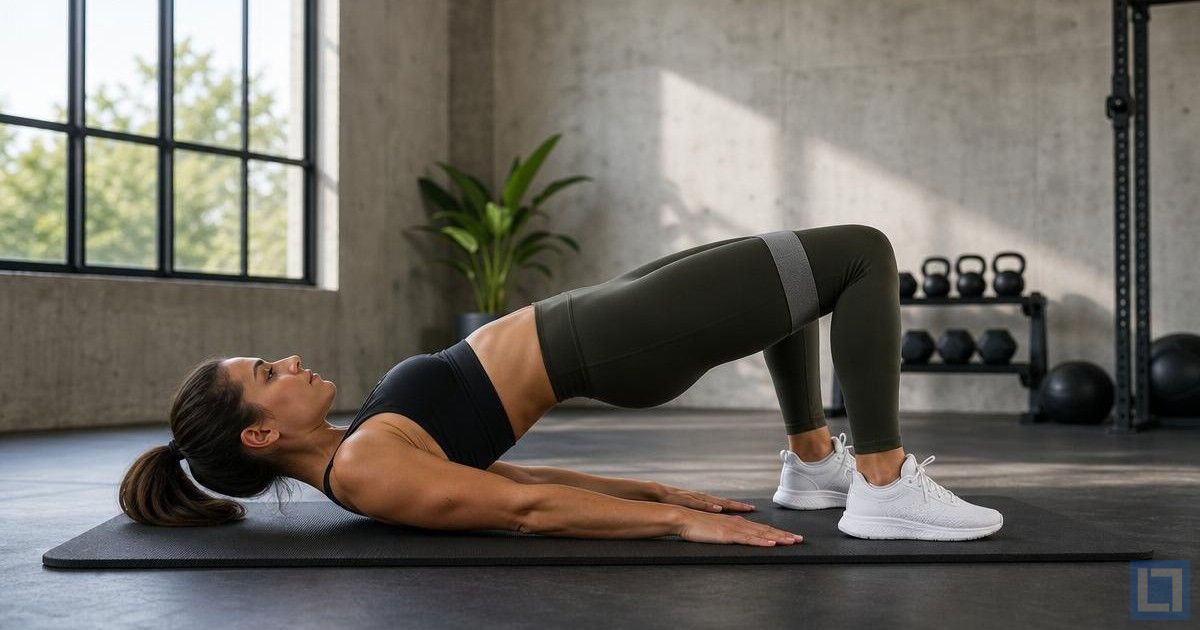
Resistance band glute training produces real glute development through a unique combination of accommodating resistance (which loads the glutes most heavily at the contracted position where they generate the most force) and constant tension throughout the entire range of motion. The combination produces particularly strong glute activation per rep because the band tension is heaviest exactly where the glutes contract hardest. Bands also work well for the glute medius (the side glute that produces hip stability and the upper-glute shape) because the band can be looped around the thighs to add resistance to abduction patterns that bodyweight training cannot effectively load.
Below are ten effective resistance band glute exercises that cover bilateral compound work (band squat, band glute bridge, band elevated glute bridge), unilateral exercises (standing balance glute kickback, band lunge, band split squat), glute medius training (clam, side plank glute raise, side walk squat), and posterior-chain work (45-degree hyperextension). Together they form a complete resistance band glute training program that fits in any setting. A 30 to 45-minute session pulled from this list produces strong glute stimulus across every major glute function.
Resistance Band Elevated Glute Bridge

The Resistance Band Elevated Glute Bridge places a band around the thighs and performs a glute bridge with the feet elevated on a bench or step. The combination of band tension and elevated feet produces extreme glute loading at the contracted position.
For resistance band glute training, the elevated glute bridge is one of the most demanding band exercises that exists. The pattern hits the glutes at the contracted position with maximum tension. Run it for 3 to 4 sets of 12 to 15 reps as primary glute work in any band session.
Place a resistance band around the thighs above the knees. Lie on the back with feet elevated on a bench or step. Drive the hips up by squeezing the glutes hard, while simultaneously pressing the knees out against the band. Hold briefly at the top. Lower under control.
Resistance Band Glute Bridge
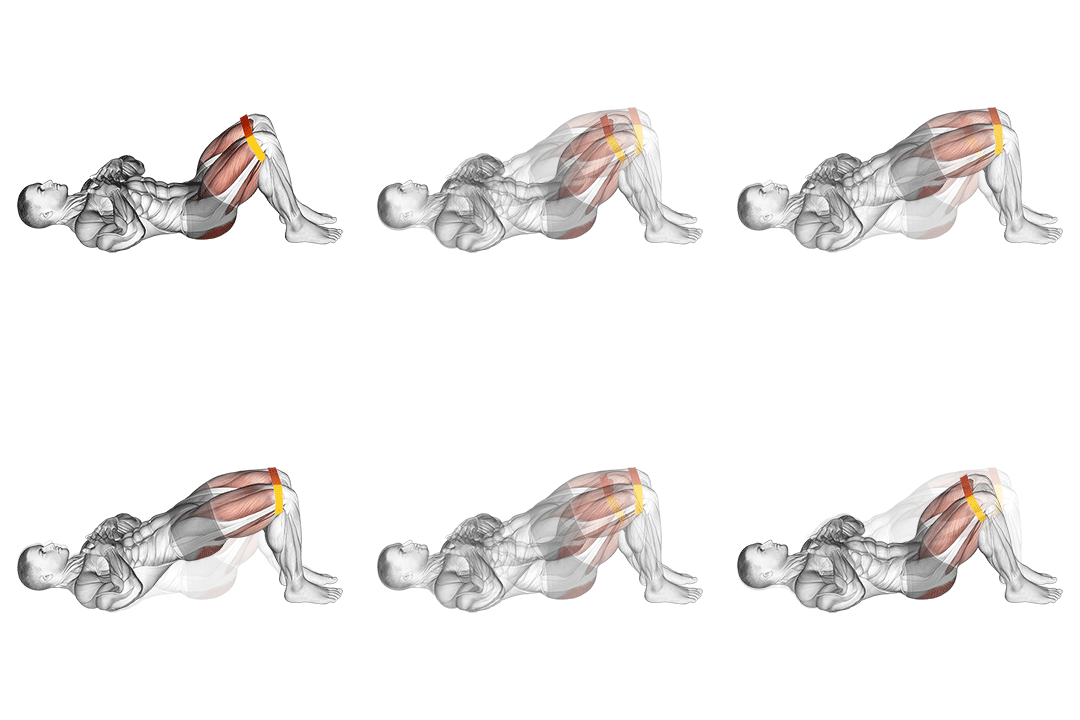
The Resistance Band Glute Bridge places a band around the thighs and performs a standard glute bridge motion. The band tension forces the glutes to work harder against the outward knee pressure throughout the rep.
For foundational resistance band glute training, the standard glute bridge with band is the cornerstone exercise. The pattern hits both hip extension (driving the hips up) and hip abduction (pressing knees out against the band) simultaneously. Run it for 3 to 4 sets of 15 to 20 reps as primary glute activation work.
Place a resistance band around the thighs above the knees. Lie flat on the back with knees bent and feet planted. Drive the hips up by squeezing the glutes hard, while pressing the knees out against the band. Hold briefly at the top. Lower under control.
Resistance Band Standing Balance Glute Kickback

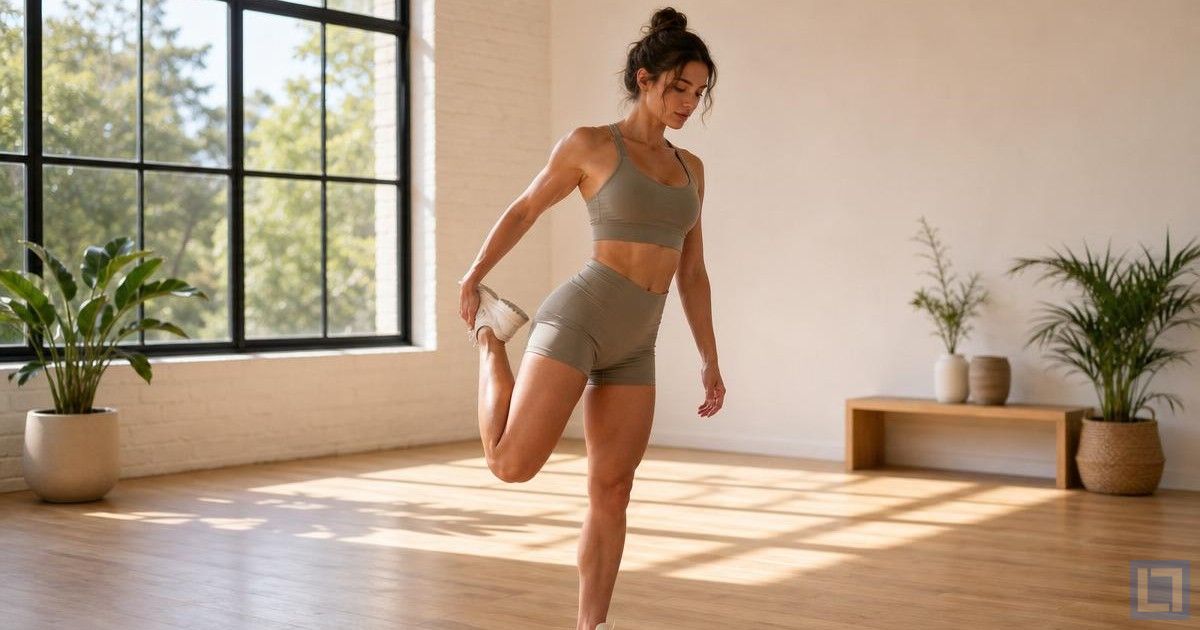
The Resistance Band Standing Balance Glute Kickback anchors a band at floor level with one end around the ankle and kicks the leg back into a glute extension while balancing on the standing leg. The pattern produces strong unilateral glute work along with balance demand.
For unilateral resistance band glute training, the standing balance glute kickback produces strong single-leg glute loading. The pattern translates well to athletic balance positions. Run it for 3 sets of 12 to 15 reps per leg as unilateral glute work.
Anchor a resistance band at floor level. Place the band around one ankle. Stand facing away from the anchor. Balance on the opposite leg. Kick the band leg back into a glute extension by squeezing the glute hard. Return under control. Switch sides between sets.
Resistance Band Side Plank Glute Raise

The Resistance Band Side Plank Glute Raise sets up in a side plank position with a band around the thighs and lifts the top leg against the band tension. The combination of side plank and leg lift produces strong oblique and glute medius work.
For glute medius training (the often-undertrained side of the glutes), the side plank glute raise with band is one of the most direct exercises that exists. The pattern hits the glute medius which produces hip stability and the upper-glute shape. Run it for 3 sets of 10 to 12 reps per side.
Set up in a side plank position with feet stacked. Place a resistance band around the thighs above the knees. Maintain the side plank while lifting the top leg up against the band tension. Lower under control. Complete all reps on one side before switching.
Resistance Band Lunge
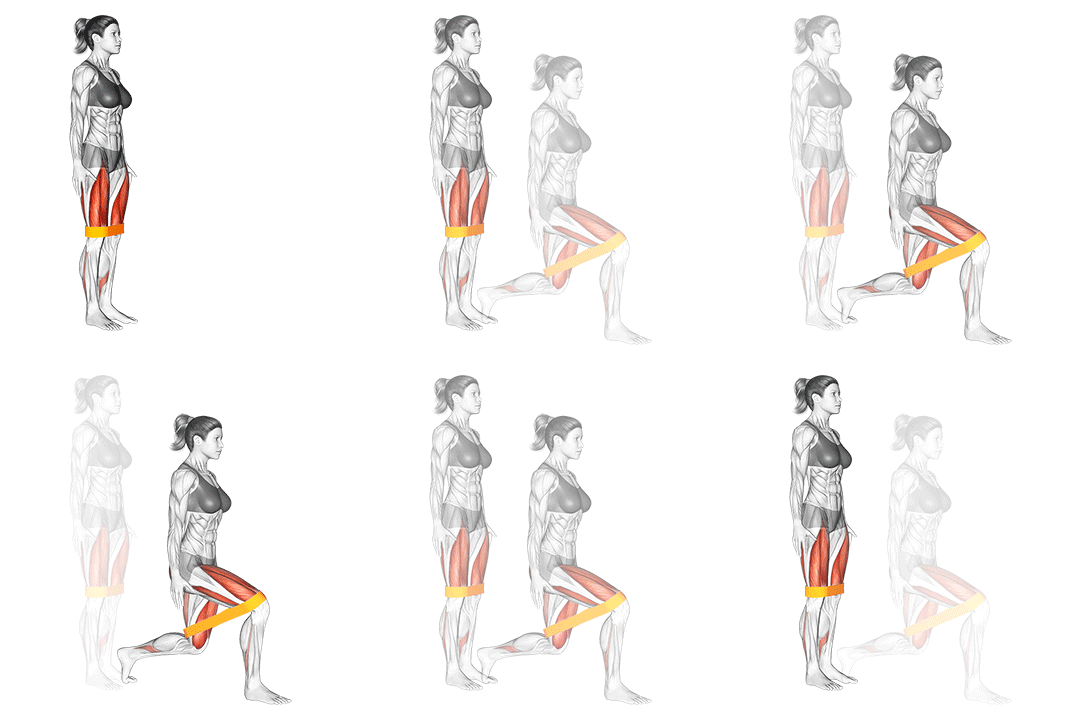
The Resistance Band Lunge stands on a band and holds the band ends at the shoulders, then performs a forward or backward lunge against the band tension. The accommodating resistance increases as the lunge depth increases.
For resistance band glute training that includes unilateral work, the band lunge produces strong unilateral leg loading with the accommodating resistance pattern. Run it for 3 sets of 8 to 10 reps per leg as unilateral band glute work.
Stand on a resistance band with both feet. Hold the band ends at the shoulders. Step forward into a long lunge stance, lowering the back knee toward the floor while bending the front knee against the band tension. Drive through the front foot to step back to standing. Alternate sides.
Resistance Band Clam

The Resistance Band Clam lies on the side with knees bent and a band around the thighs, then opens the top knee like a clamshell against the band tension. The pattern isolates the glute medius and hip rotators directly.
For glute medius isolation, the band clam is one of the most direct exercises that exists. The pattern hits the glute medius and external rotators that produce hip stability. Run it for 3 sets of 12 to 15 reps per side as direct glute medius work.
Lie on the side with knees bent at roughly 45 degrees and feet stacked. Place a resistance band around the thighs above the knees. Keep the feet together while opening the top knee against the band tension. Pause briefly at the top. Lower under control. Switch sides between sets.
Resistance Band Squat

The Resistance Band Squat stands on a band and holds the band ends at the shoulders, then performs a squat motion against the band tension. The accommodating resistance pattern is heaviest at the lockout where the glutes contract hardest.
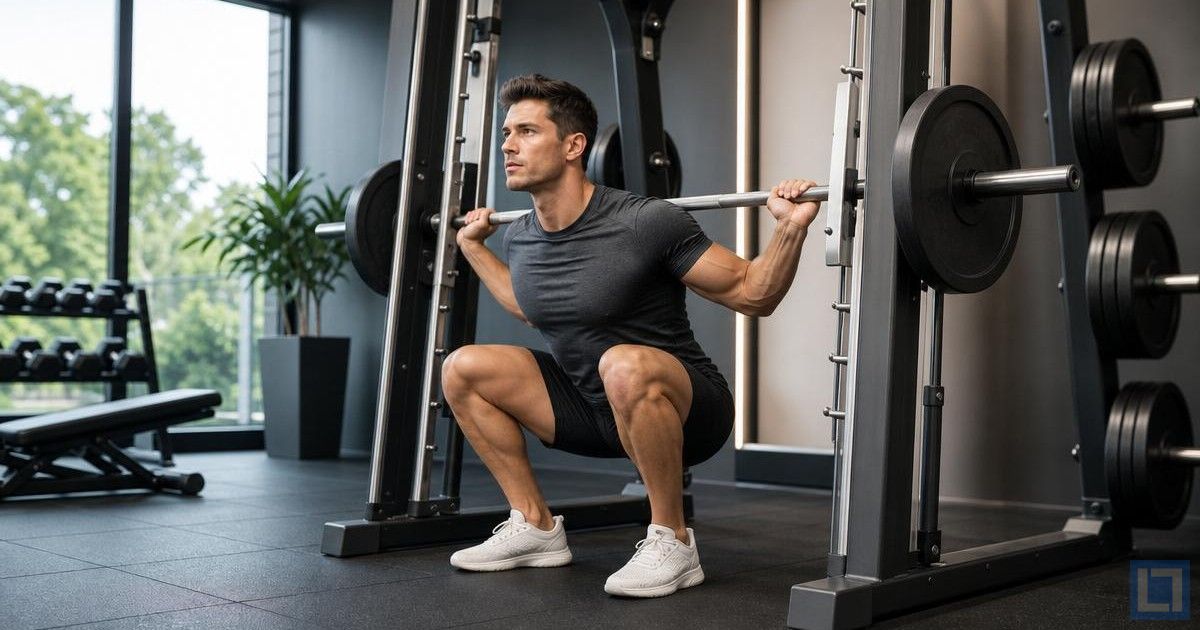
For resistance band glute training, the band squat is the foundational compound exercise. The accommodating resistance increases as the squat reaches the standing position, which produces strong glute loading at the contracted position. Run it for 3 to 4 sets of 12 to 15 reps as primary band squat work.
Stand on a resistance band with both feet at shoulder-width. Hold the band ends at the shoulders. Squat down by sitting the hips back while bending the knees. Drive back to standing through the whole foot, fighting the band tension. Squeeze the glutes hard at the top of every rep.
Resistance Band 45 Degrees Hyperextension

The Resistance Band 45 Degrees Hyperextension performs hyperextensions on a 45-degree hyperextension bench while holding a resistance band that adds loading to the hip extension motion. The pattern targets the glutes and hamstrings heavily.
For resistance band posterior-chain work, the band-loaded 45-degree hyperextension is one of the most direct glute and hamstring exercises that exists. The accommodating resistance increases the loading at the contracted position. Run it for 3 sets of 12 to 15 reps as glute and hamstring accessory work.
Set up on a 45-degree hyperextension bench. Anchor a resistance band around the lower body or hold it across the chest. Hinge over at the hips, then drive back up to neutral by squeezing the glutes hard against the band tension. Lower under control to the start.
Resistance Band Side Walk Squat

The Resistance Band Side Walk Squat places a band around the thighs and performs side-stepping while maintaining a quarter-squat position. The pattern produces continuous glute medius loading through the lateral stepping motion.
For dynamic glute medius training, the band side walk produces strong glute medius activation through the continuous lateral stepping pattern. Run it for 3 sets of 30 to 45-second intervals or 10 to 12 steps per direction.
Place a resistance band around the thighs above the knees. Drop into a quarter-squat position with feet shoulder-width. Step laterally one direction, maintaining tension on the band throughout. Step in the same direction multiple times, then return in the opposite direction.
Resistance Band Split Squat

The Resistance Band Split Squat sets up in a split stance with a band looped around the front foot and held at the shoulders, then performs a split squat motion against the band tension. The accommodating resistance is heaviest at the lockout.
For resistance band unilateral glute training, the band split squat produces strong single-leg glute loading with the accommodating resistance pattern. Run it for 3 sets of 8 to 10 reps per leg as unilateral band glute work.
Place a resistance band under the front foot. Hold the band ends at the shoulders. Stand in a split stance with the back foot behind. Drop straight down by bending the front knee. Drive back to the start through the front foot, fighting the band tension. Switch sides between sets.
How To Program These Workouts
A productive resistance band glute session pulls six to eight exercises from the list above. A balanced session includes one bridge variation (band glute bridge or elevated glute bridge), one band squat, one unilateral exercise (band lunge or split squat), one glute medius exercise (band clam or side plank glute raise), one dynamic exercise (band side walk squat), and one accessory (45-degree hyperextension or standing kickback). Run band squats and bridges for 3 to 4 sets of 12 to 20 reps; unilateral work for 3 sets of 8 to 12 reps per leg; glute medius work for 3 sets of 12 to 15 reps per side.
Train resistance band glute sessions 2 to 3 times per week. The accommodating resistance produces moderate joint stress, which allows higher frequency than barbell-heavy glute training. Most lifters do well with 2 to 3 dedicated band glute sessions per week alongside broader lower-body or full-body training. The format also fits naturally as a glute-focused warm-up or finisher attached to other lower-body workouts.
For other glute programming, see our best resistance band glute workouts and best at home glute workouts. For broader band training, see our best resistance band workouts.
Final Thoughts
The best glute workouts with resistance bands deliver real glute development through accommodating resistance that loads the glutes most heavily at the contracted position. The combination of bilateral compounds, unilateral exercises, glute medius work, and posterior-chain training covers every major glute function and produces complete glute development. For lifters who want serious glute training without barbell access, want to add band work to their existing programs, or need effective glute training in any setting, resistance band glute training is one of the most effective options available.
Stay focused on the band tension throughout the rep. The most common resistance band glute training mistake is letting the band slack at the bottom of movements (especially squats and lunges), which kills the loading and reduces the effective stimulus. The fix: maintain constant band tension throughout the entire range of motion, which keeps the glutes loaded continuously. The accommodating resistance pattern is what makes band glute training so effective; respecting that pattern through strict execution produces stronger results than mechanical exercise execution.
Frequently Asked Questions
Are resistance bands good for glute growth?
Yes, very effectively. The accommodating resistance pattern (heaviest at the contracted position) produces strong glute activation because the bands load the glutes most heavily exactly where they generate the most force. Bands also work particularly well for glute medius training (the side glute that produces hip stability) because the band can be looped around the thighs to load abduction patterns that bodyweight cannot effectively load. Most lifters who consistently do band glute work see measurable development within 8 to 12 weeks.
What size bands for glute workouts?
Most beginners need a set ranging from light (10 to 20 pound resistance equivalent) to medium-heavy (30 to 50 pound resistance equivalent). Loop bands work for thigh-around exercises (clams, glute bridges with band); tube bands with handles work for compound exercises (squats, lunges, kickbacks). Most successful band glute setups include 3 to 5 different resistance levels to allow progression and variety.
How often should I do band glute workouts?
Two to three times per week works for most lifters. The accommodating resistance produces moderate joint stress, which allows higher frequency than barbell-heavy glute training. Most successful programs include 2 to 3 dedicated band glute sessions per week alongside broader lower-body or full-body training. The format also fits as a daily glute activation warm-up before other workouts.
Bands or weights for glute growth?
Both work; the choice depends on goals and equipment access. Bands produce strong glute activation with accommodating resistance (heaviest at contracted position) and work particularly well for glute medius training. Heavy weights (barbell hip thrusts, dumbbell glute bridges) allow heavier total loading and produce stronger overall mass development. Most successful glute programs include both: weights for maximum loading, bands for activation and glute medius work.
Can I build glutes with only resistance bands?
Yes for general glute development. The combination of progressive band training (using heavier resistance bands as you get stronger), appropriate volume, and consistent nutrition produces real glute development for years of consistent practice. Advanced lifters chasing maximum glute size eventually benefit from heavy barbell hip thrusts, but consistent band glute training produces measurable development at every level for general aesthetic goals.