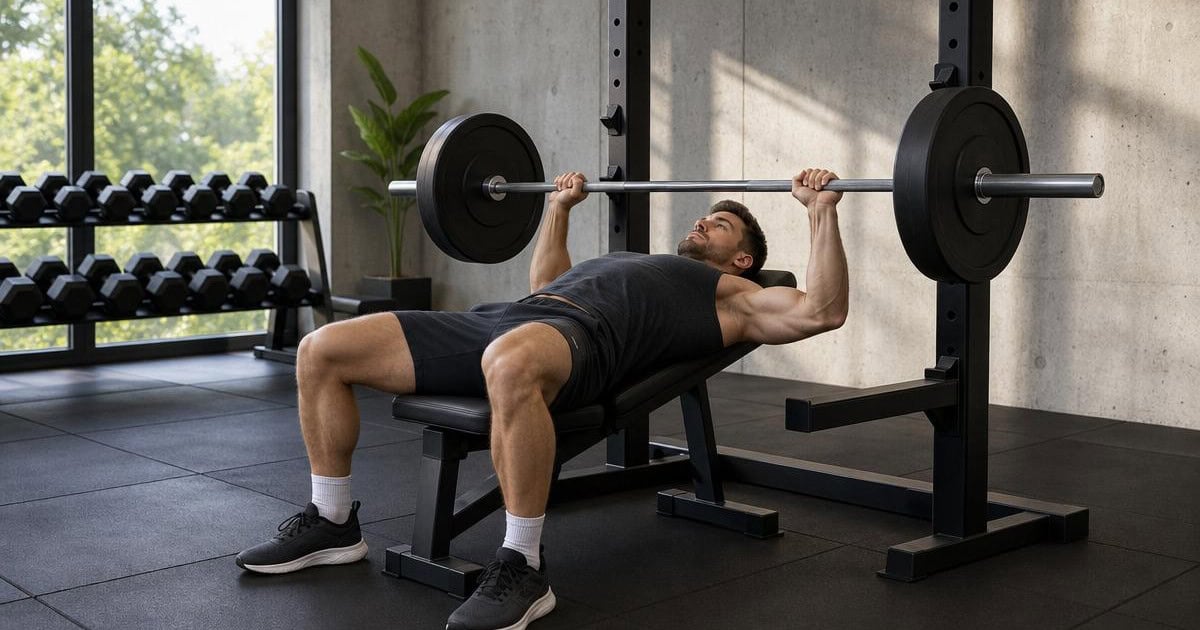
Building a bigger bench press requires understanding both the foundational nature of the lift (heavy bench practice with progressive overload is irreplaceable) and the supporting elements that drive long-term bench progress: bench variations that address specific weaknesses (pause bench for bottom-position strength, close grip for tricep emphasis), upper chest development (incline press), tricep accessory work (close grip bench, dips, overhead press, lying tricep extensions), back work for setup integrity (rows, pull-ups), and dumbbell variations for addressed imbalances. The bench press typically plateaus due to one of: 1) insufficient frequency on the actual lift, 2) tricep weakness limiting lockout, 3) underdeveloped upper chest creating mid-range weakness, 4) weak back/setup creating form breakdown, 5) bottom-position weakness during heavy attempts, 6) left/right imbalances that bilateral barbell pressing hides. The right bench-building program addresses each of these through specific exercises and progressive overload over time.
Below are ten of the most effective exercises for building a bigger bench press, covering the foundational lift (barbell bench press), competition variation (barbell pause bench press), variations and chest accessories (dumbbell incline bench press, dumbbell bench press, barbell close grip bench press), tricep development (triceps dip, dumbbell lying triceps extension), shoulder accessory (barbell seated overhead press), and back work for setup integrity (barbell bent over row, pull-up). Together they form a complete bench-building program. A 60 to 90-minute bench-focused upper-body session pulled from this list, performed 1 to 2 times per week, produces strong bench development for any lifter focused on building a bigger bench press.
Barbell Bench Press

The Barbell Bench Press performs flat bench press. The pattern is the foundational lift you are trying to improve.
For bench press improvement, the bench press IS the lift. The pattern requires consistent heavy practice with progressive overload. Run it for 4 to 6 sets of 3 to 8 reps as primary work.
Lie on a flat bench with the eyes directly under the barbell. Grip the bar with hands wider than shoulder-width. Set up with strong arched back, retracted shoulder blades, and tight body position. Unrack the bar and position it over the chest. Lower the bar to the chest with controlled tempo. Press the bar back up by extending the arms while maintaining tight body position. The pattern is the lift you are trying to improve – direct progressive overload on the bench press is the most effective way to build bench strength. Most successful bench programs include heavy bench work 1 to 2 times per week with periodized programming.
Barbell Pause Bench Press

The Barbell Pause Bench Press performs bench press with a pause at chest. The pattern eliminates stretch reflex and builds bottom-position strength.
For bench press improvement, the pause bench builds the bottom-position strength that breaks through plateaus. Run it for 3 to 4 sets of 1 to 5 reps as primary bench accessory work.
Lie on a flat bench. Grip the bar with bench grip and set up with strong arch and retracted shoulder blades. Unrack the bar and position it over the chest. Lower the bar to the chest with controlled tempo. PAUSE the bar on the chest (no bouncing) for 2 to 3 seconds. Press the bar back up explosively from the dead-stop on the chest. The pattern eliminates the stretch reflex and forces strict pressing strength from the dead-stop position – excellent for breaking through bench press plateaus where lifters fail at the chest of heavy attempts. Pause bench is also the competition movement in powerlifting.
Dumbbell Incline Bench Press

The Dumbbell Incline Bench Press performs incline press with dumbbells. The pattern builds upper chest strength supporting bench press performance.
For bench press improvement, the dumbbell incline press builds upper chest strength that supports flat bench performance. Run it for 3 to 4 sets of 6 to 12 reps as primary chest accessory work.
Set up an incline bench at about 30 to 45 degrees. Lie back on the bench holding dumbbells over the chest with palms facing forward. Lower the dumbbells to chest level by bending the elbows. Press the dumbbells back up by extending the arms. The dumbbells allow greater range of motion than barbell bench. The pattern builds upper chest strength that supports bench press through complete chest development. Many bench plateaus stem from underdeveloped upper chest – dedicated incline work often produces measurable bench improvements within 8 to 12 weeks.
Dumbbell Bench Press

The Dumbbell Bench Press performs flat bench press with dumbbells. The pattern allows greater range of motion and addresses imbalances.
For bench press improvement, the dumbbell bench press allows greater range of motion and addresses left/right imbalances. Run it for 3 to 4 sets of 6 to 12 reps as primary accessory work.
Lie on a flat bench holding dumbbells over the chest with palms facing forward. Lower the dumbbells to chest level by bending the elbows. Press the dumbbells back up by extending the arms. The dumbbells allow for greater range of motion than barbell bench – the dumbbells can come closer together at the top and the chest can stretch more deeply at the bottom. The pattern addresses left/right imbalances common in barbell pressing and adds training volume that supports bench progress. Most bench programs include dumbbell bench as primary accessory work.
Barbell Close Grip Bench Press

The Barbell Close Grip Bench Press performs bench press with a close grip. The pattern is foundational tricep work for bench lockout.
For bench press improvement, the close grip bench produces strong tricep loading critical for bench press lockout. Run it for 3 to 4 sets of 5 to 8 reps as primary tricep accessory work.
Lie on a flat bench with the eyes directly under the barbell. Grip the bar with hands shoulder-width apart (closer than bench grip). Unrack the bar and position it over the chest. Lower the bar to the lower chest by bending the elbows while keeping them relatively close to the sides. Press the bar back up by extending the arms. The triceps work hard through compound pressing. The pattern produces foundational tricep mass and strength critical for bench press lockout – most bench plateaus at lockout stem from tricep weakness, and dedicated close grip bench work often breaks through these plateaus.
Barbell Seated Overhead Press

The Barbell Seated Overhead Press performs strict overhead press. The pattern builds shoulder and tricep strength supporting bench press lockout.
For bench press improvement, the overhead press builds shoulder and tricep strength supporting bench press lockout. Run it for 3 to 4 sets of 5 to 8 reps as primary upper-body accessory work.
Sit on a bench with the back firmly against an upright pad. Grip a barbell slightly wider than shoulder-width with overhand grip. Unrack the bar to shoulder height. Press the bar straight overhead by extending the arms. Lower under control. The pattern builds shoulder and tricep strength that directly supports bench press lockout – the triceps work in both lifts, and strong overhead press capacity correlates with strong bench lockouts. Most successful bench programs include strict overhead press as primary upper-body accessory work.
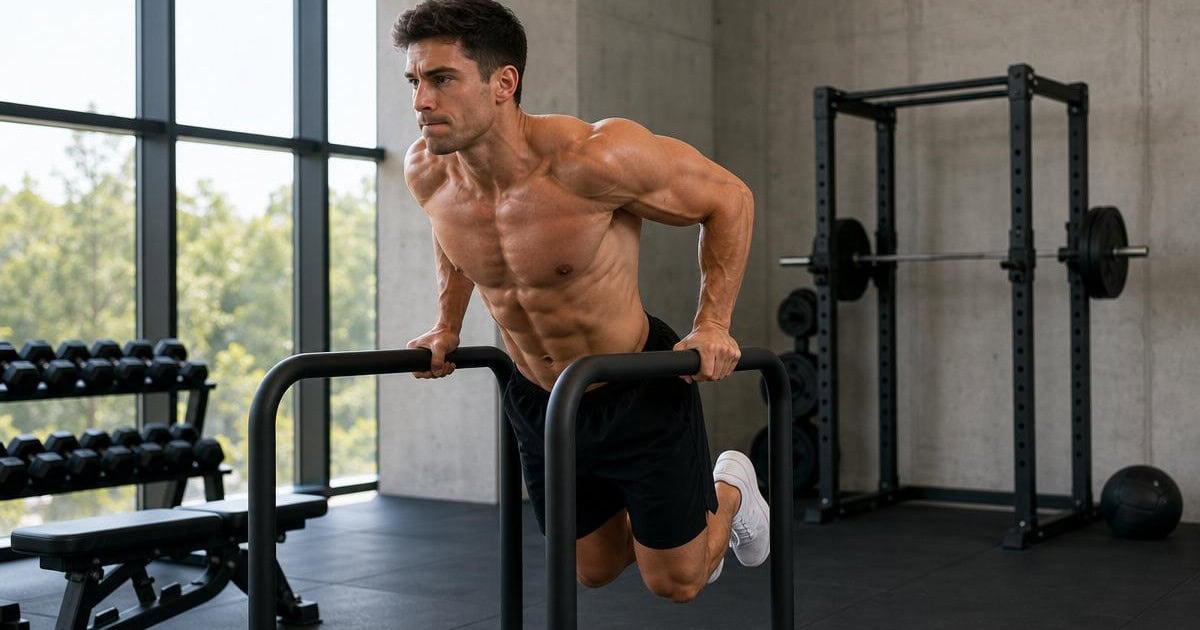
Triceps Dip

The Triceps Dip performs bodyweight dips on parallel bars. The pattern produces compound tricep work supporting bench press performance.
For bench press improvement, dips produce compound tricep work that builds bench press lockout strength. Run it for 3 to 4 sets of 6 to 12 reps as compound tricep work.
Position yourself between parallel bars with the body suspended above. Stay upright (do not lean forward – upright position emphasizes triceps). Lower the body by bending the elbows until the upper arms are roughly parallel to the floor. Press back up by extending the arms. The triceps work hard through compound pressing. The pattern produces compound tricep loading that builds bench press lockout strength. Progress with weighted dips for advanced strength as bodyweight reps become easy. Combined with close grip bench, dips form the foundation of compound tricep development.
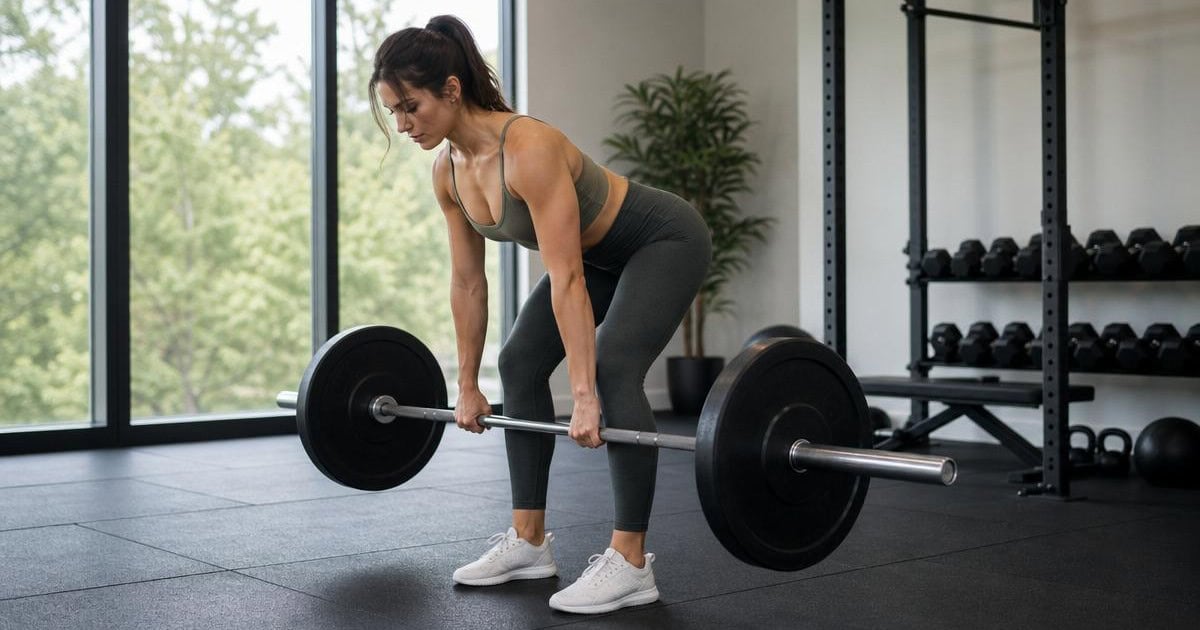
Barbell Bent Over Row

The Barbell Bent Over Row performs barbell rows. The pattern produces strong upper back work supporting bench press setup integrity.
For bench press improvement, the bent-over row builds upper back strength essential for bench press setup arch and integrity. Run it for 4 sets of 6 to 10 reps as bench accessory work.
Stand with feet hip-width holding a barbell at the front of the thighs with overhand grip. Hinge forward at the hips with a flat back so the torso is at about 45 degrees. Pull the bar to the lower chest by retracting the shoulder blades and pulling the elbows back. The lats, rhomboids, traps, and rear delts work hard. Squeeze the shoulder blades hard at peak. Lower under control. The pattern builds the upper back strength critical for bench press performance – strong upper back maintains tight position during heavy benches and supports the proper shoulder blade retraction that drives strong bench setup.
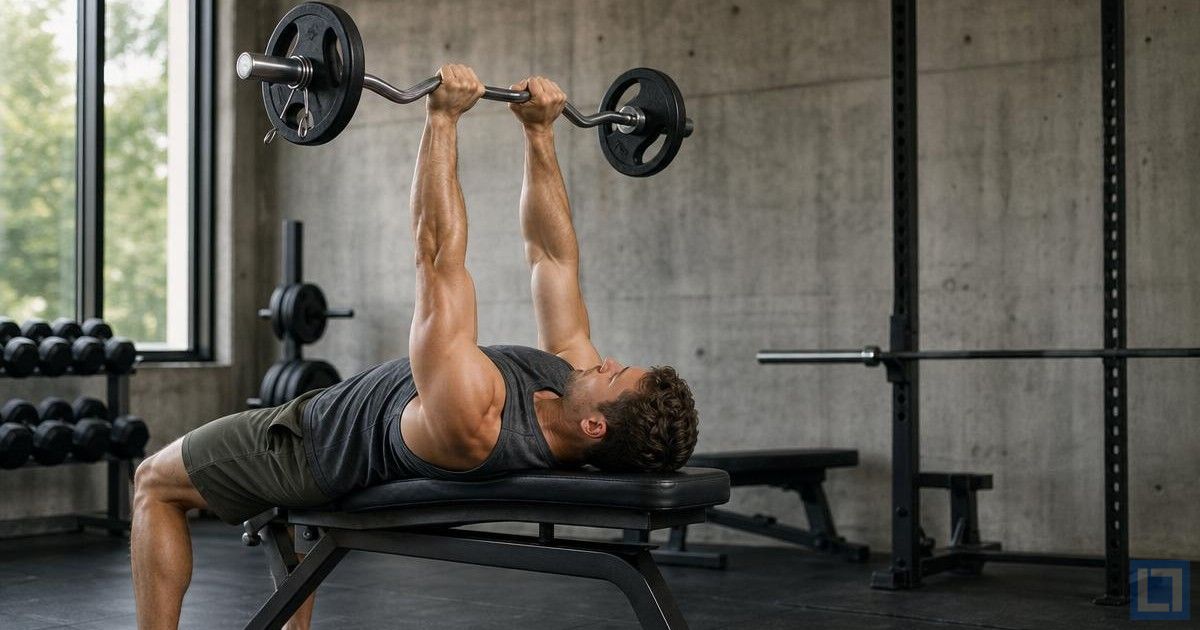
Dumbbell Lying Triceps Extension

The Dumbbell Lying Triceps Extension performs lying tricep extensions. The pattern produces direct tricep isolation supporting bench performance.
For bench press improvement, the lying tricep extension produces direct tricep loading that supports bench press lockout. Run it for 3 sets of 8 to 12 reps as direct tricep isolation.
Lie on a flat bench holding dumbbells over the chest with arms straight and palms facing each other. Lower the dumbbells back toward the head by bending the elbows while keeping the upper arms relatively vertical. The triceps work hard through pure elbow extension. Press the dumbbells back up by extending the elbows. The pattern produces direct tricep loading that supports bench press lockout – dedicated tricep isolation often breaks through bench plateaus where lockout weakness limits maximum attempts. Most successful bench programs include lying tricep extensions as accessory work.
Pull Up

The Pull Up performs bodyweight pull-ups. The pattern builds back strength supporting bench press setup and integrity.
For bench press improvement, pull-ups build the back and lat strength essential for bench press setup and integrity. Run it for 4 sets of 6 to 10 reps as bench accessory work.
Hang from a pull-up bar with hands shoulder-width apart and palms facing away. Pull the body up by retracting the shoulder blades and pulling the elbows down toward the ribs until the chin reaches over the bar. Lower under control to full hang. The pattern builds the lat and back strength foundational for bench press performance – lats stabilize during bench press and support the bar path, and strong back supports the tight setup arch. Most successful bench programs include pull-ups as accessory work that supports both upper-body health and bench press capacity.
How To Program These Workouts
A productive bench-building session pulls 5 to 7 exercises from the list above, organized around heavy bench work plus accessories. A common session: barbell bench press (heavy primary), barbell pause bench press OR dumbbell bench press (variation), barbell close grip bench press (tricep), dumbbell incline bench press (upper chest), dumbbell lying triceps extension (tricep isolation), barbell bent over row (back). For weakness-focused programming: more pause bench if struggling at chest, more close grip and tricep work if struggling at lockout, more incline if mid-range is weak, more dumbbell work if imbalances exist. Run heavy bench press for 4 to 6 sets of 3 to 8 reps with periodized programming, variations for 3 to 4 sets of 3 to 8 reps, accessory work for 3 to 4 sets of 6 to 12 reps. Total session covers 18 to 22 working sets focused on bench development.
Train bench press 1 to 2 times per week. Most successful bench-building programs include 1 to 2 weekly bench sessions – one heavy day focused on competition movement (flat or pause bench) and one volume/variation day focused on accessory work and variations (dumbbell bench, incline, close grip). Schedule heavy bench work with at least 48 hours recovery between bench sessions. Avoid maxing out frequently – planned periodization with strategic peaking produces more progress than constant maximum effort. Most lifters benefit from 12 to 16 week training cycles that progress through intensity phases (hypertrophy, strength, peaking) before retesting one-rep max.
For broader programming, see our best workouts for powerlifting and best chest workouts. For specific work, see our best tricep workouts.
Final Thoughts
Building a bigger bench press requires applying the right training principles consistently over time: heavy bench practice with progressive overload as the foundation, bench variations that address specific weaknesses, upper chest development through inclines, dedicated tricep accessory work for lockout, back work for setup integrity, and dumbbell variations for addressed imbalances. The combination of flat bench, pause bench, dumbbell bench, incline bench, close grip bench, dips, overhead press, lying tricep extensions, rows, and pull-ups covers every supporting element of bench development and produces broader upper-body strength than any single exercise approach. Most lifters who consistently apply these principles see measurable bench improvements within 12 to 16 weeks (typically 15 to 35+ pound gains for intermediate lifters). For lifters who have struggled to break through bench plateaus, the combination of identified weakness work, dedicated tricep volume, and proper periodization typically breaks through the plateau within a single training cycle.
Stay focused on technique mastery and proper setup. The most common mistake lifters make in bench press training is poor setup – including: 1) inconsistent grip width, 2) insufficient shoulder blade retraction, 3) inadequate arch and tightness, 4) lifting feet during the press, 5) inconsistent bar path. The fix: prioritize a tight, consistent setup on every working rep – retracted shoulder blades, strong arch, planted feet, locked grip width. Combined with progressive overload over time and adequate accessory work, proper setup produces the long-term bench progress that defines successful upper-body strength development. Many lifters who plateau on bench discover the issue is setup inconsistency rather than strength deficit.
Frequently Asked Questions
How often should I bench press?
1 to 2 times per week works for most. Most successful bench-building programs include 1 heavy bench session per week as primary work plus 1 additional session including bench variations and accessory work. Some advanced lifters use higher frequency programming (3+ weekly sessions) with carefully managed intensities. Schedule heavy bench work with at least 48 hours recovery between bench sessions. The bench press recovers reasonably quickly compared to lower-body lifts, allowing for higher frequency than squats or deadlifts.
What’s the best accessory for bench press?
Tricep work and bench variations. Close grip bench press builds the heavy tricep loading that supports bench lockout. Dips produce compound tricep work. Lying tricep extensions provide direct isolation. Combined with bench variations (pause bench, incline, dumbbell bench) and upper back work (rows, pull-ups), these form the foundation of bench accessory work. Most lifters who plateau on bench have either tricep weakness limiting lockout or upper chest weakness creating mid-range issues – addressing these specifically produces measurable bench improvements.
Why isn’t my bench press going up?
Most bench plateaus stem from one of these issues: 1) tricep weakness limiting lockout (most common), 2) underdeveloped upper chest creating mid-range weakness, 3) bottom-position weakness during heavy attempts, 4) weak back/setup creating form breakdown, 5) inconsistent setup, 6) insufficient bench frequency. The fix: identify which factor is limiting progress, then address it with specific accessory work plus consistent setup practice. Most bench plateaus break within 8 to 12 weeks of targeted work.
Should I use barbell or dumbbell bench press?
Both – they serve different purposes. Barbell bench is the foundational lift for maximum strength development and competition. Dumbbell bench allows greater range of motion, addresses left/right imbalances, and reduces shoulder strain for some lifters. Most successful bench programs include both – typically barbell bench as primary lift with dumbbell bench as accessory work, or alternating barbell/dumbbell as primary across training cycles. Both belong in serious bench development programs.
How heavy should I bench press?
Periodized weights based on the training cycle. Heavy phases use 80-95%+ of one-rep max for 1 to 5 reps with 3 to 4 sets. Volume phases use 65-80% for 5 to 10 reps. Variations like pause bench use slightly lighter weights (typically 5-10% less than touch-and-go bench) for the same rep ranges. Accessory work uses moderate weights for 6 to 12 reps. Most successful programs follow planned cycles that progress through these intensity zones rather than always training at maximum effort.