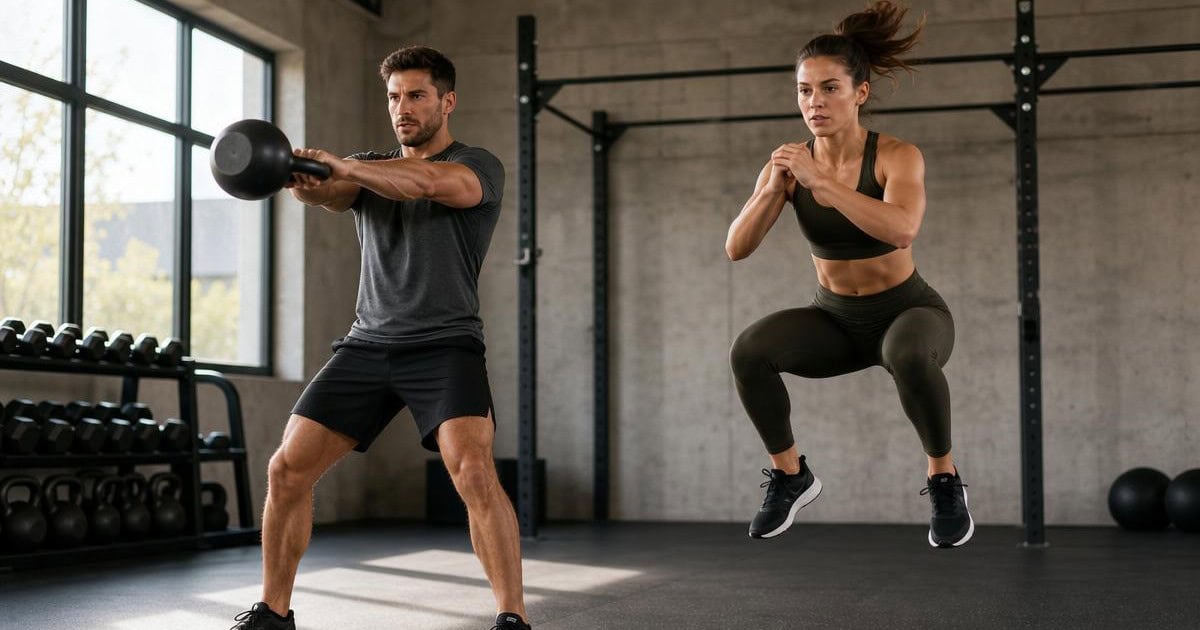
Kettlebell lat training produces real lat development and V-taper width through patterns that load the lats with the unique advantages kettlebells offer: the offset bell weight position produces unique loading through pulling motion, asymmetric loading capacity through unilateral exercises, dynamic patterns like renegade rows that combine pulling with extreme core demand, pullover variations for stretched-position lat work, and combined patterns like single-leg bridge pullovers that integrate lat work with full-body stability. The format works particularly well for lats because the muscle responds to varied angle and grip loading, and kettlebells deliver dedicated loading patterns for compound rowing (bent-over rows, two-arm rows), unilateral work (one-arm rows), pullover variations (stretched-position lats), and combined core/lat work (renegade rows, alternating twist rows). Most lifters who consistently train kettlebell lat work 1 to 2 times per week alongside compound pulling movements (or even alone for kettlebell-only training) see measurable lat development, improved V-taper width, better pulling performance, and stronger overall back and core development within 8 to 12 weeks. The combination of rows, pullovers, and combined core/lat patterns produces broader lat development than equipment-limited training would suggest.
Below are ten effective kettlebell lat exercises that cover bent-over row variations (kettlebell bent over row, kettlebell one arm row, kettlebell two arm row, kettlebell alternating row, kettlebell bent over alternate twist row), pullover patterns (kettlebell bent arm pullover with knees bent, kettlebell pullover 3 month position, kettlebell single leg glute bridge pullover), upper back work (kettlebell rear delt row), and combined core/lat patterns (kettlebell alternating renegade row). Together they form a complete kettlebell lat program. A 30 to 40-minute session pulled from this list, performed 1 to 2 times per week, produces strong lat and back development.
Kettlebell Bent Over Row

The Kettlebell Bent Over Row performs bent-over rows holding two kettlebells. The pattern produces strong combined lat and upper back loading through compound horizontal pulling.
For kettlebell lat training, the bent over row is the foundational compound back exercise. The pattern hits the lats through horizontal pulling. Run it for 4 sets of 8 to 12 reps as primary compound lat mass work in any kettlebell lat session.
Stand with feet hip-width holding two kettlebells at the sides. Hinge forward at the hips with a flat back until the torso is roughly parallel to the floor. Let the kettlebells hang straight down. Pull the kettlebells up toward the lower chest by retracting the shoulder blades and bending the elbows back. Squeeze the lats and upper back hard at the top. Lower under control. The pattern produces strong compound back work with the kettlebells’ offset weight position.
Kettlebell One Arm Row

The Kettlebell One Arm Row performs unilateral rows with a kettlebell while supported on a bench or knee. The pattern produces strong concentrated lat work per side.
For kettlebell lat training, the one arm row is the foundational unilateral lat exercise. The pattern hits each lat individually with concentration. Run it for 3 to 4 sets of 8 to 12 reps per side as unilateral lat mass work.
Place one knee and one hand on a bench for support (or hinge forward with one hand on a bench). Hold a kettlebell in the free hand with the arm extended toward the floor. Pull the kettlebell up toward the hip by retracting the shoulder blade and bending the elbow back. The kettlebell tracks close to the body. Squeeze the lat hard at the top. Lower under control. Switch sides between sets. The unilateral position allows concentrated work and addresses imbalances.
Kettlebell Two Arm Row

The Kettlebell Two Arm Row performs bilateral rows with kettlebells held in both hands. The pattern produces strong combined lat loading through bilateral pulling.
For kettlebell lat training, the two arm row produces strong bilateral lat work. The pattern hits both lats simultaneously. Run it for 3 sets of 8 to 12 reps as bilateral lat mass work.
Stand with feet hip-width holding two kettlebells. Hinge forward at the hips with a flat back. Let the kettlebells hang. Pull both kettlebells up simultaneously toward the lower ribs by retracting the shoulder blades and bending the elbows back together. Squeeze the lats and upper back hard at the top. Lower under control. The bilateral pattern allows heavier total loading than unilateral variations and produces strong lat work.
Kettlebell Alternating Row

The Kettlebell Alternating Row performs bent-over rows alternating one arm at a time. The pattern produces dynamic combined lat and core anti-rotation loading.
For kettlebell lat training, the alternating row produces dynamic lat work plus core anti-rotation. The alternating pattern challenges core stability. Run it for 3 sets of 10 to 12 reps per arm as combined lat and core work.
Stand with feet hip-width holding two kettlebells. Hinge forward at the hips with a flat back. Pull one kettlebell up toward the lower rib while the other arm extends down. Lower the rowing arm and pull the other kettlebell up. Continue alternating. The non-rowing arm hanging adds asymmetric loading that demands core anti-rotation. The pattern produces combined lat work and core stability development.
Kettlebell Bent Over Alternate Twist Row

The Kettlebell Bent Over Alternate Twist Row performs alternating rows with a slight twist of the torso during each pull. The pattern produces combined lat and rotational core loading.
For kettlebell lat training, the alternate twist row produces combined lat and rotational core work. The twist adds rotational engagement. Run it for 3 sets of 10 to 12 reps per arm as combined lat and core work.
Stand with feet hip-width holding two kettlebells. Hinge forward at the hips with a flat back. Pull one kettlebell up while slightly rotating the torso toward that side (the elbow tracks back and slightly out). Lower and pull the other kettlebell with reverse rotation. The slight twist with each row adds rotational core engagement to the lat work. Continue alternating. The pattern produces combined back and rotational core development.
Kettlebell Bent Arm Pullover with Knees Bent

The Kettlebell Bent Arm Pullover with Knees Bent performs pullover motion with a kettlebell, lying on the floor with knees bent. The pattern produces strong stretched-position lat loading.
For kettlebell lat training, the bent arm pullover produces strong lat stretch work. The pullover motion hits the lats through unique stretched-position loading. Run it for 3 sets of 10 to 12 reps as primary lat stretch work.
Lie face-up on the floor with knees bent and feet planted. Hold a kettlebell with both hands at the chest with elbows bent. Slowly lower the kettlebell behind the head while maintaining the elbow bend. The lats stretch significantly through the pullover motion. Pull the kettlebell back to the chest by engaging the lats and bringing the arms back to the start. Squeeze the lats hard at the top. The pattern produces strong stretched-position lat loading.
Kettlebell Pullover 3 Month Position

The Kettlebell Pullover 3 Month Position performs pullover motion in a baby crunch hip-flexed position. The pattern produces strong combined lat and core loading through the demanding hip-flexed position.
For kettlebell lat training, the pullover in 3 month position produces combined lat and deep core work. The hip-flexed position adds significant core engagement. Run it for 3 sets of 10 to 12 reps as combined lat and core work.
Lie face-up on the floor with hips and knees bent at 90 degrees (feet lifted off the floor in baby/3-month position). Hold a kettlebell with both hands at the chest with elbows bent. Lower the kettlebell behind the head in pullover motion while maintaining the hip-flexed position. The deep core works hard to maintain the position throughout. Pull the kettlebell back to the chest using the lats. The pattern produces extreme combined lat and core work.
Kettlebell Single Leg Glute Bridge Pullover

The Kettlebell Single Leg Glute Bridge Pullover performs pullover motion while holding a single-leg glute bridge. The pattern produces extreme combined lat, glute, and core loading.
For kettlebell lat training, the single leg glute bridge pullover produces extreme combined work. The pattern hits the lats while demanding glute and core stability. Run it for 3 sets of 8 to 10 reps per side as advanced combined work.
Set up in a single-leg glute bridge position (one foot planted, hips lifted, opposite leg extended straight). Hold a kettlebell with both hands at the chest. Lower the kettlebell behind the head in pullover motion while maintaining the single-leg glute bridge throughout. The lats work through the pullover while the glutes and core work hard to maintain the bridge with the leg extended. Switch sides between sets. The pattern produces extreme combined upper and lower body work.
Kettlebell Rear Delt Row

The Kettlebell Rear Delt Row performs high-elbow rows with kettlebells targeting the rear delts and upper lat fibers. The wide elbow path emphasizes upper back and rear delts.
For kettlebell lat training, the rear delt row produces strong combined upper back and rear delt work. The high elbow path emphasizes upper back. Run it for 3 sets of 10 to 12 reps as combined upper back work.
Stand with feet hip-width holding two kettlebells. Hinge forward at the hips with a flat back. Let the kettlebells hang. Pull the kettlebells up toward the chest while pulling the elbows out wide and high (high elbow row). The wide elbow path emphasizes the rear delts and upper lats more than standard rows. Squeeze the upper back and rear delts hard at the top. Lower under control. The pattern produces broader upper back development than standard rows.
Kettlebell Alternating Renegade Row

The Kettlebell Alternating Renegade Row performs alternating rows in a plank position with hands on kettlebells. The pattern produces extreme combined lat, core anti-rotation, and full-body loading.
For kettlebell lat training, the renegade row is one of the most effective combined back and core exercises. The pattern hits the lats while demanding extreme core stability. Run it for 3 sets of 8 to 10 reps per arm as advanced combined work.
Set up in a plank position with hands on two kettlebells (the kettlebells provide stable plank platforms). Maintain a strong plank position throughout. Pull one kettlebell up toward the rib by retracting the shoulder blade and bending the elbow back, while the other hand stays planted. Lower and switch sides. The core works extremely hard to resist rotation as one hand rows while the other supports. The pattern produces extreme combined lat and core work.
How To Program These Workouts
A productive kettlebell lat session pulls 5 to 6 exercises from the list above based on training goals. A common balanced session: kettlebell bent over row (mass), kettlebell one arm row (unilateral), kettlebell bent arm pullover with knees bent (stretch), kettlebell rear delt row (upper back), kettlebell alternating renegade row (combined core/lat). For mass focus: kettlebell bent over row, kettlebell two arm row, kettlebell one arm row, kettlebell bent arm pullover with knees bent. Run row work for 3 to 4 sets of 8 to 12 reps, unilateral row work for 3 sets of 8 to 12 reps per side, pullover work for 3 sets of 10 to 12 reps, and combined core/lat work for 3 sets of 8 to 10 reps per arm. Total session covers 14 to 18 working sets focused on lat development.
Train kettlebell lat work 1 to 2 times per week as part of broader pulling-day or kettlebell programming. The lats recover reasonably quickly but accumulate fatigue from compound pulling work that activates them substantially. Most successful programs include kettlebell lat work either: 1) on a dedicated pull day with kettlebells as primary movements, 2) at the end of a back day after compound free-weight pulls, or 3) integrated into kettlebell complex training with other muscle groups. Keep training time under 35 to 40 minutes per session.
For broader lat programming, see our best lat workouts and how to grow your lats. For specific kettlebell back work, see our best kettlebell back workouts.
Final Thoughts
The best kettlebell lat workouts deliver real lat development and V-taper width through patterns that effectively load the lats with the unique advantages kettlebells offer: offset weight loading, asymmetric variations, pullover stretch work, dynamic combined patterns, and integrated core/lat work through renegade rows. The combination of rows, pullovers, and combined patterns covers every functional pattern of the lats and produces broader development than free-weight-only programs for many lifters. For lifters who train primarily with kettlebells, want to add kettlebell-specific patterns to existing lat programs, want to combine lat training with core and full-body stability work, or want to break through plateaus in back development, dedicated kettlebell lat work is one of the most effective options available.
Stay focused on shoulder blade retraction and proper hinge form. The most common kettlebell lat training mistakes include using arms instead of leading with the lats (which limits lat recruitment) and rounding the back during bent-over rows (which limits lat loading and risks back strain). The fix: initiate every row by retracting the shoulder blades first (think ‘pull with the lats, not the arms’), and maintain a strong neutral spine during all bent-over variations with the hips properly hinged backward. Quality reps with proper lat engagement and form produce stronger lat development than ego-driven heavy weights with poor form.
Frequently Asked Questions
Are kettlebells effective for lats?
Yes very effectively. Kettlebells produce real lat development through bent-over row variations (compound mass), unilateral rows (concentrated work), pullover patterns (stretched-position lats), and combined core/lat work like renegade rows. The kettlebell’s offset weight position produces unique pulling loading. Many lifters build excellent lats through dedicated kettlebell training. Most successful programs include kettlebell work alongside pull-ups and barbell rows when both are accessible.
Are kettlebell rows or barbell rows better for lats?
Both effective; choose based on goals and equipment. Barbell rows allow maximum compound loading and progressive overload to heavy weights, ideal for foundational lat mass. Kettlebell rows allow unilateral focus through one-arm variations, dynamic combined work like renegade rows, and pullover stretched-position work that barbells don’t replicate. Most successful programs include both when accessible. Lifters with kettlebell-only access can build excellent lats through dedicated kettlebell training.
Are renegade rows effective for lats?
Yes very effectively for combined lat and core development. Renegade rows produce strong lat work through unilateral rowing in plank position while demanding extreme core anti-rotation stability. The pattern is one of the most efficient combined back and core exercises that exists. Most successful programs include renegade rows as combined work, typically 8 to 10 reps per arm with controlled tempo. Use only after building solid one-arm row strength and plank stability.
How heavy should kettlebells be for lat work?
Heavy for compound, moderate for combined work. Bent-over rows can use heavy kettlebells (24 to 40+ kg per hand for advanced lifters). One-arm rows use heavy kettlebells (24 to 40+ kg). Pullover variations use moderate kettlebells (16 to 24 kg) due to the position requiring control. Renegade rows use moderate kettlebells (16 to 24 kg) because the plank position demands stability. Most successful programs progressively load all exercises until 8 to 12 reps becomes challenging on compound work.
How often should I train lats with kettlebells?
One to two kettlebell lat sessions per week works for most lifters. The lats recover reasonably quickly but accumulate fatigue from compound pulling work that activates them substantially. Most successful programs include kettlebell lat work either on a dedicated pull day, at the end of a back day, or integrated into kettlebell complex training. Three or more weekly heavy lat sessions typically produces overuse issues, particularly given the high core involvement in many kettlebell lat exercises.