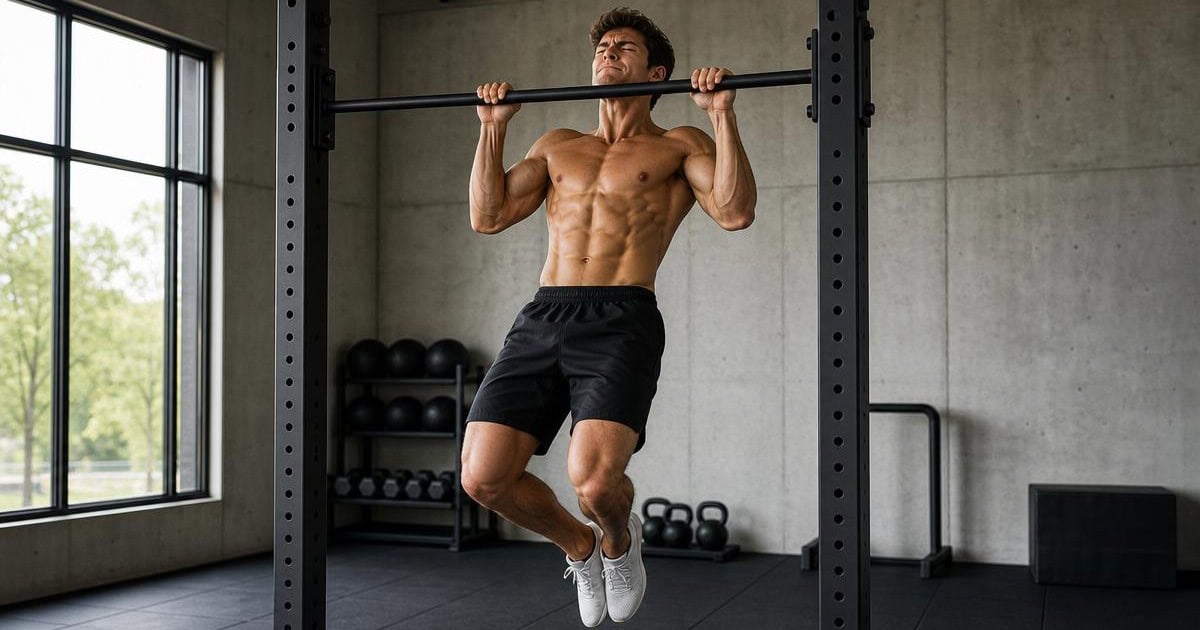
Kettlebell hamstring training produces real hamstring development through patterns that load the hamstrings with the unique advantages kettlebells offer: kettlebell-friendly handles for natural deadlift grip, single-bell options for asymmetric loading that builds core strength along with hamstring work, and explosive ballistic patterns like swings that produce both strength and conditioning benefits in one exercise. The format works particularly well for hamstrings because kettlebells encourage proper hip-hinge mechanics (the bell drives between the legs at the bottom for swings and deadlifts), allow unilateral loading at moderate weights for productive single-leg work, and provide the ballistic explosive loading that swings deliver better than any other equipment. Most lifters who consistently train kettlebell hamstring work 1 to 2 times per week alongside compound lower-body movements see measurable hamstring development, improved hip mobility, better single-leg balance, stronger explosive hip extension capacity, and reduced hamstring injury risk within 8 to 12 weeks. The combination of Romanian deadlifts, single-leg variations, sumo work, and explosive swings produces broader hamstring development than barbell-only programs for many lifters.
Below are ten effective kettlebell hamstring exercises that cover hip-hinge mass loading (kettlebell Romanian deadlift, kettlebell deadlift, kettlebell good morning, kettlebell straight leg deadlift), unilateral strength (kettlebell single leg deadlift, kettlebell one legged deadlift, kettlebell kickstand one leg deadlift), wide-stance variation (kettlebell sumo deadlift), asymmetric loading (kettlebell suitcase deadlift), and explosive power (kettlebell swing). Together they form a complete kettlebell hamstring program that hits every functional pattern of the muscle. A 30 to 40-minute session pulled from this list, performed 1 to 2 times per week, produces strong hamstring development for kettlebell-based or hybrid training programs.
Kettlebell Romanian Deadlift

The Kettlebell Romanian Deadlift performs hip-hinge motion with kettlebells held in front of the thighs, lowering them along the legs while keeping a slight bend in the knees. The pattern is one of the most effective kettlebell hamstring exercises that exists.
For kettlebell hamstring training, the Romanian deadlift is the foundational mass-building exercise. The pattern hits the hamstrings through stretched-position loading with kettlebell-friendly handles. Run it for 4 sets of 8 to 12 reps as primary hamstring mass work in any kettlebell hamstring session.
Stand with feet hip-width holding two kettlebells in front of the thighs (or one held with both hands). Hinge at the hips by sending them backward while keeping the back flat and a slight bend in the knees. Lower the kettlebells along the legs until the hamstrings stretch deeply. Drive back to standing by extending the hips. Maintain neutral spine throughout. The kettlebell handles allow a natural grip position.
Kettlebell Deadlift

The Kettlebell Deadlift performs deadlift motion with a kettlebell placed between the feet, pulling it from the floor to standing. The pattern produces strong combined hamstring, glute, and full posterior chain loading.
For kettlebell hamstring training, the kettlebell deadlift produces strong combined hamstring and posterior chain work. The pattern hits the hamstrings through compound pulling. Run it for 4 sets of 6 to 10 reps as primary mass and strength work.
Stand with feet hip-width with a kettlebell on the floor between the feet. Hinge at the hips and bend the knees to lower the hands and grip the kettlebell handle while keeping the back flat and chest up. Drive through the heels and extend the hips and knees to stand fully tall with the kettlebell at thigh level. Lower under control by hinging back at the hips. The pattern combines hamstring loading with full posterior chain work.
Kettlebell Sumo Deadlift

The Kettlebell Sumo Deadlift performs deadlifts with a wide sumo stance and the kettlebell pulled from between the legs. The wide stance produces stronger glute, adductor, and inner-thigh recruitment combined with hamstring loading.
For kettlebell hamstring training, the sumo deadlift produces combined hamstring, glute, and adductor loading. The wide stance hits the hamstrings through different angles than standard deadlifts. Run it for 3 sets of 8 to 12 reps as combined posterior chain variation work.
Stand with feet wider than shoulder-width and toes pointing slightly out (sumo stance). Place a kettlebell on the floor between the legs. Hinge at the hips and bend the knees to grip the kettlebell with both hands. Drive through the heels to stand fully tall while pulling the kettlebell up between the legs. Lower under control. The wide stance combines hamstring loading with adductor and glute work.
Kettlebell Good Morning

The Kettlebell Good Morning performs hip-hinge motion with a kettlebell held at the chest or behind the head. The pattern produces strong combined hamstring and lower-back loading through pure hip-hinge mechanics.
For kettlebell hamstring training, the good morning produces strong combined hamstring and posterior chain work. The pattern hits the hamstrings through hip-hinge motion. Run it for 3 sets of 8 to 12 reps as combined hamstring and lower-back work.
Stand with feet hip-width holding a kettlebell at the chest with both hands or behind the head at the upper back. Hinge at the hips by sending them backward while keeping the back flat. Lower the torso forward until it approaches parallel to the floor (or as far as flexibility allows with neutral spine). Drive back to standing by extending the hips. Use lighter loads than kettlebell deadlifts because the lever arm is significantly longer.
Kettlebell Straight Leg Deadlift

The Kettlebell Straight Leg Deadlift performs deadlifts with the legs kept nearly straight throughout (minimal knee bend). The pattern produces extreme hamstring stretch loading through the full hip-hinge range.
For kettlebell hamstring training, the straight-leg deadlift produces extreme hamstring stretch loading. The pattern hits the hamstrings through their longest stretched position. Run it for 3 sets of 8 to 10 reps as advanced hamstring stretch work.
Stand with feet hip-width holding a kettlebell with both hands in front of the thighs. With legs nearly straight (minimal knee bend), hinge at the hips by sending them backward. Lower the kettlebell along the legs as far as possible while maintaining a flat back. The hamstrings will stretch significantly more than in Romanian deadlifts due to the straighter legs. Drive back to standing by extending the hips. Use lighter weights than RDLs.
Kettlebell Single Leg Deadlift

The Kettlebell Single Leg Deadlift performs deadlift motion balancing on one leg with a kettlebell held at the side or in front. The pattern produces strong unilateral hamstring loading combined with significant balance demands.
For kettlebell hamstring training, the single-leg deadlift produces strong unilateral hamstring loading. The pattern hits the hamstrings through unilateral hip-hinge motion plus balance work. Run it for 3 sets of 6 to 10 reps per leg as primary unilateral hamstring work.
Stand on one leg holding a kettlebell at the side (in the same-side hand or opposite-side hand for variation), with the other leg extended slightly behind for balance. Hinge at the hip by sending it backward while extending the back leg up behind the body, lowering the torso forward. Drive back to standing by extending the planted hip. Switch legs between sets. The unilateral position produces strong hamstring work plus balance challenge.
Kettlebell One Legged Deadlift
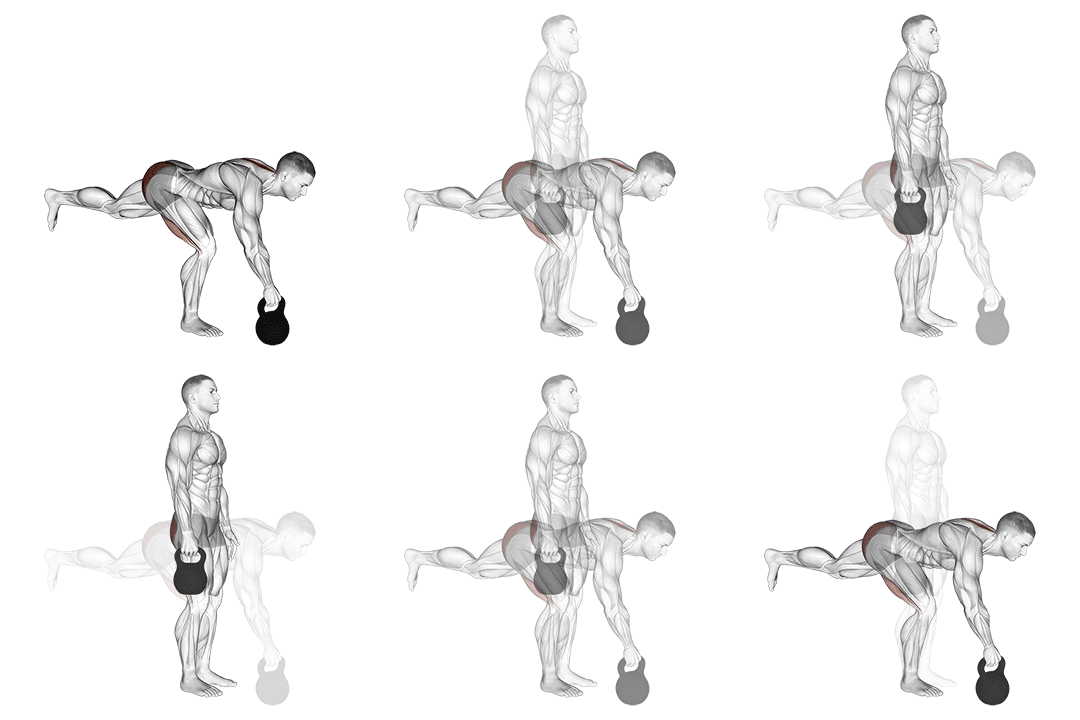
The Kettlebell One Legged Deadlift performs unilateral deadlifts with the working leg planted and the other leg lifted, holding a kettlebell. The pattern produces strong unilateral hamstring loading through deep hip-hinge.
For kettlebell hamstring training, the one-legged deadlift produces strong unilateral hamstring work. The pattern hits each hamstring individually through deep hip-hinge motion. Run it for 3 sets of 6 to 8 reps per leg as deep-range unilateral hamstring work.
Stand on one leg holding a kettlebell at the side or in the opposite-side hand. The non-working leg lifts slightly off the floor. Hinge at the hip and extend the lifted leg back behind the body for counterbalance, lowering the kettlebell along the planted leg. Continue lowering until the hamstring stretches deeply. Drive back to standing by extending the planted hip. The fully-lifted non-working leg provides counterbalance.
Kettlebell Kickstand One Leg Deadlift

The Kettlebell Kickstand One Leg Deadlift performs unilateral deadlifts with the back foot lightly touching the floor as a kickstand for balance support. The pattern produces unilateral hamstring loading with reduced balance demands.
For kettlebell hamstring training, the kickstand one-leg deadlift produces unilateral hamstring work with manageable balance demands. The pattern hits the hamstrings through unilateral hip-hinge motion. Run it for 3 sets of 8 to 10 reps per leg as accessible unilateral hamstring work.
Stand with feet hip-width holding a kettlebell at the side. Step one foot back about 6 to 12 inches with the toes lightly touching the floor as a kickstand. Most of the weight goes to the front (working) leg. Hinge at the hip by sending it backward while keeping the back flat. Lower the kettlebell along the working leg until the hamstring stretches. Drive back to standing by extending the working hip. The kickstand position simplifies balance work compared to full single-leg variants.
Kettlebell Suitcase Deadlift

The Kettlebell Suitcase Deadlift performs deadlifts with a kettlebell held at one side (like a suitcase) rather than between the legs. The asymmetric load demands strong core anti-lateral-flexion work along with hamstring and glute loading.
For kettlebell hamstring training, the suitcase deadlift produces combined hamstring loading and core anti-lateral-flexion work. The pattern hits the hamstrings through deadlift motion plus the asymmetric loading challenge. Run it for 3 sets of 8 to 10 reps per side as combined hamstring and core work.
Stand with feet hip-width with a kettlebell placed on the floor next to one foot. Hinge at the hips and bend the knees to grip the kettlebell handle with the same-side hand. Drive through the heels to stand fully tall while keeping the torso level (resist the pull of the kettlebell to that side). Lower under control. The asymmetric loading produces strong combined posterior chain and core work. Switch sides between sets.
Kettlebell Swing

The Kettlebell Swing performs explosive hip-hinge motion swinging a kettlebell from between the legs to chest height through hip drive. The pattern is one of the most effective explosive hamstring and glute exercises that exists.
For kettlebell hamstring training, the swing produces strong combined hamstring power and conditioning loading. The pattern hits the hamstrings through explosive hip extension. Run it for 4 sets of 12 to 15 reps as combined power and conditioning work.
Stand with feet shoulder-width and a kettlebell on the floor about 12 to 18 inches in front of the toes. Hinge at the hips and grip the handle with both hands. Hike the kettlebell back between the legs by pulling it explosively. Drive the hips forward explosively to swing the kettlebell up to chest or shoulder height (with the arms relatively passive). Let the kettlebell swing back between the legs and immediately repeat. The explosive hip drive produces strong hamstring power loading.
How To Program These Workouts
A productive kettlebell hamstring session pulls 5 to 6 exercises from the list above based on training goals. A common mass-building session: kettlebell Romanian deadlift (mass), kettlebell single leg deadlift (unilateral), kettlebell good morning (hip-hinge), kettlebell sumo deadlift (wide stance), kettlebell swing (explosive finisher). For unilateral focus: kettlebell single leg deadlift, kettlebell one legged deadlift, kettlebell kickstand one leg deadlift, kettlebell suitcase deadlift, kettlebell single leg step-up adapted. Run hip-hinge work for 3 to 4 sets of 8 to 12 reps, unilateral work for 3 sets of 6 to 10 reps per leg, and explosive swing work for 4 sets of 12 to 15 reps. Total session covers 14 to 20 working sets focused on hamstring development.
Train kettlebell hamstring work 1 to 2 times per week as part of broader lower-body programming. The hamstrings recover from training in 48 to 72 hours but accumulate fatigue from compound work and from running/sprinting. Most successful programs include kettlebell hamstring work either: 1) on a dedicated leg day with Romanian deadlifts as the primary movement, 2) split across 2 leg days (heavier deadlift day + swing volume day), or 3) integrated with quad work for complete lower-body sessions. Keep training time under 35 to 40 minutes per session. Progress kettlebell weight by switching to heavier bells (typically 4 to 8 kg jumps) as 12 to 15 reps becomes manageable.
For broader hamstring programming, see our best hamstring workouts and how to grow your hamstrings. For specific kettlebell work, see our best kettlebell leg workouts.
Final Thoughts
The best kettlebell hamstring workouts deliver real hamstring development through patterns that effectively load the hamstrings with the unique advantages kettlebells offer: ergonomic handles, asymmetric loading capacity, and explosive ballistic patterns. The combination of Romanian deadlifts, single-leg variations, sumo work, suitcase loading, and explosive swings covers every functional pattern of the hamstring and produces broader development than equipment-limited training would suggest. For lifters who train primarily with kettlebells, want to add kettlebell-specific patterns to existing programs, want to build athletic explosive hip extension through swings, or want to break through plateaus in hamstring development, dedicated kettlebell hamstring work is one of the most effective options available.
Stay focused on hip-hinge mechanics and hip drive on swings. The most common kettlebell hamstring training mistakes include rounding the lower back during deadlifts and Romanian deadlifts (which shifts work from hamstrings to lower back and creates injury risk) and using arms instead of hips to swing the kettlebell on swings (which limits hamstring power loading). The fix: maintain a flat back position throughout every hip-hinge exercise, and on swings, drive the hips forward explosively while keeping the arms relatively passive (the kettlebell swings up due to hip drive, not arm lifting). Quality reps with proper mechanics produce stronger hamstring development than ego-driven heavy bells with sloppy form.
Frequently Asked Questions
Are kettlebell swings good for hamstrings?
Yes very effectively. Kettlebell swings produce strong combined hamstring power and conditioning loading through explosive hip extension. The pattern hits the hamstrings through dynamic ballistic loading that builds both strength and endurance. Most successful kettlebell hamstring programs include swings as primary explosive work, typically in the 12 to 15 rep range with full recovery between sets. Swings also build excellent cardiovascular conditioning when performed for high-rep intervals.
Kettlebell vs barbell deadlifts for hamstrings?
Both effective; choose based on equipment and goals. Barbell deadlifts allow heavier loading and progressive overload to maximum weights, ideal for strength-focused programs. Kettlebell deadlifts produce excellent hamstring loading with more accessible setup and naturally encourage the upright-torso hip-hinge that mirrors squat depth. Most successful programs include both: barbell deadlifts as primary heavy work when accessible, kettlebell deadlifts for warm-ups, conditioning work, single-leg variations, and home-friendly training.
How heavy should kettlebells be for hamstrings?
Moderate to heavy depending on the exercise. Bilateral mass work like kettlebell Romanian deadlifts can use heavy kettlebells (24 to 40+ kg for advanced lifters). Unilateral work like single-leg deadlifts typically uses moderate-weight kettlebells (12 to 24 kg) because the unilateral position is more challenging. Swings use moderate to heavy bells depending on the goal (16 to 32 kg for most lifters). Most successful programs progressively load all exercises until 8 to 12 reps becomes challenging on strength work, then increase to the next kettlebell size.
How often should I train hamstrings with kettlebells?
One to two kettlebell hamstring sessions per week works for most lifters. The hamstrings recover from training in 48 to 72 hours but accumulate fatigue from compound work and from sprinting/running that activates them substantially. Most successful programs include kettlebell hamstring work either on a dedicated leg day, or split across 2 days (heavy deadlift day + swing volume day). Three or more weekly heavy hamstring sessions typically produces overuse injuries rather than accelerated growth.
Can kettlebell workouts replace barbell deadlifts?
For some lifters yes, for others as a complement. Kettlebell hamstring exercises produce real hamstring development through patterns that mirror many of barbell deadlift’s hamstring loading patterns plus add unilateral, asymmetric, and explosive swing work that barbells can not match. Lifters who can not access barbells (home training, travel, recovery from injury) can build excellent hamstrings through dedicated kettlebell training. Lifters with full equipment access typically include both for maximum development. The ceiling for kettlebell loading is typically lower than barbell loading, but the variety often produces broader development.