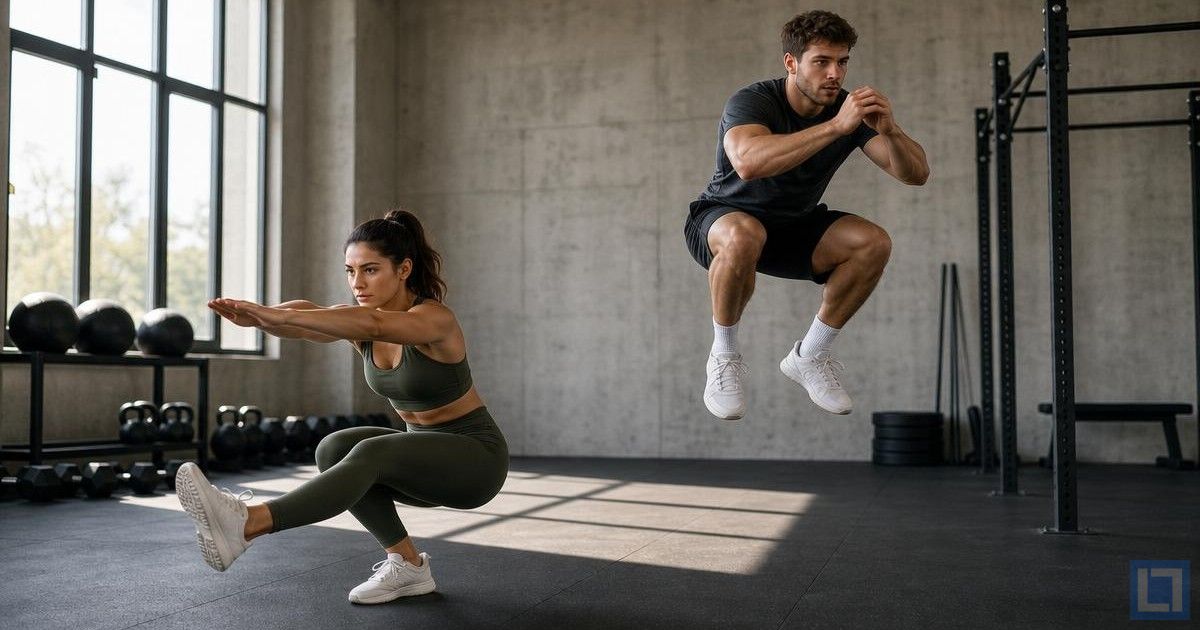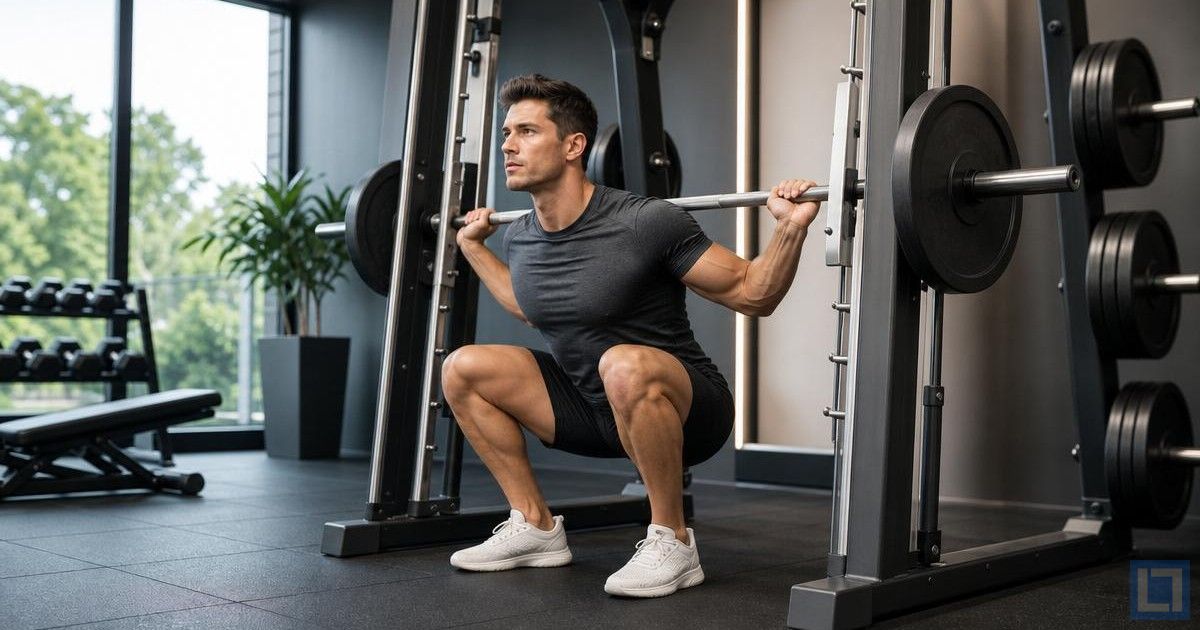
Smith machine leg training produces strong lower-body development through a fixed bar path that eliminates balance demands and lets the lifter focus purely on the working muscles. The smith machine excels for leg training because the lower body responds well to heavy bilateral loading, and the fixed bar path allows lifters to push closer to maximum loads without the technique demands of free-weight squatting and deadlifting. The smith machine also fits naturally for unilateral leg work (split squats, lateral step-ups, single-leg deadlifts) where the fixed bar path provides stability that free weights cannot match.
Below are ten effective smith machine leg exercises that cover bilateral compounds (full squat, leg press, stiff-legged deadlift), unilateral work (single-leg split squat, lateral step-up, one-leg deadlift), glute-focused training (hip raise), calf development (seated and standing single-leg calf raises), and explosive power (hang clean). Together they form a complete smith machine leg training program that fits in any commercial gym with a standard smith machine. A 60 to 75-minute session pulled from this list produces strong lower-body stimulus across every major leg function.
Smith Leg Press

The Smith Leg Press uses the smith machine bar set at a low position with the lifter lying on the floor or a low bench, pressing the bar up by extending through the hips and knees. The exercise produces strong quad and glute loading through the fixed smith bar path.
For smith machine leg training, the leg press fits naturally as the foundational compound exercise. The fixed bar path eliminates balance demands and lets the legs work harder than free-weight squatting variations. Run it for 4 to 5 sets of 8 to 12 reps as primary leg work.
Set the smith machine bar at a low position. Lie on the floor or a low bench under the bar with feet pressed against the bar. Unrack the bar and press up by extending through the hips and knees. Lower under control until the knees approach the chest. Drive back to lockout.
Smith Full Squat

The Smith Full Squat performs a back squat under the smith machine bar with the bar resting across the upper back. The fixed bar path allows the lifter to focus purely on the squat motion without balance demands.
For smith machine leg training, the full squat is the cornerstone exercise. The fixed bar path makes the smith squat more accessible than free-weight back squats while still producing strong quad and glute development. Run it for 4 to 5 sets of 6 to 10 reps as primary leg work.
Set the smith machine bar at upper-back height. Step under the bar with the bar across the upper back. Unrack by rotating the bar. Squat down by sitting the hips back while bending the knees. Drive back to standing through the whole foot. Re-rack between sets.
Smith Stiff Legged Deadlift
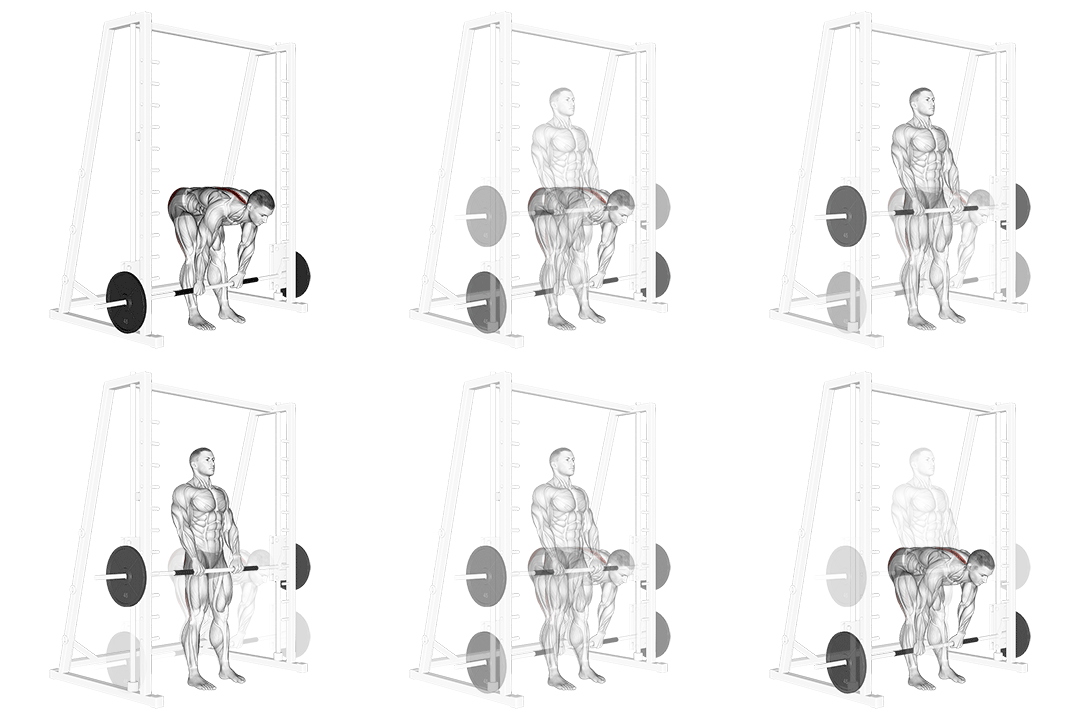
The Smith Stiff Legged Deadlift performs a stiff-legged deadlift under the smith machine bar, hinging at the hips with relatively straight legs to lower the bar. The exercise targets the hamstrings and glutes heavily through the hip-hinge motion.
For smith machine hamstring development, the stiff-legged deadlift is one of the most direct hamstring exercises that exists. The fixed bar path makes the pattern easier to learn than free-weight Romanian deadlifts while still producing strong hamstring loading. Run it for 3 to 4 sets of 8 to 12 reps.
Set the smith machine bar at hip height. Stand with feet hip-width and grip the bar with shoulder-width grip. Unrack the bar. Hinge at the hips with relatively straight legs, lowering the bar in a path close to the legs until the hamstrings stretch. Drive the hips forward to stand. Re-rack between sets.
Smith Single Leg Split Squat

The Smith Single Leg Split Squat sets up in a split stance with one foot back and the other forward under the smith machine bar, then squats by bending both knees. The unilateral pattern produces strong single-leg development.
For smith machine unilateral leg training, the split squat is one of the most effective exercises that exists. The fixed bar path allows heavier loading than free-weight Bulgarian split squats while still producing the unilateral leg loading. Run it for 3 to 4 sets of 8 to 10 reps per leg.
Set the smith machine bar at upper-back height. Step under the bar with the bar across the upper back. Position one foot forward and the other back in a split stance. Squat down by bending both knees. Drive back to standing through the front foot. Complete all reps on one side before switching.
Smith Lateral Step-Up

The Smith Lateral Step-Up positions a step or box to one side of the smith machine bar and steps laterally up onto the box while holding the bar across the upper back. The lateral pattern hits the glutes and lateral leg stabilizers heavily.
For smith machine leg training that includes lateral plane work, the lateral step-up produces development that purely sagittal-plane exercises miss. The pattern hits the gluteus medius and lateral hip stabilizers. Run it for 3 sets of 8 to 10 reps per side.
Set the smith machine bar at upper-back height. Position a step box to one side of the bar. Step under the bar with the bar across the upper back. Step laterally up onto the box, driving through the box-side foot. Step back down. Complete all reps on one side before switching.
Smith One Leg Deadlift

The Smith One Leg Deadlift performs a single-leg deadlift under the smith machine bar by hinging at the hips while the back leg lifts behind the body. The unilateral pattern produces strong glute and hamstring loading along with balance demand.
For smith machine unilateral posterior-chain work, the one-leg deadlift produces unique single-leg hamstring and glute development. The fixed bar path makes the pattern more accessible than free-weight single-leg Romanian deadlifts. Run it for 3 sets of 8 to 10 reps per leg.
Set the smith machine bar at hip height. Stand with the bar gripped in shoulder-width grip. Lift one foot slightly off the floor. Hinge at the hips, lifting the lifted leg behind the body as the bar lowers. Drive through the standing leg to return. Switch legs between sets.
Smith Hip Raise

The Smith Hip Raise lies on the floor with the upper back braced against a bench and the smith machine bar across the hips, then raises the hips up by squeezing the glutes. The pattern is essentially a hip thrust with the smith machine bar.
For smith machine glute work, the hip raise (hip thrust variation) is one of the most effective glute exercises that exists. The fixed bar path makes it easier to position the bar than free-weight hip thrusts. Run it for 3 to 4 sets of 10 to 15 reps as primary glute work.
Set the smith machine bar at hip height. Sit on the floor with the upper back braced against a bench. Position the bar across the hips. Drive the hips up by squeezing the glutes hard until the body forms a straight line from shoulders to knees. Lower under control.
Smith Seated One Leg Calf Raise

The Smith Seated One Leg Calf Raise sits on a bench under the smith machine bar with the bar across one knee, then raises the heel up by pushing through the ball of the foot. The seated position isolates the calf without the lifter’s bodyweight contributing.
For smith machine calf training, the seated one-leg calf raise produces strong soleus loading because the bent-knee position emphasizes the soleus over the gastrocnemius. The unilateral pattern catches strength imbalances. Run it for 3 sets of 12 to 15 reps per side.
Set the smith machine bar at knee height when seated. Sit on a bench with one foot positioned on a small step or block under the bar. Place the bar across the knee. Raise the heel up by pushing through the ball of the foot. Lower under control. Switch legs between sets.
Smith One Leg Floor Calf Raise

The Smith One Leg Floor Calf Raise stands under the smith machine bar with the bar across the upper back and performs single-leg calf raises by raising the heel off the floor. The unilateral standing pattern emphasizes the gastrocnemius.
For complete smith machine calf training, the standing one-leg calf raise complements the seated variation by hitting the gastrocnemius (the calf muscle that responds to straight-leg loading). Run it for 3 sets of 12 to 15 reps per side as accessory calf work.
Set the smith machine bar at upper-back height. Step under the bar with the bar across the upper back. Stand on one leg with the other lifted slightly. Raise the heel up by pushing through the ball of the foot. Lower under control. Switch legs between sets.
Smith Hang Clean

The Smith Hang Clean lifts the smith machine bar from a hanging position (just above the knees) to the rack position at the shoulders in one explosive motion. The exercise combines lower-body explosive power with upper-body lockout strength.
For smith machine leg training that includes explosive power work, the hang clean produces lower-body power development that pure squatting cannot match. The exercise requires solid technique; build the basic strict press first before progressing to the clean. Run it for 3 to 4 sets of 5 to 8 reps as power work.
Set the smith machine bar at upper-thigh height. Stand with the bar gripped at shoulder-width. Unrack and lower to just above the knees in a hang position. Drive the hips forward explosively to lift the bar to the rack position at the shoulders. Lower under control. Re-rack between sets.
How To Program These Workouts
A productive smith machine leg session pulls six to eight exercises from the list above. A balanced session includes one bilateral primary compound (full squat or leg press), one posterior-chain exercise (stiff-legged deadlift), one unilateral exercise (split squat or one-leg deadlift), one glute-focused exercise (hip raise), and one or two calf exercises. Run primary compounds for 4 to 5 sets of 6 to 10 reps; secondary exercises for 3 to 4 sets of 8 to 12 reps; calf work for 3 sets of 12 to 15 reps.
Train smith machine legs 1 to 2 times per week. The legs recover within 48 to 72 hours of moderate training, and the smith machine fixed bar path produces less central nervous system fatigue than heavy free-weight squatting. Most lifters do well with 1 to 2 dedicated leg sessions per week alongside upper-body and accessory training. The format works particularly well for lifters who prefer machine-focused training over free-weight squatting and deadlifting.
For other leg programming, see our best dumbbell leg workouts and best barbell leg workouts. For at-home leg training, see our best at home hamstring workouts.
Final Thoughts
The best smith machine leg workouts deliver real lower-body development through a fixed bar path that lets lifters push closer to maximum loads without balance demands. The combination of bilateral primary compounds, unilateral work, glute-focused training, and calf development covers every major leg function and produces broader lower-body development than free-weight-only programs for many lifters. For lifters who prefer machine-focused training or want to add smith machine variations to existing free-weight programs, this format is one of the most effective options available.
Stay focused on full range of motion. The most common smith machine leg training mistake is shortening the range of motion to use heavier weights, which produces weaker leg development than full-range work with appropriate loading. The fix: use weights light enough to perform full-range squats, deadlifts, and split squats with strict form. The legs respond best to the full stretch at the bottom of every rep; cutting the range short eliminates the loaded stretch position that drives growth.
Frequently Asked Questions
Is the smith machine good for legs?
Yes for most leg training goals. The fixed bar path eliminates balance demands, allows heavier loading than free-weight squatting for many lifters, and works particularly well for unilateral leg exercises (split squats, lateral step-ups). Some advanced lifters argue free-weight squatting produces broader athletic development than smith squats, but for pure leg muscle development the smith machine produces measurable results comparable to free weights for most goals.
Smith machine squat or barbell squat?
Both produce real leg development. Smith machine squats are easier to learn, eliminate balance demands, and let lifters push closer to maximum loads on a single muscle group. Free-weight barbell squats produce broader athletic development through balance and stabilizer demands. Most successful programs include both: smith squats for pure leg loading, barbell squats for athletic development. Beginners often do better starting with smith squats before progressing to free-weight squats.
How often should I do smith machine leg workouts?
One to two times per week works for most lifters. The legs recover within 48 to 72 hours of moderate training. Most successful programs include one heavy leg session per week and one moderate-intensity leg session per week, both of which can use the smith machine for primary compound work.
Can I build big legs with only the smith machine?
Yes for general leg development. The combination of progressive smith machine training, appropriate volume, and consistent nutrition produces real leg development for years of consistent practice. Advanced lifters chasing maximum strength and athletic development often combine smith machine training with free-weight squatting and deadlifting, but the smith machine alone produces measurable leg development at every level for general goals.
Are smith machine squats easier than barbell squats?
Generally yes due to eliminated balance demands. The fixed bar path means the lifter does not have to stabilize the bar laterally, which lets them focus pure effort on the leg work. Most lifters can squat 5 to 15 percent more weight on the smith machine than free-weight barbell squats. The reduced balance demand makes smith squats more accessible for beginners and produces real leg development without the technique requirements of free-weight squatting.