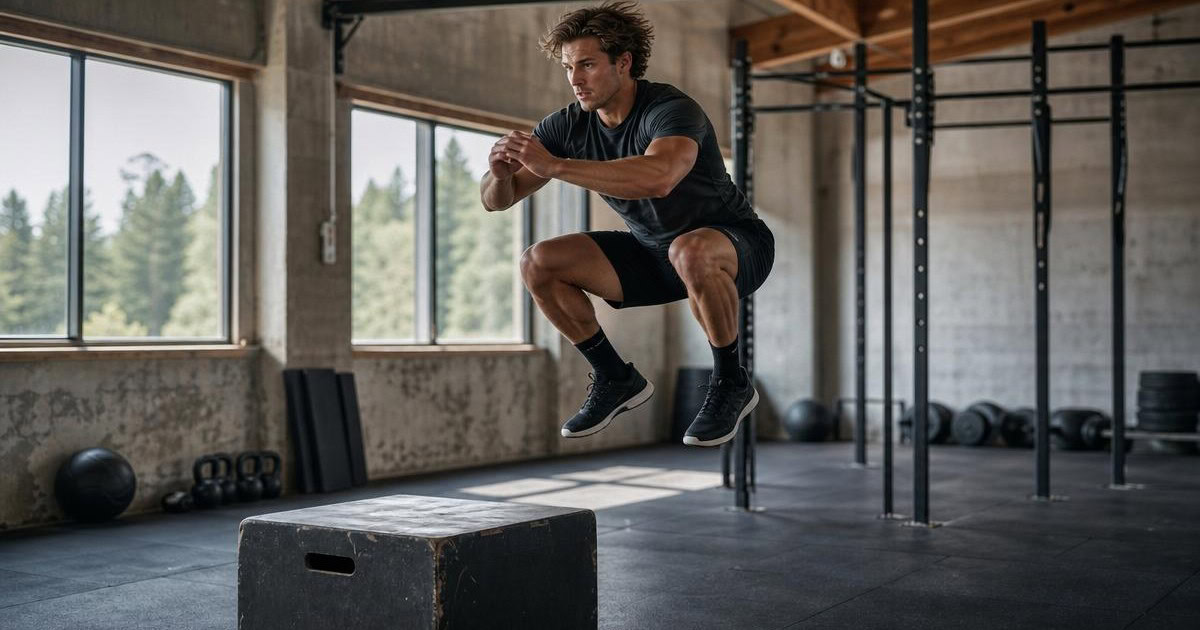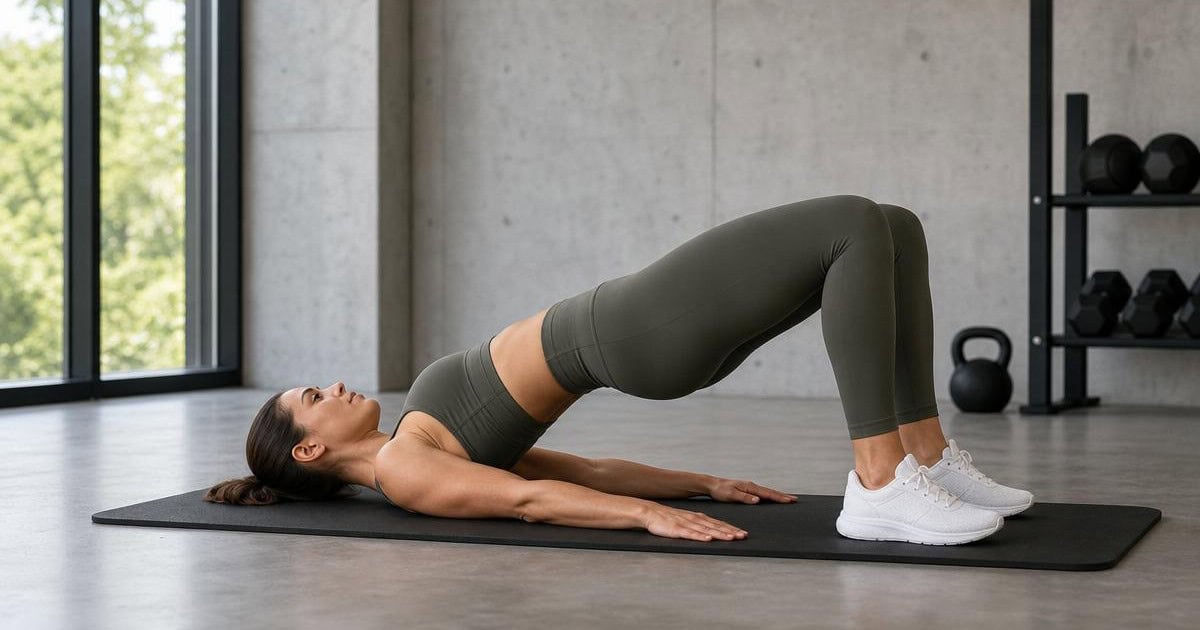
Bodyweight hamstring training produces real hamstring development through patterns that load the hamstrings effectively without barbells, dumbbells, or machines: hip-hinge variations, single-leg work, eccentric loading, and explosive plyometrics. The format works particularly well for hamstrings because the muscle responds to a combination of stretched-position loading (hip hinges, deadlifts), eccentric stress (Nordic curls), and dynamic power work (jumping variations) — all of which can be achieved through bodyweight progressions. Most lifters who consistently train bodyweight hamstring work 1 to 2 times per week alongside compound lower-body movements see measurable hamstring development, improved hip mobility, better single-leg balance, and reduced hamstring injury risk within 8 to 12 weeks. The combination of hip-hinge variations, single-leg work, eccentric loading, and explosive power produces broader hamstring development than barbell deadlifts alone for many lifters.
Below are ten effective bodyweight hamstring exercises that cover hip-hinge variations (B stance good morning, single-leg deadlift with knee lift), bilateral hip thrust work (frog hip thrust, glute bridge march), unilateral strength (single-leg bridge, glute bridge march), eccentric loading (self-assisted inverse leg curl), direct hamstring isolation (lying leg curl), and explosive power (single leg hip thrust jump, jumping glute bridge, jumping lunge). Together they form a complete bodyweight hamstring program that hits every functional pattern of the muscle. A 25 to 35-minute session pulled from this list, performed 1 to 2 times per week, produces strong hamstring development for home training.
Bodyweight B Stance Good Morning

The Bodyweight B Stance Good Morning performs hip-hinge motion with the feet in a B stance (one foot slightly forward, the other slightly back). The pattern produces strong unilateral-bias hamstring loading without weights.
For bodyweight hamstring training, the B stance good morning produces strong unilateral-bias hamstring loading. The B stance shifts most of the load to the back leg, creating an effective single-leg hamstring exercise. Run it for 3 sets of 12 to 15 reps per leg as primary unilateral hamstring work.
Stand with feet hip-width and place one foot slightly forward, the other slightly back, with most weight on the back leg (B stance position). Hinge at the hips by sending them backward while keeping the back flat. Lower the torso forward until the hamstrings of the back leg stretch deeply. Drive back to standing by extending the hips. Switch sides between sets.
Bodyweight Frog Hip Thrust

The Bodyweight Frog Hip Thrust performs hip thrust motion with feet together and knees pointing out wide (frog leg position). The pattern hits the glutes and hamstrings through hip extension with external rotation.
For bodyweight hamstring training, the frog hip thrust produces strong combined glute and hamstring loading. The frog position activates the glute medius along with the hamstrings. Run it for 3 sets of 15 to 20 reps as posterior chain work.
Lie flat on the back with feet planted close together (touching) and knees pointed out wide to form a frog-leg position. Drive the hips up by squeezing the glutes and hamstrings hard while maintaining the frog-leg position. Hold briefly at the top. Lower under control. The frog position adds external hip rotation that recruits the glute medius along with the hamstrings.
Single Leg Deadlift with Knee Lift

The Single Leg Deadlift with Knee Lift performs single-leg Romanian deadlifts with a knee lift at the top for combined hamstring and balance loading. The pattern produces strong unilateral hamstring work.
For bodyweight hamstring training, the single-leg deadlift with knee lift produces strong unilateral hamstring loading combined with balance and hip flexor activation. The pattern hits the hamstrings through hip-hinge motion. Run it for 3 sets of 8 to 10 reps per side as primary unilateral hamstring work.
Stand on one leg with the free leg extended slightly behind. Hinge at the hip by sending it backward while extending the free leg back behind the body, lowering the torso forward. Drive back to standing by extending the planted hip while simultaneously driving the free knee up to chest height. Hold briefly at the top. Reverse the motion. Switch legs between sets.
Single Leg Hip Thrust Jump

The Single Leg Hip Thrust Jump performs explosive single-leg hip thrusts that finish with a jump at the top. The pattern produces strong combined hamstring power and explosive hip extension.
For bodyweight hamstring training, the single-leg hip thrust jump produces strong combined hamstring power and explosive hip extension work. The pattern hits the hamstrings through dynamic loading. Run it for 3 sets of 5 to 8 reps per leg as advanced explosive hamstring work.
Lie flat on the back with shoulders flat on the floor and one foot planted on the floor, knee bent. Extend the other leg straight out (off the floor). Drive the hips up explosively by extending through the planted foot, generating enough force to jump the planted foot off the floor at peak extension. Land softly with the planted leg and immediately reset for the next rep. Switch legs between sets.
Bodyweight Lying Legs Curl

The Bodyweight Lying Legs Curl performs hamstring curl motion in a lying position, using the body weight and leg position to load the hamstrings. The pattern produces direct hamstring loading without equipment.
For bodyweight hamstring training, the lying leg curl produces direct hamstring loading through pure knee flexion. The pattern hits the hamstrings through their primary function. Run it for 3 sets of 12 to 15 reps as direct hamstring isolation work.
Lie face-down on the floor or a mat with the legs straight. Bend the knees to bring the heels toward the glutes by flexing the hamstrings. Hold briefly at peak contraction with the heels close to the glutes. Lower the legs under control until they are fully straight. Maintain hip position flat against the floor throughout.
Glute Bridge March

The Glute Bridge March performs alternating single-leg lifts while holding a glute bridge position. The pattern produces strong unilateral hamstring and glute loading combined with core stability.
For bodyweight hamstring training, the glute bridge march produces strong unilateral hamstring and glute loading. The pattern hits the hamstrings through alternating single-leg work. Run it for 3 sets of 10 to 12 reps per leg as combined posterior chain work.
Lie flat on the back with knees bent and feet planted shoulder-width. Drive the hips up into a glute bridge position. While maintaining the bridge, lift one foot off the floor and bring the knee toward the chest. Lower the foot and immediately lift the other foot. Continue alternating while maintaining hip height throughout. The supporting leg works hard through each rep.
Single Leg Bridge with Outstretched Leg

The Single Leg Bridge with Outstretched Leg performs hip thrust motion with one leg planted and the other leg extended straight out. The pattern produces maximum unilateral glute and hamstring loading.
For bodyweight hamstring training, the single-leg bridge produces strong unilateral glute and hamstring loading. The pattern is one of the most effective bodyweight hamstring exercises that exists. Run it for 3 sets of 10 to 12 reps per leg as primary unilateral posterior chain work.
Lie flat on the back with one foot planted on the floor (knee bent) and the other leg extended straight out. Drive the hips up by squeezing the glute and hamstring of the planted leg hard. Keep the extended leg in line with the torso throughout. Hold briefly at peak contraction. Lower under control. Switch legs between sets.
Self Assisted Inverse Leg Curl

The Self Assisted Inverse Leg Curl performs Nordic-style hamstring curls with hands on the floor for support. The pattern produces strong eccentric hamstring loading critical for hamstring strength and injury prevention.
For bodyweight hamstring training, the self-assisted inverse leg curl produces strong eccentric hamstring loading. The pattern hits the hamstrings through controlled lengthening contractions that build hamstring strength and resilience. Run it for 3 sets of 6 to 8 reps as advanced hamstring work.
Kneel on a soft surface with the ankles fixed (have a partner hold them or anchor them under a heavy object). Place hands on the floor in front for support. Slowly lower the body forward by extending the knees, keeping the body in a straight line from knees to head. Use the hands to control the descent and push back to starting position. Build up to performing the descent without pushing back; the eccentric is the key.
Single Leg Jumping Glute Bridge

The Single Leg Jumping Glute Bridge performs explosive single-leg glute bridges that finish with a jumping motion. The pattern produces strong combined hamstring power and explosive hip extension.
For bodyweight hamstring training, the jumping glute bridge produces strong combined hamstring power work. The pattern hits the hamstrings through dynamic explosive loading. Run it for 3 sets of 6 to 8 reps per leg as advanced explosive hamstring work.
Lie flat on the back with one foot planted on the floor (knee bent) and the other leg extended out straight. Drive the hips up explosively into a single-leg glute bridge, generating enough force at the top to slightly leave the floor with the planted foot. Land softly back on the planted foot and immediately reset for the next rep. Switch legs between sets.
Jumping Single Leg Lunge

The Jumping Single Leg Lunge performs explosive lunges with a jump at the top. The pattern produces strong combined hamstring, glute, and quad power loading.
For bodyweight hamstring training, the jumping single-leg lunge produces strong combined posterior chain and quad power work. The pattern hits the hamstrings through dynamic plyometric loading. Run it for 3 sets of 6 to 8 reps per leg as advanced explosive lower body work.
Start in a lunge position with one foot forward and one back, both knees bent. Explosively jump straight up while maintaining the lunge position (or switching legs in the air). Land softly back into the lunge position. Reset and immediately repeat. The combination of lunge depth and jumping motion produces strong posterior chain and quad work. Switch legs or alternate between sets.
How To Program These Workouts
A productive bodyweight hamstring session pulls 5 to 6 exercises from the list above based on training goals. A common session: bodyweight B stance good morning (hip hinge), single-leg deadlift with knee lift (unilateral hinge), single-leg bridge (unilateral isolation), bodyweight frog hip thrust (bilateral mass), self-assisted inverse leg curl (eccentric). For explosive emphasis: single-leg hip thrust jump, single-leg jumping glute bridge, jumping single-leg lunge. Run hip-hinge work for 3 sets of 10 to 15 reps per leg, isolation work for 3 sets of 12 to 15 reps, eccentric work for 3 sets of 6 to 8 reps, and explosive work for 3 sets of 5 to 8 reps with full recovery between sets. Total session covers 15 to 20 working sets focused on hamstring development.
Train bodyweight hamstring work 1 to 2 times per week as part of broader lower-body programming. The hamstrings are a moderate-sized muscle group that recovers reasonably quickly but accumulates fatigue from compound lower-body work (squats, deadlifts) that already activates them substantially. Most successful programs schedule bodyweight hamstring work either: 1) at the end of a leg day (after compound squats), 2) on a dedicated posterior chain day, or 3) twice per week with one volume-focused session and one explosive-focused session. Keep training time under 30 to 35 minutes per session. Progress through bodyweight variations by adding sets, reducing rest, or progressing to harder exercises (Nordic curls progression).
For broader hamstring programming, see our best hamstring workouts and how to grow your hamstrings. For specific posterior chain work, see our best at home hamstring workouts.
Final Thoughts
The best bodyweight hamstring workouts deliver real hamstring development through patterns that effectively load the hamstrings without external resistance. The combination of hip-hinge variations, single-leg work, eccentric loading, and explosive power covers every functional pattern of the hamstring and produces broader development than weighted deadlifts alone for many lifters. For lifters who want to train hamstrings effectively at home with no equipment, want to add unilateral work to address muscle imbalances, want to build hamstring resilience for sport performance, or want to break through plateaus in hamstring development, dedicated bodyweight hamstring work is one of the most effective options available.
Stay focused on hip-hinge mechanics and progressive overload. The most common bodyweight hamstring training mistakes include rounding the lower back during good mornings and single-leg deadlifts (which shifts work from hamstrings to lower back) and not progressing the difficulty over time (which produces stagnant results). The fix: maintain a flat back position throughout every hip-hinge exercise, prioritize hamstring stretch over depth of motion, and progress the difficulty by adding sets, reducing rest periods, or progressing to harder variations like Nordic curls. Quality reps with progressive overload produce stronger hamstring development than mindless volume.
Frequently Asked Questions
Can you build hamstrings with bodyweight only?
Yes effectively for most lifters. The bodyweight hamstring exercises in this list produce real hamstring development through hip-hinge variations, single-leg work, eccentric loading, and explosive power. Many lifters build excellent hamstrings through dedicated bodyweight training. Most successful programs include bodyweight work alongside loaded work when both are accessible, but bodyweight alone produces strong development for lifters with limited equipment access.
Are Nordic curls the best bodyweight hamstring exercise?
They are one of the most effective for hamstring strength and injury prevention but require significant baseline hamstring strength to perform. Most lifters need to start with self-assisted Nordic curls (using hands on the floor) and progress over months to unassisted reps. Other strong choices for general bodyweight hamstring development include single-leg deadlifts, single-leg bridges, and B stance good mornings. Most successful programs include Nordic curl progressions as one of multiple hamstring exercises.
How often should I train hamstrings with bodyweight?
One to two bodyweight hamstring sessions per week works for most lifters. The hamstrings recover reasonably quickly but accumulate fatigue from compound lower-body work (squats, deadlifts) and from running/sprinting. Most successful programs include bodyweight hamstring work either at the end of a leg day, on a dedicated posterior chain day, or twice per week with light volume on one day and heavier focused work on the other.
What’s the best bodyweight hamstring exercise for hypertrophy?
Single-leg variations produce the strongest bodyweight hamstring loading because they double the relative load per leg compared to bilateral exercises. Top choices for hypertrophy include the single-leg deadlift with knee lift, single-leg bridge with outstretched leg, and B stance good morning. Add explosive variations (single-leg hip thrust jump) for power development. Most successful bodyweight hamstring programs include 4 to 6 different exercises across hip-hinge, isolation, eccentric, and explosive patterns.
Can bodyweight hamstring exercises replace deadlifts?
For some lifters yes, for others as a complement. Bodyweight hamstring exercises produce real hamstring development through hip-hinge variations and single-leg work that mirror many of deadlift’s hamstring loading patterns. Lifters who can not access barbells (home training, travel, recovery from injury) can build excellent hamstrings through dedicated bodyweight training. Lifters with full equipment access typically include both for maximum development.