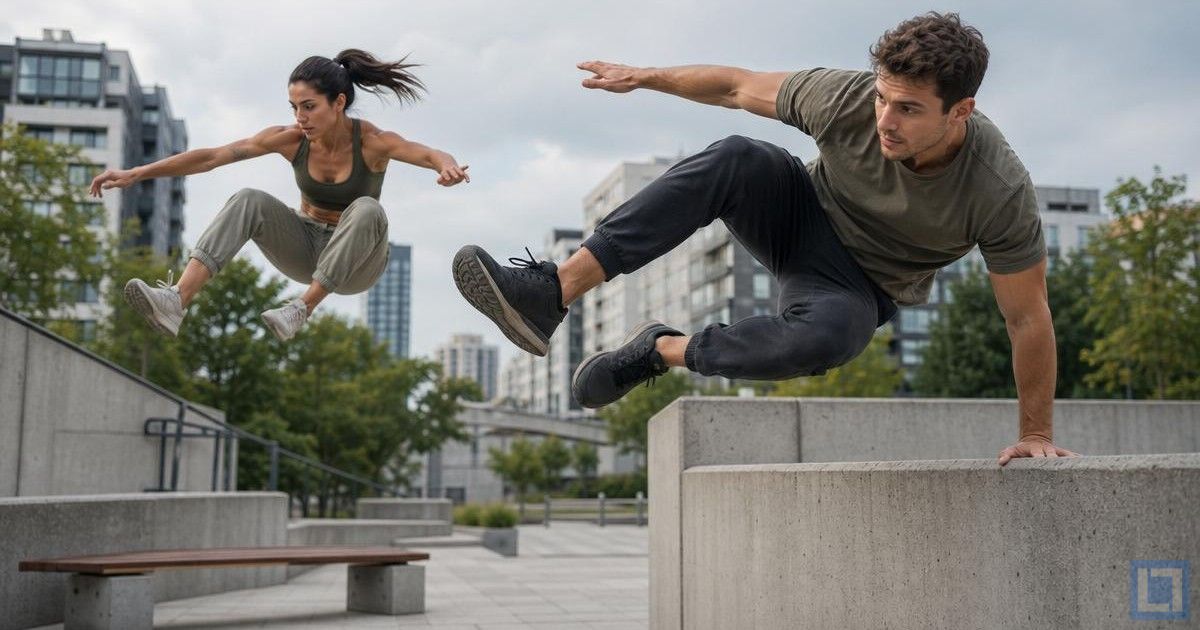
Parkour training produces real movement performance through exercises that build the specific physical capacities parkour demands: explosive leg power for jumps and vaults, upper-body pressing strength for handstands and wall work, pulling strength for muscle ups and ledge recoveries, and the body control needed for technical movements. The format works particularly well for parkour because the discipline requires bodyweight strength, plyometric power, and inversion confidence that traditional weight training rarely develops together. Most parkour practitioners who consistently train physical conditioning 3 to 4 times per week alongside skill practice see measurable movement capacity improvements within 8 to 12 weeks. The combination of explosive jumps, plyometric upper-body work, handstand progressions, and dynamic conditioning produces broader movement capacity than skill practice alone.
Below are ten effective parkour exercises that cover total-body conditioning (burpee), explosive upper-body power (plyo push-up, clap push-up), vertical pressing strength (pike push-up, handstand push-up, wall walks), explosive leg power (jump squat, knee tuck jump, squat tuck jump), and demanding upper-body strength (muscle up). Together they form a complete parkour conditioning program that hits every physical demand of the discipline. A 45 to 60-minute session pulled from this list, performed 3 to 4 times per week alongside skill practice, produces strong physical foundation for parkour performance and reduces injury risk through better preparation.
Burpee

The Burpee combines a squat thrust into a push-up and a vertical jump. The pattern produces strong full-body conditioning loading and develops the explosive transitions critical for parkour movement.
For parkour training, the burpee is one of the most foundational total-body conditioning exercises that exists. The pattern hits the entire body through high-intensity total-body motion that mirrors parkour transitions. Run it for 4 sets of 10 to 20 reps as foundational conditioning work in any parkour training session.
Stand with feet shoulder-width. Drop into a squat position and place the hands on the floor. Kick the feet back into a high plank position. Lower the chest to the floor in a push-up. Press back to high plank. Jump the feet forward to the squat position. Explosively jump up vertically with arms reaching overhead. Land softly and immediately repeat for the next rep.
Plyo Push Up

The Plyo Push-Up performs explosive push-up motion where the hands leave the floor at the top of the rep. The pattern produces explosive upper-body power critical for parkour vaulting, climbing, and recovery moves.
For parkour training, the plyo push-up produces explosive upper-body power that translates directly to parkour-specific moves like vaults and recovery from falls. The pattern hits the chest, shoulders, and triceps through dynamic loading. Run it for 4 sets of 5 to 8 reps as primary explosive upper-body work.
Set up in a push-up position with hands shoulder-width. Lower the chest toward the floor by bending the elbows. Explosively press up with enough force that the hands leave the floor at the top of the rep. Land softly with bent elbows, immediately lowering into the next rep. Maintain tight body position throughout. Beginners can scale by starting with regular push-ups before progressing.
Clap Push Up

The Clap Push-Up performs plyometric push-up motion with a hand clap during the airborne phase. The pattern produces explosive upper-body power with added skill demand from the timing requirement.
For parkour training, the clap push-up develops fast-twitch upper-body power and timing skill needed for advanced movements. The pattern hits the chest, shoulders, and triceps through advanced explosive loading. Run it for 3 sets of 4 to 8 reps as advanced explosive upper-body work.
Set up in a push-up position with hands shoulder-width. Lower the chest toward the floor by bending the elbows. Explosively press up with enough force that the hands leave the floor at the top, then quickly clap the hands together before catching the body in the lowered position. Maintain tight body position throughout. Master plyo push-ups before attempting clap variations.
Pike Push Up

The Pike Push-Up sets up in a downward dog yoga position (hips up, body in inverted V) and performs push-ups with the head moving toward the floor. The vertical pressing angle hits the shoulders much harder than standard push-ups.
For parkour training, the pike push-up is one of the foundational vertical pressing exercises that exists. The pattern hits the shoulders through partial vertical pressing and builds strength toward handstand work. Run it for 4 sets of 8 to 12 reps as foundational shoulder strength work.
Set up in a downward dog yoga position with hands shoulder-width and hips up high, forming an inverted V with the body. Walk the hands closer to the feet to increase the vertical loading. Lower the head toward the floor by bending the elbows. Press back to lockout. The position simulates vertical pressing without full handstand demand.
Handstand Push Up

The Handstand Push-Up performs push-up motion in a full handstand position with feet against a wall for stability. The pattern produces the strongest possible vertical shoulder pressing under full bodyweight loading and develops the inversion strength critical for parkour.
For parkour training, the handstand push-up is one of the most demanding vertical pressing exercises that exists with bodyweight. The pattern develops the shoulder strength and body control needed for advanced parkour movements involving inversion. Run it for 3 sets of 4 to 8 reps as advanced vertical pressing work.
Set up in a handstand position with hands shoulder-width on the floor and feet against a wall for stability. Lower the head toward the floor by bending the elbows. Press back to lockout by extending through the shoulders and triceps. Maintain tight body position throughout. Beginners can scale by starting with pike push-ups and progressing to wall-supported handstand push-ups.
Wall Walks

The Wall Walks start in push-up position facing away from a wall, then walk the feet up the wall and the hands toward the wall to progress into a handstand against the wall. The pattern develops the inversion strength and confidence needed for parkour wall work.
For parkour training, wall walks produce strong combined shoulder strength, inversion practice, and wall confidence. The pattern builds the strength and body awareness needed for parkour wall work and handstand variations. Run it for 3 sets of 4 to 6 reps as advanced shoulder strength and inversion work.
Start in a push-up position with feet against a wall (heels touching). Walk the feet up the wall while simultaneously walking the hands closer to the wall, progressing into a handstand position with the body against the wall. Hold briefly. Walk back down to the start position. Each up-and-down counts as one rep.
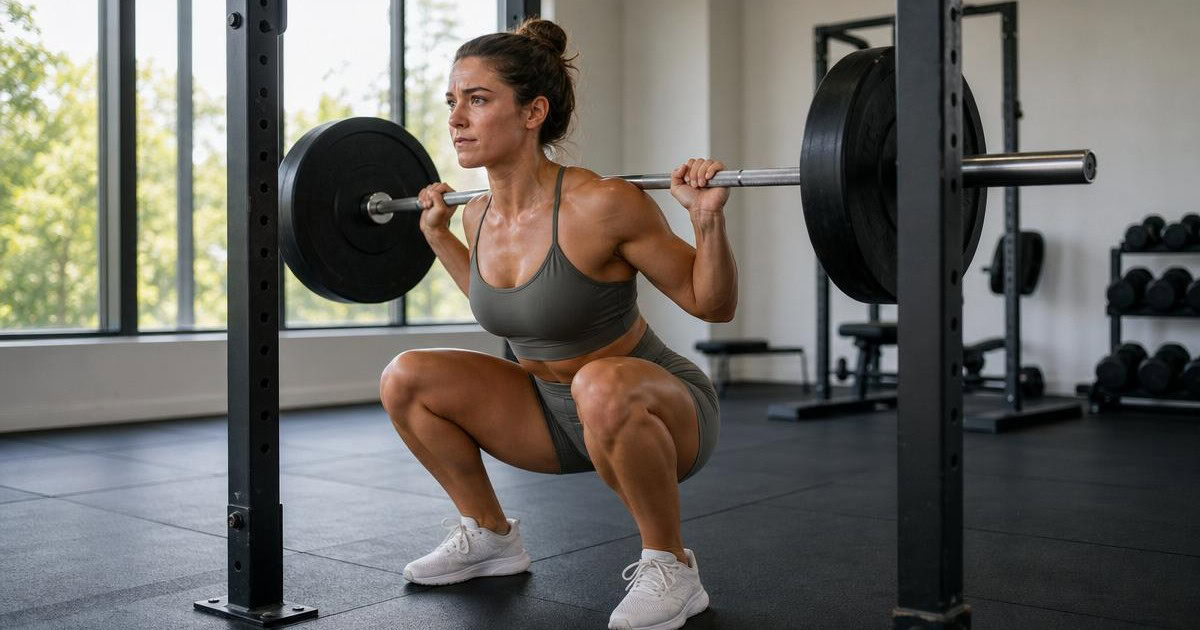
Jump Squat

The Jump Squat performs explosive squat motion ending with a vertical jump, then absorbs the landing back into the squat. The pattern produces explosive leg power that translates directly to parkour jumps, vaults, and recovery movements.
For parkour training, the jump squat is one of the most direct explosive leg power exercises that exists. The pattern hits the legs through high-intensity dynamic loading that mirrors parkour-specific jumping demands. Run it for 4 sets of 6 to 10 reps as primary explosive leg power work.
Stand with feet shoulder-width. Squat down by sitting the hips back. Explosively extend the legs and hips to jump straight up vertically. Land softly with bent knees, immediately lowering into the next squat. Continue in a smooth tempo. The explosive extension produces strong leg power loading.
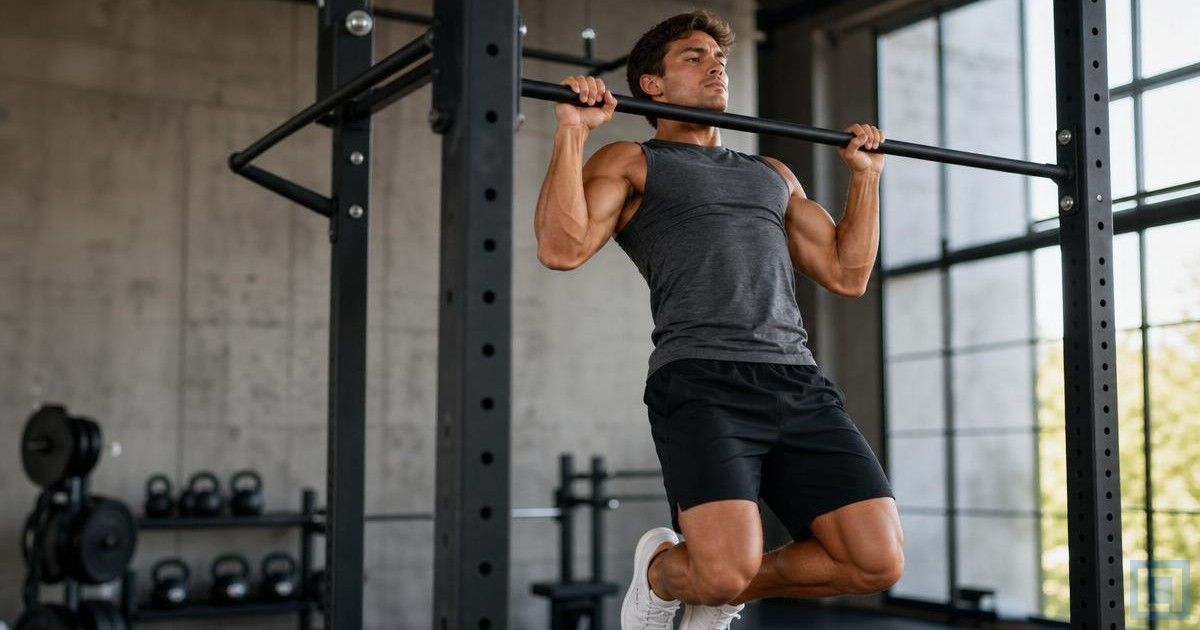
Muscle Up

The Muscle Up combines a pull-up with a transition over the bar to a dip lockout position. The pattern is one of the most demanding upper-body movements in parkour and develops the strength needed for vault recoveries and ledge work.
For parkour training, the muscle up is one of the most demanding upper-body strength movements that exists. The pattern hits the back, chest, shoulders, and arms through combined pulling and pressing that translates directly to parkour wall and ledge work. Run it for 3 sets of 1 to 5 reps as advanced upper-body work, with progressions for athletes still building toward unsupported reps.
Hang from a pull-up bar (or sturdy ledge) with overhand grip. Pull explosively while leaning back to bring the chest toward the bar. As the chest approaches the bar, transition by rolling the shoulders over the bar and pressing up to a dip lockout position with arms straight and the body above the bar. Lower under control to start. Beginners should master strict pull-ups and dips before attempting muscle ups.
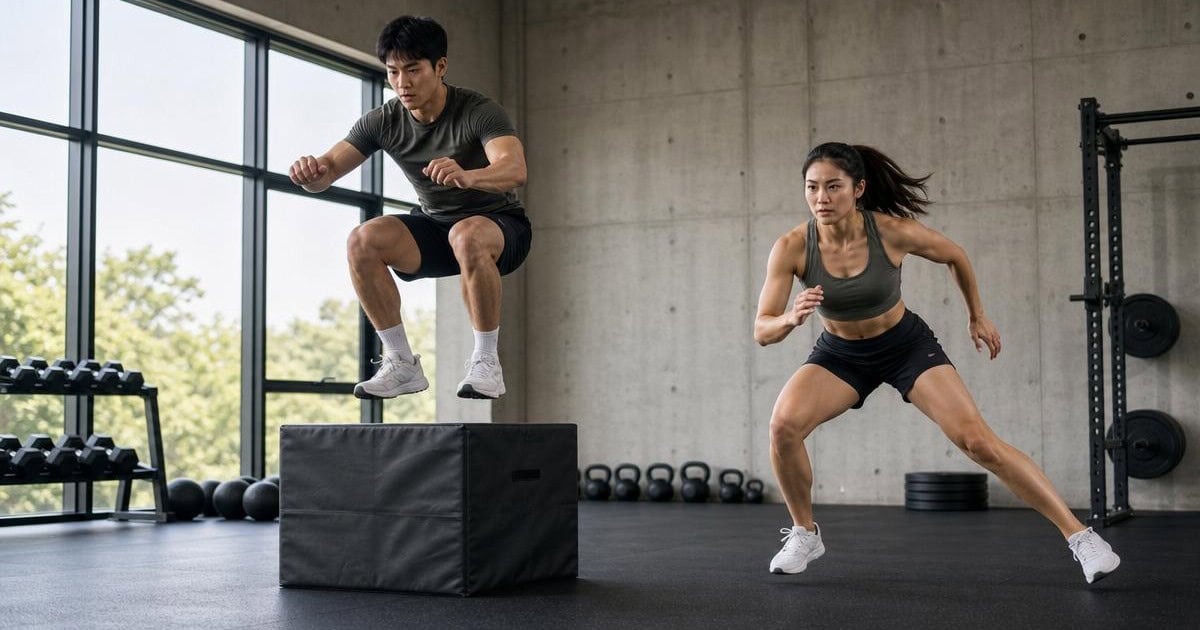
Knee Tuck Jump

The Knee Tuck Jump performs explosive vertical jumps where the knees are tucked toward the chest at peak height. The pattern produces explosive leg power combined with the body control needed for parkour movements requiring tucked positions.
For parkour training, the knee tuck jump produces explosive leg power combined with body control practice. The pattern hits the legs through dynamic loading while developing the body awareness for tuck positions during parkour movements. Run it for 4 sets of 4 to 8 reps as primary explosive power work.
Stand with feet shoulder-width. Drop slightly into a quarter squat. Explosively jump straight up vertically while tucking the knees toward the chest at peak height. Reach the hands forward to meet the knees if possible. Land softly with bent knees in the start position, immediately preparing for the next rep. Maintain tight body position during the tuck phase.
Squat Tuck Jump

The Squat Tuck Jump combines a full squat with an explosive tuck jump. The deeper squat starting position produces stronger leg power loading than the knee tuck jump, building maximum vertical jump capacity for parkour.
For parkour training, the squat tuck jump produces maximum explosive leg power through the deep squat starting position. The pattern hits the legs through full-range dynamic loading. Run it for 3 sets of 4 to 6 reps as advanced explosive power work, with full recovery between sets.
Stand with feet shoulder-width. Squat down to a full depth squat by sitting the hips back. Explosively jump straight up vertically while tucking the knees toward the chest at peak height. Land softly with bent knees, immediately lowering into the next full squat. Continue in a controlled tempo. The full-range squat produces stronger leg power loading than partial squat versions.
How To Program These Workouts
A productive parkour conditioning program organizes these exercises across 3 to 4 weekly sessions, paired with skill practice on additional days. A common 3-day structure: Day 1 (Lower Body Power): jump squat, knee tuck jump, squat tuck jump, plus burpees as conditioning finisher. Day 2 (Upper Body Power and Pressing): plyo push-up, clap push-up, pike push-up, handstand push-up. Day 3 (Pulling and Inversion): muscle up progressions, wall walks, plus burpees as conditioning. Run explosive work for 3 to 4 sets of 4 to 8 reps with full recovery between sets; bodyweight strength work for 3 to 4 sets of 5 to 12 reps; conditioning work (burpees) for 3 to 5 sets of 10 to 20 reps with shorter rest periods.
Train parkour conditioning sessions 3 to 4 times per week alongside skill practice. The combination of explosive power work, bodyweight strength training, and skill practice produces strong but recoverable training stimulus when properly programmed. Most successful parkour programs include 3 to 4 weekly conditioning sessions of 45 to 60 minutes each, plus 2 to 3 skill practice sessions per week. The format works particularly well when paired with appropriate warm-up (joint mobility and dynamic stretches), proper progression (starting with foundational movements and building to advanced variations), and sufficient recovery (parkour involves high-impact activities that require rest days for tissue adaptation). Working with experienced parkour coaches significantly improves technique quality and reduces injury risk.
For broader bodyweight programming, see our best calisthenics workouts and best bodyweight workouts. For specific power work, see our best plyometric workouts.
Final Thoughts
The best parkour workouts deliver real movement performance through exercises that build the specific physical capacities parkour demands: explosive leg power, upper-body pressing strength, pulling strength, and body control. The combination of total-body conditioning, plyometric upper-body work, vertical pressing, explosive jumps, and demanding pulling movements covers every physical demand of parkour and produces broader movement development than skill practice alone. For parkour practitioners who want measurable movement capacity improvements, want to reduce injury risk through proper physical preparation, or want to extend their training career through smart conditioning, dedicated parkour conditioning is one of the most effective investments practitioners can make.
Stay focused on landing mechanics and progression. The most common parkour training mistakes include poor landing mechanics on jumps (which significantly increases injury risk over time) and skipping foundational progressions to attempt advanced movements before the body is ready. The fix: prioritize soft, controlled landings on every jump (with bent knees absorbing impact, not stiff-legged landings), and respect proper progressions for bodyweight strength (master push-ups before plyo push-ups, pike push-ups before handstand push-ups, strict pull-ups before muscle ups). Quality movement built on proper progressions produces sustainable long-term parkour development; rushing progressions or sloppy landings produces injuries that derail training for months.
Frequently Asked Questions
How often should parkour practitioners train?
Three to four conditioning sessions per week alongside 2 to 3 skill practice sessions works for most practitioners. The combination of explosive power work, bodyweight strength training, and skill practice produces strong but recoverable training stimulus when properly programmed. Most successful programs include 3 to 4 weekly conditioning sessions of 45 to 60 minutes each plus 2 to 3 skill practice sessions of 60 to 90 minutes each. Daily training (6 to 7 sessions per week) typically produces accumulated fatigue and injury risk.
Can I train parkour at home?
Yes for foundational conditioning. Most of the exercises in this list require minimal equipment (just floor space and a wall for handstand work). A pull-up bar significantly expands training options (muscle up progressions). However, parkour skill development typically requires outdoor environments with appropriate terrain (parks, urban environments, parkour gyms). Most practitioners benefit from combining home conditioning with outdoor skill practice for complete development.
Are handstand push-ups necessary for parkour?
Highly beneficial but not strictly necessary. Handstand strength translates to many parkour movements (kongs, dive rolls, recovery from falls), and handstand push-ups develop the shoulder strength and body control needed for advanced parkour. Most practitioners benefit from working toward handstand push-ups through progressions (pike push-ups, wall walks, wall-supported handstand push-ups) over 6 to 18 months of consistent practice. Practitioners who prefer not to develop handstand work can still progress in parkour but may have limitations on certain movements.
How do I avoid injury in parkour?
Multiple complementary approaches: prioritize soft controlled landings on every jump, respect proper movement progressions (don’t skip foundations), build strong physical conditioning before attempting demanding movements, work with experienced coaches when learning new techniques, train surfaces and movements appropriate to current ability, and treat recovery as critical (rest days, mobility work, sufficient sleep). Most parkour injuries come from rushed progressions, poor landings, or inadequate physical preparation rather than the discipline itself being inherently dangerous.
Do I need to be young to start parkour?
No, parkour can be started at any age with appropriate progression. Many adult beginners (30s, 40s, even 50s) develop substantial parkour ability over 1 to 3 years of consistent training. Older beginners typically benefit from extended foundational phases (more time on basic conditioning before attempting demanding movements), focus on movements appropriate to current ability, and may need slightly longer recovery between sessions. Children and teenagers often progress faster, but parkour is sustainable as a lifelong practice when trained appropriately for current capacity.