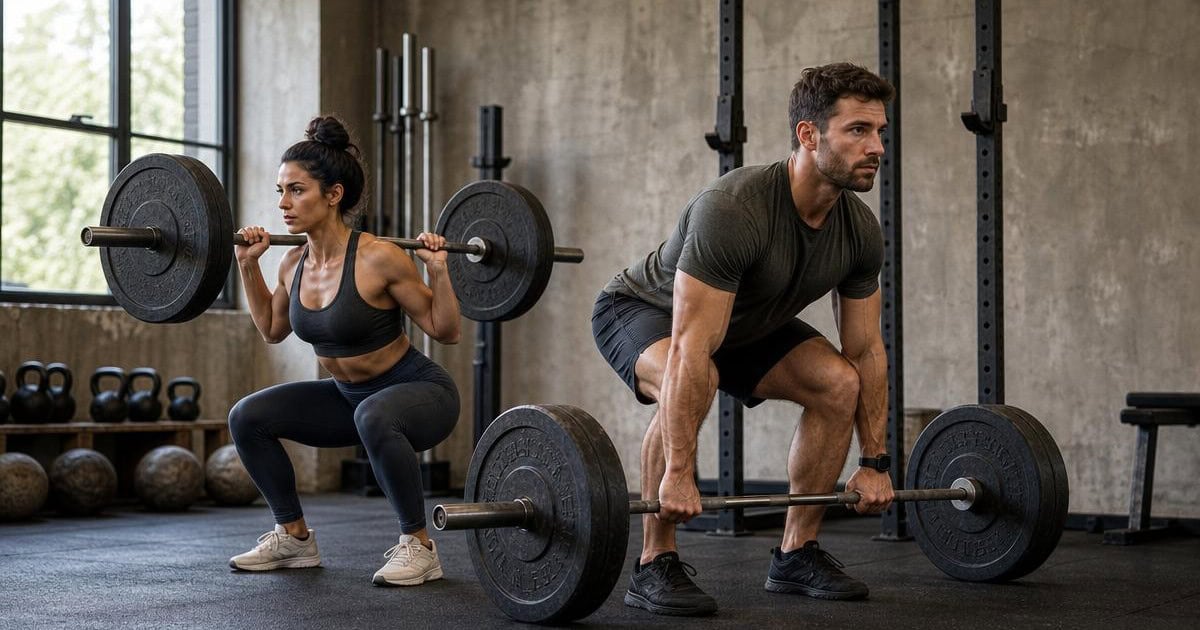
Powerlifting-focused training centers on building maximum strength on the three competition lifts (squat, bench press, deadlift) plus the accessory work that addresses individual weaknesses and builds the specific muscle groups that drive each main lift. Powerlifters who consistently train with proper periodization see continuous strength improvements through their training careers: stronger competition totals, better technique on the three lifts, addressed weaknesses, balanced muscle development that supports the main lifts, reduced injury risk through proper accessory work, and improved meet performance through competition-specific training (paused bench, deadlift lockouts, squat depth). The most effective powerlifting programs prioritize: 1) heavy training on the three competition lifts with periodized programming (working in the 1 to 5 rep range for max strength, occasionally 6 to 10 reps for hypertrophy phases), 2) variation work on each main lift (front squat for squat, pause bench for bench, sumo deadlift for conventional deadlifters), 3) accessory work targeting individual weaknesses (Romanian deadlifts for posterior chain, rows for back/bench, overhead press for tricep lockout), and 4) sufficient recovery between heavy sessions for full strength expression.
Below are ten of the most effective exercises for powerlifting performance, covering the three competition lifts (barbell squat, barbell bench press, barbell deadlift), competition-specific variations (barbell pause bench press, barbell sumo deadlift), squat variations (barbell front squat), and essential accessory work (barbell Romanian deadlift, barbell bent over row, barbell seated overhead press, pull-up). Together they form a complete powerlifting program. A 60 to 90-minute powerlifting session pulled from this list, performed 3 to 4 times per week with proper periodization, produces strong powerlifting development for raw competitors, equipped competitors, and strength sport enthusiasts.
Barbell Squat

The Barbell Squat performs back squats. The pattern is one of the three competition lifts in powerlifting and the foundational lower-body strength builder.
For powerlifters, the back squat is one of the three competition lifts. The pattern produces foundational lower-body strength critical for raw and equipped powerlifting. Run it for 4 to 6 sets of 1 to 5 reps as primary squat training, or 3 to 4 sets of 5 to 8 reps for hypertrophy/volume work.
Set up a barbell on a rack at upper back height. Position the bar across the upper back (low bar position is most common in powerlifting). Step back with feet shoulder-width or wider. Squat down by bending the knees and hips while keeping the chest up. Lower until the hip crease passes below the top of the knee (powerlifting depth). Drive back up through the heels. The pattern is the foundational lift for lower-body strength and one of the three judged competition lifts. Train it with periodized programming for maximum strength gains.
Barbell Bench Press

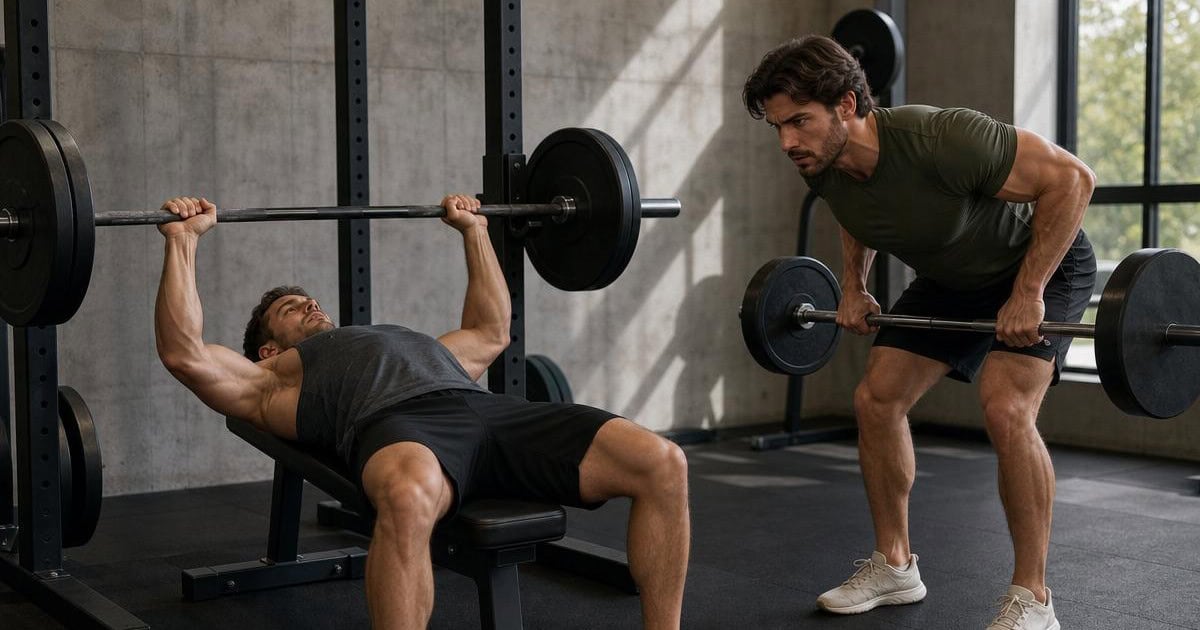
The Barbell Bench Press performs flat bench press. The pattern is one of the three competition lifts in powerlifting and the foundational upper-body strength builder.
For powerlifters, the bench press is one of the three competition lifts. The pattern produces foundational upper-body strength. Run it for 4 to 6 sets of 1 to 5 reps as primary bench training, or 3 to 4 sets of 5 to 8 reps for hypertrophy/volume work.
Lie on a flat bench with the eyes directly under the barbell. Grip the bar with hands wider than shoulder-width (legal powerlifting grip). Set up with strong arched back, retracted shoulder blades, and tight body position. Unrack the bar and position it over the chest. Lower the bar to the chest with controlled tempo (a pause at chest is required in competition). Press the bar back up by extending the arms while maintaining tight body position. The pattern is one of the three judged competition lifts and foundational upper-body strength.
Barbell Deadlift

The Barbell Deadlift performs barbell deadlifts from the floor. The pattern is one of the three competition lifts in powerlifting and the foundational compound full-body strength builder.
For powerlifters, the deadlift is one of the three competition lifts. The pattern produces extreme compound posterior chain and back loading. Run it for 4 to 6 sets of 1 to 3 reps as primary deadlift training, or 3 to 4 sets of 3 to 6 reps for hypertrophy/volume work.
Stand with feet hip-width with a barbell on the floor over the mid-foot. Hinge at the hips and bend the knees to grip the bar with hands just outside the legs (conventional) or inside the legs (sumo). Set up with tight back, locked-in hips, and tension throughout the body. Drive through the heels while extending the hips and knees to lift the bar from the floor. Stand fully tall at the top with the lockout. Lower under control. The pattern is the third judged competition lift in powerlifting and one of the most effective full-body strength builders.
Barbell Romanian Deadlift

The Barbell Romanian Deadlift performs Romanian deadlifts. The hip-hinge pattern builds posterior chain strength supporting deadlift and squat performance.
For powerlifters, the RDL is essential accessory work for deadlift and squat. The hip-hinge pattern builds the posterior chain that drives both lifts. Run it for 3 to 4 sets of 6 to 10 reps as primary posterior chain work.
Stand with feet hip-width holding a barbell at the front of the thighs. Hinge at the hips by sending them backward while keeping the back flat and legs nearly straight. Lower the barbell along the legs until the hamstrings stretch deeply. Drive back to standing by extending the hips. The pattern builds posterior chain strength critical for both deadlift (the deadlift IS a hip hinge) and squat (the back-half of the squat is hip extension). Heavy progressive RDL work translates directly to both competition lifts.
Barbell Bent Over Row

The Barbell Bent Over Row performs barbell rows in a bent-over position. The pattern produces strong upper back work supporting bench and deadlift performance.
For powerlifters, the bent-over row builds the upper back strength essential for bench arch and deadlift integrity. Run it for 4 sets of 6 to 10 reps as primary back accessory work.
Stand with feet hip-width holding a barbell at the front of the thighs with overhand grip. Hinge forward at the hips with a flat back so the torso is at about 45 degrees. Pull the bar to the lower chest by retracting the shoulder blades and pulling the elbows back. The upper back, lats, and rhomboids work hard. Squeeze the shoulder blades hard at peak. Lower under control. The pattern builds the upper back strength critical for powerlifting – bench press setup arch, deadlift back integrity, and squat upper back stability all require strong upper back.
Barbell Seated Overhead Press

The Barbell Seated Overhead Press performs strict overhead press. The pattern produces strong shoulder and tricep work supporting bench performance.
For powerlifters, the overhead press builds shoulder and tricep strength supporting bench press lockout. Run it for 3 to 4 sets of 5 to 8 reps as primary upper-body accessory work.
Sit on a bench with the back firmly against an upright pad. Grip a barbell slightly wider than shoulder-width with overhand grip. Unrack the bar to shoulder height. Press the bar straight overhead by extending the arms. Lower under control to shoulder height. The pattern builds shoulder and tricep strength that directly supports bench press lockout. Strong overhead press capacity correlates with strong bench lockouts in most powerlifters – the triceps work in both lifts.
Barbell Front Squat

The Barbell Front Squat performs front squats. The front-loaded position emphasizes quads and supports back squat performance.
For powerlifters, the front squat is excellent accessory work for back squat. The upright torso position emphasizes quads and core. Run it for 3 to 4 sets of 5 to 8 reps as primary squat accessory work.
Set up a barbell on a rack at upper chest height. Position the barbell at the front of the shoulders with elbows up high (front rack position). Step back from the rack. Squat down by bending the knees and hips while keeping the back vertical. Lower until the thighs are below parallel. Drive back up through the heels. The pattern produces strong quad and core emphasis through the upright torso requirement, addressing weaknesses common in low-bar back squatters. The front squat is excellent accessory work for building back squat strength.
Barbell Pause Bench Press

The Barbell Pause Bench Press performs bench press with a pause at chest. The pattern is competition-specific and trains the bench start strength.
For powerlifters, the pause bench is the competition movement (paused bench is required in competition). Run it for 3 to 4 sets of 1 to 5 reps as primary competition movement training.
Lie on a flat bench. Grip the bar with competition grip and set up with strong arch and retracted shoulder blades. Unrack the bar and position it over the chest. Lower the bar to the chest with controlled tempo. Pause the bar on the chest (no bouncing) for 1 to 3 seconds. Press the bar back up explosively from the dead-stop on the chest. The pattern trains the competition movement and builds the bench start strength out of the dead-stop position. Most powerlifters who train pause bench regularly handle competition bench better than those who only train touch-and-go.
Barbell Sumo Deadlift

The Barbell Sumo Deadlift performs sumo-stance deadlifts. The pattern is the alternative competition deadlift style.
For powerlifters, the sumo deadlift is the alternative competition deadlift style (powerlifters compete with either conventional or sumo). The wide stance emphasizes glutes/quads. Run it for 4 sets of 1 to 5 reps for primary work, or 3 sets of 3 to 6 reps for accessory volume.
Stand with feet wide (typically about 2x shoulder-width) and toes pointed outward, with a barbell on the floor. Grip the bar with hands inside the legs. Drive through the heels while extending the hips and knees to lift the bar from the floor. The wide stance reduces the range of motion (good for taller lifters) and emphasizes glutes/quads more than conventional deadlifts. Stand fully tall at the top. Lower under control. The pattern is the alternative competition deadlift style and excellent variation work for those who compete conventional.
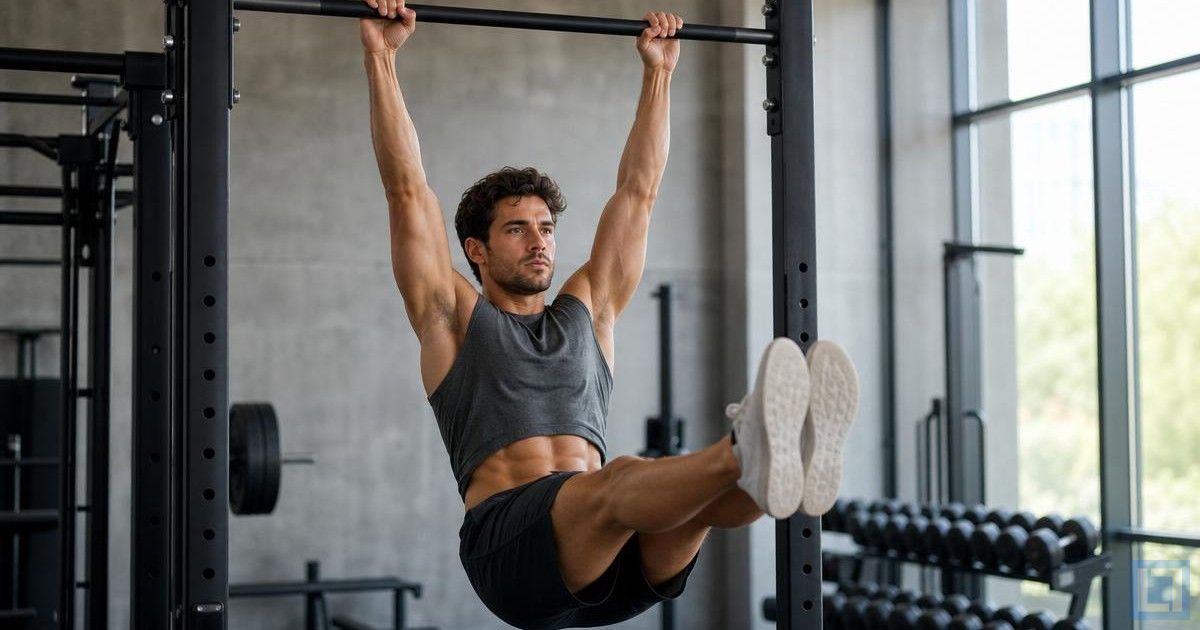
Pull Up

The Pull Up performs bodyweight pull-ups. The pattern produces strong back and lat work supporting deadlift and bench performance.
For powerlifters, pull-ups build the back/lat strength that supports deadlift integrity and bench press setup. Run it for 4 sets of 5 to 10 reps as upper-body accessory work.
Hang from a pull-up bar with hands shoulder-width apart and palms facing away. Pull the body up by retracting the shoulder blades and pulling the elbows down toward the ribs until the chin reaches over the bar. Lower under control to full hang. The pattern builds the lat and back strength critical for powerlifting – lats stabilize during deadlift (preventing the bar from drifting forward), provide setup support for bench press, and contribute to overall upper-body integrity. Add weight (dip belt) for advanced strength as bodyweight reps become easy.
How To Program These Workouts
A productive powerlifting week typically follows a periodized 3 to 4 day split. A common pattern: Day 1 (squat focus): barbell squat (heavy), barbell front squat (accessory), barbell romanian deadlift (posterior chain), barbell bent over row (back). Day 2 (bench focus): barbell bench press (heavy), barbell seated overhead press (accessory), pull-up (back/lat). Day 3 (deadlift focus): barbell deadlift (heavy), barbell sumo deadlift OR barbell romanian deadlift (variation), barbell bent over row. Day 4 (optional bench/upper): barbell pause bench press (competition specific), barbell seated overhead press, pull-up. Run main lift work for 3 to 6 sets of 1 to 5 reps with periodized programming, accessory compound work for 3 to 4 sets of 5 to 10 reps, supporting accessory for 3 to 4 sets of 8 to 12 reps.
Train powerlifting 3 to 4 times per week with proper periodization. Most successful powerlifting programs follow established periodization patterns – linear progression for beginners (5×5 with weekly weight increases), block periodization for intermediates (volume blocks then intensity blocks), or DUP/conjugate methods for advanced lifters. Schedule heavy main lift work with at least 48 to 72 hours recovery between heavy lower-body sessions and 48 hours between heavy upper-body sessions. Powerlifters peaking for meets follow specific peaking protocols (decreasing volume, maintaining or slightly increasing intensity) in the 4 to 6 weeks before competition.
For broader programming, see our best 5 day split workout and best workouts for strength. For specific work, see our best squat workouts.
Final Thoughts
The best workouts for powerlifting deliver continuous strength improvements through training that targets the specific demands of the sport: maximum strength on the three competition lifts (squat, bench press, deadlift), competition-specific variations (paused bench, sumo deadlift), addressed weaknesses through accessory work, and balanced muscle development that supports the main lifts. The combination of heavy main lift training, competition-specific variations, posterior chain work, back accessory work, and proper periodization covers every element of powerlifting development and produces continuous progress through training careers. Most powerlifters who consistently apply these principles see total improvements measured in pounds added to the three lifts within each training cycle. For powerlifters seeking competitive totals, addressed weaknesses, or continued strength progress, dedicated programming around the three competition lifts plus appropriate accessory work is the foundation of the sport.
Stay focused on technique mastery and progressive overload over time. The most common mistake newer powerlifters make is rushing weight progression before establishing solid technique on the three competition lifts. The fix: prioritize technique mastery in the early years of training (years 1 to 3), even if it means progressing slower with weight. Powerlifting is a technique-dependent sport, and lifters who establish strong technique foundations continue progressing for years/decades while those who chase weight too early often plateau or get injured. Combined with proper periodization and consistent training, technique mastery produces the long-term progress that defines successful powerlifting careers.
Frequently Asked Questions
How often should powerlifters train?
3 to 4 times per week works for most powerlifters. The optimal pattern: typically a 3 to 4 day split organized around the main lifts (squat day, bench day, deadlift day, optional fourth bench/upper day). Schedule heavy main lift work with at least 48 to 72 hours recovery between heavy lower-body sessions and 48 hours between heavy upper-body sessions. More than 4 weekly sessions can work for advanced lifters using sophisticated periodization but produces overtraining risk for most. Frequency matters less than total volume and proper recovery.
What’s the best rep range for powerlifting?
Mostly 1 to 5 reps for main lifts, 5 to 10 reps for accessories. Main competition lifts (squat, bench, deadlift) train mostly in the 1 to 5 rep range for maximum strength development, with occasional hypertrophy phases of 6 to 10 reps. Accessory compound work (RDLs, rows, overhead press, pull-ups) typically uses 5 to 10 reps for muscle development supporting the main lifts. Supporting accessories use 8 to 15 reps. Most successful powerlifting programs include both heavy strength work and moderate hypertrophy work across training cycles.
Should I do conventional or sumo deadlift for powerlifting?
Whichever produces your strongest pull. Powerlifters can compete with either style, and the optimal choice depends on individual leverages: taller lifters often prefer sumo (reduced range of motion), shorter lifters often prefer conventional (stronger leverage advantage). Test both styles for several training cycles each, then choose the style that produces your best one-rep max. Many lifters use one style as primary competition lift and the other as accessory variation work.
How important is accessory work in powerlifting?
Very important for long-term progress. Main lifts alone are usually sufficient for the first year of powerlifting, but as strength plateaus develop, accessory work becomes critical for: addressing individual weaknesses (weak hamstrings, weak triceps, weak back), building the muscle that supports the main lifts (RDLs for posterior chain, rows for back, overhead press for triceps), and providing volume without the recovery cost of heavy main lift training. Most successful intermediate and advanced powerlifters spend significant training time on accessory work.
How heavy should I lift for powerlifting?
Periodized weights based on the training cycle. Powerlifting follows established periodization patterns – heavy phases use 80 to 95%+ of one-rep max for 1 to 5 reps, volume phases use 65 to 80% for 5 to 10 reps, hypertrophy phases use 60 to 75% for 8 to 15 reps. Most successful powerlifting programs follow planned cycles that progress through these intensity zones rather than always training at maximum effort. Linear progression works for beginners. Block or DUP periodization works for intermediate and advanced lifters.