Bodyweight glute training produces real glute development through equipment-free exercises that hit the glute maximus, glute medius, and glute minimus across multiple movement patterns. The format works particularly well for glute training because the glutes respond strongly to high-volume bodyweight work (especially through full range of motion with peak-contraction squeezing) and to unilateral exercises that address left-right strength imbalances. Most lifters who consistently train bodyweight glutes 2 to 3 times per week see measurable glute strength, shape, and size improvements within 6 to 12 weeks. The format is also highly accessible (no equipment required for most exercises), which means lifters can train consistently across any setting and accumulate the high training volume that drives glute development.
Below are ten effective bodyweight glute exercises that cover hip thrust patterns (hip thrusts, single leg KAS bridge, frog pump), unilateral work (glute dominant step-up, Bulgarian split squat, walking lunge), squat variations (sumo air squat, jump squat), explosive glute power (bodyweight swing, jump squat), and combined strength-stability work (glute bridge march). Together they form a complete bodyweight glute training program that hits every glute function and movement pattern. A 30 to 40-minute session pulled from this list produces strong combined glute development across strength, hypertrophy, and power work.
Bodyweight Glute Dominant Step Up

The Bodyweight Glute Dominant Step Up steps onto an elevated surface (bench, box, or sturdy chair) using a forward lean position to maximize glute engagement over quad engagement. The forward lean shifts loading toward the glutes through hip extension.
For bodyweight glute training, the glute-dominant step-up is one of the most effective unilateral glute exercises that exists with bodyweight loading. The pattern hits the glutes through controlled hip extension. Run it for 4 sets of 8 to 12 reps per leg as primary unilateral glute work.
Stand in front of a sturdy elevated surface (12 to 18 inches high). Lean the upper body slightly forward to shift loading toward the glutes. Step onto the surface with one foot, driving through the heel and using the glute to lift the body up. Step back down under control. The forward lean position is critical for maximizing glute engagement.
Bodyweight Single Leg KAS Glute Bridge

The Bodyweight Single Leg KAS Glute Bridge performs single-leg glute bridges with the head and shoulders elevated on a bench (rather than the floor), allowing for deeper hip flexion at the bottom and stronger glute contraction at the top.
For bodyweight glute training, the single leg KAS bridge produces very strong unilateral glute loading. The bench-supported upper body allows for full hip flexion range. Run it for 3 sets of 8 to 12 reps per leg as advanced unilateral glute work.
Set up with the upper back resting on a bench (head and shoulders supported) and feet planted on the floor. Lift one leg straight out. Drive through the heel of the planted foot, extending the hip up to lift the body into a single-leg bridge position. Squeeze the glute hard at the top. Lower under control. The bench support enables full hip flexion range.
Bodyweight Frog Pump

The Bodyweight Frog Pump lies on the back with the soles of the feet pressed together (knees out wide in a frog position) and performs hip thrusts. The frog position emphasizes glute engagement over quad engagement.
For bodyweight glute training, the frog pump produces direct glute isolation through the unique foot position. The pattern hits the glutes harder than standard glute bridges. Run it for 3 sets of 15 to 20 reps as direct glute isolation work.
Lie flat on the back with arms at the sides. Bring the soles of the feet together and let the knees fall out wide (creating a frog-like position). Drive the hips up by squeezing the glutes hard. Hold briefly at the top. Lower under control. The feet-together-knees-wide position emphasizes glute engagement.
Bodyweight Swing

The Bodyweight Swing performs kettlebell-swing-style hip-hinge motion using only bodyweight (no kettlebell). The pattern produces dynamic glute and hamstring loading through repeated explosive hip extension.
For bodyweight glute training, the bodyweight swing produces explosive glute and hamstring loading through dynamic hip-hinge motion. The pattern hits the glutes through repeated explosive extension. Run it for 3 sets of 20 to 30 reps as explosive glute and hamstring work.
Stand with feet shoulder-width and arms extended forward. Hinge at the hips by sending them backward while keeping the back flat. Reverse the motion explosively by driving the hips forward, swinging the arms up to chest height. Continue in a smooth tempo throughout the working set. The dynamic hip extension produces strong glute loading.
Bulgarian Split Squat With Chair

The Bulgarian Split Squat with Chair performs split squats with the back foot elevated on a chair (or any sturdy surface). The single-leg loading produces strong combined glute and quad work that addresses left-right strength imbalances.
For bodyweight glute training, the Bulgarian split squat is one of the most effective unilateral glute exercises that exists. The pattern hits the glutes and quads through deep range of motion. Run it for 3 sets of 8 to 12 reps per leg as primary unilateral glute and quad work.
Stand 2 to 3 feet in front of a chair or bench. Place one foot on the chair behind the body. Drop straight down by bending the front knee until the back knee approaches the floor. Drive through the front foot to push back to standing while engaging the glutes hard. Switch sides between sets. Lean slightly forward to emphasize glute loading.
Glute Bridge March

The Glute Bridge March holds a glute bridge position (hips elevated) and alternates lifting one knee at a time toward the chest. The pattern produces sustained glute loading combined with single-leg stability demand.
For bodyweight glute training, the glute bridge march produces strong combined glute strength and stability loading. The pattern hits the glutes through sustained loading combined with single-leg demand. Run it for 3 sets of 16 to 20 total reps as combined glute strength and stability work.
Lie flat on the back with knees bent and feet planted. Drive the hips up into a glute bridge position. Maintain the elevated hip position throughout the set. Alternately lift one knee at a time toward the chest, then return it to the starting position. Switch sides on each rep. The sustained bridge position keeps strong glute loading.
Sumo Air Squat

The Sumo Air Squat performs squats with feet wider than shoulder-width and toes turned out at roughly 45 degrees. The wide stance emphasizes glute and adductor loading over quad loading.
For bodyweight glute training, the sumo squat produces strong combined glute and adductor loading through the wide stance. The pattern hits the glutes through hip-dominant squat motion. Run it for 3 sets of 15 to 20 reps as varied glute and adductor work.
Stand with feet significantly wider than shoulder-width and toes turned out at roughly 45 degrees. Squat down by sitting the hips back and bending the knees, keeping the chest tall. Drive back to standing by extending the hips and squeezing the glutes hard at the top. The wide stance emphasizes glute engagement.
Jump Squat

The Jump Squat performs explosive squat motion ending with a vertical jump, then absorbs the landing back into the squat. The pattern produces explosive glute and leg power through dynamic hip extension.
For bodyweight glute training, the jump squat produces explosive glute and leg power. The pattern hits the glutes through high-intensity dynamic loading. Run it for 4 sets of 6 to 10 reps as explosive glute power work.
Stand with feet shoulder-width. Squat down by sitting the hips back. Explosively extend the legs and hips to jump straight up vertically. Land softly with bent knees, immediately lowering into the next squat. Continue in a smooth tempo. The explosive extension produces strong glute power loading.
Walking Lunge

The Walking Lunge performs continuous lunge motion while walking forward, alternating legs with each step. The pattern produces strong combined unilateral glute and quad loading through dynamic forward motion.
For bodyweight glute training, walking lunges produce strong unilateral glute and quad loading through varied dynamic motion. Run it for 3 sets of 16 to 20 total steps as combined unilateral glute and quad work.
Stand with feet hip-width and hands at the sides or hips. Step one leg forward into a lunge position. Drop the back knee toward the floor by bending both legs. Drive through the front leg to push the body forward into a standing position. Step the back leg through and forward into the next lunge. Continue alternating throughout the working distance.
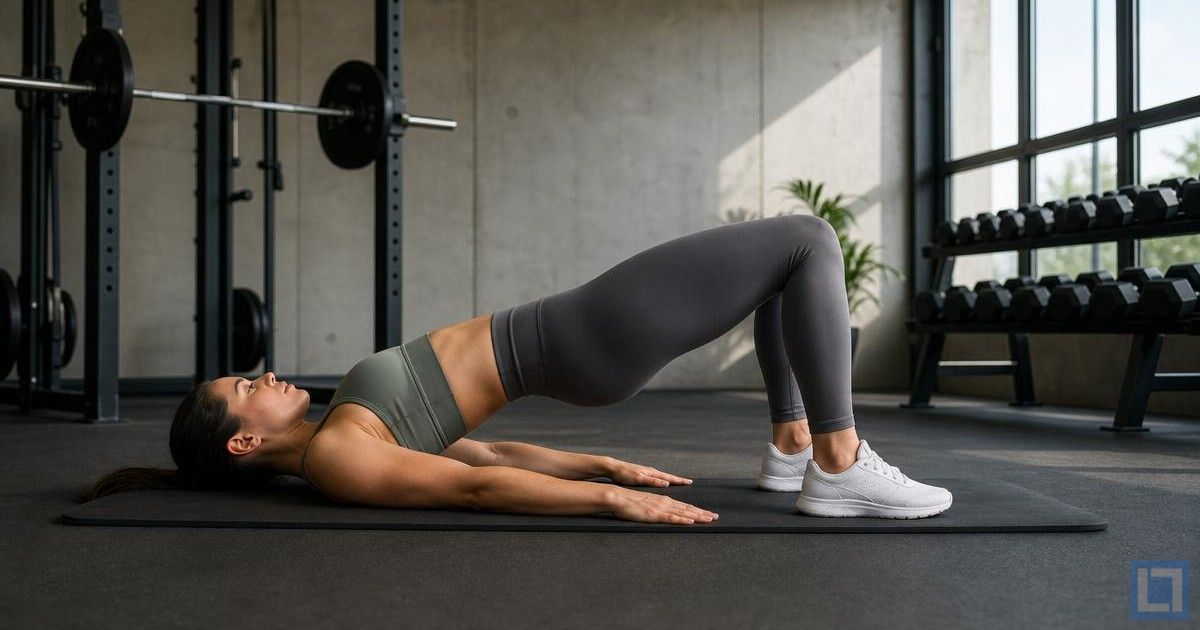
Hip Thrusts

The Hip Thrusts position the upper back on a bench (or floor) with feet planted and drive the hips up by squeezing the glutes. The pattern produces direct glute loading through pure hip extension and is one of the most effective glute exercises that exists.
For bodyweight glute training, the hip thrust is the foundational direct glute exercise. The pattern hits the glutes through pure hip extension at peak contraction. Run it for 4 sets of 12 to 20 reps as primary direct glute work in any bodyweight glute session.
Set up with the upper back resting on a bench (or shoulders on the floor) and feet planted shoulder-width on the floor. Drive the hips up by squeezing the glutes hard. Hold briefly at the top with the body forming a straight line from shoulders to knees. Lower under control. Squeeze the glutes hard at peak contraction.
How To Program These Workouts
A productive bodyweight glute session pulls 6 to 8 exercises from the list above. A balanced session includes one direct glute exercise (hip thrusts or frog pump), one unilateral hip thrust (single leg KAS bridge), one unilateral squat exercise (Bulgarian split squat or walking lunge), one unilateral step-up (glute dominant step-up), one squat variation (sumo air squat), one explosive exercise (jump squat or bodyweight swing), and one combined exercise (glute bridge march). Run direct glute work for 4 sets of 12 to 20 reps; unilateral work for 3 sets of 8 to 12 reps per leg; explosive work for 4 sets of 6 to 10 reps. Total session covers 20 to 26 working sets focused on glute development.
Train bodyweight glute sessions 2 to 3 times per week with at least one rest day per week. The glutes recover within 48 to 72 hours of moderate training and benefit from higher training frequency than other muscle groups. Most successful programs include 2 to 3 weekly bodyweight glute sessions of 30 to 40 minutes each. The format works particularly well for lifters who specifically prioritize glute development, want home-friendly glute training, or want to add high-frequency glute work to existing strength programs.
For broader bodyweight programming, see our best at home leg workouts and best bodyweight leg workouts. For specific glute work, see our how to build bigger glutes.
Final Thoughts
The best bodyweight glute workouts deliver real glute development through equipment-free exercises that hit the glute maximus, medius, and minimus across multiple movement patterns. The combination of direct glute work (hip thrusts, frog pump), unilateral exercises (Bulgarian split squat, step-up, walking lunge), squat variations, and explosive glute power covers every major glute function and produces broader development than single-modality glute training. For lifters who want effective glute training without equipment, want to specifically prioritize glute development, or want sustainable glute practice that fits any setting, dedicated bodyweight glute training is one of the most accessible and effective options available.
Stay focused on the squeeze at peak contraction. The most common bodyweight glute training mistake is rushing through reps without consciously squeezing the glutes hard at peak hip extension, which significantly reduces the glute-development stimulus. The fix: pause briefly at peak contraction on every rep (especially on hip thrusts, glute bridges, frog pumps, and step-ups) and consciously squeeze the glutes as hard as possible before lowering. Quality reps with strong peak-contraction squeezing produce stronger glute development than higher rep counts with rushed execution. The glutes respond strongly to peak-contraction tension.
Frequently Asked Questions
Can bodyweight build a bigger butt?
Yes for beginners through intermediate lifters. The combination of progressive overload (advancing exercise difficulty over time, adding tempo work, increasing volume), appropriate volume, and consistent nutrition produces real glute muscle development for the first 12 to 24 months of training. Most lifters can build noticeable glute size and shape improvements within 6 to 12 months of consistent dedicated glute training plus appropriate caloric surplus for muscle building.
How often should I train glutes with bodyweight?
Two to three times per week works for most lifters. The glutes recover within 48 to 72 hours of moderate training and benefit from higher training frequency than other muscle groups. Most successful programs include 2 to 3 weekly bodyweight glute sessions of 30 to 40 minutes each. Daily glute training produces accumulated fatigue without proportional gains; one weekly session typically provides insufficient stimulus for visible development.
Are bodyweight hip thrusts effective?
Yes effectively for beginners through intermediate lifters. Bodyweight hip thrusts produce direct glute loading through pure hip extension, hitting the glutes harder than most other bodyweight exercises. The pattern is one of the most effective bodyweight glute exercises available. As strength builds beyond 25 to 30 reps with strict form, lifters benefit from progressing to weighted hip thrusts (with dumbbells, barbells, or bands) for continued development. Single-leg variations also provide useful progression for sustained bodyweight training.
How long should bodyweight glute workouts be?
Thirty to forty minutes per session works for most lifters. The format includes 6 to 8 exercises across direct glute work, unilateral training, and squat variations, which requires 30 to 40 minutes for proper sets and rest. Shorter sessions (20 to 25 minutes) work well for high-frequency daily glute work; longer sessions (50+ minutes) typically produce diminishing returns through accumulated fatigue.
Can I build glutes without weights?
Yes effectively. Bodyweight glute training produces real glute strength and muscle development through high-volume work in proper rep ranges (12 to 20 reps), unilateral exercises that address strength imbalances, and explosive work for power development. Most successful bodyweight glute programs include 6 to 8 exercises per session, performed 2 to 3 times per week with progressive overload through harder variations and increased volume. Combined with appropriate nutrition, bodyweight training can build noticeable glute development for the first 12 to 18 months of consistent practice.