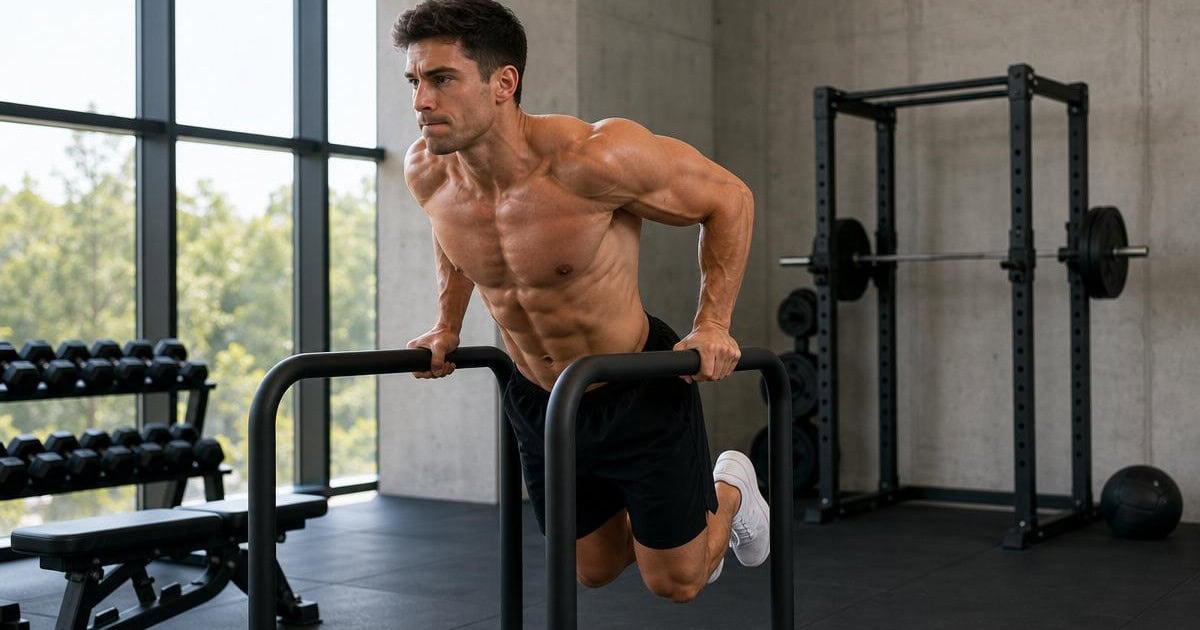
The pectoralis major (pec major) – the large fan-shaped muscle covering the front of the chest from the sternum to the upper arm – is one of the most prominent upper-body muscles, contributing substantially to upper-body mass, pressing strength, and the developed chest appearance that characterizes well-developed physiques. The pec major has multiple regions that respond to different angles: clavicular (upper) fibers that activate strongest during incline pressing, sternal (middle) fibers that activate strongest during flat pressing, and abdominal (lower) fibers that activate strongest during decline pressing – and complete pec major development requires training all three regions through varied angles. The pec major activates strongest during: flat pressing patterns (bench press, dumbbell bench press, machine chest press, push-ups) for compound mid-chest loading, incline pressing patterns (barbell incline, dumbbell incline) for upper chest emphasis, decline pressing patterns (dumbbell decline) for lower chest emphasis, isolation patterns (dumbbell fly, cable crossover) for direct chest isolation, and extended range patterns (pullover) for chest stretch and contraction. Most lifters who want a more developed pec major benefit from training chest 2 times per week with appropriate volume distributed across all three regions plus dedicated isolation work.
Below are ten of the most effective exercises for pec major development, covering primary flat pressing (barbell bench press, dumbbell bench press, push-ups, lever chest press), incline pressing for upper chest (barbell incline bench press, dumbbell incline bench press), decline pressing for lower chest (dumbbell decline bench press), direct isolation (dumbbell fly, cable crossover), and extended range work (barbell pullover). Together they form a complete pec major program. A 60 to 75-minute chest-focused session pulled from this list, performed 1 to 2 times per week (or as primary pressing work in upper-body sessions), produces strong pec major development for any lifter focused on building bigger chest, more developed pec definition, or impressive pressing strength.
Barbell Bench Press

The Barbell Bench Press performs flat bench press. The pattern is foundational for pec major development.
For pec major development, the bench press is foundational. Run it for 4 sets of 5 to 8 reps as primary chest work.
Lie on a flat bench with the eyes directly under the barbell. Grip the bar with hands wider than shoulder-width. Unrack the bar and position it over the chest. Lower the bar to the chest by bending the elbows. Press the bar back up by extending the arms. The pattern is foundational for pec major development – heavy bench press produces the heaviest possible compound chest loading through the most loaded chest pattern. Most lifters with the most developed chests have built them on consistent heavy bench press training. The compound nature trains the entire pec major while producing foundational mass stimulus.
Dumbbell Bench Press

The Dumbbell Bench Press performs dumbbell bench press. The pattern produces chest loading through deeper range.
For pec major development, the dumbbell bench press produces deeper range chest loading. Run it for 3 to 4 sets of 8 to 12 reps as chest work variation.
Lie on a flat bench holding dumbbells at chest level with palms facing forward. Press the dumbbells up by extending the arms while bringing the dumbbells slightly toward the centerline at the top. Lower under control to deep stretch position at the chest. The pattern produces chest loading through deeper range of motion than barbell bench – the dumbbells can travel deeper, producing greater chest stretch and contraction. Combined with barbell bench, dumbbells produce complete pec major development.
Barbell Incline Bench Press

The Barbell Incline Bench Press performs incline bench press. The pattern emphasizes upper pec major.
For pec major development, the incline bench press emphasizes upper chest. Run it for 3 to 4 sets of 6 to 10 reps as upper chest work.
Set up a bench at 30 to 45-degree incline. Lie on the bench with the eyes directly under the barbell. Grip the bar with hands wider than shoulder-width. Unrack the bar and position it over the upper chest. Lower the bar to the upper chest by bending the elbows. Press the bar back up by extending the arms. The pattern emphasizes the upper portion of the pec major – the incline angle shifts loading to the clavicular fibers (upper chest). Critical for complete pec major development because flat-only training underdevelops the upper chest.
Dumbbell Incline Bench Press

The Dumbbell Incline Bench Press performs incline dumbbell press. The pattern emphasizes upper pec with deeper range.
For pec major development, the dumbbell incline press emphasizes upper chest with deeper range. Run it for 3 sets of 8 to 12 reps as upper chest variation.
Lie on an incline bench at 30 to 45 degrees holding dumbbells at upper chest level with palms facing forward. Press the dumbbells up by extending the arms while bringing the dumbbells toward the centerline at the top. Lower under control to deep stretch at the upper chest. The pattern emphasizes upper pec major loading through deeper range – the incline angle plus deeper dumbbell range produces strong upper chest stimulus. Excellent variation alongside barbell incline pressing.
Dumbbell Fly

The Dumbbell Fly performs dumbbell flies. The pattern produces direct pec major isolation.
For pec major development, the dumbbell fly produces direct chest isolation. Run it for 3 sets of 10 to 15 reps as chest isolation work.
Lie on a flat bench holding dumbbells with arms extended above the chest, palms facing each other. Lower the dumbbells out to the sides in an arc by bringing the arms wide while keeping slight elbow bend. Allow the chest to stretch deeply. Bring the dumbbells back together in an arc by adducting the arms with the chest. The pattern produces direct pec major isolation through pure horizontal adduction – the fly specifically trains the chest through stretch and contraction without tricep involvement. Excellent isolation work alongside compound pressing.
Cable Crossover

The Cable Crossover performs cable crossovers. The pattern produces direct pec isolation with constant tension.
For pec major development, the cable crossover produces direct chest isolation with constant tension. Run it for 3 sets of 12 to 15 reps as chest isolation variation.
Stand between two cable pulleys at high position. Grip the handles with arms extended out to the sides. Step forward with one foot for stability. Pull the handles together in front of the chest in an arc by adducting the arms. The chest works hard with constant cable tension. Squeeze hard at peak. Return under control. The pattern produces direct pec major isolation with constant tension – the cable maintains tension throughout the range, producing more time under tension than dumbbell flies. Excellent variation alongside dumbbell flies for complete chest isolation.
Push Ups

The Push Ups performs bodyweight push-ups. The pattern produces compound chest loading.
For pec major development, push-ups provide compound chest loading. Run it for 3 sets of 10 to 20 reps as compound chest variation.
Position into a plank with hands shoulder-width apart on the floor and the body straight from head to heels. Lower the body by bending the elbows until the chest nearly touches the floor. Push back up by extending the arms. The chest, anterior delts, and triceps work hard. The pattern produces compound chest loading through bodyweight – while not the heaviest possible loading, push-ups provide chest training accessible anywhere and supplementary chest work alongside heavy bench pressing. Combined with weighted variations (weighted vests, deficit push-ups), push-ups produce excellent chest development.
Dumbbell Decline Bench Press

The Dumbbell Decline Bench Press performs decline dumbbell press. The pattern emphasizes lower pec major.
For pec major development, the decline dumbbell press emphasizes lower chest. Run it for 3 sets of 8 to 12 reps as lower chest work.
Lie on a decline bench with the legs secured holding dumbbells at lower chest level with palms facing forward. Press the dumbbells up by extending the arms. Lower under control to deep stretch at the lower chest. The pattern emphasizes the lower portion of the pec major – the decline angle shifts loading to the sternal fibers (lower chest). Critical for complete pec major development because flat and incline training can underdevelop the lower chest. Combined with flat and incline work, decline pressing produces complete chest development.
Lever Chest Press

The Lever Chest Press performs machine chest press. The pattern produces controlled compound chest loading.
For pec major development, the lever chest press produces controlled compound chest work. Run it for 3 sets of 8 to 12 reps as compound chest variation.
Sit on a machine chest press with chest against the pad. Grip the handles with both hands. Press the handles forward by extending the arms. The chest works hard. Squeeze hard at peak. Return under control. The pattern produces controlled compound chest loading – the machine eliminates stabilization demands and allows focused chest loading without the systemic fatigue of free-weight pressing. Excellent variation alongside free-weight pressing for chest volume and loading near the end of intense sessions.
Barbell Pullover

The Barbell Pullover performs barbell pullovers. The pattern produces chest stretch and pullover work.
For pec major development, the barbell pullover produces chest loading through extended range. Run it for 3 sets of 8 to 12 reps as chest stretch variation.
Lie across a bench with only the upper back supporting the body. Hold a barbell with hands shoulder-width and arms extended above the chest. Lower the barbell over and behind the head by flexing at the shoulders, allowing the chest and lats to stretch deeply. Pull the barbell back over the chest by adducting the arms. The chest and lats work hard through extended range. The pattern produces chest loading with extreme stretch – the pullover specifically trains the chest through extended range, producing excellent stretch and contraction. Excellent supplementary work alongside compound pressing.
How To Program These Workouts
A productive pec major session pulls 5 to 7 exercises from the list above. A common balanced session: barbell bench press (heavy primary), barbell incline bench press (upper chest), dumbbell bench press (variation), dumbbell fly (isolation), cable crossover (constant tension), barbell pullover (stretch). For complete chest development: include flat (bench press), incline (incline bench), and decline (decline press) angles plus isolation work. For upper chest emphasis: prioritize incline pressing (both barbell and dumbbell) plus appropriate flat work. For overall chest mass: heavy compound pressing (bench press, incline bench) plus isolation. Run heavy compound work for 3 to 4 sets of 5 to 8 reps, variation pressing for 3 sets of 8 to 12 reps, isolation work for 3 sets of 10 to 15 reps.
Train pec major 1 to 2 times per week as part of complete pressing programming. Most successful chest programs structure work as: 1) primary chest day (heavy compound pressing plus accessories), 2) secondary chest day (different angles, variations, isolation), 3) integrated chest work in regular training. The pec major responds well to varied training stimulus – hitting it with multiple angles (flat, incline, decline), compound and isolation, and varied training modalities (free weights, cables, machines, bodyweight) across multiple weekly sessions produces accelerated chest development. Combined with progressive overload and adequate volume (12 to 18+ weekly working sets focused on chest), dedicated chest training produces visible development within 12 to 16 weeks for most lifters.
For broader programming, see our how to grow your chest and how to build bigger pecs. For specific work, see our best upper pec exercises.
Final Thoughts
The best pectoralis major exercises deliver real chest development through training that targets all three regions of the chest muscle: flat pressing for compound mid-chest loading, incline pressing for upper chest emphasis, decline pressing for lower chest emphasis, direct isolation for targeted stimulus, and extended range work for stretch and contraction. The combination of bench press, dumbbell bench press, incline pressing, dumbbell incline, dumbbell fly, cable crossover, push-ups, decline press, machine chest press, and pullover covers every functional pattern of pec major development and produces broader upper-body, pressing, and aesthetic development than partial training would suggest. Many lifters discover bigger chest mass, more upper chest development (visible from the side), more defined chest separation, more impressive pressing strength, and the integrated chest development that defines well-developed physiques within 12 to 16 weeks of adding consistent comprehensive chest work. For lifters seeking complete pec major development, dedicated multi-angle chest training is one of the most effective interventions available.
Stay focused on multi-angle pressing as the priority for complete pec major development. The most common mistake lifters make in chest training is doing only flat bench pressing (often only barbell bench), which produces general chest development but underdevelops the upper and lower regions. The fix: prioritize multi-angle pressing covering flat (barbell bench, dumbbell bench), incline (barbell incline, dumbbell incline) for upper chest, and decline (dumbbell decline) for lower chest, plus dedicated isolation work (flies, crossovers) for direct chest loading. Combined with appropriate volume (12 to 18+ weekly working sets), progressive overload, and varied training modalities, multi-angle pressing produces the complete chest development that single-angle training never achieves. The pec major is built through varied stimulus across all regions.
Frequently Asked Questions
How can I build a bigger chest?
Multi-angle pressing plus dedicated isolation. Heavy bench press produces foundational chest loading. Incline pressing emphasizes upper chest. Decline pressing emphasizes lower chest. Combined with dumbbell variations (deeper range), dumbbell flies (isolation), cable crossovers (constant tension), push-ups (compound bodyweight), machine pressing (controlled), and pullovers (stretch), these form the foundation of complete chest development. The fastest gains come from multi-angle compound pressing plus dedicated isolation across multiple weekly sessions.
What’s the best chest exercise?
Heavy bench press. Heavy bench press produces the most direct chest loading possible – it specifically targets the chest through the heaviest possible compound pressing pattern. Combined with incline pressing (upper chest), decline pressing (lower chest), dumbbell variations (deeper range), flies (isolation), cable crossovers (constant tension), push-ups (compound bodyweight), and pullovers (stretch), heavy bench press forms the foundation of chest development. Most lifters with the most developed chests have built them on consistent heavy bench pressing plus multi-angle accessory work.
How do I get a more developed upper chest?
Heavy incline pressing. Heavy barbell incline bench press at 30 to 45-degree angle produces the most direct upper chest loading possible. Heavy dumbbell incline pressing adds variation with deeper range of motion. Combined with appropriate flat pressing (foundation) and isolation work (flies and crossovers), this upper-chest-focused program produces measurable upper chest development within 12 to 16 weeks. The mechanism: upper chest development depends on incline pressing – flat pressing alone underdevelops the upper region.
How often should I train chest?
1 to 2 times per week as part of complete pressing programming. The chest responds well to varied training stimulus across multiple weekly sessions. Most successful programs include: 1) primary chest day (heavy compound pressing), 2) secondary chest day (different angles, variations, isolation), 3) integrated chest work in regular training. Total weekly chest volume should be 12 to 18+ working sets across compound, isolation, and multi-angle pressing.
How long does it take to build a bigger chest?
12 to 16 weeks for measurable improvement, ongoing for substantial development. Most lifters who consistently apply multi-angle compound pressing plus dedicated isolation plus adequate volume see measurable chest improvement within 12 to 16 weeks. Beginners often see initial gains within 8 to 12 weeks. Substantial chest development requires 6 to 12+ months of consistent training. The chest is highly responsive to dedicated training when properly programmed across multiple angles.