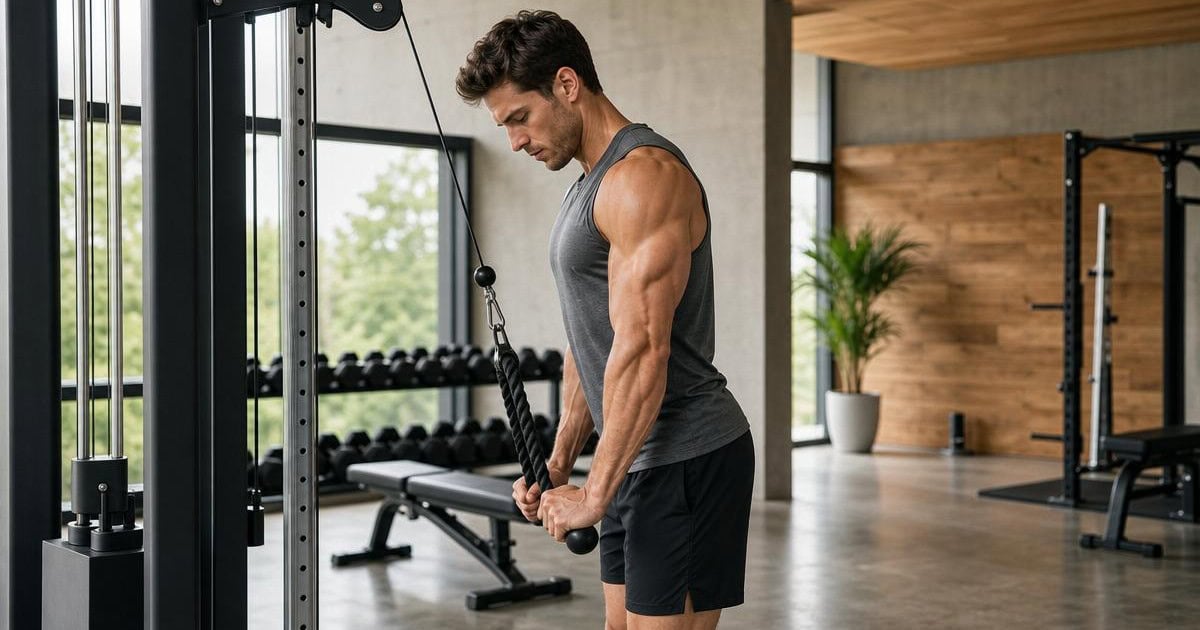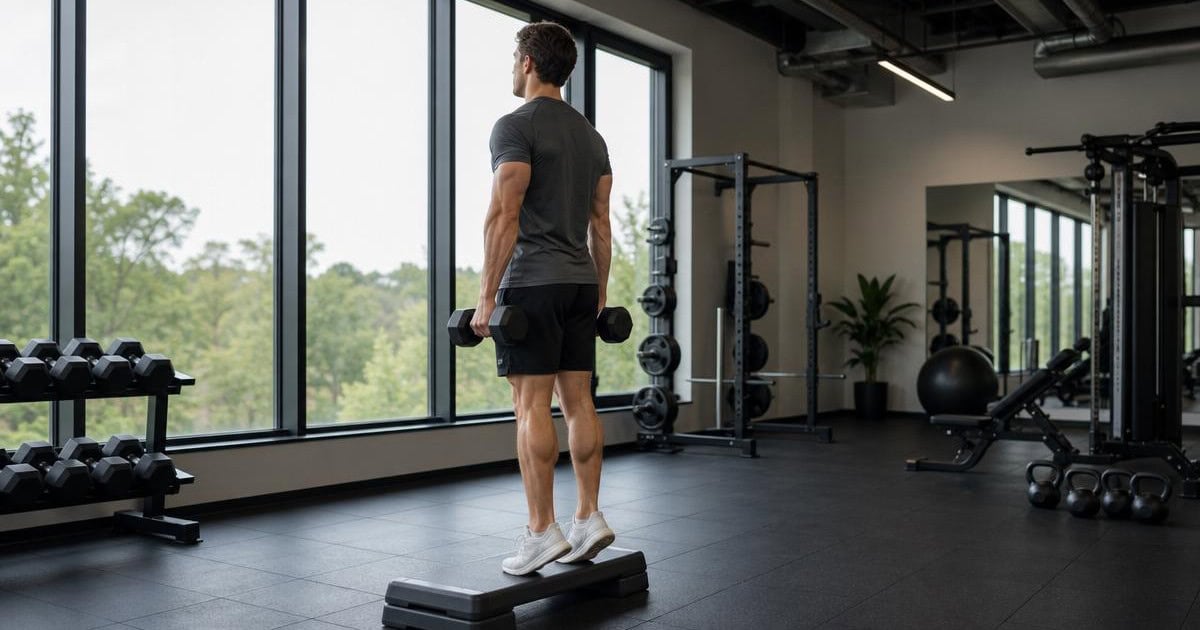
Dumbbell calf training produces real calf development through patterns that load both the gastrocnemius (upper calf) and soleus (deep calf) with the unique advantages dumbbells offer: heavy loading capacity for productive calf overload, unilateral options that effectively double the relative loading per calf, the ability to position the body in multiple ways (standing, seated, single-leg, squat-held), and accessibility for home or gym training. The format works particularly well for calves because the muscle group has two distinct functions (gastrocnemius for straight-leg plantar flexion, soleus for bent-knee plantar flexion), and dumbbells deliver dedicated loading for each through standing variations (gastrocnemius) and seated variations (soleus). Most lifters who consistently train dumbbell calf work 1 to 3 times per week alongside compound lower-body movements see measurable calf development, improved ankle health, and better athletic performance within 8 to 16 weeks. The combination of standing variations, seated soleus work, single-leg patterns, and explosive variations produces strong calf development that complements compound lifting and supports athletic performance.
Below are ten effective dumbbell calf exercises that cover standing gastrocnemius work (dumbbell standing calf raise, dumbbell single leg calf raise, dumbbell standing single leg calf raise), seated soleus work (dumbbell seated calf raise, dumbbell seated one leg calf raise, dumbbell seated one leg calf raise palm up, dumbbell seated one leg calf raise hammer grip), endurance and conditioning work (dumbbell walking calf raise), combined squat-hold work (dumbbell squat hold calf raise), and explosive power work (dumbbell plyo squat). Together they form a complete dumbbell calf program that hits both calf muscles through every available pattern. A 20 to 30-minute session pulled from this list, performed 1 to 3 times per week, produces strong calf development.
Dumbbell Standing Calf Raise

The Dumbbell Standing Calf Raise performs standing calf raises holding dumbbells at the sides. The pattern produces strong gastrocnemius loading with adjustable dumbbell weight.
For dumbbell calf training, the standing calf raise is the foundational gastrocnemius exercise. The pattern hits the gastrocnemius through standing plantar flexion. Run it for 4 sets of 12 to 15 reps as primary calf mass work in any dumbbell calf session.
Stand with feet hip-width holding heavy dumbbells at the sides. Stand on a small platform or weight plate (about 2 to 3 inches elevation) with the balls of the feet on the edge and heels hanging off. Stand fully tall through the body. Lower the heels below the platform level by allowing the calves to stretch deeply. Drive the heels up by extending through the toes (plantar flexion). Squeeze the calves hard at the top. Lower under control. The platform elevation allows full range of motion.
Dumbbell Seated Calf Raise

The Dumbbell Seated Calf Raise performs seated calf raises with dumbbells resting on the thighs. The bent-knee position emphasizes the soleus (deep calf muscle critical for thickness).
For dumbbell calf training, the seated calf raise is the foundational soleus exercise. The bent-knee position is critical for soleus targeting. Run it for 3 to 4 sets of 12 to 15 reps as primary soleus work.
Sit on a bench with feet on a small platform (heels hanging off). Place a dumbbell vertically on each thigh just above the knees, holding them in place with your hands. The bent-knee position places the soleus in primary loading position. Lower the heels below the platform level. Drive the heels up by plantar flexing through the toes. Squeeze the soleus hard at the top. Lower under control. The bent-knee position is essential for soleus emphasis.
Dumbbell Single Leg Calf Raise

The Dumbbell Single Leg Calf Raise performs unilateral calf raises with a dumbbell in one hand on the same side. The pattern produces strong unilateral gastrocnemius loading.
For dumbbell calf training, the single-leg calf raise produces strong unilateral gastrocnemius work. The single-leg position doubles relative loading per leg. Run it for 3 sets of 12 to 15 reps per leg as unilateral calf work.
Stand on one foot on a platform with the ball of the foot on the edge and heel hanging off. Hold a dumbbell in the same-side hand with the arm hanging straight at the side. The other hand can lightly hold a wall or rail for balance. Lower the heel below the platform level. Drive the heel up by plantar flexing. Squeeze hard at the top. Lower under control. Switch legs between sets. The single-leg loading produces strong unilateral calf work.
Dumbbell Standing Single Leg Calf Raise

The Dumbbell Standing Single Leg Calf Raise performs unilateral standing calf raises with a dumbbell. The pattern produces strong unilateral gastrocnemius loading with controlled balance.
For dumbbell calf training, the standing single-leg calf raise produces strong unilateral calf work with maximum loading. The single-leg position is highly effective. Run it for 3 sets of 10 to 15 reps per leg as primary unilateral calf work.
Stand on one foot near a wall or sturdy support. Hold a dumbbell in one hand. The other foot lifts off the floor (other leg can rest behind for balance). Lightly hold the support with the empty hand for balance only. Drive the heel up by plantar flexing through the toes. Squeeze the calf hard at the top. Lower under control. Switch legs between sets. The pattern produces strong unilateral calf loading equivalent to many weighted machine variations.
Dumbbell Walking Calf Raise

The Dumbbell Walking Calf Raise performs walking on the toes (high heels lifted) with dumbbells held at the sides. The pattern produces sustained calf endurance loading combined with conditioning.
For dumbbell calf training, the walking calf raise produces strong calf endurance work plus conditioning. The pattern hits the calves through sustained plantar flexion. Run it for 3 sets of 30 to 60-second walks as calf endurance and conditioning work.
Stand with feet hip-width holding moderate dumbbells at the sides. Lift the heels into full plantar flexion (high). Walk forward in controlled steps while maintaining the heels lifted throughout the entire walk. Continue for the working interval or distance. The sustained plantar flexion plus walking motion plus dumbbell loading produces strong calf endurance work and combined conditioning. Use as primary calf endurance training or as a finisher.
Dumbbell Seated One Leg Calf Raise

The Dumbbell Seated One Leg Calf Raise performs unilateral seated calf raises with a dumbbell on the working leg. The pattern produces strong unilateral soleus loading.
For dumbbell calf training, the seated one-leg calf raise produces strong unilateral soleus work. The pattern hits each soleus individually. Run it for 3 sets of 12 to 15 reps per leg as unilateral soleus work.
Sit on a bench with one foot on a platform (heel hanging off). The other foot can rest off the platform. Place a dumbbell vertically on the thigh of the working leg just above the knee. The bent-knee position places the soleus in primary loading position. Lower the heel below the platform level. Drive the heel up by plantar flexing. Squeeze the soleus hard at the top. Switch legs between sets. The unilateral position produces concentrated soleus work.
Dumbbell Seated One Leg Calf Raise Palm Up

The Dumbbell Seated One Leg Calf Raise Palm Up performs unilateral seated calf raises with the dumbbell held palm-up on the thigh. The grip variation produces unique loading.
For dumbbell calf training, the palm-up variation produces variation soleus work. The grip difference produces slight angle variation. Run it for 3 sets of 12 to 15 reps per leg as variation soleus work.
Sit on a bench with one foot on a platform. Place a dumbbell on the thigh held with palm-up grip (palm facing up under the dumbbell). The bent-knee position places the soleus in primary position. Lower the heel below the platform level. Drive the heel up by plantar flexing. Squeeze the soleus at the top. Switch legs between sets. The pattern produces variation soleus loading with slight angle differences.
Dumbbell Seated One Leg Calf Raise Hammer Grip

The Dumbbell Seated One Leg Calf Raise Hammer Grip performs unilateral seated calf raises with the dumbbell held in hammer grip. The grip variation produces unique loading.
For dumbbell calf training, the hammer grip variation produces variation soleus work. The grip continues to provide soleus loading. Run it for 3 sets of 12 to 15 reps per leg as variation soleus work.
Sit on a bench with one foot on a platform. Place a dumbbell on the thigh held with hammer grip (palm facing the side). The bent-knee position places the soleus in primary position. Lower the heel below the platform level. Drive the heel up by plantar flexing. Squeeze hard at the top. Switch legs between sets. The pattern continues to emphasize soleus through unilateral bent-knee positioning with grip variation.
Dumbbell Squat Hold Calf Raise

The Dumbbell Squat Hold Calf Raise performs calf raises while holding a goblet squat position with a dumbbell. The pattern produces combined isometric quad loading and calf work.
For dumbbell calf training, the squat hold calf raise produces combined calf and quad work. The squat hold adds isometric quad demand. Run it for 3 sets of 10 to 15 reps as combined calf and quad work.
Hold a dumbbell at the chest in goblet position. Squat down into a deep goblet squat hold (thighs parallel to the floor). From this squat hold position, raise the heels by plantar flexing through the toes. The calves work to lift the heels while the quads work isometrically to maintain the squat hold. Lower the heels under control while maintaining the squat. Continue for reps. The pattern produces combined lower-body work.
Dumbbell Plyo Squat

The Dumbbell Plyo Squat performs explosive squat jumps with dumbbells. The pattern produces combined explosive lower-body and dynamic calf loading through the explosive plantar flexion.
For dumbbell calf training, the plyo squat produces explosive calf work plus full lower-body conditioning. The pattern hits the calves through explosive plantar flexion. Run it for 3 sets of 8 to 12 reps as explosive combined work.
Stand with feet hip-width holding dumbbells at the sides. Squat down by bending the knees. Drive explosively up by extending the hips, knees, and ankles (triple extension). The calves work hard through the explosive plantar flexion as the body jumps off the ground. Land softly back into squat position. Repeat for reps. The pattern produces explosive calf power plus full-body conditioning. Use moderate dumbbells for control during landings.
How To Program These Workouts
A productive dumbbell calf session pulls 4 to 6 exercises from the list above based on training goals. A common balanced session: dumbbell standing calf raise (gastrocnemius mass), dumbbell seated calf raise (soleus mass), dumbbell standing single leg calf raise (unilateral), dumbbell walking calf raise (endurance), dumbbell plyo squat (explosive). For mass focus: dumbbell standing single leg calf raise, dumbbell seated one leg calf raise, dumbbell standing calf raise, dumbbell seated calf raise. Run gastrocnemius work for 3 to 4 sets of 12 to 15 reps, soleus work for 3 to 4 sets of 12 to 15 reps, unilateral work for 3 sets of 10 to 15 reps per leg, and explosive work for 3 sets of 8 to 12 reps. Total session covers 12 to 18 working sets focused on calf development.
Train dumbbell calf work 1 to 3 times per week as part of broader lower-body programming. The calves are highly fatigue-resistant due to their use in daily walking and standing, so they recover quickly between sessions and tolerate higher frequency than other muscle groups. Most successful programs include dumbbell calf work either: 1) at the end of a leg day after compound work, 2) on dedicated calf days for specialization, or 3) split across multiple lower-body days for high frequency. Lifters with stubborn calf development often respond well to higher-frequency training (3 to 4 times per week with managed volume per session).
For broader calf programming, see our best calf workouts and how to grow your calves. For specific seated work, see our best seated calf raise workouts.
Final Thoughts
The best dumbbell calf workouts deliver real calf development through patterns that effectively load both the gastrocnemius and soleus with the unique advantages dumbbells offer: heavy loading capacity, unilateral options, varied position work (standing, seated, single-leg, squat-held), and accessibility for home or gym training. The combination of standing variations, seated soleus work, single-leg patterns, endurance work, and explosive variations covers every functional pattern of the calves and produces broader development than equipment-limited training would suggest. For lifters who want measurable calf size improvements, want to develop the often-undertrained soleus through bent-knee work, want to address calf strength asymmetries through unilateral patterns, or want to break through plateaus in calf development, dedicated dumbbell calf work is one of the most effective options available.
Stay focused on full range of motion and seated soleus work. The most common dumbbell calf training mistakes include using partial range of motion (which dramatically limits calf loading) and skipping seated calf raises entirely (which leaves the soleus undertrained, missing significant calf size potential). The fix: use full range from deep stretch (heels below platform) to full plantar flexion (heels high) on every rep, and include seated calf raises in every calf session for soleus development. Quality reps with full range produce stronger calf development than ego-driven heavy weights with partial range.
Frequently Asked Questions
Are dumbbells effective for calf development?
Yes very effectively. Dumbbells produce real calf development through standing calf raises (gastrocnemius mass), seated calf raises (soleus mass), unilateral variations (which effectively double relative loading per leg), walking calf raises (endurance), and explosive patterns. The dumbbell’s heavy loading capacity and unilateral options allow aggressive calf training. Many lifters build excellent calves with dumbbells as primary calf work, particularly when combining standing, seated, and unilateral variations.
Standing or seated dumbbell calf raises?
Both for complete calf development. Standing dumbbell calf raises emphasize the gastrocnemius (upper calf, the diamond-shaped muscle visible from behind). Seated dumbbell calf raises emphasize the soleus (deep calf muscle that contributes substantially to calf thickness). Most successful calf programs include both: standing for gastrocnemius mass and seated for soleus mass. The combination produces broader calf development than either alone. Many lifters undertrain the soleus, missing significant calf size potential.
How heavy should dumbbell calf work be?
Heavy for compound and standing work, moderate for seated. Standing calf raises can use heavy dumbbells (40 to 80+ pounds per hand for advanced lifters). Single-leg standing calf raises use moderate to heavy dumbbells (30 to 60 pounds). Seated calf raises with dumbbells on thighs use moderate weights (20 to 50 pounds per thigh) due to setup limitations. Most successful programs progressively load all exercises until 10 to 15 reps becomes challenging, then increase weight.
How often should I train calves with dumbbells?
One to three sessions per week works for most lifters. The calves are highly fatigue-resistant due to their use in daily walking and standing, so they recover quickly between sessions. Most successful programs include calf work either at the end of leg days, on dedicated calf days, or split across multiple days for high frequency (3+ times per week). Lifters with stubborn calf development often respond well to high-frequency training (3 to 5 times per week with managed volume).
Why aren’t my calves growing despite training?
Common causes include: 1) using partial range of motion (which dramatically limits calf loading), 2) skipping seated soleus work (the soleus is critical for calf thickness), 3) insufficient training volume or frequency, 4) genetic factors (calf size is partially genetic). Solutions: use full range of motion on every rep with deep stretch and full plantar flexion, include both standing and seated calf raises, train calves 2 to 3 times per week with 12 to 16 sets per week, and accept that some lifters genetically develop calves slower than others.