Calves are one of the most stubborn muscle groups to grow for most lifters. The combination of high genetic variability, dense slow-twitch muscle fiber composition, and chronic under-training keeps most lifters’ calves significantly underdeveloped relative to their other muscle groups. The fix is not complicated, but it does require dedication: high-frequency training, full range of motion, both heavy and light loading, and patience over months and years.
This guide covers the calf anatomy that determines training response, the principles that drive calf growth (when growth is possible at all), the foundational calf raise variations, and programming strategies that produce visible calf development. The training is simple; the consistency is what most lifters miss.
Calf Anatomy And Why They Are Hard To Grow
The calves consist of two main muscles: the gastrocnemius (the larger upper calf that creates the diamond shape) and the soleus (the smaller lower calf underneath). The gastrocnemius crosses both the knee and ankle joints, which means it works most effectively during straight-leg calf raises (standing variations). The soleus crosses only the ankle joint, which means it loads better during bent-knee calf raises (seated variations).
Calves are hard to grow for three main reasons. First, genetics determine a lot of calf development; lifters with high muscle insertion points (calves that attach high on the lower leg) typically struggle to build large calves regardless of training. Second, the calves are predominantly slow-twitch fibers, which respond differently to training than fast-twitch dominant muscles like the chest and arms. Third, most lifters under-train calves significantly compared to other muscle groups; weekly calf volume is typically half of what arm or shoulder volume is in most programs, which produces predictably weak development.
The Principles Of Calf Growth
Calf growth follows a few specific principles that differ from training for most other muscles. Understanding these principles is the difference between years of stagnation and consistent visible progress.
Frequency matters more than for any other muscle group. Calves recover within 24 hours of moderate training, which means daily or near-daily training is feasible and often productive. Lifters who train calves once per week typically see minimal growth; lifters who train them four to six times per week often see noticeable changes within months.
Full range of motion is essential. Most lifters bounce through partial-range calf raises that miss the deep stretch at the bottom and the peak contraction at the top. Full-range work (deep stretch below the platform, full plantar flexion at the top with a 1 to 2-second hold) produces significantly more growth per rep than partial-range work, even at lower loads.
Mix rep ranges. The slow-twitch fiber dominance of calves means they respond to higher rep ranges (20 to 30+ reps) better than most other muscle groups. However, heavy loading (6 to 10 reps with significant weight) is also necessary because the calves contain enough fast-twitch fibers that pure endurance training misses. Most productive calf programs alternate heavy and light sessions over weeks.
Pause at the bottom and top. The two-second pause at the bottom (deep stretch position) and one-second hold at the top (full plantar flexion) produces stronger calf loading than continuous motion. Most lifters skip these pauses to chase higher rep counts; the lifters who actually grow their calves use the pauses every rep.
The Standing Calf Raise

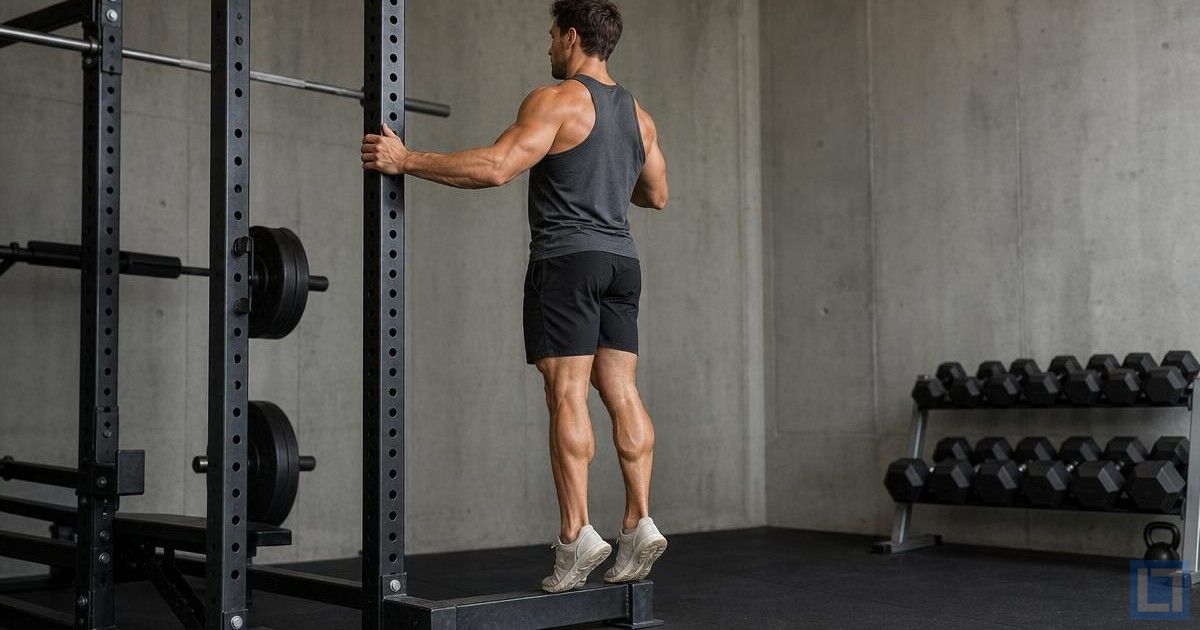
The Standing Calf Raise is the foundational calf exercise. Standing on a raised platform with the heels hanging off, you raise the heels up to full plantar flexion and lower under control to a deep stretch below the platform level. The standing position emphasizes the gastrocnemius (upper calf) because the knee is extended throughout the rep.
Build the bodyweight standing calf raise into a daily habit before adding load. Three sets of 25 to 50 reps performed every day for 4 to 6 weeks produces the foundational calf endurance and movement quality that loaded variations build on. Do them on the bottom step of a staircase or any platform that lets the heel drop below the toe level.
Loaded Calf Raise Variations
Once the bodyweight standing calf raise is solid, loaded variations drive the heavier strength gains that produce visible muscle growth. The variations below add external load through dumbbells, kettlebells, or barbells.
Dumbbell Standing Calf Raise

The Dumbbell Standing Calf Raise holds dumbbells at the sides while performing the standing calf raise. The added load increases the strength stimulus while the dumbbell position keeps the spine neutral, which makes the exercise accessible to most lifters.
Use heavy dumbbells (50 to 100+ pounds per hand) for sets of 12 to 20 reps. The grip is often the limiting factor before the calves fatigue, so straps can be useful for very heavy loading. Run 4 to 5 working sets as the primary heavy calf exercise on calf-focused training days.
Barbell Standing Calf Raise

The Barbell Standing Calf Raise places a barbell across the upper back and performs the calf raise pattern. The barbell allows significantly heavier loading than dumbbells (typically 1.5 to 2 times bodyweight or more for strong lifters) without grip becoming the limiting factor.
For maximum heavy calf loading, the barbell version is the strongest choice that exists. Most experienced lifters can work with 200 to 400+ pounds for sets of 8 to 15 reps. The heavy loading produces stronger gastrocnemius growth than lighter variations, which makes it the centerpiece of any heavy calf training program.
Donkey Calf Raise

The Donkey Calf Raise hinges over with the upper body supported and the load placed on the lower back. The hinged-over position changes the line of pull on the calves and is considered one of the most effective calf-builders in classic bodybuilding programming.
Old-school bodybuilders relied heavily on donkey calf raises for calf development. The hinged position produces a slightly different muscle recruitment pattern than standing variations, which can break through plateaus that other calf exercises produce. Use it as a secondary calf exercise in any program that has plateaued on standard standing work.
Unilateral And Variation Work
Bilateral loading allows the heaviest weight, but unilateral variations and bench-supported work produce focused stimulus that bilateral exercises miss. The variations below add depth to a complete calf program.
Single Leg Calf Raise

The Single Leg Calf Raise performs the calf raise on one leg at a time, holding a dumbbell in the same hand for added load. The unilateral pattern catches calf strength imbalances and forces each leg to work through the full range without the stronger leg compensating.
Most lifters have one calf significantly stronger than the other due to handedness, walking patterns, or athletic history. Single-leg work equalizes the development over months and produces fuller, more balanced calf appearance than bilateral training alone. Run it for 3 sets of 12 to 15 reps per leg as accessory work after bilateral exercises.
Kettlebell Standing Calf Raise

The Kettlebell Standing Calf Raise holds kettlebells at the sides during the calf raise pattern. The kettlebell variation works particularly well for home lifters and travelers who have kettlebells but not heavy dumbbells or barbells.
For home gyms with kettlebell sets, the kettlebell calf raise produces nearly identical results to the dumbbell version. The bell shape sometimes feels more comfortable to grip during long sets than dumbbells, which lets the calves fatigue before the grip does. Run it for 3 sets of 12 to 20 reps with the heaviest available bells.
Mobility And Recovery Work
Calf development depends on tissue health alongside strength training. The mobility and recovery work below addresses the chronic tightness that limits calf range of motion and slows growth over time.
Calves Stretch

The Calves Stretch positions the body against a wall or in a step position and stretches the calves through prolonged static holds. The stretch addresses chronic calf tightness that limits range of motion during calf raises.
Tight calves limit the deep-stretch position at the bottom of calf raises, which means the muscle does not get the full loading stimulus that produces growth. Daily calf stretching for 60 to 90 seconds per side produces measurable improvements in flexibility within 4 to 6 weeks, which translates to better calf raise depth and stronger growth signals.
Roll Calves

The Roll Calves uses a foam roller to release calf tightness through self-massage. Sitting on the floor with the calf positioned on the roller, you slowly roll along the length of the muscle to break up adhesions.
Self-massage with a foam roller produces different effects than static stretching: it breaks up muscle adhesions, increases blood flow, and improves tissue quality. Combining foam rolling with static stretching produces more thorough calf relief than either alone. Roll for 1 to 2 minutes per leg before training and after as needed.
How To Program For Calf Growth
Calf programming differs from most other muscle groups because of the high frequency tolerance and dual fiber-type considerations. The structure below produces consistent growth for most lifters who follow it for 12+ weeks.
Train calves four to six times per week. Heavy days (3 sets of 6 to 10 reps with significant weight) twice per week. Light days (3 sets of 20 to 30 reps with moderate weight) two to four times per week. The mixed-rep approach hits both muscle fiber types and the high frequency drives faster growth than weekly heavy sessions alone.
Use full range of motion on every rep. Drop the heels deep below the platform at the bottom (2 to 3 inches lower than the toes), and rise to full plantar flexion at the top. Pause for 1 to 2 seconds at both extreme positions. The pauses are non-negotiable for serious calf growth.
Mix bilateral and unilateral work. Heavy days use bilateral exercises (barbell or dumbbell standing calf raises) for maximum loading. Lighter days use unilateral exercises (single-leg calf raises) for focused per-side stimulus and to address strength imbalances. Including both produces more balanced development than either alone.
For broader leg programming, see our best dumbbell leg workouts and best calisthenics leg workouts. To browse the muscle archive, explore our calves exercise collection.
Final Thoughts
Calf growth is one of the most genetically variable training responses that exists. Some lifters build huge calves with minimal training; others train calves religiously for years and see modest growth. The lifters who succeed are the ones who train calves with high frequency, full range of motion, and strict pauses while accepting that the timeline for visible change is longer than most other muscle groups.
Stay patient. Most lifters who fail to grow calves quit too early. The slow-twitch fiber dominance and dense connective tissue mean visible changes take 6 to 12 months of consistent training, not weeks. The lifters who actually grow their calves are the ones who treat it as a multi-year project rather than as a 30-day challenge. Stick with the work; results follow consistency.
Frequently Asked Questions
Why won’t my calves grow?
The most common reasons are insufficient frequency (training calves once per week instead of 4 to 6 times), partial range of motion (bouncing through reps instead of pausing in stretch and contraction positions), and unrealistic timeline expectations (expecting visible changes in weeks instead of months). Genetics also play a major role; some lifters genuinely have limited calf-growth potential regardless of training.
How often should I train calves?
Four to six times per week works for most lifters. The calves recover within 24 hours of moderate training, which means daily or near-daily training is feasible. Most productive calf programs do mixed-frequency work: two heavy sessions per week and three to four light high-rep sessions filled in around regular leg training.
Are seated calf raises better than standing?
Different exercises target different muscles. Standing calf raises emphasize the gastrocnemius (the larger upper calf muscle that creates the diamond shape). Seated calf raises emphasize the soleus (the smaller lower calf muscle underneath). Including both in the program produces complete calf development; choosing only one leaves the other muscle under-trained.
How long until I see calf growth?
Most lifters with consistent high-frequency training see meaningful calf growth within 3 to 6 months. Lifters with poor genetics or low training frequency may need 12+ months for visible changes. Lifters with genuinely poor calf genetics may never see dramatic growth regardless of training, but consistent work still produces strength and functional gains even when visible size changes are limited.
Should I do high or low reps for calves?
Both. The slow-twitch fiber dominance of calves means they respond well to high rep ranges (20 to 30+ reps), while the fast-twitch fibers respond to heavy loading (6 to 10 reps). Mixing rep ranges across the week (heavy days at 6 to 10 reps, light days at 20 to 30 reps) hits both fiber types and produces stronger growth than single-rep-range programming.