Building bigger upper pecs requires understanding both the anatomy (the upper portion of the pectoralis major – clavicular head – which originates from the clavicle and runs to the upper arm) and the training principles that develop it: incline pressing patterns at 30 to 45-degree angles, dedicated upper chest fly variations, low-to-high cable pulls, and adequate volume in the upper chest-emphasized angles. The upper pecs are one of the most undertrained muscle groups for many lifters because traditional flat bench-dominated programs miss the angled loading that emphasizes the upper portion of the chest. Strong upper pec development produces: complete chest aesthetics with full upper chest filling out the shirt, balanced chest appearance (lifters with strong flat bench but weak upper chest often have flat-looking upper chests despite overall chest mass), better overhead pressing through clavicular head involvement in pressing patterns, and improved pressing variety. Most lifters who want bigger upper pecs are missing them because their programs include insufficient incline work – typically 1 to 2 incline sets per chest session is not enough volume to drive upper chest growth.
Below are ten of the most effective exercises for building bigger upper pecs, covering compound incline pressing (dumbbell incline bench press, barbell incline bench press, smith incline bench press, cable incline bench press, barbell pause incline bench press), incline fly variations (dumbbell incline fly, cable incline fly, lever incline fly), upper chest emphasis cable work (cable low fly), and accessible upper chest work (decline push-ups). Together they form a complete upper pec development program. A 30 to 45-minute upper chest-focused session pulled from this list, performed 1 to 2 times per week (or as upper chest emphasis in chest sessions), produces strong upper pec development for any lifter focused on building a thicker upper chest.
Dumbbell Incline Bench Press

The Dumbbell Incline Bench Press performs incline press with dumbbells. The pattern is foundational compound upper chest work.
For upper chest development, the dumbbell incline press is foundational. The pattern allows greater range of motion than barbell incline. Run it for 4 sets of 8 to 12 reps as primary upper chest mass work.
Set up an incline bench at about 30 to 45 degrees. Lie back on the bench holding dumbbells over the chest with palms facing forward. Lower the dumbbells to chest level by bending the elbows. Press the dumbbells back up by extending the arms while bringing them toward each other at the top. The dumbbells allow for greater range of motion than barbell incline. The pattern produces foundational upper chest mass – dumbbell incline press hits the upper portion of the pectorals through the angled pressing path. Heavy progressive dumbbell incline work over time produces broader upper chest development.
Barbell Incline Bench Press

The Barbell Incline Bench Press performs incline press with a barbell. The pattern allows heavy compound upper chest loading.
For upper chest development, the barbell incline press allows the heaviest possible upper chest loading. Run it for 3 to 4 sets of 6 to 10 reps as heavy compound upper chest work.
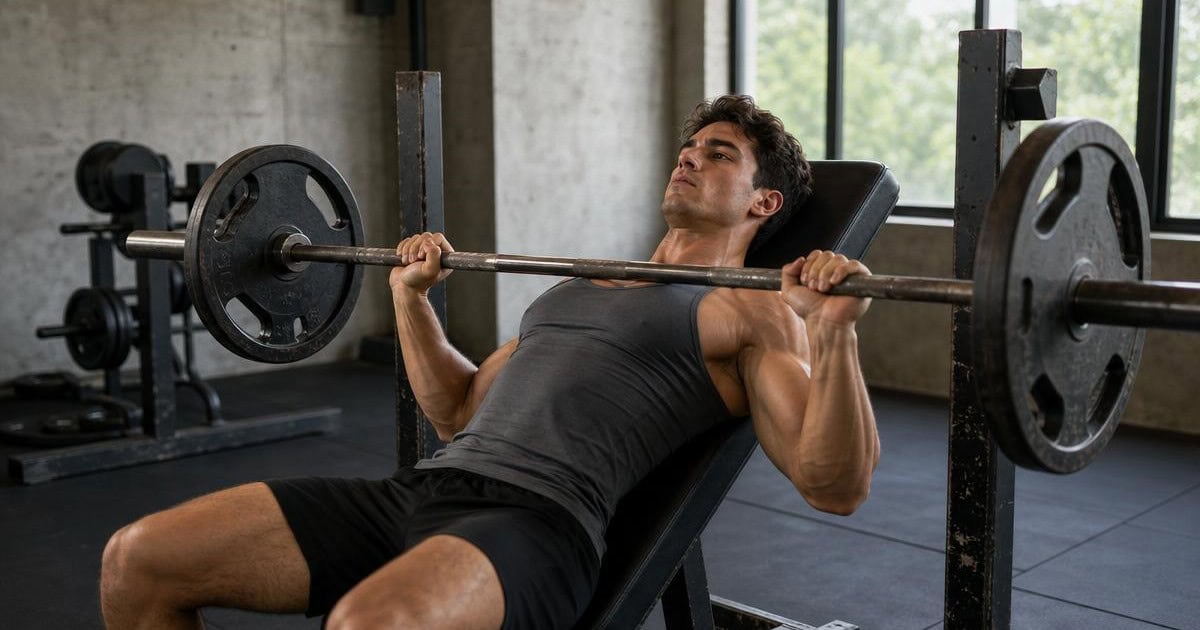
Set up an incline bench at about 30 to 45 degrees on a rack. Lie back on the bench with the eyes directly under the barbell. Grip the bar with hands wider than shoulder-width. Unrack the bar and position it over the upper chest. Lower the bar to the upper chest by bending the elbows. Press the bar back up by extending the arms. The pattern allows for heavy compound upper chest loading – barbell incline allows substantially more weight than dumbbell incline, building the foundational upper chest mass that dumbbells alone cannot match.
Dumbbell Incline Fly

The Dumbbell Incline Fly performs flies on an incline bench with dumbbells. The pattern produces direct upper chest isolation.
For upper chest development, the dumbbell incline fly produces direct upper chest isolation through the fly pattern. Run it for 3 to 4 sets of 10 to 12 reps as upper chest isolation work.
Set up an incline bench at about 30 to 45 degrees. Lie back on the bench holding dumbbells over the chest with palms facing each other and slight bend in the elbows. Lower the dumbbells out to the sides in a wide arc by lowering the arms (maintaining slight elbow bend). Feel the upper chest stretch deeply at the bottom. Bring the dumbbells back over the chest by squeezing the upper chest. The pattern produces direct upper chest isolation through the fly motion – excellent for adding upper chest volume after compound pressing.
Cable Low Fly

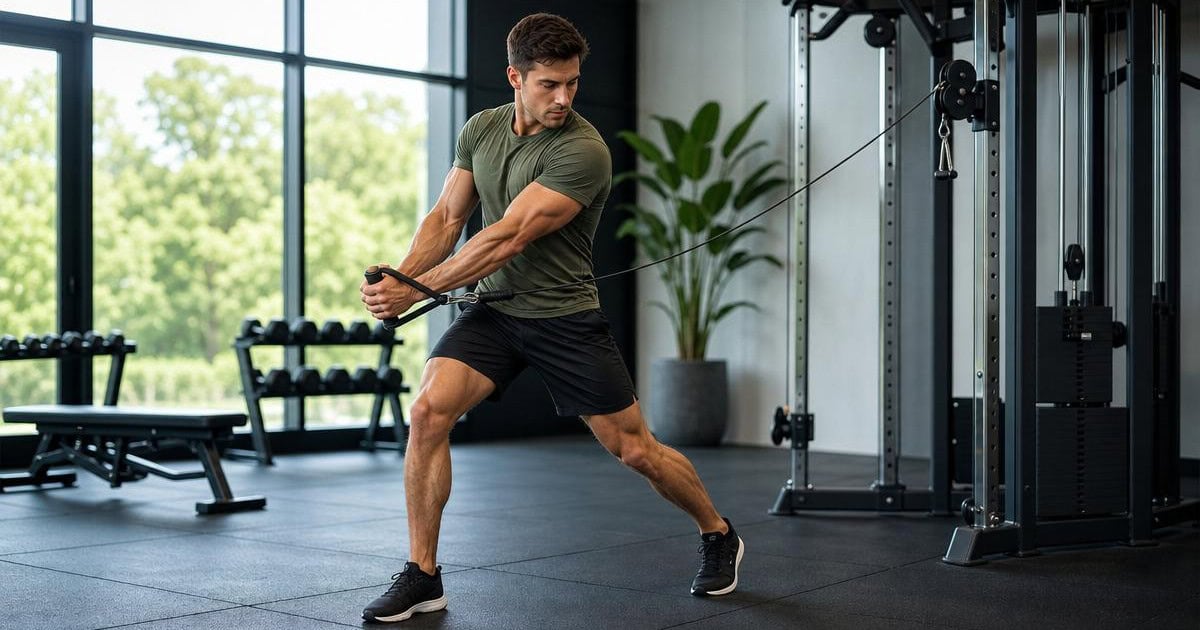
The Cable Low Fly performs flies with cable handles set at low position. The pattern produces upper chest emphasis through low-to-high motion.
For upper chest development, the cable low fly emphasizes upper chest through the low-to-high pulling angle. Run it for 3 sets of 12 to 15 reps as upper chest isolation work.
Set up cable handles at low position (near the floor) on a cable crossover machine. Stand in the middle holding the handles with arms slightly bent. Step forward to create tension. Pull the handles up and across the body in a low-to-high arc, finishing with the hands in front of the upper chest. The upper chest works hard through the upward-angled fly motion. Squeeze hard at peak. Return under control. The pattern emphasizes upper chest through the low-to-high motion – the upward angle directs loading specifically to the upper portion of the pectorals.
Cable Incline Fly

The Cable Incline Fly performs flies on an incline bench with cables. The pattern produces direct upper chest isolation with constant tension.
For upper chest development, the cable incline fly produces upper chest isolation with constant cable tension throughout the range. Run it for 3 sets of 10 to 12 reps as upper chest isolation work.
Set up an incline bench between two cable handles set at low position. Lie back on the bench holding the handles with arms slightly bent. Lower the handles out to the sides in a wide arc. Feel the upper chest stretch deeply. Bring the handles back over the chest by squeezing the upper chest, ending with the handles together. The cable resistance provides constant tension throughout the range. The pattern produces excellent upper chest isolation with the constant tension that dumbbells lack at the top of the motion – excellent for adding tension-loaded upper chest work.
Barbell Pause Incline Bench Press

The Barbell Pause Incline Bench Press performs incline press with a pause at chest. The pattern eliminates stretch reflex for bottom-position upper chest strength.
For upper chest development, the pause incline builds bottom-position upper chest strength. Run it for 3 sets of 3 to 6 reps as primary upper chest accessory work.
Set up an incline bench at about 30 to 45 degrees on a rack. Lie back on the bench. Grip a barbell with bench grip. Unrack the bar and position it over the upper chest. Lower the bar to the upper chest with controlled tempo. PAUSE the bar on the chest (no bouncing) for 2 to 3 seconds. Press the bar back up by extending the arms from the dead-stop. The pattern eliminates the stretch reflex and forces strict pressing strength from the bottom position – excellent for breaking through incline press plateaus and building specific upper chest strength at the chest position.
Cable Incline Bench Press

The Cable Incline Bench Press performs incline press with cable handles. The pattern produces upper chest pressing with constant tension.
For upper chest development, the cable incline press provides upper chest pressing with constant tension throughout the range. Run it for 3 sets of 10 to 12 reps as cable upper chest work.
Set up an incline bench between two cable handles set at low position. Lie back on the bench holding the handles at chest level. Press the handles up and slightly together by extending the arms. The upper chest works hard against constant cable tension. Lower under control. The pattern provides upper chest pressing with the constant tension that barbells and dumbbells lack – the cables maintain tension throughout the entire range. Excellent for varied loading angles in upper chest training.
Lever Incline Fly

The Lever Incline Fly performs flies on a machine. The pattern produces direct upper chest isolation with stable loading.
For upper chest development, the lever incline fly machine provides direct upper chest isolation with stable machine loading. Run it for 3 sets of 12 to 15 reps as machine upper chest work.
Set up on a lever incline fly machine. Position the body against the pad. Grip the handles with arms slightly bent. Bring the handles together in front of the upper chest by squeezing the upper chest. The upper chest works hard through the fly motion. Return under control. The pattern provides excellent upper chest isolation with the stability of machine loading – allows the lifter to focus entirely on upper chest contraction without stabilization concerns. Excellent for high-rep finishing work in upper chest training.
Smith Incline Bench Press

The Smith Incline Bench Press performs incline press on a Smith machine. The pattern provides stable upper chest pressing.
For upper chest development, the Smith incline press provides stable upper chest loading. Run it for 3 to 4 sets of 8 to 12 reps as stable upper chest work.
Set up an incline bench at about 30 to 45 degrees under a Smith machine bar. Lie back on the bench with the bar over the upper chest. Unrack the bar. Lower the bar to the upper chest by bending the elbows. Press the bar back up by extending the arms. The Smith machine eliminates stabilization demands and isolates the pressing work. The pattern provides controlled upper chest pressing with reduced stabilization demands – excellent for safely pressing heavy upper chest loads without spotter assistance, and useful for varied loading in upper chest training.
Push Ups

The Push Ups perform push-ups with feet elevated to emphasize upper chest. The pattern produces accessible upper chest work.
For upper chest development, decline push-ups (feet elevated) emphasize upper chest. Run it for 3 sets of 10 to 20 reps as accessible upper chest work.
Get into a push-up position with the feet elevated on a bench/box (the higher the elevation, the more upper chest emphasis). The body should be in a straight line from head to ankles with the head lower than the feet. Lower the body by bending the elbows until the chest nearly touches the floor. Press back up by extending the arms. The angled body position emphasizes upper chest similar to incline pressing. The pattern provides accessible upper chest work without equipment – excellent for warm-up sets, finishing volume, or training without weights.
How To Program These Workouts
A productive upper pec session pulls 5 to 7 exercises from the list above. A common balanced session: barbell incline bench press (heavy compound), dumbbell incline bench press (volume compound), dumbbell incline fly (isolation), cable low fly (low-to-high emphasis), lever incline fly (machine finishing). For mass focus: barbell incline bench press, dumbbell incline bench press, smith incline bench press, dumbbell incline fly. For variety focus: barbell pause incline bench press, cable incline fly, cable low fly, push-ups (decline). Run heavy compound incline pressing for 3 to 4 sets of 6 to 10 reps, accessory pressing for 3 to 4 sets of 8 to 12 reps, fly isolation for 3 to 4 sets of 10 to 15 reps, finishing/cable work for 3 sets of 12 to 15 reps. Total session covers 18 to 22 working sets focused on upper chest development.
Train upper chest 1 to 2 times per week as part of complete chest programming. Most successful upper chest-focused programs structure work as: 1) primary chest day with upper chest emphasis (lead with incline pressing rather than flat bench), 2) optional secondary chest day or upper-emphasized session, 3) integrated upper chest work in pressing sessions (always include at least one incline exercise). Many lifters with stubborn upper chest development find that prioritizing upper chest (training it FIRST in chest sessions when fresh) rather than after flat bench produces measurable improvement within 12 to 16 weeks. The fix to undertrained upper chest is dedicated emphasis, not just adding incline at the end.
For broader programming, see our best chest workouts and how to grow your chest. For specific work, see our best lower pec exercises.
Final Thoughts
The best upper pec exercises deliver real upper chest development through training that targets the specific demands of the upper pectoralis: compound incline pressing at 30 to 45-degree angles, dedicated incline fly variations for isolation, low-to-high cable work for upper chest emphasis, and adequate volume across angled pressing patterns. The combination of dumbbell and barbell incline presses, incline flies (dumbbell, cable, machine), low cable flies, pause incline press, smith incline press, cable incline press, and decline push-ups covers every functional pattern of the upper chest and produces broader upper chest development than flat bench-dominated programs would suggest. Many lifters discover thicker upper chest, more complete chest appearance, and better balanced pressing capacity within 12 to 16 weeks of prioritizing upper chest work. For lifters with underdeveloped upper chest, lacking complete chest aesthetics, or seeking upper body completion, dedicated upper pec training is one of the most effective interventions available.
Stay focused on proper bench angle and fly form. The most common mistakes lifters make in upper chest training are: 1) using too-steep bench angles (45+ degrees turns the exercise into a shoulder press rather than upper chest work – 30 degrees is often optimal), and 2) using too-deep elbow bend on flies which turns them into pressing motions rather than fly motions. The fix: keep incline benches at 30 to 45 degrees (lower angles for more upper chest, less front delt), maintain wide hand spacing on incline pressing, and keep flies as fly motions with slight elbow bend rather than pressing motions. Combined with adequate volume and progressive overload, proper technique produces the upper chest development that bad-angled training never achieves.
Frequently Asked Questions
What’s the best exercise for upper chest?
Heavy compound incline pressing with dedicated isolation. Dumbbell incline bench press allows greater range of motion. Barbell incline bench press allows heaviest loading. Combined with incline flies (dumbbell, cable, or machine), low cable flies, and pause incline press, these form the foundation of upper chest development. The fastest gains come from prioritizing upper chest (training it FIRST in chest sessions when fresh) and including 4 to 6 upper chest exercises per chest session.
Why won’t my upper chest grow?
Most lifters with underdeveloped upper chest make one or more of these mistakes: 1) including too few incline exercises (1 to 2 sets per session is insufficient), 2) training upper chest after flat bench when fatigued, 3) using too-steep bench angles that turn incline into shoulder press, 4) running insufficient upper chest volume relative to flat bench volume, 5) treating incline as accessory rather than primary work. The fix: prioritize upper chest, include 4 to 6 upper chest exercises per chest session, train upper chest first when fresh, use 30-degree bench angles.
What bench angle is best for upper chest?
30 degrees is often optimal for most lifters. Bench angles between 30 and 45 degrees emphasize the upper chest, with steeper angles increasingly emphasizing the front delts at the expense of upper chest. 30 degrees produces strong upper chest emphasis with minimal front delt involvement. 45 degrees produces moderate upper chest emphasis with substantial front delt involvement. Bench angles steeper than 45 degrees become essentially shoulder presses with little chest involvement. Most upper chest-focused programs use 30-degree benches as primary.
Should I train upper chest before or after flat bench?
Before for prioritization. Most lifters with underdeveloped upper chest benefit from training upper chest first when fresh – leading with barbell or dumbbell incline press rather than flat bench. After fatigue from heavy flat bench, the upper chest receives diminished stimulus when trained later in the session. By prioritizing upper chest first, you ensure full intensity and progressive overload on the muscle group you’re trying to develop. After 12 to 16 weeks of upper chest priority, return to flat bench focus.
How often should I train upper chest?
1 to 2 times per week as part of complete chest programming. Most successful programs structure work as: 1) primary chest day with upper chest emphasis (lead with incline pressing), 2) optional secondary chest day or upper-emphasized session. Lifters with significantly underdeveloped upper chest may benefit from 2 weekly sessions for 12 to 16 weeks during prioritization phases, then return to 1 to 2 weekly sessions for maintenance and continued progress. Total upper chest volume should be 8 to 16 working sets per week.