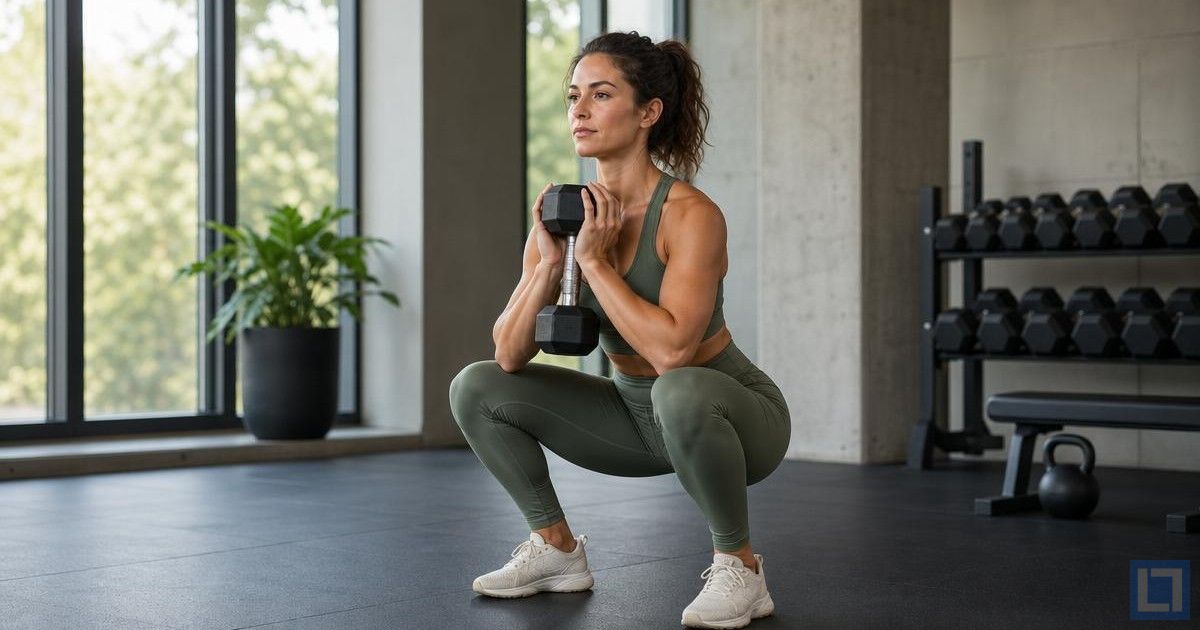
Dumbbell training is one of the most effective fitness approaches for women. The bilateral and unilateral loading patterns build real strength while developing the muscle tone that produces visible physique changes, the equipment is accessible (a single pair of dumbbells covers months of training), and the format works equally well in commercial gyms, home gyms, and travel scenarios. The best dumbbell workouts for women emphasize foundational compound movements and progressive overload, which produce stronger results than the high-rep low-weight workouts marketed to women but rarely deliver real strength or visible muscle development.
Below are ten effective dumbbell exercises for women that cover bench pressing, glute training, unilateral leg work, oblique and core exercises, shoulder pressing, and combination movements. Together they form a complete training program that builds full-body strength and produces visible physique changes over months of consistent practice. The exercises work for women at every fitness level, from absolute beginners to advanced lifters.
Dumbbell Lying Woodchop

The Dumbbell Lying Woodchop lies on the back and rotates a single dumbbell from one hip to the opposite shoulder in a chopping motion. The rotational pattern hits the obliques and rotational core stabilizers under load.
For dumbbell training that emphasizes core development, the lying woodchop is one of the most direct loaded oblique exercises that exists. The added load produces stronger oblique development per rep than bodyweight rotation alone. Run it for 3 sets of 10 to 12 reps per side as core work in any complete dumbbell program.
Lie flat on the back with both hands holding a single dumbbell. Start with the dumbbell at one hip. Rotate the trunk to bring the dumbbell across the body to the opposite shoulder area. Reverse under control. Switch sides on the next set.
Dumbbell Standing Driver

The Dumbbell Standing Driver stands holding a single dumbbell at shoulder height and rotates the trunk while pressing the dumbbell across the body in a driving motion. The exercise hits the obliques, shoulders, and core simultaneously through coordinated rotation.
The dumbbell standing driver is one of the most underrated combination exercises for women that exists. The rotational pressing pattern produces stronger functional core development than isolated movements, and the standing position adds total-body engagement that isolation work misses. Run it for 3 sets of 10 to 12 reps per side.
Stand tall with feet shoulder-width apart and a dumbbell held at one shoulder. Press the dumbbell across the body diagonally while rotating the trunk in the same direction. End with the dumbbell at the opposite hip area. Reverse the motion to bring the dumbbell back to the shoulder. Switch sides.
Dumbbell Bench Dip

The Dumbbell Bench Dip places hands on a bench behind the body with feet planted forward, and dips the body up and down by bending the elbows. A dumbbell can be placed across the lap to add resistance to the bodyweight movement.
For tricep development at home or in the gym, the bench dip is one of the most accessible direct tricep exercises that exists. The bodyweight version produces strong tricep loading; adding a dumbbell across the lap progresses the exercise as strength builds. Run it for 3 sets of 10 to 15 reps as tricep work.
Sit on the edge of a bench with hands placed at the sides of the body, fingers pointing forward. Plant the feet on the floor. Slide forward off the bench so the body is supported by the arms. Lower the body by bending the elbows, then press back up to the start. Add a dumbbell across the lap for added resistance.
Dumbbell Decline Shrug

The Dumbbell Decline Shrug performs a shrug motion while lying face-down on a decline bench with dumbbells held at the sides. The decline angle changes the loading direction on the upper traps and rhomboids compared to standing shrugs.
For upper-back development that complements pulling exercises, the decline shrug isolates the upper traps and rhomboids in a way that standing shrugs cannot match. The exercise produces stronger mid-back development per rep. Run it for 3 sets of 10 to 12 reps as accessory work.
Lie face-down on a decline bench with dumbbells held at the sides, arms hanging straight down. Shrug the shoulder blades together and up by squeezing the upper back. Hold briefly at the top. Lower under control. Use lighter weight than for standing shrugs; the decline position significantly increases the demand.
Dumbbell Crunch Up

The Dumbbell Crunch Up lies on the back with a dumbbell held at the chest and performs a crunch motion while keeping the dumbbell positioned at the chest. The added load increases the demand on the abs through trunk flexion.
For loaded ab training, the dumbbell crunch up is one of the most direct exercises that exists. The added external weight produces stronger ab loading per rep than bodyweight crunches, which fits programs that prioritize per-rep stimulus. Run it for 3 sets of 12 to 15 reps.
Lie flat on the back with knees bent and feet planted. Hold a dumbbell at the chest with both hands. Curl the trunk up to bring the chest toward the knees, keeping the dumbbell at the chest. Lower under control to the start position.
Dumbbell Side Bridge

The Dumbbell Side Bridge holds a side plank position with a dumbbell in the top hand pressed toward the ceiling. The combined isometric core hold and weighted shoulder press hits the obliques, shoulders, and core simultaneously.
For combined core and shoulder work, the dumbbell side bridge is one of the most efficient exercises that exists. The side plank position loads the obliques continuously while the dumbbell press adds shoulder demand. Run it for 3 sets of 30 to 45-second holds per side.
Lie on one side with the elbow under the shoulder. Lift the hips into a side plank position. Hold a dumbbell in the top hand and press it straight up toward the ceiling. Maintain the side plank while holding the dumbbell extended. End the set when form breaks down.
Dumbbell Bench Press

The Dumbbell Bench Press lies flat on a bench and presses two dumbbells from chest level to lockout overhead. The bilateral pressing pattern hits the chest, front delts, and triceps as a coordinated unit and serves as the foundational upper-body pressing exercise.
For chest and shoulder development, the dumbbell bench press is one of the most effective compound exercises that exists. The dumbbell version is more shoulder-friendly than barbell pressing because each arm moves independently, which catches strength imbalances and fits a wider range of body types. Run it for 3 to 4 sets of 8 to 12 reps.
Lie flat on a bench with feet planted firmly on the floor. Hold dumbbells at chest level with palms facing forward. Press both dumbbells up to lockout above the chest. Lower under control to chest level. Maintain a slight arch in the lower back and tight upper back throughout.
Dumbbells Glute Bridge

The Dumbbells Glute Bridge lies on the back with knees bent and dumbbells across the hips, then drives the hips up by squeezing the glutes hard. The added external load increases the strength stimulus on the glutes significantly compared to bodyweight bridges.
For glute development, the loaded glute bridge is one of the most effective exercises that exists. The hip-thrust mechanics target the glutes specifically without quad involvement, which fills a key gap in squat-and-lunge dominant programs. Run it for 3 to 4 sets of 12 to 15 reps with hard glute squeezes at the top.
Lie flat with knees bent and feet planted shoulder-width apart. Place a heavy dumbbell across the hips. Drive the hips up by squeezing the glutes hard at the top. Lower under control. Hold the top position briefly on each rep to maximize the contraction.
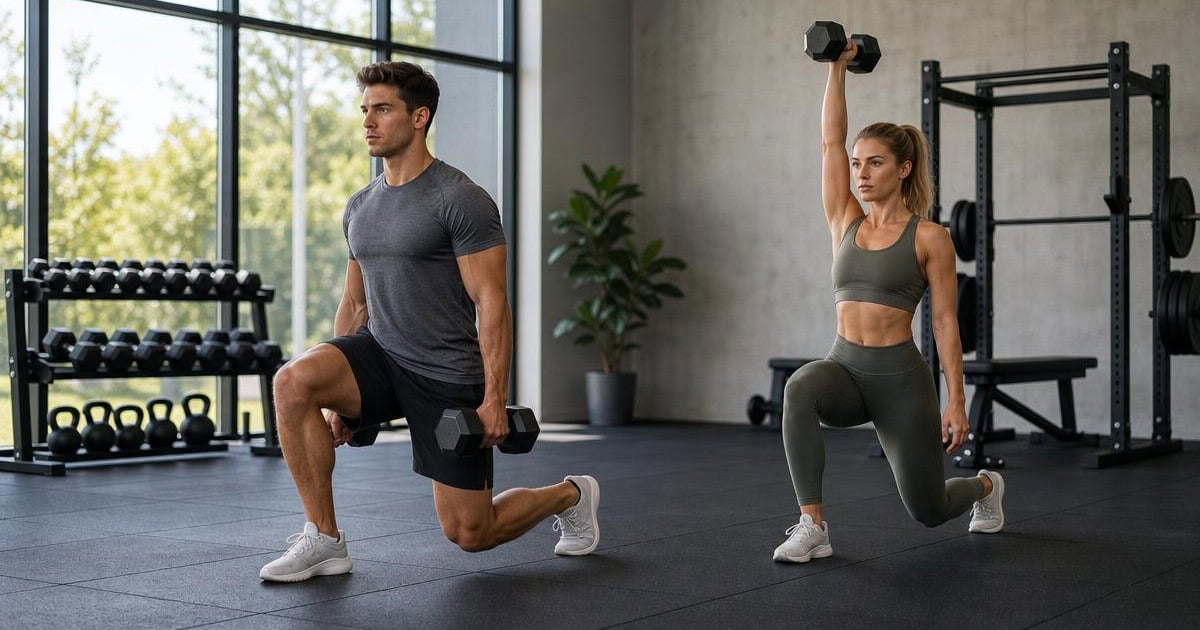
Dumbbell Static Lunge

The Dumbbell Static Lunge takes a long stance with dumbbells held at the sides and drops straight down by bending both knees, then drives back to standing without moving the feet. The static position eliminates the dynamic stepping component and produces focused unilateral loading.
For unilateral leg strength, the dumbbell static lunge is one of the most effective exercises that exists. The static stance allows higher rep counts than walking lunges and produces stronger glute and quad development per rep. Run it for 3 to 4 sets of 8 to 12 reps per leg.
Set up in a long stance with one foot forward and one back. Hold dumbbells at the sides with arms extended. Drop straight down by bending both knees, lowering the back knee toward the floor. Drive through the front heel to stand. Complete all reps on one leg before switching.
Dumbbell Z Press

The Dumbbell Z Press sits on the floor with legs extended in front of the body and presses dumbbells overhead from the shoulder position. The seated-floor position eliminates leg drive entirely and produces extreme isolation on the shoulders and core.
The Z press is one of the most demanding shoulder pressing variations that exists. The seated floor position forces the shoulders, triceps, and core to do all the work without any leg or hip drive, which produces stronger shoulder development and core engagement than standing or seated bench pressing. Run it for 3 sets of 6 to 10 reps.
Sit on the floor with legs extended straight in front of the body, back upright. Hold dumbbells at the shoulders with palms facing forward. Press both dumbbells up to lockout overhead, keeping the back upright and core braced throughout. Lower under control to the shoulders.
How To Program These Workouts
A productive dumbbell session for women pulls six to eight exercises from the list above. A balanced session includes one upper-body push (bench press), one lower-body bilateral (loaded glute bridge), one lower-body unilateral (static lunge), one core piece (woodchop or side bridge), one shoulder exercise (Z press or standing driver), and one direct arm or back exercise (bench dip or decline shrug). Run sets of 8 to 12 reps for most exercises with 60 to 90 seconds rest between sets.
Train two to three times per week as a beginner, three to four times per week as an intermediate. Most beginners do well with full-body sessions three times per week (Monday/Wednesday/Friday) using 6 to 8 exercises per session. Intermediate lifters can split routines (upper body day and lower body day, twice per week each) for higher total volume per muscle group.
For more dumbbell programming, see our best full body dumbbell workouts and best beginner dumbbell workouts. For specific lower-body work, see our best dumbbell leg workouts.
Final Thoughts
The best dumbbell workouts for women deliver real strength gains, visible physique changes, and improved athletic performance through foundational compound movements and progressive loading. The combination of bilateral pressing, unilateral leg work, glute-focused exercises, and core training covers every major function the body uses, and the dumbbell format makes the training accessible regardless of gym membership or schedule. For women who want stronger, leaner, more athletic physiques, dumbbell training is one of the most effective options available.
Stay focused on progressive overload. The most common myth in women’s fitness training is that lifting heavy weights produces a bulky look, which causes many women to avoid the progressive loading that actually produces visible results. The reality: women have significantly less testosterone than men and rarely build the dramatic muscle mass that the bulky concern implies. The lifters who get the strongest, leanest, most athletic-looking results are the ones who consistently add weight to their dumbbell exercises over months and years.
Frequently Asked Questions
Will dumbbell workouts make me look bulky?
No. The bulky look that some women fear requires significantly more muscle mass than most women can build with normal training, even over many years. Women have roughly 10 to 20 times less testosterone than men, which means muscle gains happen significantly slower and rarely reach the levels that produce a dramatically bulky appearance. The lifters who get the leanest, most athletic-looking results are the ones who consistently progress their dumbbell training. Body composition changes (lower body fat plus stronger muscles) produce the lean toned look most women want.
How heavy should women’s dumbbells be?
Most beginner women start with 5 to 12-pound dumbbells for upper-body work and 15 to 25-pound dumbbells for lower-body work. Most intermediate women work with 15 to 25-pound dumbbells for upper-body and 25 to 40-pound dumbbells for lower-body. The right weight is whatever allows clean reps in the 8 to 12 rep range with one or two reps in reserve. Adjustable dumbbells (5 to 50+ pounds in increments) are the most cost-effective option for home training.
How often should women do dumbbell workouts?
Three to four times per week works for most women. Beginners should start with three full-body sessions per week to allow adequate recovery; intermediates can typically handle four sessions split between upper and lower body. Higher frequencies (5 to 6 sessions per week) become harder to sustain for most lifters and rarely produce significantly better results than well-programmed 3 to 4-day routines.
Can dumbbells alone build a complete physique?
Yes for beginners and intermediates. Dumbbell training produces real strength, muscle development, and athletic conditioning for the first 12 to 24 months of consistent practice, and progressive variations extend that runway by another 12 to 24 months. Most women never need to progress beyond dumbbell training; consistent dumbbell programming combined with appropriate nutrition produces the strong, lean, athletic physiques most women want.
How long until I see results from dumbbell training?
Most women feel meaningful strength improvements within 2 to 4 weeks of consistent training. Visible muscle definition appears within 8 to 12 weeks combined with appropriate nutrition. Major physique changes (visibly leaner, more athletic body composition) take 3 to 6 months of dedicated practice. Patience and consistency matter more than intensity in the early stages.