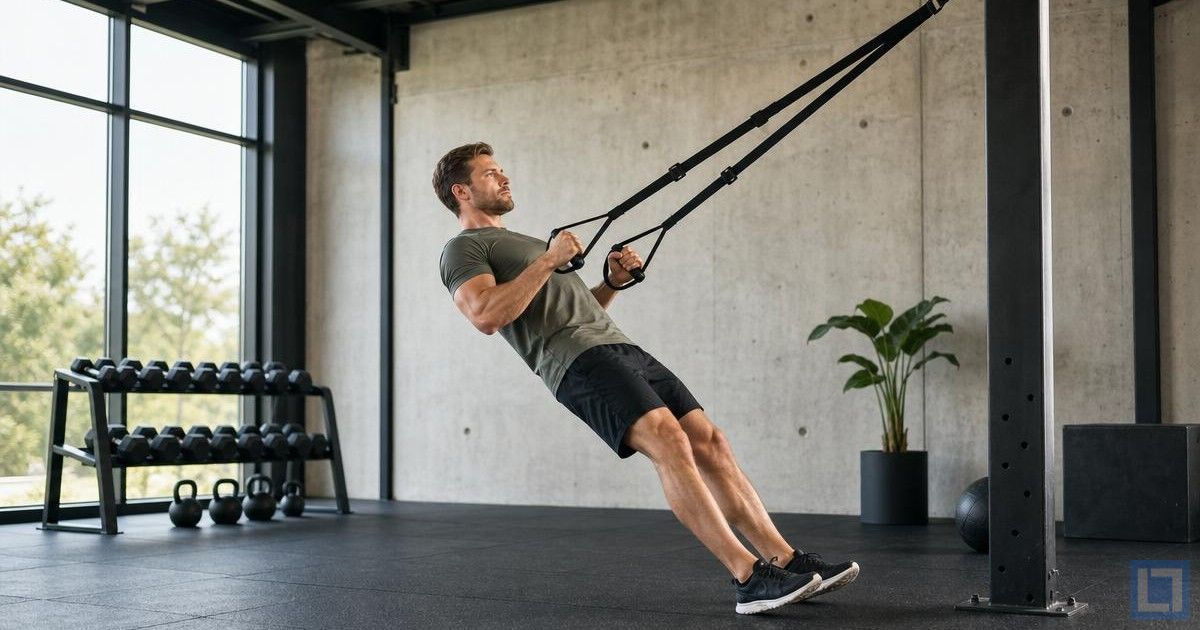
Twenty-minute ab workouts hit the sweet spot between quick 10-minute sessions (which limit volume) and longer 30-minute sessions (which often produce diminishing returns). The 20-minute format provides enough time for a proper warm-up, 8 to 10 working exercises across all major core functions (trunk flexion, anti-extension, anti-rotation, lateral flexion, isometric holds, hip flexion), and brief recovery between exercises. Most lifters who consistently train 20-minute ab sessions 3 to 4 times per week see measurable core strength and visible ab development within 8 to 12 weeks combined with appropriate nutrition.
Below are ten effective 20-minute ab exercises that cover combined trunk-and-hip flexion (V-up, reverse crunch), advanced hanging core work (hanging leg raise), loaded rotational training (dumbbell Russian twist, dumbbell side bend), isometric holds (side plank, hollow hold), anti-extension work (dead bug), anti-rotation work (bird dog), and sustained lower-ab loading (flutter kicks). Together they form a complete 20-minute ab training program. Pull 7 to 8 exercises per session and rotate the selection across sessions for complete training.
V Up

The V Up lies flat on the back and simultaneously lifts the legs and torso to meet in the middle, forming a V shape with the body. The combined motion produces strong upper-and-lower-ab loading per rep.
For 20-minute ab workouts, the V-up is one of the most efficient single exercises that exists. The combined trunk and leg flexion hits both the upper and lower abs simultaneously. Run it for 3 to 4 sets of 10 to 12 reps as primary combined ab work.
Lie flat on the back with arms extended overhead and legs straight. Simultaneously lift the legs and torso, reaching the hands toward the feet at the top of the rep. Keep both the legs and upper body straight throughout. Lower under control to the floor.
Reverse Crunch

The Reverse Crunch lies on the back and lifts the hips off the floor by curling the lower spine and bringing the knees toward the chest. The pattern targets the lower abs through pure spinal flexion from the bottom up.
For 20-minute ab sessions, the reverse crunch is the foundational lower-ab exercise. The pattern hits the lower abs more directly than standard crunches because the motion starts at the pelvis. Run it for 3 sets of 12 to 15 reps as primary lower-ab work.
Lie flat on the back with hands at the sides. Bend the knees with feet lifted slightly off the floor. Lift the hips off the floor by curling the lower spine and bringing the knees toward the chest. Pause briefly at the top. Lower under control to the start.
Hanging Leg Raise

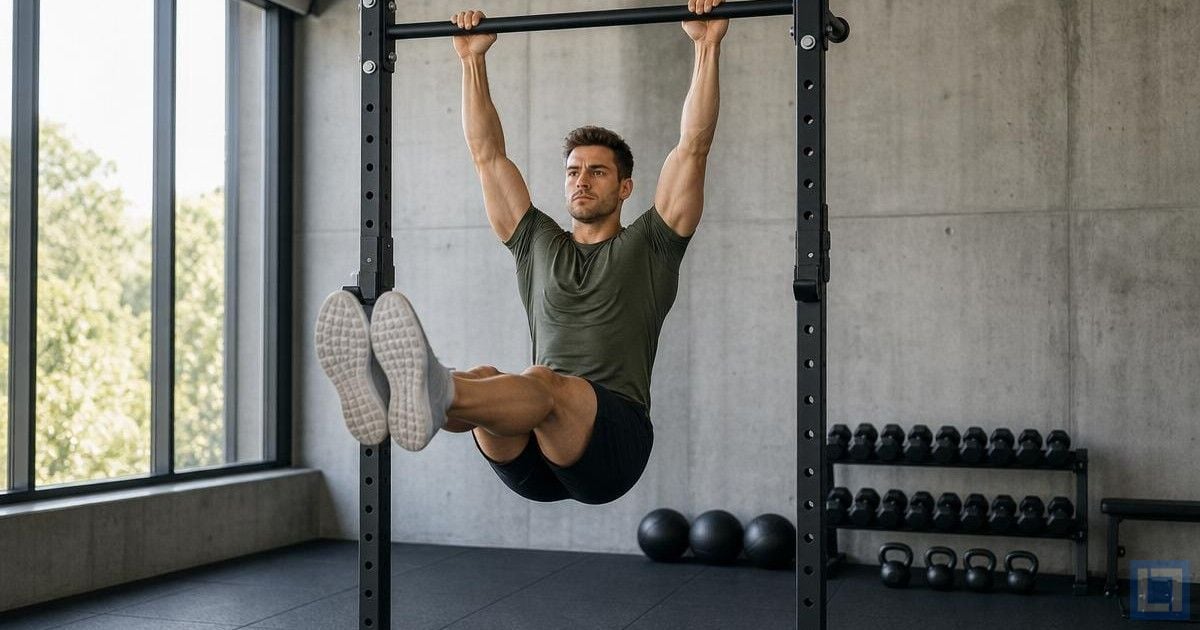
The Hanging Leg Raise hangs from an overhead bar and lifts the legs up in front of the body to roughly horizontal or higher. The pattern produces extreme abdominal demand combined with grip and shoulder stability work.
For 20-minute ab workouts that include challenging core work, the hanging leg raise is one of the most demanding direct core exercises that exists. The pattern hits the lower abs and hip flexors with significant loading. Run it for 3 sets of 8 to 12 reps as advanced ab work.
Hang from an overhead bar with overhand grip, arms fully extended. Lift the legs up in front of the body to roughly horizontal, contracting the abs hard at the top. Lower under control without swinging. Avoid using momentum.
Dumbbell Russian Twist

The Dumbbell Russian Twist sits on the floor with feet lifted and twists the trunk side-to-side while holding a dumbbell at the chest. The continuous rotation hits the obliques throughout the entire set.
For 20-minute ab sessions that include loaded rotational work, the Russian twist produces strong oblique loading per rep. The dumbbell loading scales the difficulty as core strength builds. Run it for 3 sets of 16 to 20 total reps as primary oblique work.
Sit on the floor with knees bent. Lean back slightly to engage the abs and lift the feet off the floor. Hold a dumbbell at the chest with both hands. Twist the trunk to bring the dumbbell to one side, then to the other side. Continue alternating throughout the set.
Side Plank
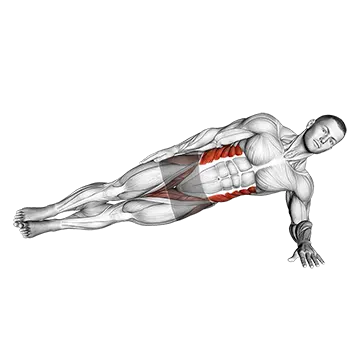
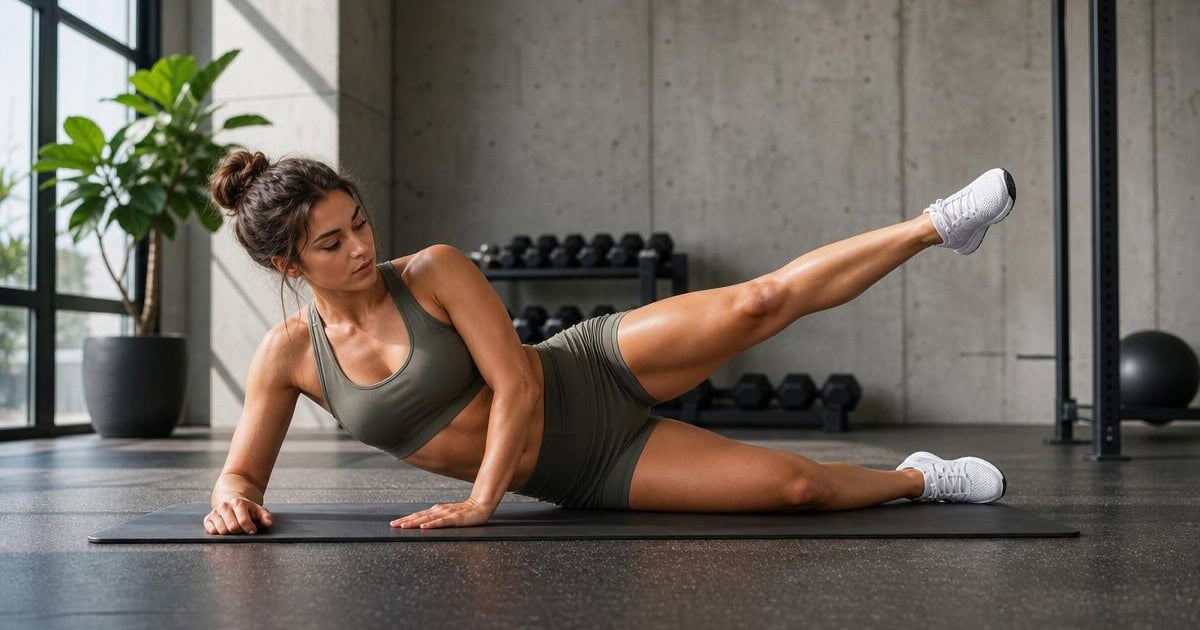
The Side Plank supports the body on one forearm and one foot, with the body forming a straight line on its side. The isometric hold produces strong oblique and lateral core loading.
For 20-minute ab workouts that include direct oblique training, the side plank is one of the most effective exercises that exists. The pattern hits the obliques and lateral core stabilizers. Run it for 2 to 3 sets of 30 to 60-second holds per side as primary lateral core work.
Lie on the side with one forearm on the floor and feet stacked. Lift the hips so the body forms a straight line from head to heels on its side. Hold the position while bracing the obliques hard. End the hold when form breaks down. Switch sides between sets.
Dead Bug

The Dead Bug lies on the back with arms extended toward the ceiling and knees bent at 90 degrees, then alternates extending the opposite arm and leg toward the floor. The pattern produces strong anti-extension core demand.
For 20-minute ab sessions that include anti-extension work, the dead bug is the foundational anti-extension exercise. The pattern hits the deep core stabilizers without requiring extreme intensity. Run it for 3 sets of 8 to 10 reps per side as primary anti-extension work.
Lie flat on the back with arms extended toward the ceiling and knees bent at 90 degrees. Press the lower back firmly into the floor. Slowly extend one arm overhead and the opposite leg out to nearly touch the floor. Return to the start. Alternate sides on each rep.
Flutter Kicks

The Flutter Kicks lie on the back with legs extended and alternate kicking the legs up and down in a small swimming-flutter motion. The continuous lower-ab demand produces strong lower-ab loading throughout the set.
For 20-minute ab sessions that include sustained lower-ab work, flutter kicks produce continuous lower-ab tension that translates to strong lower-ab development. Run it for 3 sets of 30 to 45-second intervals as primary lower-ab work.
Lie flat on the back with legs extended and hands tucked under the lower back for support. Lift the legs slightly off the floor. Alternate kicking the legs up and down in a small flutter motion (similar to swimming kicks). Keep the lower back pressed into the floor throughout.
Hollow Hold
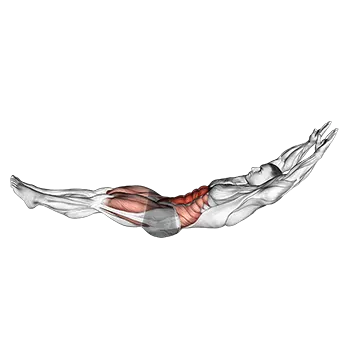
The Hollow Hold lies on the back with arms extended overhead and legs lifted slightly off the floor, holding the body in a banana-curve position. The isometric loading produces extreme abdominal demand throughout the position.
For 20-minute ab sessions that include isometric work, the hollow hold is the foundational gymnastics-style ab exercise. The pattern produces continuous full-body tension with the abs as the primary working muscle. Run it for 3 sets of 20 to 45-second holds as primary isometric ab work.
Lie flat on the back with arms extended overhead. Press the lower back firmly into the floor. Lift the shoulder blades slightly off the floor. Lift the legs slightly off the floor. The body forms a slight banana curve with the abs braced hard. Hold while breathing normally.
Bird Dog
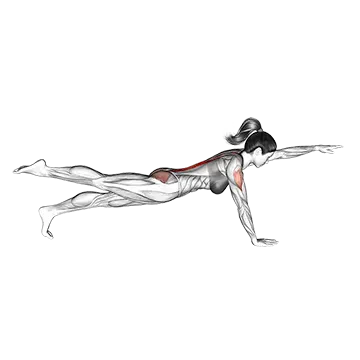
The Bird Dog sets up on hands and knees and alternates extending the opposite arm and leg straight out from the body. The pattern produces strong anti-rotation core demand combined with glute activation.
For 20-minute ab sessions that include anti-rotation work, the bird dog produces strong combined core and glute loading. The pattern translates well to athletic positions. Run it for 3 sets of 8 to 10 reps per side as combined core-and-glute work.
Set up on hands and knees with hands shoulder-width and knees hip-width. Brace the core hard. Extend one arm forward and the opposite leg straight back, holding briefly at full extension. Return to the start. Alternate sides on each rep.
Dumbbell Side Bend

The Dumbbell Side Bend stands tall holding a dumbbell at one side and bends the trunk laterally toward that side, then returns to standing. The pattern hits the obliques through pure lateral flexion under load.
For 20-minute ab sessions that include direct loaded oblique work, the side bend is one of the most direct oblique exercises that exists. The pattern hits the obliques through pure lateral flexion. Run it for 3 sets of 12 to 15 reps per side as direct oblique work.
Stand tall holding a dumbbell at one side with arm extended. Place the free hand on the head or hip. Bend the trunk laterally toward the dumbbell side, lowering the dumbbell down the side of the leg. Return to standing by contracting the opposite oblique. Switch sides between sets.
How To Program These Workouts
A productive 20-minute ab workout uses circuit-style organization. A standard 18 to 20-minute structure: 7 to 8 exercises performed for 30 to 45 seconds each with 15 to 20 seconds rest between exercises, repeated for 3 to 4 rounds. The continuous pacing produces strong metabolic stress alongside the direct ab loading. Most successful 20-minute sessions include 3 to 4 standing or unloaded exercises (V-up, side plank, dead bug, bird dog) interspersed with 2 to 3 loaded exercises (Russian twist, side bend) and 1 to 2 advanced exercises (hanging leg raise, hollow hold).
Train 20-minute ab workouts 3 to 4 times per week. The format produces moderate ab fatigue per session, which sits in the sweet spot for sustainable growth. Most lifters do well with 3 to 4 dedicated 20-minute ab sessions per week alongside other training. The format works particularly well as morning routines, post-workout finishers, or daily lunch-break sessions because the 20-minute commitment fits most busy schedules.
For shorter ab sessions, see our 10 minute ab workouts and 15 minute ab workouts. For longer training, see our best 30 minute ab workouts.
Final Thoughts
The best 20-minute ab workouts deliver real core development through the sweet-spot training duration that balances volume with sustainability. The combination of trunk flexion, anti-extension, anti-rotation, isometric holds, and loaded rotational work covers every major core function in 20 minutes. For lifters who want serious core training that produces measurable strength and visible development, the 20-minute format is one of the most effective and sustainable options available.
Stay focused on form quality across all rounds. The most common 20-minute ab training mistake is pushing through compromised form in later rounds to maintain rep counts, which reduces actual training stimulus and increases lower-back strain risk. The fix: drop to easier exercise variations or shorter intervals as fatigue accumulates rather than maintaining the same difficulty with deteriorating form. Quality reps with strict form throughout the session produce stronger core development than higher-rep counts with cut-short ranges or compensating motion.
Frequently Asked Questions
Are 20 minute ab workouts enough?
Yes for most lifters. The 20-minute format provides enough time for proper warm-up, 7 to 8 working exercises across all major core functions, and brief recovery between exercises. Most lifters who consistently train 20-minute ab sessions 3 to 4 times per week see measurable core strength and visible ab development within 8 to 12 weeks combined with appropriate nutrition. The format works for both general fitness and physique-focused training.
How often should I do 20 minute ab workouts?
Three to four times per week works for most lifters. The format produces moderate ab fatigue per session, which sits in the sweet spot for sustainable growth. Daily 20-minute ab training typically produces accumulated fatigue without proportional gains; spaced-out sessions sustain the format long-term. Most successful programs include 3 to 4 dedicated ab sessions per week alongside broader strength and conditioning training.
20 minutes or 10 minutes for ab workouts?
Different formats serve different goals. 10-minute ab sessions work well for daily training, sustainability, and busy schedules. 20-minute sessions allow more per-exercise volume and stronger single-session stimulus. Most general lifters do well with 20-minute sessions training 3 to 4 times per week. Those with severe time constraints or who want daily training often do better with 10-minute sessions.
Can I get abs with 20 minute workouts?
Yes when combined with appropriate nutrition. Ab training builds the muscle that gives the stomach its shape; reducing body fat through nutrition reveals that shape. Both are required for visible abs. Most lifters need to be at 12 to 18 percent body fat for abs to show clearly. The 20-minute training handles the muscle-building side; sustainable nutrition handles the body fat side. The combination produces visible results over 12 to 16 weeks for most lifters.
Do I need equipment for 20 minute ab workouts?
Most exercises work with no equipment (V-up, reverse crunch, side plank, dead bug, bird dog, flutter kicks, hollow hold). Adding a pair of dumbbells expands the exercise selection (Russian twist, side bend) and a pull-up bar enables advanced work (hanging leg raise). The format scales naturally based on available equipment; minimal equipment still allows complete 20-minute ab training.