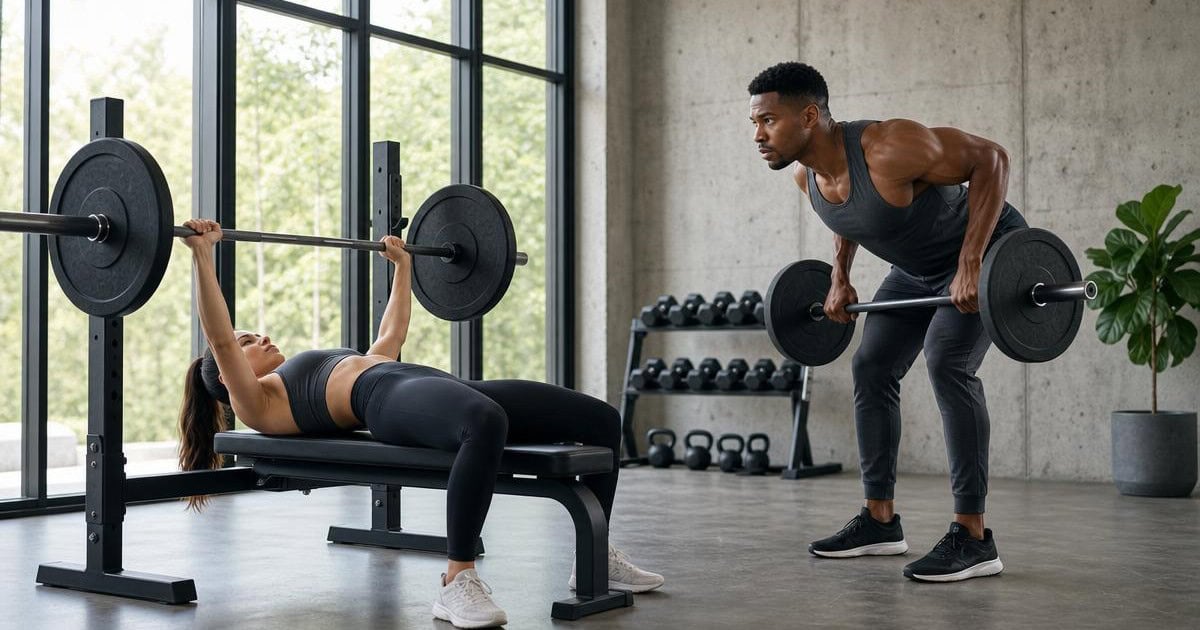
Bodybuilding-focused training centers on building maximum muscle mass through hypertrophy-focused programming that combines heavy compound work with dedicated isolation across every major muscle group. Bodybuilders who consistently train with proper periodization, progressive overload, and adequate volume see continuous mass gains through their training careers: bigger chest through bench press and incline variations, broader back through pull-ups and rowing, larger legs through squats and leg extensions, more impressive arms through curls and dips, wider shoulders through lateral raises, thicker traps through deadlifts and shrugs. The most effective bodybuilding programs prioritize: 1) heavy compound work as the foundation (bench press, squat, deadlift, pull-ups, rows), 2) dedicated isolation for each muscle group (curls, lateral raises, leg extensions, dips), 3) sufficient volume across all muscle groups (10 to 20 working sets per muscle per week), 4) appropriate rep ranges for hypertrophy (mostly 6 to 15 reps with progressive overload), 5) sufficient recovery and nutrition for mass gains, and 6) periodization that includes both heavy strength phases and higher-volume hypertrophy phases.
Below are ten of the most effective exercises for bodybuilding, covering the foundation compound lifts (barbell bench press, barbell squat, barbell deadlift), back development (pull-up, barbell bent over row), upper chest (dumbbell incline bench press), arm development (barbell curl, triceps dip), shoulder width (dumbbell lateral raise), and quad isolation (lever leg extension). Together they form the foundation of complete bodybuilding development. A bodybuilding split using these exercises across 4 to 6 weekly sessions produces strong mass development for any lifter focused on maximum muscle gain, contest preparation, or simply looking impressive.
Barbell Bench Press

The Barbell Bench Press performs flat bench press with a barbell. The pattern is foundational compound chest mass work for bodybuilding.
For bodybuilders, the bench press is foundational compound chest work. The pattern allows the heaviest possible bilateral chest loading. Run it for 4 sets of 6 to 10 reps as primary chest mass work.
Lie on a flat bench with the eyes directly under the barbell. Grip the bar with hands wider than shoulder-width. Unrack the bar and position it over the chest. Lower the bar to the chest by bending the elbows. Press the bar back up by extending the arms. The pattern produces compound chest, shoulder, and tricep work that builds foundational pushing mass. Heavy progressive bench press training over time produces broader chest mass than any single isolation exercise can match.
Barbell Squat

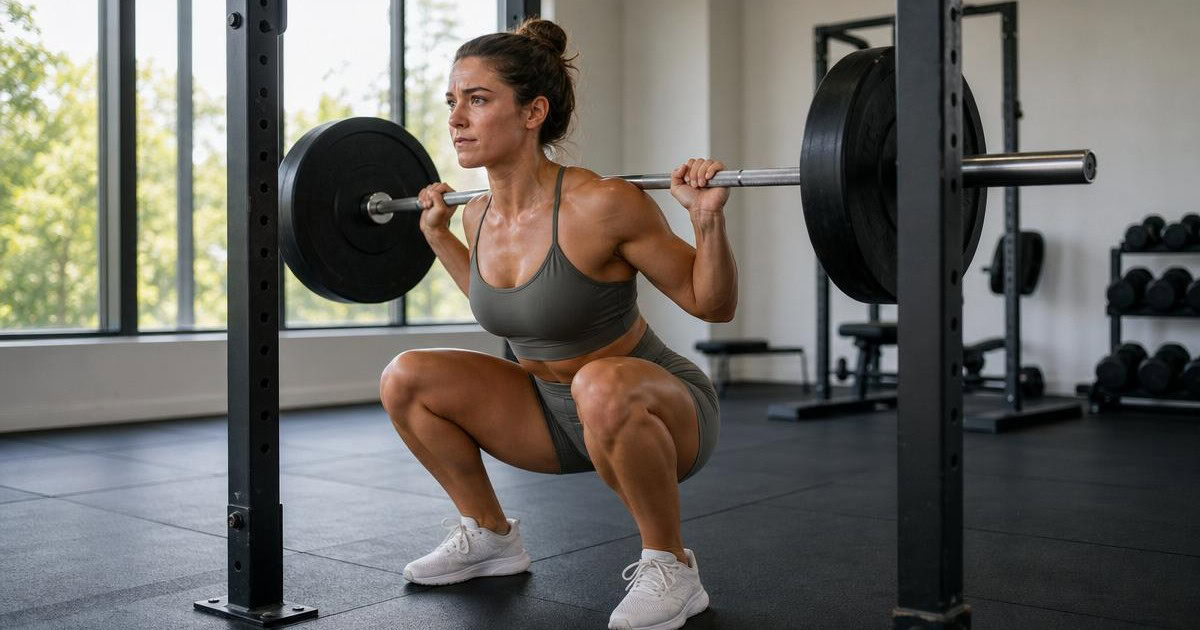
The Barbell Squat performs back squats. The compound pattern is foundational lower-body mass work for bodybuilding.
For bodybuilders, the back squat is foundational compound leg mass work. The pattern allows heavy bilateral lower-body loading. Run it for 4 sets of 6 to 10 reps as primary leg mass work.
Set up a barbell on a rack at upper back height. Position the bar across the upper back. Step back with feet shoulder-width. Squat down by bending the knees and hips. Lower until the thighs are parallel to the floor or below. Drive back up through the heels. The pattern produces compound quad, glute, and posterior chain loading that builds foundational leg mass. Heavy progressive squat training is one of the most effective lower-body mass-builders for bodybuilders.
Barbell Deadlift

The Barbell Deadlift performs barbell deadlifts. The pattern produces compound full-body loading for bodybuilding mass development.
For bodybuilders, the deadlift produces compound full-body loading – back, posterior chain, traps, forearms all work. Run it for 3 to 4 sets of 4 to 8 reps as heavy compound work.
Stand with feet hip-width with a barbell on the floor over the mid-foot. Hinge at the hips and bend the knees to grip the bar with hands just outside the legs. Drive through the heels while extending the hips and knees to lift the bar from the floor. Stand fully tall at the top. Lower under control. The pattern produces extreme compound loading on the entire posterior chain, back, traps, and forearms – one of the most effective full-body mass-builders that exists.
Pull Up

The Pull Up performs bodyweight pull-ups. The pattern produces compound back and lat work for bodybuilding development.
For bodybuilders, pull-ups build the lats and back through compound bodyweight pulling. Run it for 4 sets of 6 to 12 reps as primary vertical pulling work.
Hang from a pull-up bar with hands shoulder-width apart and palms facing away. Pull the body up by retracting the shoulder blades and pulling the elbows down toward the ribs until the chin reaches over the bar. Lower under control to full hang. The pattern produces foundational lat and back development. Bodybuilders with the most impressive lats and back development typically have built them on consistent pull-up training. Progress with weighted pull-ups for advanced strength.
Barbell Bent Over Row

The Barbell Bent Over Row performs barbell rows. The pattern is foundational compound back mass work for bodybuilding.
For bodybuilders, the bent-over row is foundational horizontal pulling work. The pattern hits the entire back through heavy compound rowing. Run it for 4 sets of 6 to 10 reps as primary back mass work.
Stand with feet hip-width holding a barbell at the front of the thighs with overhand grip. Hinge forward at the hips with a flat back so the torso is at about 45 degrees. Pull the bar to the lower chest by retracting the shoulder blades and pulling the elbows back. The lats, rhomboids, traps, and rear delts work hard. Squeeze the shoulder blades hard at peak. Lower under control. The pattern produces heavy compound back loading and is foundational for back thickness development.
Dumbbell Incline Bench Press

The Dumbbell Incline Bench Press performs incline press with dumbbells. The pattern emphasizes upper chest development.
For bodybuilders, the incline dumbbell bench press emphasizes upper chest development – critical for complete chest aesthetics. Run it for 3 to 4 sets of 8 to 12 reps as upper chest work.
Set up an incline bench at about 30 to 45 degrees. Lie back on the bench holding dumbbells over the chest with palms facing forward. Lower the dumbbells to chest level by bending the elbows. Press the dumbbells back up by extending the arms while bringing them toward each other at the top. The pattern emphasizes the upper portion of the pectorals – the often-undertrained area that creates the complete chest appearance and balanced upper body for bodybuilders.
Barbell Curl

The Barbell Curl performs barbell biceps curls. The pattern is foundational compound bicep mass work.
For bodybuilders, the barbell curl is foundational bicep mass work. The pattern allows heaviest bilateral bicep loading. Run it for 4 sets of 8 to 10 reps as primary bicep mass work.
Stand with feet hip-width holding a barbell at the front of the thighs with underhand grip. Keep the elbows tucked at the sides. Curl the barbell up by bending the elbows. The biceps work hard through elbow flexion. Squeeze the biceps hard at peak contraction. Lower under control. Avoid using momentum from the legs or trunk – keep the curl strict for maximum bicep loading. The pattern is foundational for bicep mass building – bodybuilders with the largest biceps typically have built them on consistent heavy barbell curl training.
Lever Leg Extension

The Lever Leg Extension performs leg extensions. The pattern produces direct quad isolation for bodybuilding development.
For bodybuilders, the leg extension produces direct quad isolation through pure knee extension. Run it for 4 sets of 12 to 15 reps as primary quad isolation work.
Sit on a lever leg extension machine with the back against the pad and shins under the lower pad. Adjust the seat so the knees align with the machine pivot. Extend the knees by lifting the lower pad up until the legs are completely straight. The quads work hard through pure knee extension. Squeeze hard at peak with focus on quad contraction. Lower under control. The pattern produces direct quad isolation that complements compound squat and deadlift work for complete quad development. Pause briefly at full extension on each rep for maximum quad activation.
Dumbbell Lateral Raise

The Dumbbell Lateral Raise performs lateral raises with dumbbells. The pattern produces direct medial deltoid isolation.
For bodybuilders, the lateral raise is foundational shoulder isolation work. The pattern hits the medial delts that create shoulder width. Run it for 4 sets of 10 to 15 reps as primary shoulder width work.
Stand with feet hip-width holding dumbbells at the sides with palms facing the body. Lift the dumbbells out to the sides by abducting the arms until they reach shoulder height (the dumbbells should be at shoulder level with palms down). Keep slight bend in the elbows throughout. Squeeze the medial delts hard at peak. Lower under control. The pattern produces direct medial delt isolation – the muscle responsible for shoulder width that defines the broad-shouldered bodybuilder appearance.
Triceps Dip

The Triceps Dip performs bodyweight dips on parallel bars. The pattern produces strong compound tricep mass work.
For bodybuilders, dips are foundational compound tricep work. Stay upright (not leaned forward) for tricep emphasis. Run it for 3 to 4 sets of 8 to 15 reps as compound tricep work.
Position yourself between parallel bars with the body suspended above. Stay upright (do not lean forward – upright position emphasizes triceps). Lower the body by bending the elbows until the upper arms are roughly parallel to the floor. Press back up by extending the arms. The triceps work hard through compound pressing. The pattern produces strong tricep mass work. Progress with weighted dips for advanced strength as bodyweight reps become easy. Combined with close grip bench, dips form the foundation of tricep mass development.
How To Program These Workouts
A productive bodybuilding split organizes these exercises across 4 to 6 weekly sessions. A common 5-day split: Chest day (barbell bench press, dumbbell incline bench press, dips, cable flies). Back day (pull-up, barbell bent over row, lat pulldowns, cable rows). Leg day (barbell squat, lever leg extension, leg curls, calf work). Shoulder day (overhead press, dumbbell lateral raise, rear delts). Arm day (barbell curl, triceps dip, isolation curl/extension variations). Run heavy compound work for 3 to 4 sets of 6 to 10 reps with progressive overload. Run isolation work for 3 to 4 sets of 8 to 15 reps. Total weekly volume per muscle group: 10 to 20 working sets distributed across 1 to 2 weekly sessions per muscle group.
Train bodybuilding 4 to 6 times per week with periodized programming. Most successful bodybuilding programs follow established splits: Push/Pull/Legs (3 to 6 days per week), Bro Splits (5-day single-muscle splits), Upper/Lower (4 days per week), Full Body (3 days per week for beginners). Schedule each muscle group with at least 48 hours recovery between sessions. Most successful bodybuilders periodize with: heavy strength phases (lower reps, heavier weights) for 4 to 8 weeks, hypertrophy phases (moderate reps, moderate weights) for 8 to 12 weeks, and occasional deload weeks every 4 to 8 weeks. The bodybuilder’s primary focus is consistent progressive overload, adequate volume, and sufficient recovery and nutrition.
For broader programming, see our best 5 day split workout and best workouts for muscle growth. For specific work, see our best chest workouts.
Final Thoughts
The best workouts for bodybuilding deliver continuous mass gains through training that targets the specific demands of muscle growth: compound lifts for foundational mass across major muscle groups, dedicated isolation for muscle group-specific development, adequate volume across all muscles (10 to 20 working sets per muscle per week), appropriate rep ranges for hypertrophy (6 to 15 reps with progressive overload), and proper periodization that mixes heavy strength and high-volume hypertrophy phases. The combination of bench press, squat, deadlift, pull-ups, rows, incline press, curls, lateral raises, leg extensions, and dips covers every fundamental bodybuilding pattern and produces broader development than any single approach. Most lifters who consistently apply bodybuilding principles see measurable mass gains within each training cycle (typically 12 to 16 weeks), with continuous progress over years through proper programming, recovery, and nutrition. For lifters seeking maximum muscle mass, contest preparation, or impressive aesthetic development, dedicated bodybuilding training is the foundation of the goal.
Stay focused on progressive overload and consistency over time. The most common mistake bodybuilders make is either constantly switching programs (preventing the consistent progressive overload needed for mass) or training with insufficient intensity/volume (providing too little stimulus for growth). The fix: choose a proven program (or build one based on these principles), commit to it for at least 12 to 16 weeks, track all working weights and reps, and progressively add weight or reps over time. Combined with adequate nutrition (sufficient protein and calories), proper recovery (7 to 9 hours sleep), and patience (mass gains are slow), consistent progressive overload produces the bodybuilding results that define successful muscle building.
Frequently Asked Questions
How often should bodybuilders train?
4 to 6 times per week works for most bodybuilders. The optimal frequency depends on the split: 5-day bro splits hit each muscle once per week, push/pull/legs hits each muscle 1 to 2 times per week, upper/lower 4 days hits each muscle twice per week. Each muscle group should receive 10 to 20 working sets per week distributed across 1 to 2 weekly sessions for optimal hypertrophy. More frequency (training each muscle 2 times per week) tends to produce better growth than less frequency for most lifters.
What’s the best rep range for muscle growth?
Mostly 6 to 15 reps for hypertrophy, with periodized variation. Heavy compound work uses 6 to 10 reps for 3 to 4 sets. Isolation work uses 8 to 15 reps for 3 to 4 sets. Some advanced lifters include occasional very heavy phases (3 to 6 reps for strength) and very light phases (15 to 25 reps for endurance). Most successful bodybuilding programs spend most time in the 6 to 15 rep range with periodized variation. The specific rep range matters less than progressive overload over time and total weekly volume.
Should bodybuilders do compound or isolation exercises?
Both – compound for foundation, isolation for completion. Compound lifts (bench press, squat, deadlift, pull-ups, rows) build foundational mass across major muscle groups and allow the heaviest possible loading. Isolation work (curls, lateral raises, leg extensions, leg curls) targets specific muscle groups for completion and addresses individual weaknesses. Most successful bodybuilding programs include both – typically 2 to 3 compound exercises plus 2 to 4 isolation exercises per session for each muscle group.
How heavy should bodybuilders lift?
Heavy enough for progressive overload in target rep ranges. Compound lifts use weights that allow 6 to 10 reps with strict form for 3 to 4 sets. Isolation work uses weights that allow 8 to 15 reps with strict form. The goal is progressive overload over time – adding weight or reps each session/week while maintaining proper form. Most successful bodybuilders train within 2 to 3 reps of failure on most working sets, with occasional sets to actual failure. Quality reps with progressive overload produce mass; ego-lifting with poor form produces injuries.
How long does it take to build a good physique?
1 to 3 years for noticeable transformation, 5 to 10+ years for advanced physiques. Most lifters who consistently apply proper training principles see measurable mass gains in the first year (5 to 15 lbs of muscle for natural lifters), continued progress through years 2 to 3 (10 to 20 additional lbs), and ongoing slow progress through years 5 to 10+ for advanced lifters approaching genetic potential. Natural muscle building is slow – the impressive physiques visible in fitness media take years/decades of consistent training, nutrition, and recovery. Patience and consistency are critical.