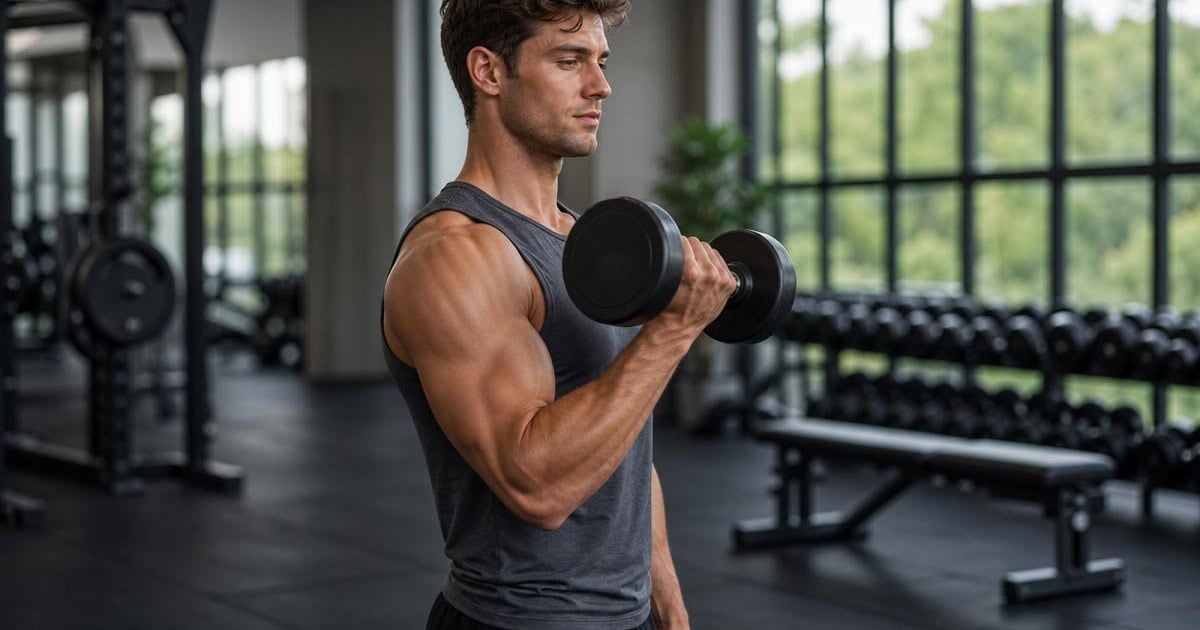
Bench access is one of the most common limitations for home lifters and travelers. The standard dumbbell bench press and dumbbell incline press require a bench, which often is not available in apartments, hotel rooms, or minimalist home gym setups. The good news: dumbbell chest training without a bench produces real chest development through a different set of exercises that work just as well as bench-based variations for most general fitness goals.
Below are ten effective floor-based dumbbell chest exercises that cover pressing, fly motion, pullover work, and combination movements. Together they form a complete chest training program that requires nothing more than a pair of dumbbells and a clear floor space. A 30 to 45-minute session pulled from this list produces strong chest stimulus without any bench equipment.
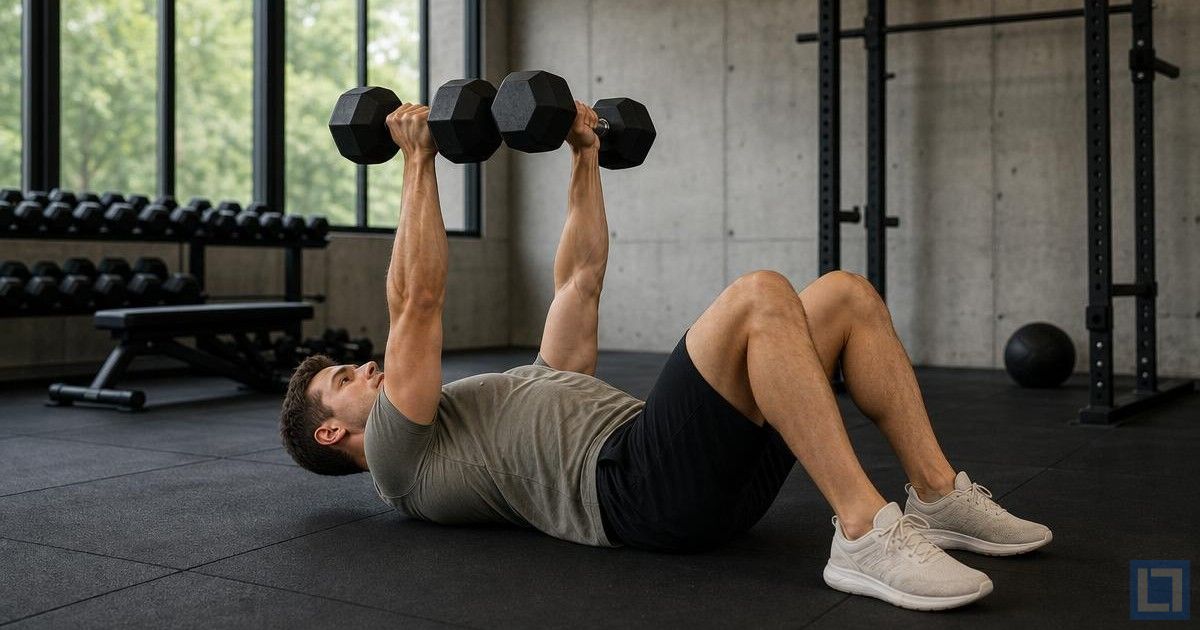
Dumbbell Lying on Floor Chest Press

The Dumbbell Lying on Floor Chest Press lies flat on the floor and presses dumbbells from chest level to lockout above the chest. The floor-based version of the bench press is the foundational dumbbell chest exercise for lifters without bench access.
For lifters training chest without a bench, the floor press is the primary heavy compound. The floor stops the elbows from dropping below the body, which limits the range of motion compared to bench pressing but eliminates the need for spotters and reduces shoulder strain. Run it for 3 to 4 sets of 8 to 12 reps as the heaviest exercise of the chest session.
Lie flat on the floor with knees bent and feet planted. Hold dumbbells at chest level with palms facing forward. Press both dumbbells up to lockout above the chest. Lower under control until the elbows touch the floor. Pause briefly at the bottom before pressing back up.
Dumbbell Floor Fly

The Dumbbell Floor Fly lies flat on the floor and lowers dumbbells out to the sides in a wide arc, then squeezes them back to the start position above the chest. The fly motion isolates the chest through pure horizontal adduction without the tricep involvement of pressing variations.
For chest isolation without a bench, the floor fly is one of the most effective exercises that exists. The floor limits elbow drop, which reduces shoulder strain compared to bench-based flies. Run it for 3 sets of 10 to 12 reps with light to moderate weight as the primary chest isolation exercise.
Lie flat on the floor with dumbbells held above the chest, arms slightly bent. Lower the dumbbells out to the sides in a wide arc until the elbows touch the floor. Squeeze the chest to bring the dumbbells back to the start. Use lighter weight than for pressing.
Dumbbell Svend Press

The Dumbbell Svend Press holds two dumbbells together at the chest with palms pressing inward and presses them straight forward away from the body. The continuous inward pressure from the palms produces extreme chest contraction throughout the rep.
The Svend press is one of the most underrated chest exercises that exists, and it works particularly well in dumbbell-only home programs because it requires no bench. The continuous pec contraction produces stronger chest growth per rep than many heavier exercises. Run it for 3 sets of 12 to 15 reps with light dumbbells.
Stand or kneel holding two light dumbbells pressed firmly together at the chest with palms facing each other. Press the dumbbells straight forward away from the chest while maintaining maximum inward pressure. Return to the start. Squeeze hard throughout the entire rep.
Dumbbell Larsen Press

The Dumbbell Larsen Press performs the chest press with the legs extended straight rather than planted on the floor. The change in body position eliminates leg drive and forces the chest and triceps to do all the work, producing stronger isolation than standard floor pressing.
For lifters who feel they use too much leg drive on standard floor presses, the Larsen variation eliminates that compensation entirely. The pure chest-and-tricep loading produces stronger upper-body development per rep. Run it for 3 sets of 8 to 12 reps as a variation in floor-based chest programming.
Lie flat on the floor with legs extended straight rather than bent. Hold dumbbells at chest level. Press both dumbbells up to lockout above the chest. The legs should not drive into the floor; all the press power comes from the chest and triceps. Lower under control and repeat.
Dumbbell Twisted Fly

The Dumbbell Twisted Fly performs the floor fly while rotating the dumbbells through the rep so the palms face each other at the bottom and rotate to face down at the top. The added rotation hits more chest muscle fibers than standard floor flies.
For variety in floor-based chest programming, the twisted fly adds a unique rotation pattern that loads the chest from a slightly different angle than standard flies. The combination of horizontal adduction and rotation produces stronger total chest stimulus per rep. Run it for 3 sets of 10 to 12 reps.
Lie flat on the floor with dumbbells held above the chest, palms facing each other. Lower the dumbbells out to the sides while rotating the palms to face down at the bottom. Reverse the motion: bring the dumbbells back up while rotating the palms back to face each other.
Dumbbell Low Fly

The Dumbbell Low Fly lies flat on the floor and performs a fly motion with the arms positioned lower toward the abdomen rather than horizontally outward. The lowered arm position shifts emphasis to the lower portion of the chest.
For complete chest development without a bench, the low fly fills the gap that standard floor flies miss. The lower arm position emphasizes the lower chest fibers that incline pressing typically cannot reach. Run it for 3 sets of 10 to 12 reps as accessory work after primary pressing.
Lie flat on the floor with dumbbells held above the chest, arms slightly bent. Lower the dumbbells in an arc toward the lower abdomen rather than straight out to the sides. Reverse the motion to bring the dumbbells back to the start.
Hyght Dumbbell Fly

The Hyght Dumbbell Fly performs the floor fly with the dumbbells held in a neutral grip throughout the rep. The neutral grip reduces shoulder strain compared to pronated-grip flies and is particularly useful for lifters with sensitive shoulders.
For lifters who experience shoulder discomfort during standard fly variations, the Hyght fly provides an alternative loading pattern that hits the chest without aggravating the shoulder joint. The neutral hand position is more biomechanically friendly for many lifters. Run it for 3 sets of 10 to 12 reps.
Lie flat on the floor with dumbbells held above the chest, palms facing each other (neutral grip). Lower the dumbbells out to the sides in a fly motion while maintaining the neutral grip throughout. Squeeze the chest to bring the dumbbells back to the start.
Dumbbell Pullover

The Dumbbell Pullover lies flat on the floor with a single dumbbell held above the chest with both hands, then lowers the dumbbell back over the head in an arc and returns. The exercise hits the chest, lats, and serratus anterior in one combined motion.
For complete chest and back development in dumbbell-only programs, the pullover is one of the most efficient exercises that exists. The combined chest and lat loading produces broader upper-body development than chest-isolated exercises alone. Run it for 3 sets of 10 to 12 reps.
Lie flat on the floor with a single heavy dumbbell held above the chest with both hands cupping the top end. Lower the dumbbell in an arc back over the head until the arms are roughly parallel with the floor. Pull the dumbbell back to the start position by engaging the lats and chest.
Dumbbell Renegade Row
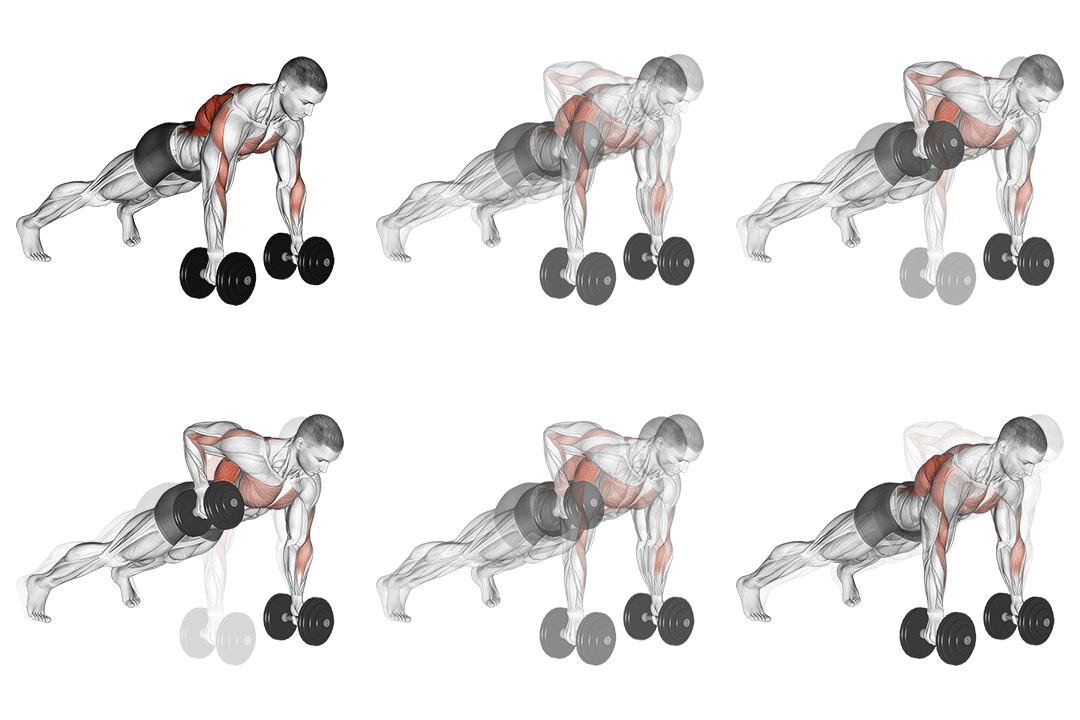
The Dumbbell Renegade Row holds two dumbbells in a push-up position and rows one dumbbell to the chest while balancing on the other dumbbell and the toes. The exercise combines a plank with a row, hitting the back, chest, and core simultaneously.
For full upper-body work without a bench, the renegade row is one of the most demanding combined exercises that exists. The plank position loads the core and chest while the rowing motion adds back work, which produces broader development per rep than isolated chest exercises. Run it for 3 sets of 8 to 10 reps per side.
Set up in a push-up position holding two dumbbells under the shoulders. Brace the core hard. Row one dumbbell up to the side of the chest while balancing on the other dumbbell and the toes. Lower under control and switch sides. Keep the hips square to the floor; do not let them rotate.
Push Ups

The Push Ups perform a push-up motion in standard plank position. The bodyweight loading complements dumbbell work and serves as the foundational upper-body pressing exercise that requires no equipment at all.
In a no-bench dumbbell chest program, push-ups round out the chest training stimulus by adding bodyweight loading that translates directly to athletic and daily-life pushing tasks. The combination of dumbbell pressing and push-ups produces stronger chest development than either alone. Run them for 3 sets to near failure as a finisher.
Set up in plank position with hands directly under the shoulders and body in a straight line from head to heels. Lower the chest to within an inch of the floor by bending the elbows. Press back to lockout. For added difficulty, perform push-ups with hands on dumbbells (which increases the range of motion).
How To Program These Workouts
A productive no-bench dumbbell chest session pulls five to seven exercises from the list above. A balanced session includes one heavy floor press (lying on floor chest press as the primary lift), one fly variation (floor fly or twisted fly), one continuous-tension exercise (Svend press), one combined movement (pullover or renegade row), and a finisher (push-ups to failure). Run primary lifts for 3 to 4 sets of 8 to 12 reps; isolation work for 3 sets of 10 to 15 reps.
Train chest one to two times per week. The chest recovers within 48 to 72 hours of moderate training, but the high involvement in pressing exercises (front delts, triceps) means chest work compounds with other upper-body training. Most lifters program chest work once per week as a dedicated session or split it across two upper-body days.
For more chest programming, see our best dumbbell chest workouts (with bench access) and best at home chest workouts. For broader dumbbell programming, see our best full body dumbbell workouts.
Final Thoughts
The best dumbbell chest workouts without bench produce real chest development through floor-based pressing, fly variations, and combination movements that work just as well as bench-based variations for most general fitness goals. The lack of a bench is not a real training limitation; it just shifts the exercise selection toward floor-based variations that handle the same muscle development through slightly different patterns.
Stay focused on contraction quality. The most common no-bench chest training mistake is rushing through reps to compensate for the limited range of motion of floor pressing. The fix: use slower tempos with strong contractions at the top of every rep. The Svend press, in particular, requires continuous hard inward pressure throughout the entire set; lifters who hold the dumbbells loosely waste the exercise. Quality contractions outperform faster reps for chest development.
Frequently Asked Questions
Can you build a big chest without a bench?
Yes for most general fitness goals. Floor-based pressing, fly variations, and combination movements produce real chest development that compares well to bench-based programs for the first 12 to 24 months of training. Advanced lifters chasing maximum chest size eventually benefit from bench-based work that allows fuller range of motion, but consistent no-bench training produces measurable chest growth at every level.
How is the floor press different from the bench press?
The floor stops the elbows from dropping below the body level, which limits the range of motion to roughly the bottom 60 percent of a full bench press. The reduced range eliminates the deep stretch at the bottom that loads the chest most heavily, which means the floor press emphasizes the triceps and lockout strength more than chest. To compensate, lifters need to add fly variations and pullovers (which restore the chest stretch) for complete development.
How often should I train chest without a bench?
One to two times per week works for most lifters. The chest recovers within 48 to 72 hours of moderate training. Most lifters do well with one focused chest session per week or two lighter sessions split across upper-body days. The lack of a bench does not change the recovery timeline; just the exercise selection.
Are push-ups enough for chest training?
Not by themselves. Push-ups are bodyweight exercises that produce moderate chest stimulus, but they cap out as lifters get stronger because the load (bodyweight) does not increase. Adding dumbbell exercises like floor presses, flies, and pullovers produces stronger ongoing development by allowing progressive load increases over months and years.
Can I do incline pressing without a bench?
Not in the traditional sense, but you can mimic the angle. Decline push-ups (feet elevated on a chair or couch) produce upper-chest emphasis similar to incline pressing. Standing dumbbell shoulder presses with a forward lean also bias the upper chest along with the front delts. For lifters without bench access who want upper-chest emphasis, these substitutes produce most of the benefit of incline pressing.