Addressing knee pain through targeted exercise requires understanding both the typical causes (knee pain commonly results from muscle imbalances around the knee – weak glutes, weak gluteus medius, weak VMO, quad-hamstring imbalance, weak calves – rather than the knee itself) and the training principles that address these imbalances: glute strengthening (the glutes are typically the most important muscles for knee support, and weak glutes produce the knee valgus and hip drop patterns that contribute to knee pain), gluteus medius training (the most direct lateral hip work), VMO strengthening (the inner quad that stabilizes the kneecap), posterior chain work (RDLs to balance quad-dominant patterns), unilateral patterns for balanced strength, lateral core work for hip and knee alignment, calf strengthening for lower-leg stability, and progressive loading that respects current pain levels. Most people with knee pain are dealing with one or more of these issues: weak glutes producing knee valgus during squats, weak gluteus medius producing hip drop during single-leg movement, weak VMO failing to stabilize the kneecap, quad-dominant training producing imbalance, lack of unilateral leg work, weak calves producing lower-leg dysfunction, and overall training without knee-specific consideration. Note: this article addresses general knee strengthening for muscle imbalance-related knee pain. Acute injuries, structural issues, or persistent pain require professional evaluation – this article is not a substitute for medical advice.
Below are ten of the most effective exercises for addressing muscle imbalance-related knee pain, covering glute strengthening (barbell glute bridge, single leg glute bridge with knee to chest), posterior chain (barbell Romanian deadlift), unilateral leg work (step up), VMO strengthening (bodyweight wall squat, dumbbell goblet squat), gluteus medius (side lying clam, resistance band lateral walk), lateral core (side plank), and calf strengthening (standing calf raise). Together they form a complete knee strengthening program. A 30 to 40-minute knee strengthening session pulled from this list, performed 3 to 4 times per week (or as integrated work alongside your regular training), produces measurable knee strength and stability improvement within 6 to 12 weeks of consistent training – with appropriate medical evaluation for persistent pain.
Barbell Glute Bridge
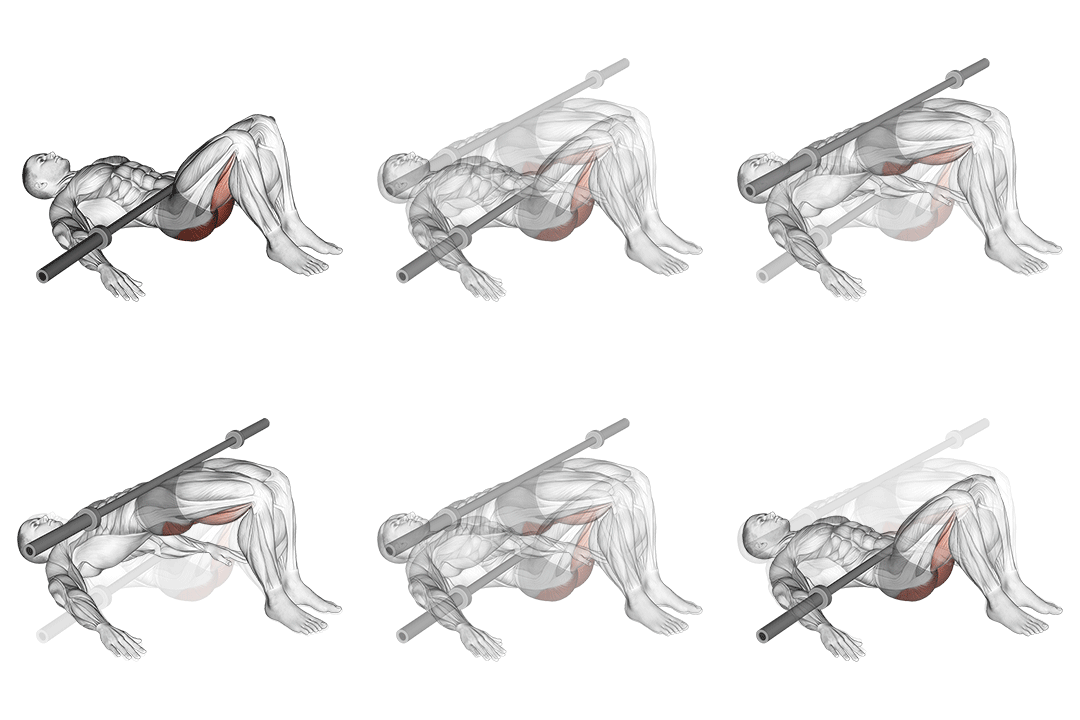
The Barbell Glute Bridge performs glute bridges. The pattern strengthens glutes that support knee health.
For knee pain, the glute bridge strengthens the glutes that support proper knee alignment. Run it for 4 sets of 10 to 15 reps as primary glute strengthening for knee support.
Lie on the floor with knees bent and feet planted. Position a barbell across the hips. Hold the bar in place. Drive through the heels to lift the hips up by extending the hips. The body forms a straight line from shoulders to knees at the top. The glutes work hard. Squeeze at peak hip extension. Lower under control. The pattern strengthens the glutes – weak glutes contribute substantially to knee pain through poor knee alignment, hip drop during single-leg movement, and excessive knee valgus during squats. Strong glutes support proper knee alignment and reduce knee pain.
Barbell Romanian Deadlift

The Barbell Romanian Deadlift performs Romanian deadlifts. The hip-hinge pattern produces posterior chain work supporting knee health.
For knee pain, the RDL produces posterior chain work that addresses the muscle imbalances contributing to knee pain. Run it for 3 sets of 8 to 12 reps as posterior chain work.
Stand with feet hip-width holding a barbell at the front of the thighs. Hinge at the hips by sending them backward while keeping the back flat and legs nearly straight. Lower the barbell along the legs until the hamstrings stretch deeply. Drive back to standing by extending the hips. The pattern produces posterior chain strengthening – quad-dominant patterns (which contribute to knee pain) often accompany weak hamstrings and glutes, and RDL training balances the musculature around the knee. Strong posterior chain reduces knee pain by addressing quad-hamstring imbalance.
Step Up

The Step Up performs bodyweight step-ups. The pattern produces unilateral leg strengthening with knee-friendly loading.
For knee pain, the step-up produces unilateral leg work without excessive knee loading. Run it for 3 sets of 10 to 15 reps per leg as unilateral leg strengthening.
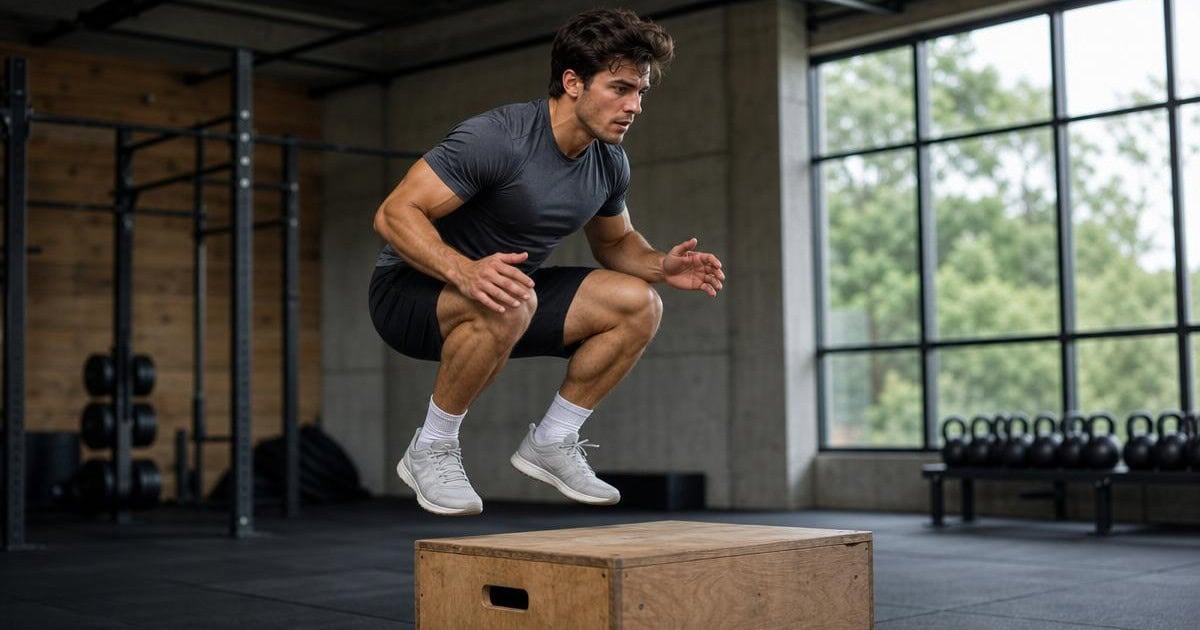
Stand in front of a sturdy box or bench (knee-height for most lifters – lower if needed for knee pain). Step up onto the box with one leg, driving through the heel of the lifting leg until standing fully upright on the box. Step back down with control. Switch legs. The pattern produces unilateral leg strengthening with relatively knee-friendly loading – the controlled drive-up trains the glutes and quads in proper alignment without the high knee shear forces of deep squatting. Excellent for rebuilding leg strength while managing knee pain.
Bodyweight Wall Squat
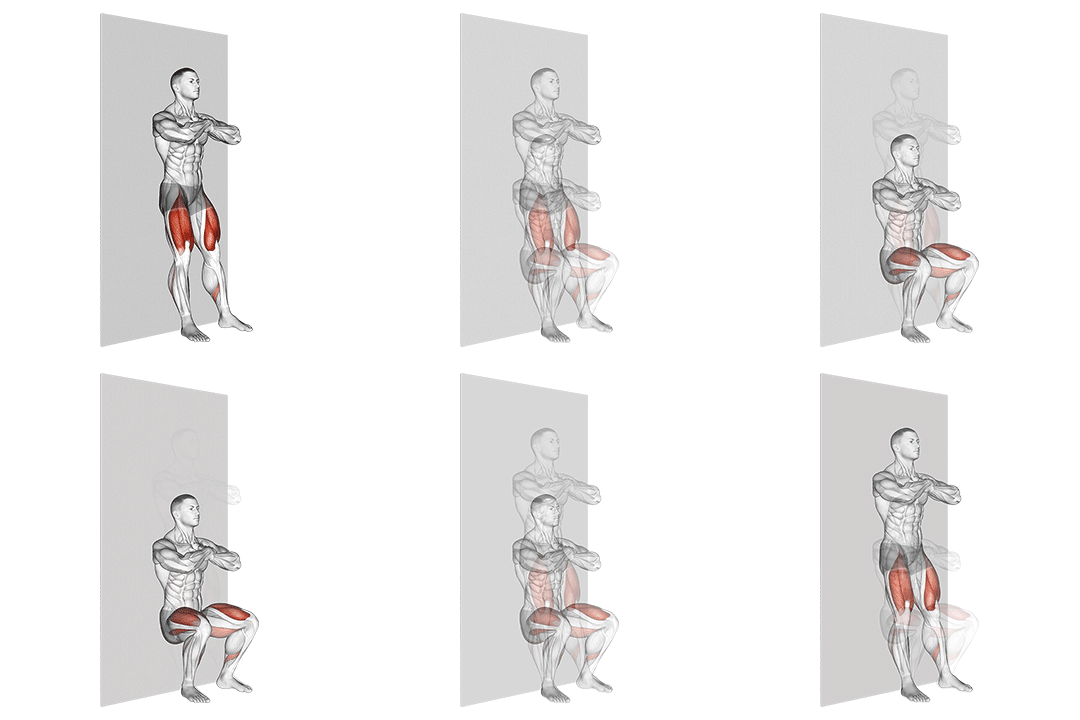
The Bodyweight Wall Squat performs wall sit holds. The isometric pattern produces quad strengthening without excessive knee shear.
For knee pain, the wall squat produces isometric quad strengthening – tolerable for many people with knee pain. Run it for 3 to 4 sets of 30 to 60-second holds as isometric quad strengthening.
Stand with the back against a wall. Walk the feet forward about 2 feet from the wall. Slide the back down the wall by bending the knees until the thighs are parallel to the floor (90-degree knee bend – reduce depth if needed). The back stays flat against the wall. Hold the position. The quads work hard isometrically – especially the VMO (inner quad) that stabilizes the kneecap. The pattern produces excellent VMO strengthening – the VMO is critical for kneecap tracking and knee stability, and isometric loading is often well-tolerated by people with knee pain. Excellent for rebuilding quad strength while managing knee pain.
Single Leg Glute Bridge with Knee to Chest

The Single Leg Glute Bridge with Knee to Chest performs unilateral glute bridges. The pattern produces unilateral glute strengthening for knee support.
For knee pain, the single-leg glute bridge addresses left/right glute asymmetries that contribute to knee pain. Run it for 3 sets of 10 to 12 reps per leg as unilateral glute strengthening.
Lie on the back with one knee bent and foot planted on the floor. Pull the opposite knee to the chest with the hands. Drive through the heel of the planted foot to lift the hips up by extending the hip. The working glute and hamstring work hard through unilateral hip extension. Squeeze at peak. Lower under control. The pattern produces unilateral glute strengthening – left/right glute asymmetries often contribute to knee pain through uneven loading. Addresses both sides equally to support balanced knee health.
Side Lying Clam
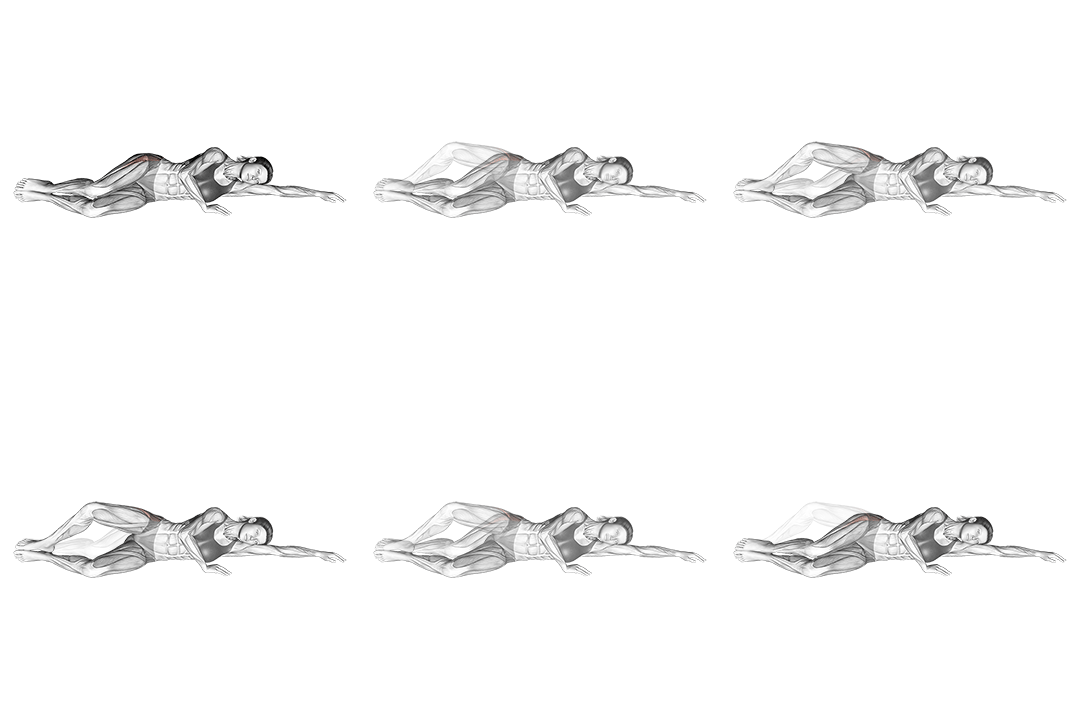
The Side Lying Clam performs clamshell exercises. The pattern produces direct gluteus medius strengthening for knee support.
For knee pain, the clamshell strengthens the gluteus medius – a critical knee-supporting muscle. Run it for 3 sets of 12 to 15 reps per side as gluteus medius work.
Lie on one side with knees bent at 90 degrees and feet stacked. Lift the top knee away from the bottom knee by externally rotating the hip while keeping the feet together. The gluteus medius works hard. Lower under control. Continue for the working interval. Switch sides. The pattern produces direct gluteus medius strengthening – the gluteus medius is THE most important muscle for knee alignment during single-leg movement. Weak gluteus medius produces knee valgus (knees caving inward) during squats and lunges, contributing substantially to knee pain. Strong gluteus medius prevents knee valgus and supports knee health.
Resistance Band Lateral Walk
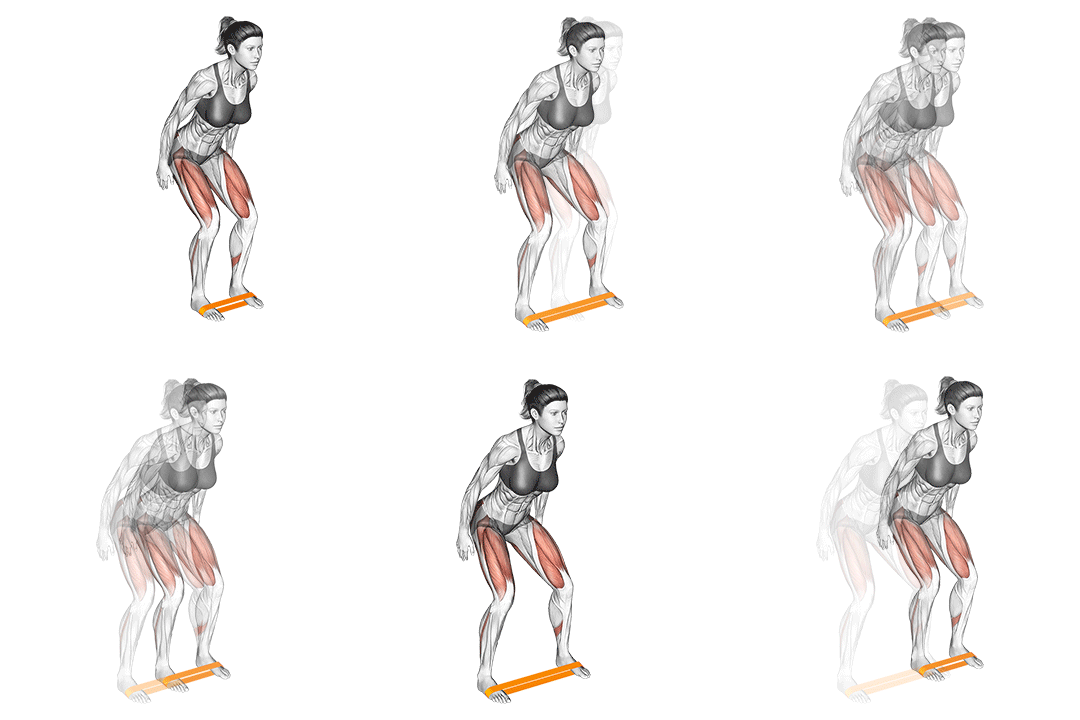
The Resistance Band Lateral Walk performs lateral walks with band resistance. The pattern produces gluteus medius activation for knee support.
For knee pain, the lateral band walk produces direct gluteus medius activation that supports knee alignment. Run it for 3 sets of 10 to 15 steps per direction as gluteus medius activation work.
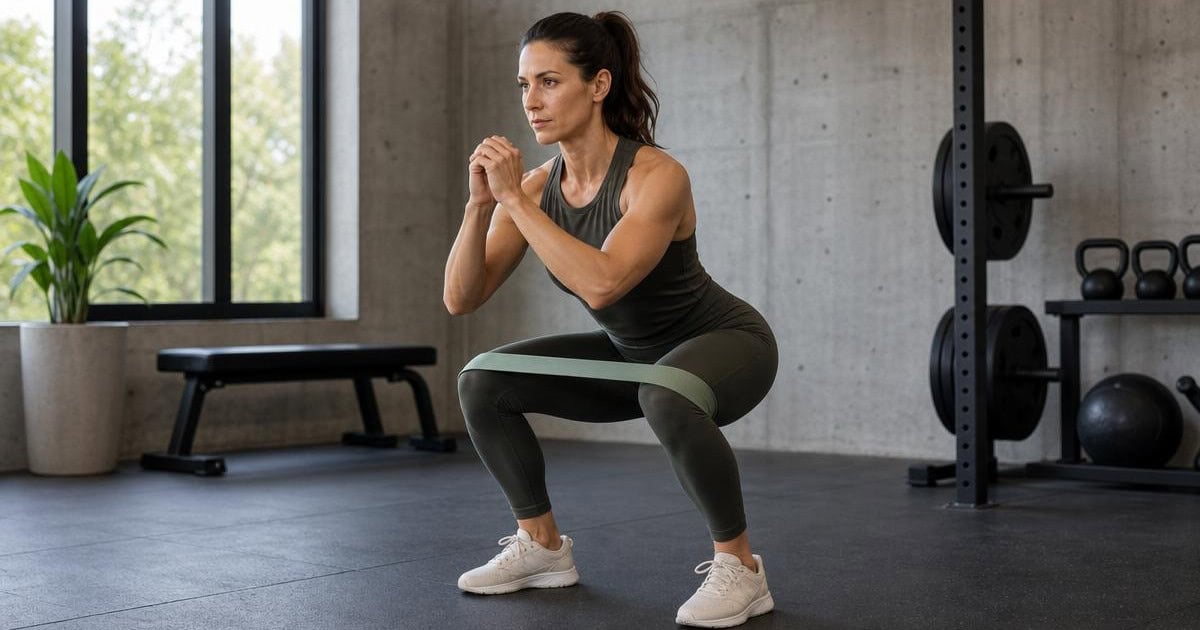
Place a resistance band around the legs just above the knees. Stand with feet hip-width and knees slightly bent. Step laterally to one side, maintaining tension in the band throughout. Continue stepping in one direction for the working interval, then switch directions. The gluteus medius works hard against the band resistance. The pattern produces direct gluteus medius activation – excellent warm-up exercise that primes the gluteus medius for proper knee alignment during compound work. Combined with clamshells and glute bridges, lateral band walks complete the gluteus medius strengthening that supports knee health.
Side Plank
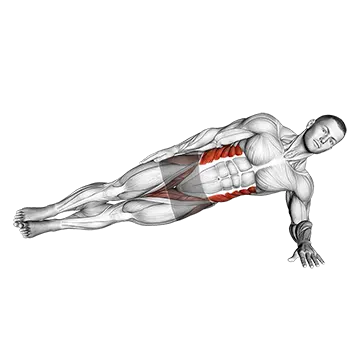
The Side Plank performs side plank holds. The pattern produces lateral core and hip strengthening supporting knee alignment.
For knee pain, the side plank builds lateral core and hip stability that supports proper knee alignment. Run it for 3 sets of 30 to 45-second holds per side as lateral core work.
Lie on one side with the body straight. Prop up on one forearm with the elbow under the shoulder. Lift the hips up so the body forms a straight line from feet to head. The obliques and gluteus medius work hard. Hold for the working interval. Switch sides between sets. The pattern builds lateral core and hip strength – the gluteus medius and lateral core support proper pelvic position which directly affects knee alignment. Strong lateral core and gluteus medius prevent the hip drop and knee valgus patterns that contribute to knee pain.
Dumbbell Goblet Squat
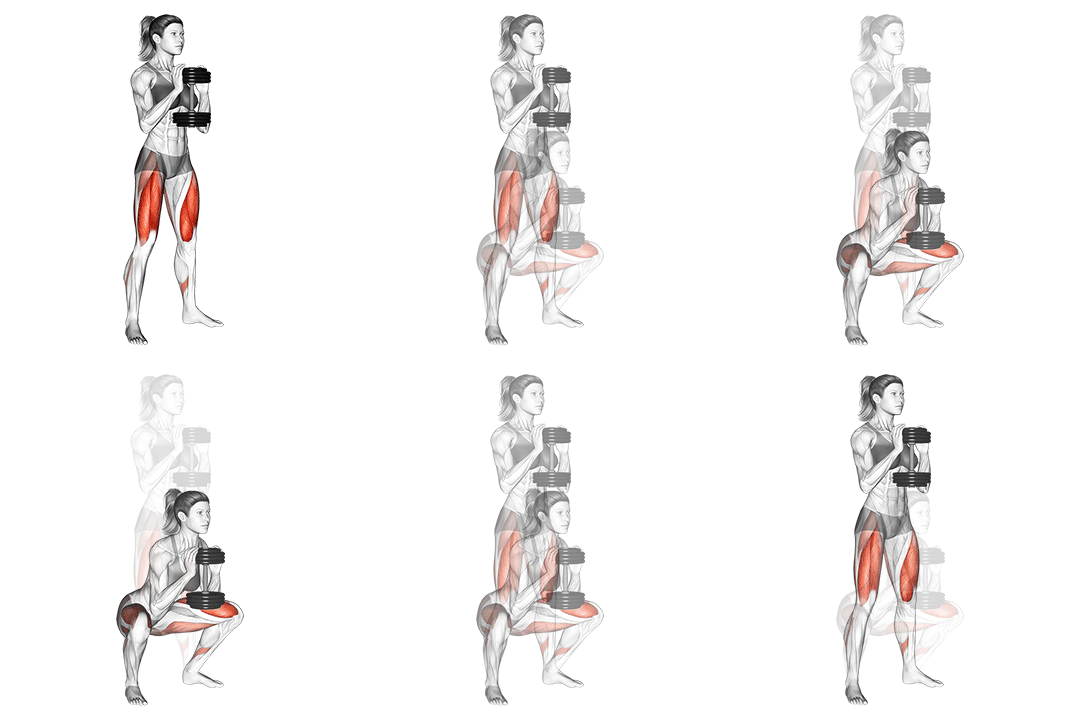
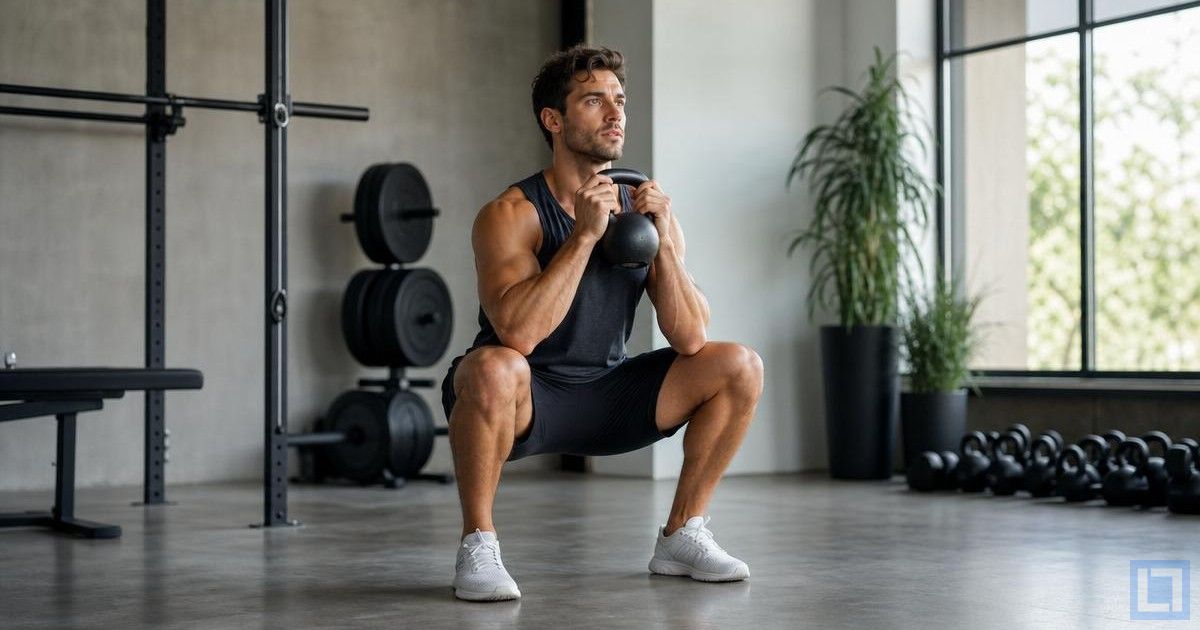
The Dumbbell Goblet Squat performs goblet squats. The pattern produces controlled squatting for knee strengthening.
For knee pain, the goblet squat produces controlled squatting with the front-loaded position teaching proper movement patterns. Run it for 3 sets of 8 to 12 reps as squat strengthening (start with bodyweight if needed).
Stand with feet shoulder-width holding a dumbbell at the chest with both hands (cup the top end of the dumbbell). Squat down by bending the knees and hips. Lower as deep as comfortable (reduce depth if needed for knee pain). Drive back up. The pattern produces controlled squatting with the front-loaded position teaching proper squat mechanics – the goblet position counterbalances the squat and trains proper alignment. Excellent for rebuilding squat strength with knee pain. Most people with knee pain can perform goblet squats more comfortably than back squats due to the upright torso and counterbalance.
Standing Calf Raise

The Standing Calf Raise performs standing calf raises. The pattern produces calf strengthening supporting knee health.
For knee pain, the calf raise produces calf strengthening that supports knee function. Run it for 3 to 4 sets of 12 to 15 reps as calf strengthening work.
Stand with feet hip-width on a flat surface or with the balls of the feet on a slightly elevated surface for added range of motion. Rise up onto the toes by extending the ankles. The calves work hard through plantar flexion. Squeeze the calves hard at peak extension. Lower under control to a deep stretch at the bottom. The pattern produces calf strengthening – strong calves contribute to lower-leg stability and proper foot mechanics, both of which affect knee alignment. Weak calves contribute to ankle and foot dysfunction that can cascade up to knee pain. Excellent supporting work for knee health.
How To Program These Workouts
A productive knee strengthening session pulls 6 to 8 exercises from the list above. A common balanced session: barbell glute bridge (glute strengthening), barbell romanian deadlift (posterior chain), step up (unilateral), bodyweight wall squat (VMO isometric), side lying clam (gluteus medius), resistance band lateral walk (gluteus medius activation), side plank (lateral core), standing calf raise (calves). For acute knee pain phase: emphasize isometric work (wall squats), gluteus medius isolation (clams, lateral walks), and glute bridges – exercises that produce minimal knee stress while strengthening supporting muscles. For rebuilding strength phase: progressively add step-ups, goblet squats, RDLs as tolerated. Run isometric work for 3 to 4 sets of 30 to 60-second holds, glute strengthening for 3 to 4 sets of 10 to 15 reps, gluteus medius work for 3 sets of 12 to 15 reps per side, unilateral patterns for 3 sets of 8 to 12 reps per leg.
Train knee strengthening 3 to 4 times per week for accelerated rehabilitation. Most successful knee strengthening programs structure work as: 1) 3 to 4 weekly dedicated knee strengthening sessions during acute or rehabilitation phases, 2) integrated knee-supporting work (glute bridges, lateral band walks, clamshells) as warm-up in regular training, 3) progressive loading that respects current pain levels – never push into pain, 4) gradual return to compound squatting (goblet squats progressing to back squats) as knee strength improves. The supporting muscles (glutes, gluteus medius) tolerate higher frequency without irritating knee pain. Combined with appropriate medical evaluation for persistent pain, dedicated strengthening produces measurable knee improvement within 6 to 12 weeks for muscle imbalance-related pain.
For broader programming, see our how to fix knee valgus and best workouts for posture. For specific work, see our best vmo exercises.
Final Thoughts
Addressing knee pain through targeted exercise requires applying the right training principles consistently over time: glute strengthening for knee support, gluteus medius training for lateral hip stability, VMO strengthening for kneecap stabilization, posterior chain work for muscle balance, unilateral patterns for balanced strength, lateral core work for hip alignment, calf strengthening for lower-leg stability, and progressive loading that respects current pain levels. The combination of glute bridges, RDLs, step-ups, wall squats, single-leg glute bridges, clamshells, lateral band walks, side planks, goblet squats, and calf raises covers every functional pattern needed for knee strengthening and produces broader leg/hip development than knee-specific isolation alone would suggest. Most people who consistently apply these principles see measurable knee improvement within 6 to 12 weeks – reduced knee pain, improved knee stability, better squatting capacity, and the integrated leg/hip function that supports long-term knee health. For people with muscle imbalance-related knee pain, dedicated strengthening (combined with appropriate medical evaluation for persistent issues) is one of the most effective interventions available.
Stay focused on glute strengthening as the priority intervention for most knee pain. The most common mistake people make in addressing knee pain is focusing on quad strengthening or knee-specific isolation while neglecting the glutes. The fix: prioritize glute strengthening (bridges, hip thrusts, clamshells, lateral band walks) as the cornerstone of knee strengthening – the glutes are typically the most important muscles for knee support, and weak glutes produce the knee valgus and hip drop patterns that contribute to most knee pain. Combined with VMO work (wall squats), posterior chain work (RDLs), and lateral hip work (clams, lateral walks), glute-focused training addresses the root causes of muscle imbalance-related knee pain. Note: persistent knee pain that doesn’t improve with consistent strengthening requires professional medical evaluation.
Frequently Asked Questions
Should I exercise if I have knee pain?
Yes for muscle imbalance-related knee pain, with appropriate medical evaluation for persistent issues. Targeted exercise (especially glute and gluteus medius strengthening) addresses the muscle imbalances that contribute to most knee pain. Acute injuries, structural issues, or persistent pain require professional medical evaluation before exercise. For typical muscle imbalance-related knee pain, dedicated strengthening (avoiding exercises that increase pain) produces measurable improvement within 6 to 12 weeks. Always consult a medical professional for persistent or severe knee pain.
What’s the best exercise for knee pain?
Glute strengthening exercises – typically the most important intervention. Glute bridges and clamshells strengthen the glutes that prevent knee valgus during squatting. Lateral band walks activate the gluteus medius. Wall squats strengthen the VMO that stabilizes the kneecap. Combined with RDLs (posterior chain balance), step-ups (unilateral strengthening), and side planks (lateral hip stability), these exercises address the root muscle imbalances contributing to most knee pain.
Why do my knees hurt during squats?
Most commonly from glute weakness, gluteus medius weakness, or quad-hamstring imbalance. Knee pain during squats typically results from: 1) weak glutes producing knee valgus (knees caving inward), 2) weak gluteus medius producing hip drop, 3) weak VMO failing to stabilize the kneecap, 4) quad-dominant pattern overloading the knee, 5) restricted ankle mobility forcing improper squat mechanics. The fix: dedicated glute strengthening, gluteus medius work, VMO training, and addressing any movement pattern issues. Persistent pain requires professional evaluation.
Can I squat with knee pain?
Sometimes – depends on the cause and severity. For mild muscle imbalance-related pain, modified squatting (goblet squats, wall squats, partial range squats, lower loads) is often well-tolerated and helps build strength. For acute pain or persistent issues, avoid squatting and emphasize knee-friendly alternatives (glute bridges, step-ups, clamshells) until pain resolves. Always respect pain – never push into significant pain. Persistent knee pain with squatting requires professional evaluation.
How often should I do knee strengthening exercises?
3 to 4 times per week for accelerated improvement. The supporting muscles (glutes, gluteus medius, VMO) tolerate higher frequency without irritating knee pain. Most successful programs include: 3 to 4 weekly dedicated knee strengthening sessions, integrated knee-supporting work as warm-up in regular training, progressive loading that respects current pain levels. Combined with appropriate medical evaluation for persistent issues, dedicated strengthening produces measurable knee improvement within 6 to 12 weeks for muscle imbalance-related pain.